Quick Answer
Maximum safe heat depends on how cookware materials respond to thermal stress over time. Most cookware handles typical household heat predictably when material behavior remains stable. Issues develop when heat alters structure, shape, or surface stability rather than appearance alone.
What “Safe Heat” Means in Practical Use
Safe heat does not describe a single temperature where cookware suddenly loses stability. Instead, it reflects how consistently a material maintains its shape, surface condition, and attachment points during cooking.
In everyday kitchens, cooking heat usually remains well within material tolerance ranges. Concerns develop when repeated exposure changes how cookware behaves under load, especially over extended periods.
These changes tend to appear gradually and affect performance and longevity before safety becomes relevant. Understanding safe heat therefore involves observing material behavior rather than assuming concern based on intensity alone.
How Heat Interacts With Cookware Materials
Heat affects cookware through expansion, contraction, and energy distribution. Each material manages these forces differently depending on density, thickness, and construction methods.
Some materials absorb heat slowly while retaining it efficiently, whereas others respond quickly but lose stability under sustained exposure. Surface coatings behave differently from base metals, with the base usually determining structural safety and the surface influencing performance and lifespan.
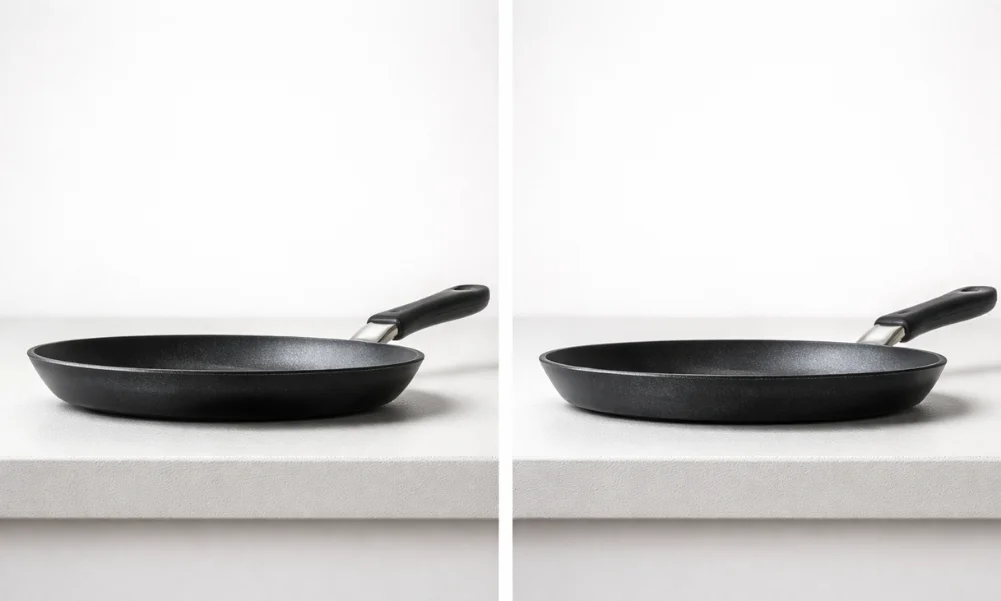
When heat exceeds what a material can distribute evenly, stress concentrates and eventually appears as distortion, coating breakdown, or weakened joints. These outcomes are mechanical in nature rather than chemical.
Stainless Steel Cookware
Stainless steel tolerates high cooking heat without inherent structural concern. Its real-world behavior depends heavily on base construction rather than the steel surface itself.
Multi-layer bases spread heat more evenly, while thin single-layer pans concentrate heat faster and show stress sooner. Over time, uneven expansion can contribute to gradual base distortion, particularly on flat cooktops.
This behavior aligns closely with observations discussed in cookware thickness and heat control and cookware warping causes and prevention.
Cast Iron Cookware
Cast iron absorbs heat slowly and releases it gradually once temperature equalizes. This behavior supports stability during sustained heat exposure under normal cooking conditions.
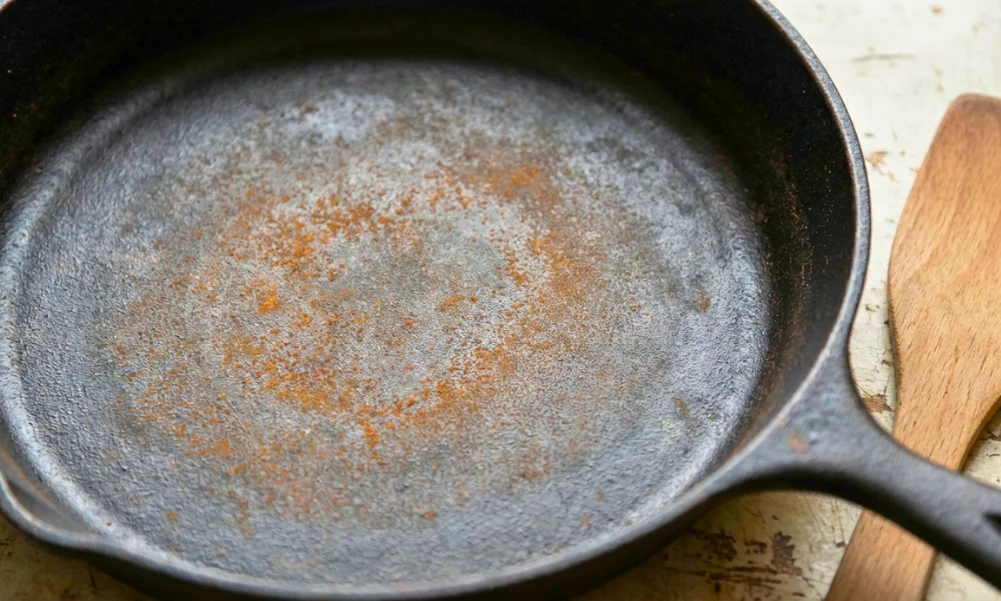
Rapid temperature changes place greater strain on the material, while extended overheating primarily alters surface condition rather than structure. In household kitchens, surface changes generally appear long before any safety concerns become relevant.
Material behavior comparisons in carbon steel vs cast iron cookware highlight similar durability with different response speeds.
Carbon Steel Cookware
Carbon steel responds to heat faster than cast iron due to thinner construction. This responsiveness improves control but reduces tolerance for uneven or highly localized heat exposure.
Surface changes tend to appear sooner when heat concentrates in limited areas. Structural integrity typically remains intact, with longevity influenced more by consistency than peak heat levels.
Aluminum Cookware (Bare and Anodized)
Aluminum transfers heat quickly and distributes it evenly across the cooking surface. However, it offers less resistance to prolonged thermal stress than denser materials.
Bare aluminum softens under sustained high heat, while hard-anodized aluminum improves surface durability without increasing structural rigidity. Repeated overheating may lead to gradual shape changes, which explains patterns discussed in is aluminum cookware safe for everyday use.
Safety considerations relate to deformation rather than material composition.
Non-Stick Cookware
Non-stick cookware behavior depends on both the base material and surface stability. The coating typically degrades before the underlying structure shows meaningful change.
Higher heat accelerates surface breakdown, which affects performance and lifespan rather than immediate safety. Once coating wear becomes widespread, replacement often becomes practical, as outlined in when to replace non-stick cookware.
Structural risk remains uncommon under normal household use.
Ceramic-Coated Cookware
Ceramic coatings tolerate moderate heat reliably under consistent conditions. They respond less favorably to repeated thermal cycling compared with metal surfaces.
Higher heat levels may reduce coating adhesion over time, leading to performance decline before safety concerns arise. The underlying base material continues to govern structural integrity, as discussed in ceramic cookware explained.
Copper Cookware (Lined)
Copper conducts heat efficiently and responds rapidly to temperature changes. Its cooking behavior depends primarily on the lining material rather than the copper itself.
Excessive heat places stress on the lining before affecting structural copper stability. Performance changes generally appear before safety considerations, as detailed in copper cookware performance and maintenance.
Glass and Stone-Based Cookware
Glass and stone cookware respond poorly to rapid temperature changes. They tolerate steady heat more reliably than sudden exposure differences.
Thermal shock remains the primary concern, with cracks developing before complete failure. This behavior aligns with guidance discussed in glass cookware heat safety.
Longevity and Safety Are Not the Same Thing
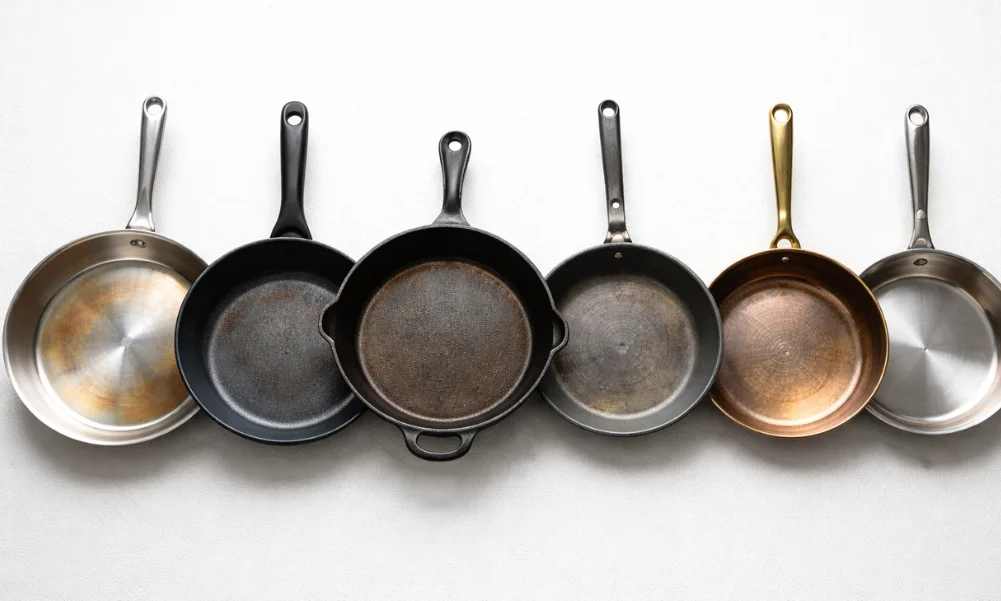
Heat shortens cookware lifespan before it introduces safety considerations. Most forms of damage develop incrementally rather than abruptly.
Discoloration often signals stress without indicating danger, while structural changes matter more than visual changes alone. These distinctions reflect patterns outlined in how long should cookware last and signs your cookware is no longer safe to use.
When Heat Levels Matter and When They Usually Do Not
Routine household cooking typically remains within predictable heat ranges. Occasional high-heat use rarely produces meaningful structural effects.
Repeated patterns of misuse have greater influence than isolated events. This explains why heat-related issues usually develop slowly rather than immediately.
Common Misunderstandings About High Heat
Discoloration does not indicate unsafe cookware. Smoke does not signal structural instability.
Warping reflects accumulated mechanical stress rather than immediate hazard. These outcomes are explored further in cookware warping causes and prevention. Appearance alone rarely determines safety.
Summary
Maximum safe heat depends on material behavior rather than fixed thresholds. Most cookware handles typical cooking heat predictably when behavior remains stable.
Longevity usually declines before safety becomes relevant. Understanding material response provides clarity without unnecessary concern.