Carbon Steel vs Cast Iron Cookware: Practical Differences for Home Cooks

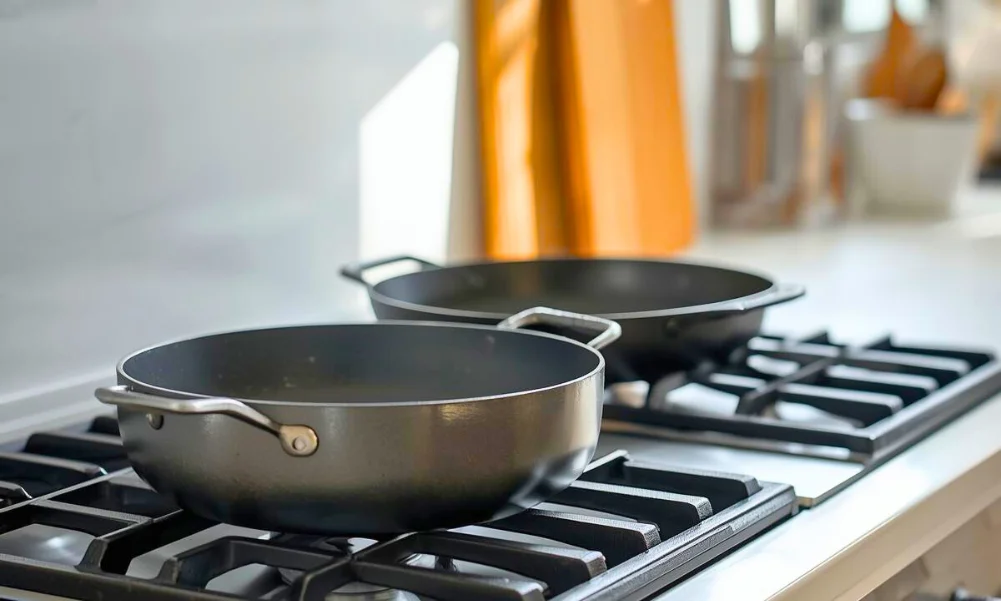
Carbon steel and cast iron cookware are often grouped together because they share several traits. Both are durable, tolerate high heat, and develop a natural non-stick surface through seasoning. These similarities cause many home cooks to assume they perform the same way.
In practice, carbon steel and cast iron behave quite differently in everyday cooking. Their weight, heat response, and maintenance needs influence how comfortable they are to use and which cooking styles they support best.
This article explains the practical differences between carbon steel and cast iron cookware. It focuses on how each material cooks, how they are maintained, and which types of kitchens benefit most from each option. The goal is to help readers choose based on cooking habits rather than assumptions.
The comparison below focuses on heat behavior, handling, maintenance, and everyday cooking comfort rather than tradition or reputation.
Quick Answer: Carbon Steel or Cast Iron — Which Is Better?
Carbon steel cookware heats faster and responds more quickly to temperature changes, making it easier to control during active cooking. Cast iron cookware retains heat longer and provides steady, consistent temperatures, which benefits slow cooking and deep searing.
Both materials require seasoning and regular care. Neither is universally better. The more suitable choice depends on how often the cookware is used, what types of food are prepared, and how much weight and maintenance the cook is comfortable managing.
For most home cooks, carbon steel favors active stovetop cooking, while cast iron favors steady heat and oven-based recipes.
What Carbon Steel and Cast Iron Have in Common
Despite their differences, carbon steel and cast iron share foundational characteristics that distinguish them from stainless steel and non-stick cookware.
Natural Non-Stick Performance Through Seasoning
Both materials rely on seasoning to create a non-stick surface. Seasoning forms when oil is heated on the metal, creating a polymerized layer that reduces sticking and protects against rust.
Over time, repeated use strengthens this layer. With proper care, both carbon steel and cast iron can develop surfaces that release food effectively without synthetic coatings.
High-Heat Tolerance
Carbon steel and cast iron tolerate higher temperatures than non-stick cookware. This allows for effective searing, browning, and oven use without concern for coating breakdown.
Reactivity and Care Considerations
Both materials can react with acidic foods, especially when newly seasoned. Prolonged cooking of acidic ingredients can weaken the seasoning layer and affect flavor.
Routine care includes drying thoroughly after cleaning and applying a light oil layer when needed. These habits help maintain performance and prevent rust.
🔗 Related: Cookware Types Explained: Materials, Uses, and Limitations
Carbon Steel Cookware Explained
Carbon steel cookware is made from an alloy of iron and carbon, similar to cast iron but formed into thinner sheets. This difference in thickness affects how the cookware heats, handles, and responds during cooking.
Material Composition and Thickness
Carbon steel pans are thinner and lighter than cast iron. The reduced thickness allows heat to move through the pan more quickly, which shortens preheating time and improves responsiveness.
This construction makes carbon steel cookware feel more agile on the stovetop. Temperature changes take effect faster, which benefits cooks who adjust heat frequently.
How Carbon Steel Cooks
Carbon steel performs well in cooking techniques that involve movement and timing. It supports quick searing, stir-frying, and sautéing, especially once a stable seasoning layer has developed.
Because the pan responds quickly to heat adjustments, it allows cooks to correct mistakes more easily. This responsiveness can reduce scorching when heat is lowered promptly.
With consistent seasoning, carbon steel can handle eggs and delicate foods reliably, although it typically requires more attention than modern non-stick cookware.
Weight and Handling
Carbon steel cookware is noticeably lighter than cast iron. This makes it easier to lift, tilt, and maneuver, especially during tasks such as tossing vegetables or pouring sauces.
For cooks who prefer active stovetop techniques, this reduced weight improves comfort and control during daily use.
Cast Iron Cookware Explained
Cast iron cookware is made by pouring molten iron into molds, resulting in thick, dense pieces. This construction gives cast iron its characteristic weight and heat behavior.
Material Composition and Density
Cast iron pans are significantly thicker than carbon steel. The added mass allows them to store large amounts of heat, which contributes to their steady cooking performance.
This density also explains why cast iron takes longer to heat up but holds temperature well once hot.
How Cast Iron Cooks
Cast iron excels at tasks that benefit from sustained heat. Deep searing, slow cooking, and oven-based recipes perform consistently because temperature changes occur gradually.
The stable heat environment reduces fluctuations that can interfere with browning or long cooking times. This makes cast iron particularly useful for recipes that require patience rather than rapid adjustments.
Weight and Kitchen Practicality
The weight of cast iron provides stability on the stovetop but can be challenging for some users. Lifting a hot cast iron pan requires more effort, and extended use may cause fatigue.
Storage also requires consideration, as heavier cookware places greater stress on shelves and hooks.
Heat Performance Compared
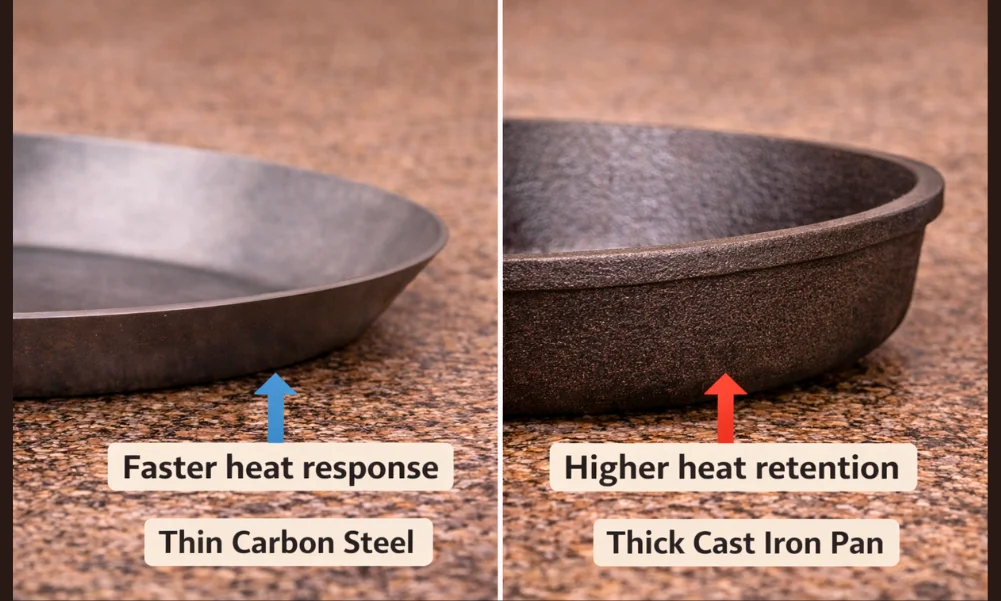
Heat behavior is one of the most important differences between carbon steel and cast iron. While both tolerate high temperatures, they manage heat in distinct ways that affect daily cooking.
Heat-Up Speed
Carbon steel heats up relatively quickly due to its thinner construction. This allows the pan to reach cooking temperature faster and respond promptly when heat is increased or reduced.
This faster response is useful for cooking methods that require frequent adjustments, such as sautéing or stir-frying. It gives the cook more immediate feedback and control.
Cast iron heats more slowly because of its mass. Preheating takes longer, but the pan reaches a stable temperature once fully heated.
Heat Retention
Cast iron excels at retaining heat. Once hot, it resists temperature drops when food is added, which supports strong browning and consistent searing.
Carbon steel retains less heat than cast iron. When food is added, especially in larger quantities, the temperature may drop more noticeably. This difference can affect browning but improves responsiveness.
Temperature Control
Carbon steel offers greater responsiveness, while cast iron offers greater stability. Neither approach is inherently better. Each supports different cooking styles.
Cooks who value precision and quick adjustments may prefer carbon steel. Those who favor steady heat and minimal intervention often gravitate toward cast iron.
Seasoning and Maintenance Compared
Both materials rely on seasoning for performance and protection, but the maintenance experience differs slightly.
Seasoning Process Differences
Carbon steel usually requires an initial seasoning process before use. Because the surface is smoother and thinner, seasoning builds gradually through repeated cooking.
Cast iron often comes pre-seasoned. Its rougher surface holds seasoning more readily, which can make it feel non-stick sooner.
In both cases, seasoning improves with consistent use rather than perfection during initial setup.
Cleaning and Rust Prevention
Cleaning practices are similar for both materials. Hot water, gentle scrubbing, and immediate drying prevent rust and preserve seasoning.
Carbon steel tends to dry quickly due to its thinness, which reduces rust risk if handled promptly. Cast iron holds moisture longer, making thorough drying especially important.
A light oil coating after cleaning helps protect both materials during storage.
Long-Term Care Expectations
Neither material is maintenance-free. Both require attention to drying and occasional re-seasoning.
However, both are forgiving. Scratches, rust, and seasoning damage can usually be repaired with basic care rather than replacement.
Cooking Performance by Use Case
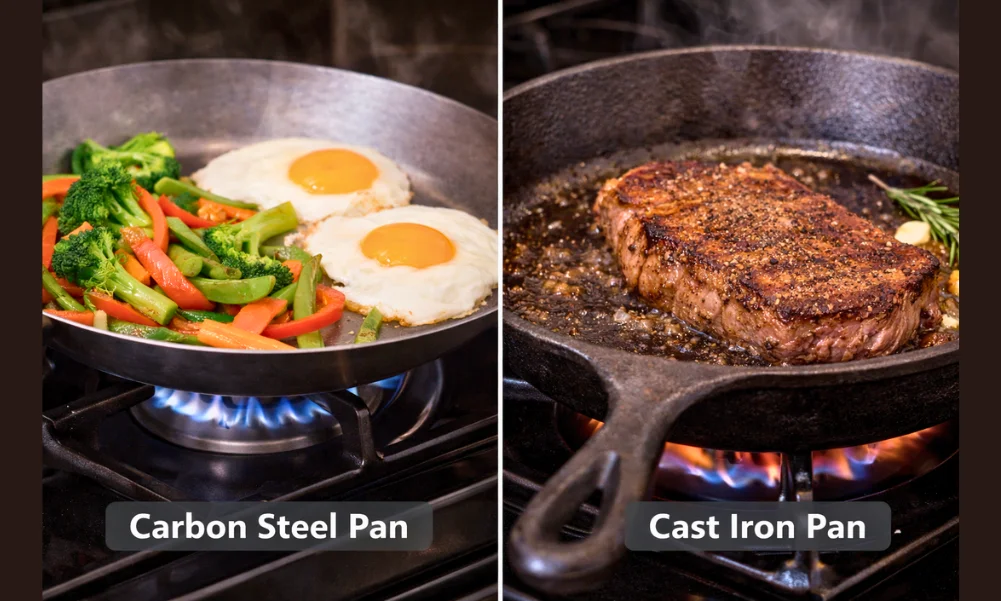
Comparing performance by cooking task helps clarify which material aligns with specific needs.
Searing Meat
Cast iron excels at searing because of its heat retention. It maintains surface temperature when meat is added, promoting even browning.
Carbon steel can also sear effectively, especially when properly preheated, but it may require more attention to heat management.
Cooking Eggs and Delicate Foods
Carbon steel generally performs better for eggs once seasoned. Its smoother surface and responsiveness reduce sticking when heat is adjusted carefully.
Cast iron can cook eggs successfully, but it requires a well-developed seasoning layer and careful temperature control.
Stir-Frying and High-Motion Cooking
Carbon steel is better suited for stir-frying. Its lighter weight and quick response allow for tossing and rapid heat changes.
Cast iron is less practical for high-motion cooking due to its weight and slower responsiveness.
Slow Cooking and Simmering
Cast iron performs well for slow cooking and long simmers. Its stable heat environment supports gradual cooking without frequent adjustments.
Carbon steel can handle these tasks but does not offer the same level of heat stability.
Durability and Lifespan
Both carbon steel and cast iron are known for long service life when properly maintained.
Resistance to Warping
Cast iron resists warping due to its thickness. Carbon steel, while durable, can warp if exposed to sudden extreme temperature changes.
Proper preheating and gradual cooling reduce this risk for carbon steel cookware.
Surface Wear Over Time
Neither material relies on a coating that wears out permanently. Seasoning evolves with use and can be restored when damaged.
This repairability contributes to the long lifespan of both materials.
Repairability
Rust, scratches, and uneven seasoning can be corrected through cleaning and re-seasoning. In most cases, damage does not require replacement.
Carbon Steel vs Cast Iron: Pros and Cons for Home Cooking
Carbon Steel — Advantages
- Lighter weight
- Faster heat response
- Easier handling during active cooking
Carbon Steel — Limitations
- Less heat retention
- Requires consistent seasoning care
- More sensitive to warping
Cast Iron — Advantages
- Excellent heat retention
- Stable cooking temperatures
- Extremely durable
Cast Iron — Limitations
- Heavy and harder to maneuver
- Slower heat response
- Requires careful drying
Which One Fits Your Cooking Style?
Carbon steel suits cooks who value responsiveness, lighter cookware, and active stovetop techniques. It supports fast-paced cooking and frequent heat adjustments.
Cast iron suits cooks who prefer steady heat, oven-to-table cooking, and slower techniques that benefit from thermal stability.
Many kitchens benefit from having both materials available for different tasks.
Final Verdict: Carbon Steel vs Cast Iron
Carbon steel and cast iron are both reliable cookware materials with distinct strengths. Neither is universally better, and neither replaces the other in every situation.
Choosing between them depends on cooking habits, physical comfort, and maintenance preferences. Understanding these trade-offs leads to better long-term satisfaction than focusing on tradition or assumptions.
Frequently Asked Questions
Is carbon steel safer than cast iron?
Both materials are considered safe when properly seasoned and maintained.
Does carbon steel rust more easily?
Carbon steel can rust if left wet, but prompt drying and oiling prevent most issues.
Can cast iron cook acidic foods?
Short exposure is generally fine, but prolonged acidic cooking can weaken seasoning.
Which lasts longer?
With proper care, both materials can last for decades.