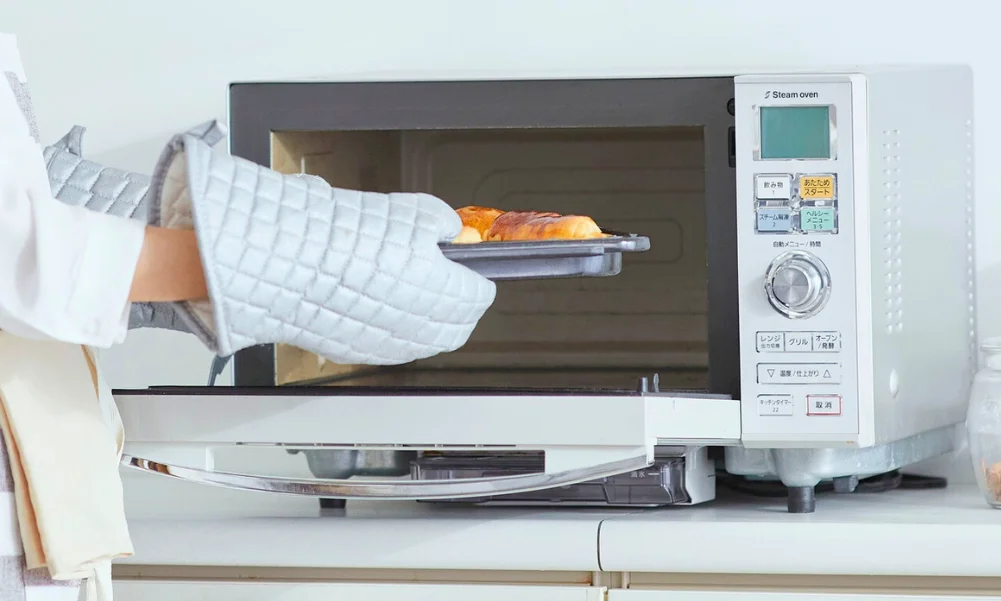
Glass cookware is made from heat-resistant glass designed primarily for oven use, baking, and reheating. It does not conduct heat like metal and is vulnerable to sudden temperature changes, known as thermal shock. When used within stated heat limits and handled carefully during heating and cooling transitions, glass cookware is predictable and safe. Its best uses are baking, casseroles, and food storage rather than stovetop or high-heat cooking.
Most glass cookware is rated for specific oven temperatures, but real-world safety is governed more by how quickly temperature changes occur than by the maximum heat rating itself.
What Glass Cookware Is (and Is Not)
Glass cookware is a true material category. Unlike coated cookware, where performance depends on surface treatments, glass cookware places food in direct contact with the glass itself. This makes its behavior easier to understand, but also less forgiving when misused.
In cookware, glass is most commonly used for oven-safe dishes, such as baking pans, casserole dishes, and roasting trays. These are distinct from glass lids, which are designed only as covers and are not intended to function as primary cooking vessels.
A common assumption is that glass cookware behaves like metal cookware but without chemical concerns. In practice, glass behaves very differently. It heats slowly, retains less thermal energy, and responds poorly to sudden temperature changes. These characteristics define both its strengths and its limitations.
Another frequent misunderstanding is that all glass cookware is interchangeable. Different glass formulations tolerate heat and stress differently, which affects how and where a dish can be used safely. The transparency of glass can make cooking easier to monitor, but it does not make the cookware more tolerant of extreme conditions.
A useful way to think about glass cookware is as a controlled environment tool. It performs best when conditions change gradually and predictably. When those conditions change abruptly, glass does not bend or deform. It fails.
Types of Glass Used in Cookware
Glass cookware is not made from a single type of glass. The formulation determines how well a dish tolerates heat and temperature changes.
Tempered Soda-Lime Glass
Tempered soda-lime glass is the most common material used in consumer glass cookware. It is strengthened through a heat treatment process that improves impact resistance and helps it withstand normal oven temperatures.
This type of glass performs reliably during steady heating, such as baking or roasting in a preheated oven. Its main limitation is sensitivity to rapid temperature shifts. Moving a hot dish onto a cold surface, adding cold liquid to a hot pan, or exposing it to uneven heat can create stress that leads to cracking or shattering.
Borosilicate Glass
Borosilicate glass has a lower rate of thermal expansion, which makes it more resistant to thermal shock. This property allows it to tolerate wider temperature differences with less stress.
In cookware, borosilicate glass is less common than many buyers assume. Some products are marketed using the term loosely, which can create confusion. When present, borosilicate glass improves margin for error, but it does not eliminate all risks. It still requires gradual heating and cooling to perform safely over time.
Regardless of formulation, glass cookware does not become more tolerant with experience. Small impacts, scratches, or prior stress can reduce its safety margin without visible warning.
Heat Limits and Thermal Shock Explained
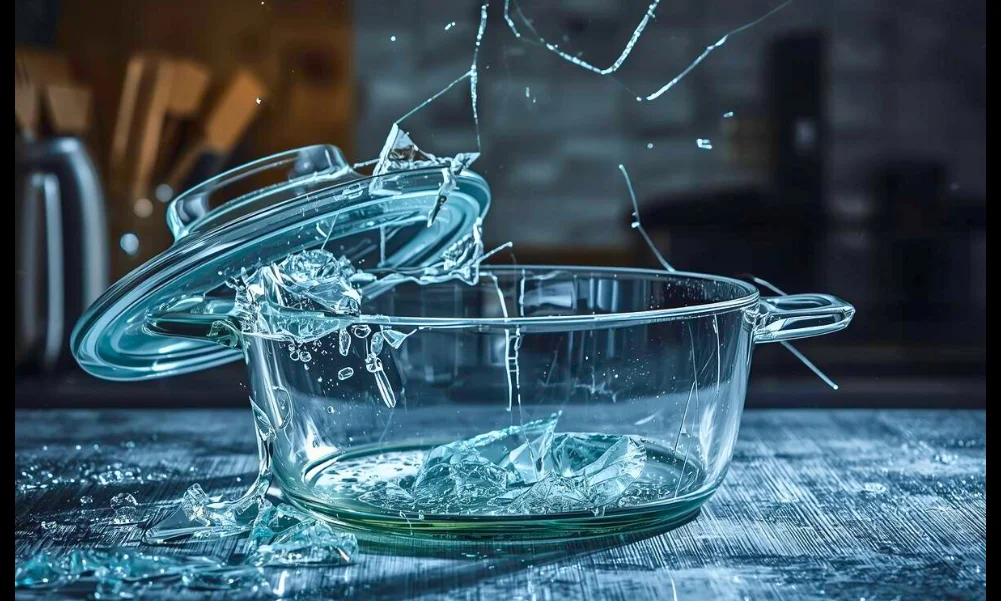
Glass cookware tolerates heat differently than metal cookware. The critical factor is not the maximum temperature alone, but how quickly the temperature changes. This is where thermal shock becomes relevant.
Thermal shock occurs when one part of a glass dish changes temperature faster than another. Glass does not conduct heat efficiently, so internal stresses build instead of equalizing. When those stresses exceed the strength of the glass, failure happens suddenly rather than gradually.
In practical terms, glass cookware handles steady oven heat well. It performs predictably when placed into a preheated oven and allowed to warm gradually. Problems arise when glass is exposed to abrupt transitions, such as moving directly from oven to a cold countertop or adding refrigerated liquid to a hot dish.
This behavior explains why glass cookware can appear reliable for years and then fail unexpectedly. The failure is often the result of accumulated stress rather than a single misuse. Each rapid temperature change slightly reduces the margin of safety.
Understanding this limitation helps place glass cookware in the right context. It is not fragile by default, but it is intolerant of shortcuts.
Is Glass Cookware Safe to Use?
Glass cookware is safe when used within its design limits. Safety concerns are tied to breakage risk rather than chemical exposure, since glass is inert and does not react with food.
Breakage typically occurs in two ways. The first is cracking, which may remain contained within the dish. The second is shattering, where the glass breaks into multiple fragments. Tempered glass is designed to break in a less hazardous pattern, but it can still create sharp pieces.
Several factors influence safety over time. Repeated heating and cooling cycles introduce stress. Small chips or scratches create weak points. Contact with hard surfaces during handling can add damage that is not immediately visible.
From a buyer perspective, safe use comes down to predictable handling. Allowing glass cookware to cool gradually, avoiding cold surfaces, and inspecting for damage before use significantly reduces risk. Glass cookware should be replaced once visible cracks, deep scratches, or clouding appear.
These visible warning signs align with broader indicators outlined in signs cookware is no longer safe to use.
A useful comparison is to think of glass cookware as similar to a windshield. It performs well under normal conditions, but once compromised, it should not be pushed further.
Cooking Performance Characteristics
Glass cookware heats slowly and unevenly compared to metal. This is a limitation for high-intensity cooking, but it can be an advantage for certain applications.
Because glass does not conduct heat efficiently, it reduces the risk of localized hot spots. This makes it well suited to baking, casseroles, and dishes that benefit from gentle, even heating. The transparency of glass allows visual monitoring, which helps prevent overcooking without disturbing the dish.
Glass does not promote browning in the same way metal does. Foods that rely on direct conductive heat, such as roasted vegetables or seared proteins, may cook through without developing surface color. This is not a flaw, but a tradeoff that affects recipe outcomes.
In everyday use, glass cookware favors control and visibility over speed and intensity.
Durability and Lifespan Realities
Glass cookware resists staining, corrosion, and chemical wear better than many materials. Its durability limits are mechanical rather than chemical.
Over time, repeated thermal stress reduces strength. Unlike metal, glass does not bend or deform to absorb damage. Each stress cycle slightly increases the chance of failure during a future use.
With careful handling, glass cookware can last many years. With frequent rapid temperature changes or rough handling, its lifespan shortens. There is no reliable way to restore strength once damage occurs.
For buyers, durability should be viewed in terms of risk management rather than wear. A dish may look usable long after its safety margin has narrowed.
Best Uses for Glass Cookware
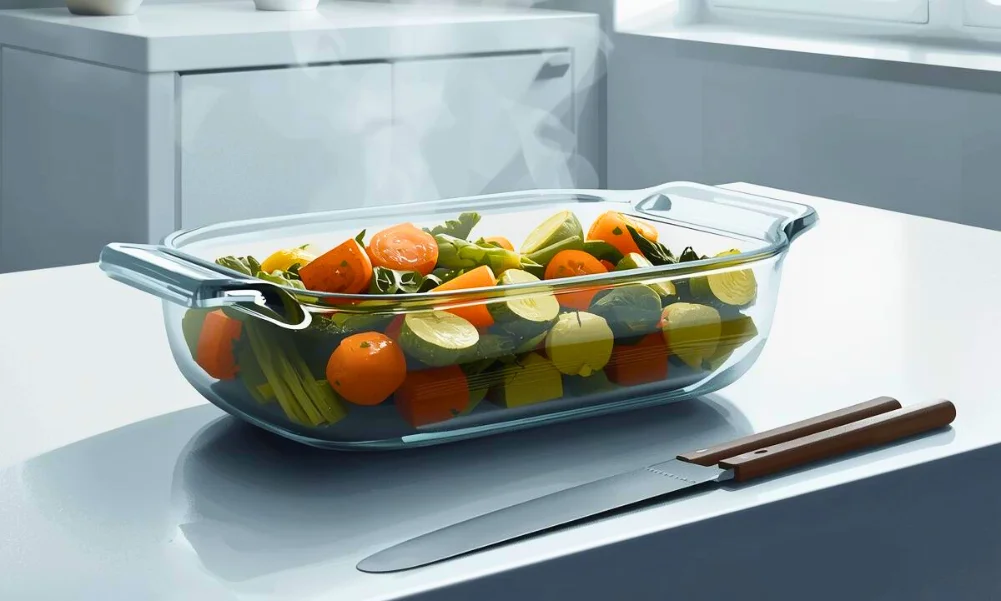
Glass cookware performs best in situations where heat changes are gradual and cooking benefits from even exposure rather than direct intensity.
Baking is the most consistent use case. Cakes, casseroles, baked pasta, and desserts benefit from steady oven temperatures and gentle heat transfer. Glass cookware also works well for reheating leftovers, where controlled warming reduces the risk of drying out food.
Another strength is food storage. Glass does not absorb odors, stains, or flavors, which makes it suitable for storing prepared meals. The ability to move a dish from refrigerator to oven is useful when temperature transitions are managed carefully and according to manufacturer guidance.
In these roles, glass cookware offers predictability. It supports methods where patience and visibility matter more than speed.
When Glass Cookware Is a Poor Choice
Glass cookware is not well suited to direct stovetop use. Most glass dishes are not designed to handle direct flame or concentrated burner heat, which creates uneven temperature zones and increases breakage risk.
High-heat techniques are also a poor match. Broiling, empty preheating, or rapid temperature swings place stress on glass that it cannot dissipate safely. Even when breakage does not occur immediately, repeated exposure reduces long-term reliability.
Transport is another consideration. Moving a hot glass dish onto a cold or wet surface introduces sudden thermal gradients. This is one of the most common failure scenarios and one that is often underestimated by users.
In short, glass cookware should not be treated as all-purpose cookware. It performs well within defined boundaries and poorly outside them.
Glass Cookware Compared to Alternatives
Glass vs Ceramic Bakeware
Glass and ceramic bakeware share similar use cases, but their failure modes differ. Ceramic tends to chip or crack gradually, while glass can fail suddenly under stress.
Ceramic bakeware often retains heat better, which can improve browning. Glass offers better visibility and tends to be less porous. Both materials require controlled temperature changes, though glass is generally less tolerant of abrupt shifts.
Glass vs Metal Bakeware
Metal bakeware conducts heat efficiently and responds quickly to temperature changes. This makes it better suited to browning and high-heat applications.
Glass bakeware heats more slowly and evenly, which reduces scorching but limits surface color development. Metal is more durable under thermal stress, while glass offers chemical inertness and easier visual monitoring.
The choice between them depends on cooking goals rather than perceived safety.
Glass vs Enameled Cast Iron
Enameled cast iron operates at the opposite end of the spectrum. It holds heat exceptionally well, tolerates a wide range of temperatures, and is suitable for stovetop and oven use.
Glass cookware is lighter, more transparent, and easier to handle for baking and storage. Enameled cast iron is more versatile but requires more effort to move and clean.
Each material serves a different role. Substituting one for the other often leads to disappointment.
Common Myths About Glass Cookware
One common belief is that glass cookware “explodes without warning.” In reality, failures usually result from accumulated stress or improper temperature transitions rather than random defects.
Another assumption is that glass is inherently safer because it is inert. While glass does not leach substances into food, physical breakage is the primary safety consideration, and that risk depends on handling.
A third misconception is that all glass cookware is borosilicate. Many products are not, and labeling can be unclear. Buyers should rely on stated heat limits and usage instructions rather than material assumptions.
How Glass Cookware Fits Into a Balanced Kitchen
Glass cookware is best viewed as a specialized tool, not a universal solution. It complements metal and enameled cookware by covering baking, reheating, and storage needs with clarity and consistency.
When used with an understanding of heat limits and thermal shock, glass cookware is predictable and reliable. When pushed beyond those limits, it becomes one of the least forgiving materials in the kitchen.
For buyers, the value of glass cookware lies in matching the material to the method. When expectations align with its strengths, glass cookware earns its place without unnecessary risk.