Quick Answer
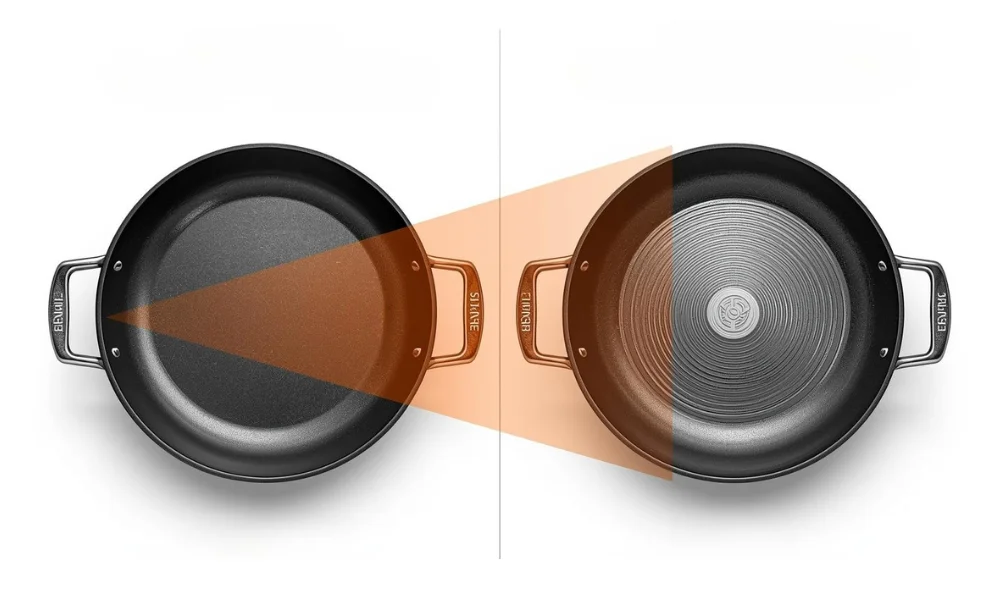
Cookware thickness refers to how much material separates the heat source from the food. Thickness affects how quickly a pan heats up, how evenly heat spreads, and how stable the cooking temperature remains when heat input changes. Thicker cookware tends to heat more evenly and resist temperature swings, while thinner cookware responds faster but is more prone to hot spots. Neither approach is universally better. The right thickness depends on cooking method, material, and control needs.
What Cookware Thickness Means
Cookware thickness is often discussed loosely, but it has a precise meaning in performance terms. Thickness describes the depth of material in the pan’s base and walls, not the pan’s size, diameter, or advertised weight.
Two pans of the same size can behave very differently if their material thickness differs. A wider pan does not automatically heat more evenly. A heavier pan is not always thicker in the areas that matter. What counts is how much conductive material sits between the burner and the food.
It is also important to distinguish between base thickness and wall thickness. Many pans are designed with thicker bases to manage burner heat and thinner walls to reduce weight. This can be effective for some cooking styles and limiting for others, particularly when heat needs to climb the sides of the pan.
Marketing descriptions often blur these distinctions. Terms like “heavy-duty” or “professional weight” do not specify where thickness is concentrated. For buyers, understanding thickness as a structural choice rather than a quality label helps explain why pans that look similar can perform very differently.
This distinction becomes clearer when thickness is viewed alongside cookware materials and construction, as explained in Cookware Types Explained: Materials, Uses, and Limitations.
A useful way to think about thickness is as a buffer. More thickness increases the buffer between heat input and food response. Less thickness reduces that buffer and increases immediacy.
How Thickness Affects Heat Transfer
Heat moves through cookware by conduction. Thickness determines how that movement behaves in practice. When a pan is thin, heat passes through quickly and reaches the cooking surface with little delay. When a pan is thick, heat takes longer to travel, but it spreads more evenly as it moves.
This difference explains why thin pans often feel powerful at first contact. They react immediately to burner output, which can be useful for fast adjustments. At the same time, that speed leaves little room for error. Localized hot spots form more easily because there is less material to distribute heat sideways before it reaches the food.
Thicker cookware slows this process. Heat enters more gradually and spreads across a larger area of material before reaching the surface. This reduces sharp temperature differences and helps stabilize cooking conditions, especially on uneven burners.
Thickness does not create heat. It manages it. The thicker the material, the more time and energy it takes to change temperature, and the more evenly that temperature tends to distribute.
Heat Control vs Heat Retention
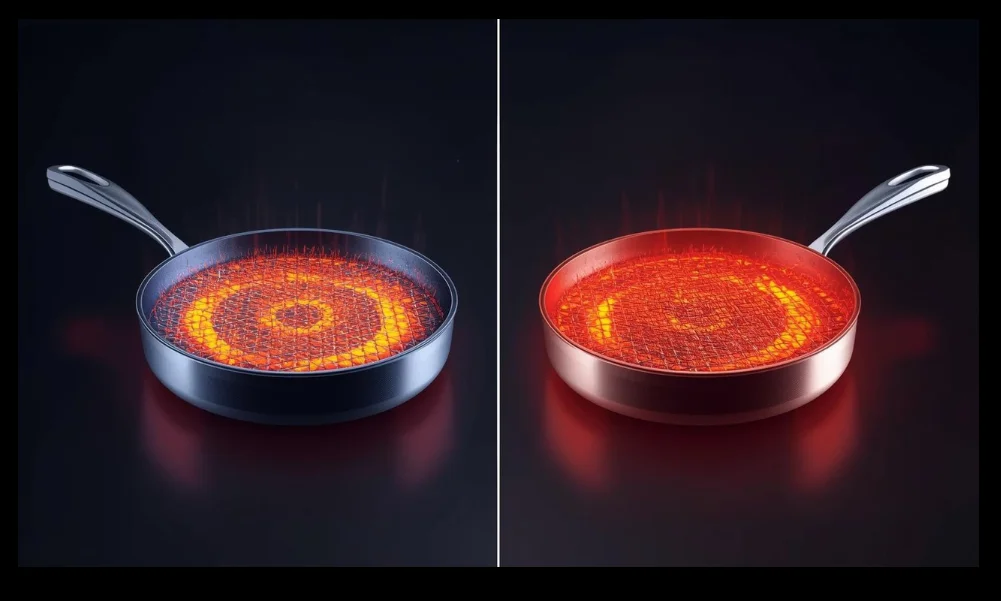
Heat control and heat retention are related, but they are not the same thing. Thickness influences both, often in opposite directions.
Thin cookware excels at heat control in the sense of responsiveness. When the burner is turned down, the pan cools quickly. When heat is increased, the surface responds almost immediately. This can feel intuitive for cooks who rely on constant adjustment.
Thicker cookware excels at heat retention. Once it reaches temperature, it resists change. Adding cold food causes less temperature drop, and brief burner adjustments have less immediate impact. This stability is useful for searing, browning, and cooking methods where consistency matters more than speed.
The trade-off is predictability versus agility. Thin pans behave like a light switch. Thick pans behave more like a thermostat. Neither is inherently superior, but each favors different techniques.
Understanding this distinction helps explain why cooks can have strong preferences. Thickness shapes how a pan responds to decisions, not just how hot it gets.
Thickness Across Common Cookware Materials
Thickness does not function the same way across all materials. Each metal conducts and stores heat differently, which means thickness must be evaluated in context, not in isolation.
Stainless Steel Cookware
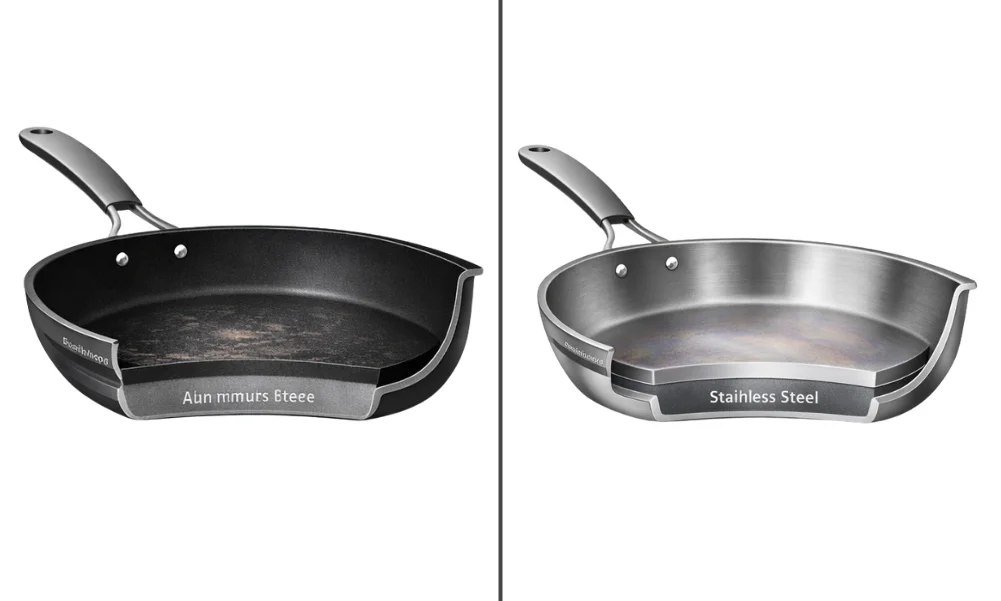
Stainless steel is a poor heat conductor. On its own, increasing thickness does little to improve performance. This is why quality stainless steel cookware relies on layered construction, with aluminum or copper cores embedded between steel layers.
In stainless cookware, core thickness matters far more than steel grade. A thin stainless pan with a thin core heats unevenly and develops hot spots. A thicker core improves heat spread and stability, even though the stainless layers themselves contribute little to conduction.
This is why stainless cookware performance is driven by construction, not brand or alloy naming.
Aluminum Cookware
Aluminum conducts heat efficiently but is structurally soft. Thickness compensates for this softness by improving stability and reducing warping.
Thin aluminum pans heat quickly but lose temperature rapidly and can deform under high heat. Thicker aluminum distributes heat more evenly and resists shape changes, especially in cast aluminum cookware.
For aluminum, thickness improves both heat behavior and durability. It is one of the materials where added thickness delivers clear functional gains.
Copper Cookware
Copper conducts heat extremely well. Thin copper already performs better than thicker aluminum in terms of responsiveness. However, thickness still matters.
Very thin copper heats quickly but lacks thermal stability. Thicker copper adds control by smoothing temperature fluctuations and improving evenness. Beyond a certain point, added thickness yields diminishing returns. The pan becomes heavier and more expensive without proportional performance gains.
In copper cookware, thickness determines value. Below a functional threshold, copper loses its advantage. Above it, gains become incremental.
Cast Iron
Cast iron cookware is thick by design. Its low conductivity is offset by mass. Thickness allows cast iron to store large amounts of heat, creating exceptional temperature stability once preheated.
The trade-off is slow response. Thick cast iron does not adjust quickly to burner changes. This makes it reliable for steady cooking but less adaptable for fine control.
In cast iron, thickness is the feature, not a variable.
Carbon Steel
Carbon steel sits between cast iron and stainless steel. It is thinner than cast iron but thicker than many stainless pans.
This balance allows carbon steel to heat faster than cast iron while retaining more stability than thin steel cookware. Thickness in carbon steel supports durability and heat retention without eliminating responsiveness.
Carbon steel demonstrates how moderate thickness can offer versatility rather than specialization.
Thickness in Non-Stick Cookware
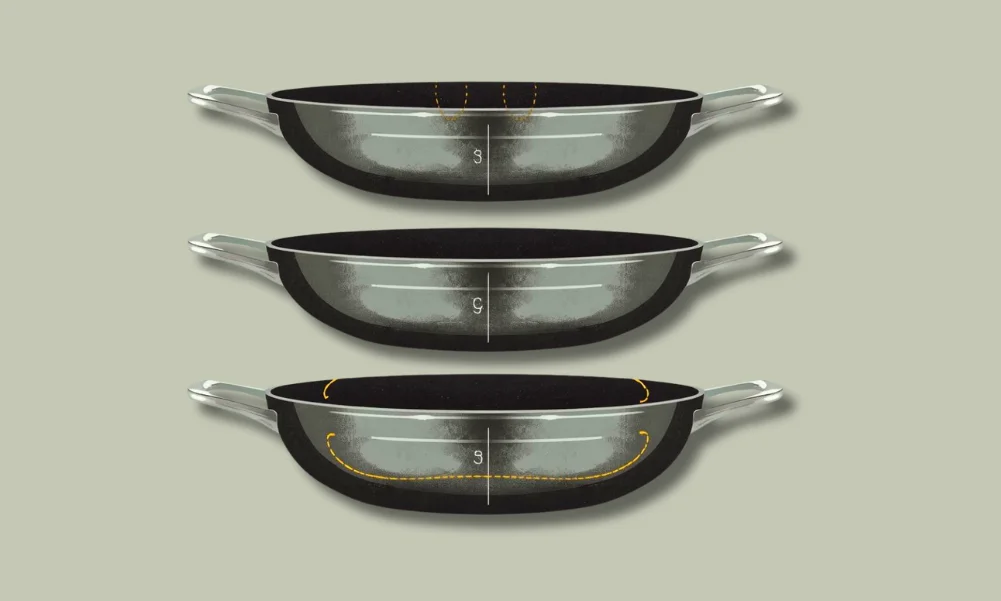
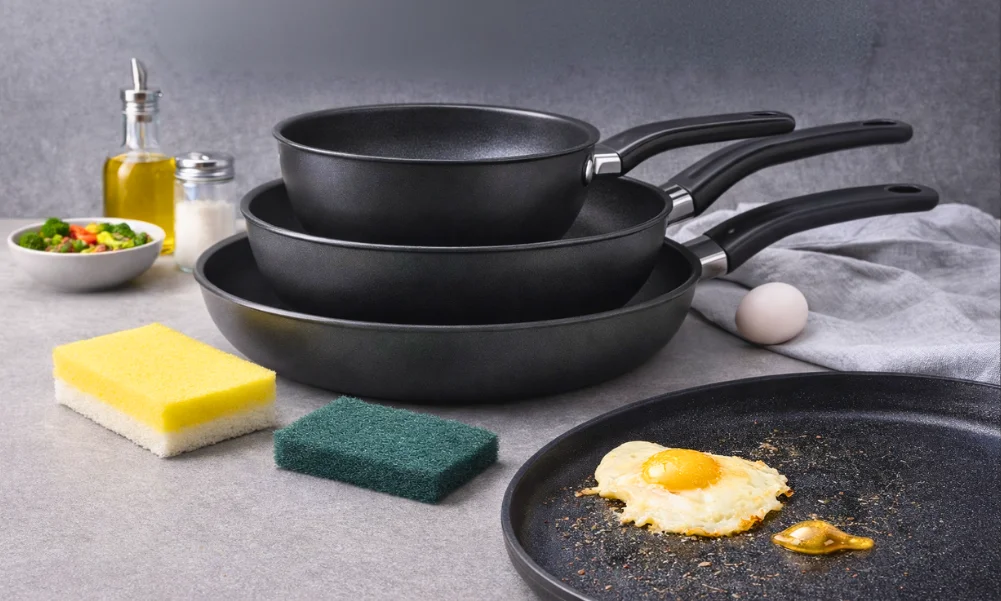
In non-stick cookware, thickness affects heat behavior but does not change coating limitations. A thicker base can improve heat distribution and reduce hot spots, which helps protect the coating from localized overheating.
However, thickness does not extend coating lifespan in a fundamental way. Non-stick coatings fail due to wear, heat exposure, and surface damage. A thicker pan may slow some forms of stress, but it cannot prevent eventual degradation.
This is a common buyer misunderstanding. A heavy non-stick pan may feel more durable, but the coating remains the limiting factor. Thickness improves cooking performance, not permanence.
When Thicker Cookware Is Better
Thicker cookware performs best when temperature stability matters more than speed. This includes searing, browning, and cooking methods where food is added cold to a hot pan.
Thick cookware also helps on uneven burners by smoothing heat input. It provides a margin of error that reduces the impact of small mistakes.
For cooks who prefer steady outcomes over rapid adjustments, thickness offers predictability.
When Thinner Cookware Is Better
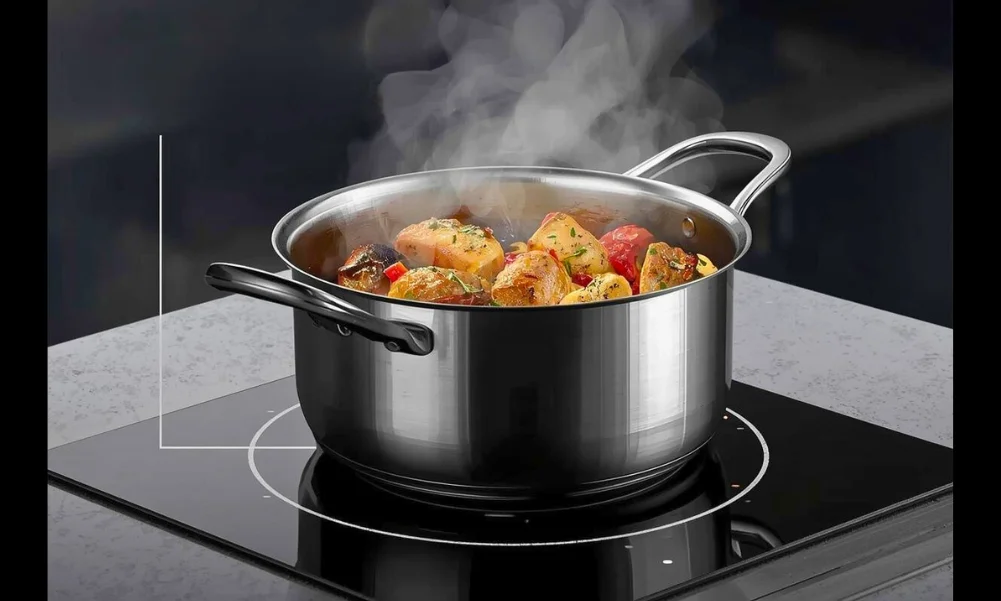
Thinner cookware excels when rapid response is the priority. Delicate sauces, quick sautés, and tasks that require constant heat adjustment benefit from faster temperature changes.
Weight and handling also matter. Thinner cookware is easier to lift, pour, and maneuver, which can improve control in practice even if heat stability is lower.
For cooks who actively manage heat, thin cookware can feel more intuitive.
Common Thickness Myths
One common myth is that heavier cookware is always better. Weight does not guarantee effective thickness where it matters.
Another misconception is that professional cookware is thin. In reality, professional cookware is purpose-built, with thickness matched to task rather than minimized.
A third myth is that thickness replaces technique. Even the thickest pan cannot correct poor heat management.
How to Evaluate Thickness When Buying Cookware
Manufacturers rarely publish precise thickness measurements. Buyers can still assess thickness by lifting the pan, tapping the base, and observing how it responds to heat during early use.
Evenness matters more than absolute thickness. A pan with consistent material distribution performs more predictably than one with isolated thickness.
Thickness should be viewed as a design choice, not a quality shortcut.
How Thickness Fits Into Cookware Selection
Thickness shapes how cookware responds to decisions. It determines whether a pan forgives or amplifies mistakes.
No single thickness is ideal for all cooking. Understanding thickness allows buyers to select cookware that complements their habits rather than fighting them.
Closing Summary
Cookware thickness affects heat control by managing how quickly and evenly heat moves through a pan. Thicker cookware offers stability and evenness. Thinner cookware offers speed and responsiveness.
Neither approach is universally better. Thickness is a tool. When matched to material and cooking style, it improves outcomes. When misunderstood, it creates frustration.