Quick Answer
Copper cookware is valued for its exceptional heat responsiveness, allowing precise control over cooking temperatures. Because copper reacts with many foods, modern copper cookware is lined, most commonly with stainless steel or tin. When properly lined and maintained, copper cookware is safe to use and highly effective for temperature-sensitive cooking. Its main trade-offs are high cost, regular maintenance, and limited advantages for everyday cooking tasks.
What Copper Cookware Is (and Is Not)
Copper cookware is defined by the material that forms the body of the pan. Unlike coated cookware, where performance depends on a surface layer, copper cookware relies on the thermal properties of the metal itself.
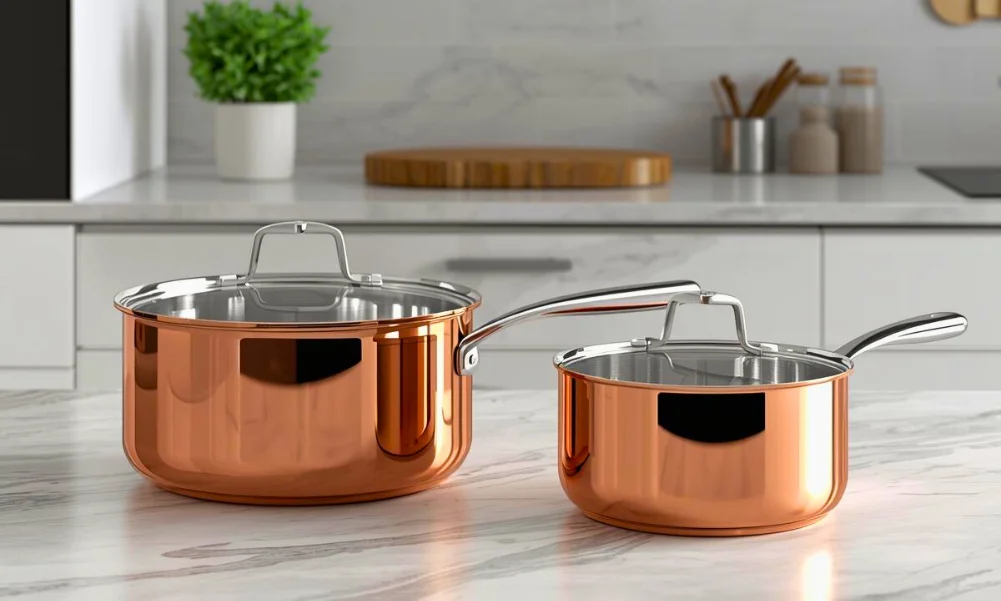
True copper cookware uses a thick copper body paired with a non-reactive interior lining. The copper is responsible for heat movement, while the lining protects food from direct contact with the metal. This combination allows copper cookware to deliver performance benefits without introducing chemical or flavor concerns.
It is important to distinguish copper cookware from copper-colored cookware. Many products use copper-toned exteriors or thin decorative layers that do not meaningfully affect heat behavior. These should not be evaluated as copper cookware in functional terms.
Another common point of confusion involves “solid copper” claims. In practical cookware, copper is never left bare on the cooking surface for regular use. Acidic foods react with copper, which is why linings are essential for safety and durability. Copper cookware is therefore best understood as a heat control system, not a single-material solution.
A useful way to think about copper cookware is as a precision heat conductor paired with a protective interface. The copper manages temperature. The lining manages food contact.
🔗 Related: Cookware Types Explained: Materials, Uses, and Limitations
How Copper Performs in Cooking
Heat Conductivity and Responsiveness
Copper conducts heat more efficiently than most materials used in cookware. This allows it to respond quickly when heat is increased or reduced, giving the cook fine-grained control over temperature changes.
This responsiveness is most noticeable in tasks where timing matters, such as sauce preparation, sugar work, or delicate proteins. The pan adjusts rapidly, reducing lag between burner input and cooking surface temperature.
Compared to aluminum, copper is more responsive. Compared to cast iron, it is dramatically faster to adjust. This does not make copper universally better, but it does make it well suited to precision-focused cooking.
Heat Retention Versus Heat Control
Copper does not retain heat as long as heavier materials. Instead, it prioritizes control over storage. This trade-off matters.
For cooks who rely on residual heat, copper can feel unforgiving. For cooks who want immediate feedback and adjustment, copper offers clarity. It behaves more like a dimmer switch than a heat reservoir, which explains both its appeal and its learning curve.
Lining Materials and Food Contact Safety
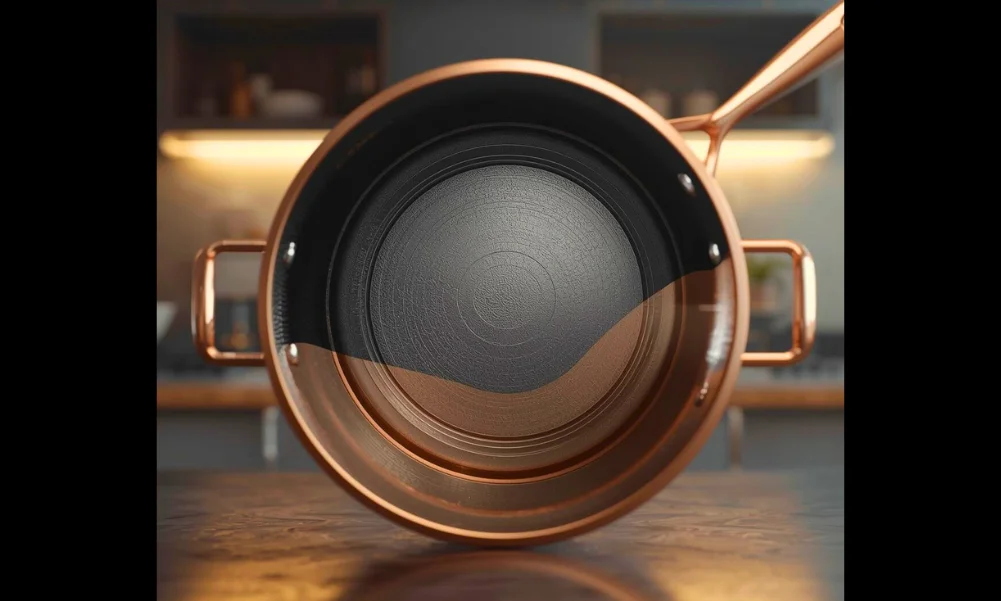
Copper’s performance advantages come with an important constraint. Copper reacts with many foods, particularly acidic ingredients. For this reason, copper cookware intended for regular use is lined with a non-reactive material. The lining determines both safety and day-to-day usability.
Stainless Steel Linings
Stainless steel is the most common lining in modern copper cookware. It creates a durable, inert cooking surface that does not react with food and tolerates a wide temperature range.
A stainless lining slightly reduces the direct responsiveness of copper, but the effect is modest when the copper layer is thick enough. For most buyers, this trade-off favors practicality. Stainless linings allow for higher heat use, easier cleaning, and compatibility with a broader range of recipes.
From a safety standpoint, stainless-lined copper cookware behaves much like stainless cookware, with the added benefit of copper’s heat control beneath it.
Tin Linings
Tin is a traditional lining material with a long history in copper cookware. It provides a naturally non-reactive surface and preserves more of copper’s immediate heat response than stainless steel.
The limitation is heat tolerance. Tin melts at relatively low temperatures compared to stainless steel, which restricts how hot the cookware can safely be used. Tin linings also wear over time and require re-lining to maintain performance.
Tin-lined copper cookware rewards attentive, lower-heat cooking. It demands more care and awareness, which narrows its appeal for everyday use.
Is Copper Cookware Safe to Use?
Copper cookware is safe when food does not come into contact with bare copper. This safety depends on the integrity of the lining rather than the copper itself.
Modern lined copper cookware avoids the risks associated with copper exposure by separating the food from the metal body. As long as the lining remains intact, there is no special safety concern beyond standard cookware practices.
Safety becomes a consideration when linings wear through, chip, or degrade. At that point, cookware should be repaired or removed from service. This applies most often to tin-lined pieces, where wear is expected over time.
A practical buyer takeaway is that copper cookware is conditionally safe by design. The condition is maintenance. When the lining is intact and appropriate heat limits are respected, copper cookware does not present unique safety risks.
Maintenance and Care Requirements
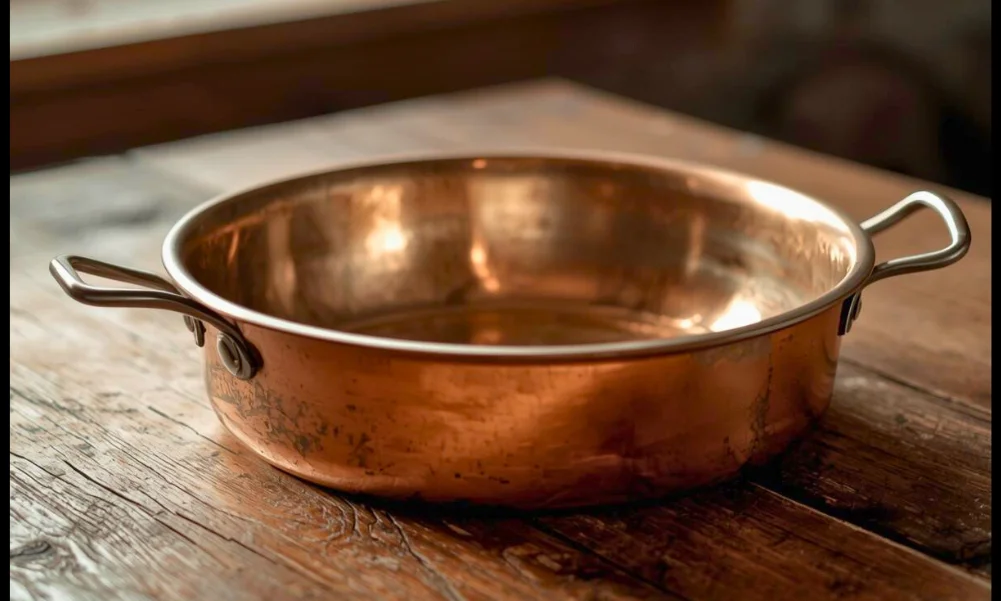
Copper cookware requires more maintenance than most alternatives. This maintenance affects appearance, performance, and longevity.
Copper oxidizes naturally, developing a patina over time. This does not affect cooking performance, but it changes appearance. Some users polish copper regularly to maintain a bright finish. Others accept patina as a normal outcome of use.
Interior care depends on the lining. Stainless steel linings tolerate standard cleaning methods, while tin linings require gentler handling and lower heat exposure. Abrasive cleaning and overheating accelerate wear on both types.
Maintenance is not optional with copper cookware. It is part of the ownership cost and should be considered alongside purchase price.
Durability and Lifespan Realities
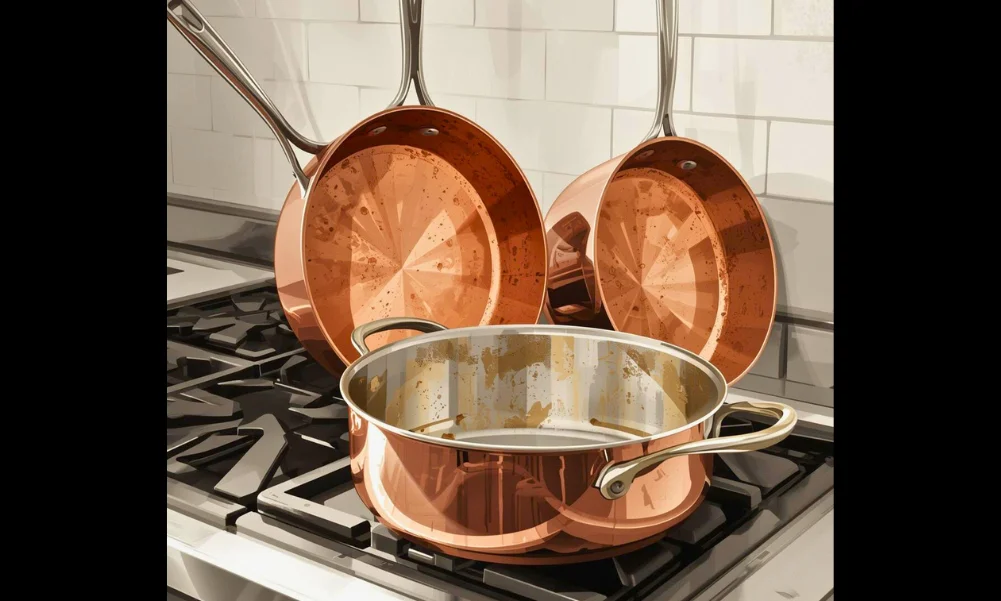
Copper itself is structurally durable. A thick copper body can last decades or longer without losing thermal performance.
The limiting factor is the lining. Stainless steel linings can last many years with minimal intervention. Tin linings wear more quickly and eventually require professional re-lining.
Re-lining is possible and common for high-quality copper cookware, but it adds cost and inconvenience. For buyers, this means copper cookware offers long structural life with periodic functional maintenance, rather than maintenance-free durability.
Cost Trade-Offs Explained
Copper cookware carries a higher price because of material cost, construction requirements, and labor. Copper is expensive as a raw material, and effective cookware requires a thick copper body to deliver meaningful performance benefits. Thin copper layers or decorative exteriors do not provide the same heat control.
Manufacturing copper cookware is also more complex. Bonding a durable lining to copper requires precision to maintain even thickness and long-term stability. These factors increase production cost before branding or positioning is considered.
From a buyer perspective, the value equation depends on use. Copper cookware does not make everyday cooking faster or easier in a general sense. Its value appears when precise temperature control changes outcomes. For cooks who do not regularly encounter those situations, the cost often outweighs the benefit.
Copper cookware should therefore be evaluated as a specialty investment, not as a default upgrade.
Copper Cookware Compared to Alternatives
Copper vs Aluminum Cookware
Both copper and aluminum offer strong heat responsiveness. Aluminum delivers much of this benefit at a significantly lower cost and with less maintenance.
Copper remains superior in fine-grained control, particularly at low temperature adjustments. Aluminum closes most of the gap for general cooking. For many buyers, aluminum offers better cost-to-performance balance.
Copper vs Stainless Steel Cookware
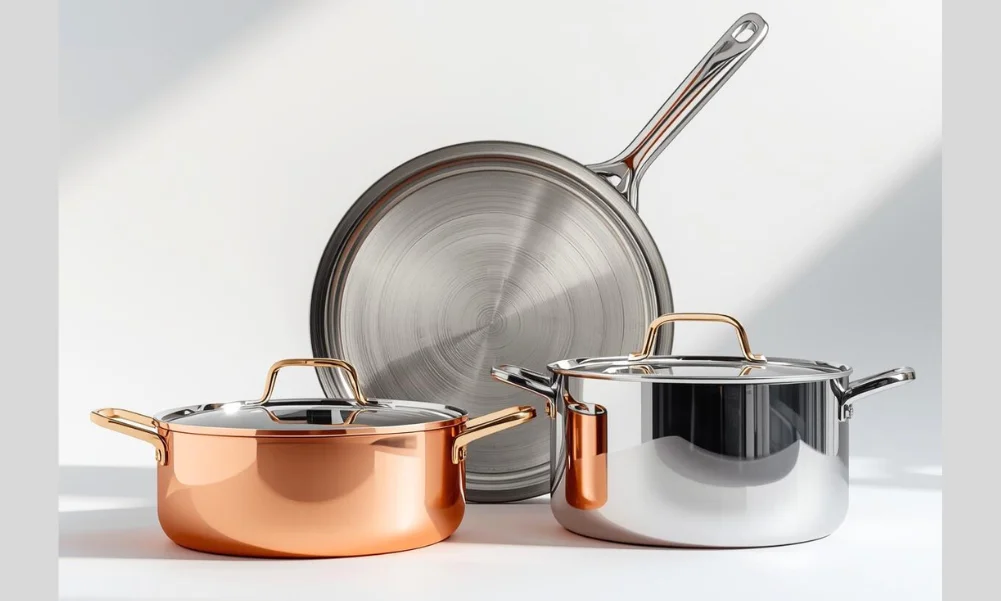
Stainless steel cookware prioritizes durability, versatility, and low maintenance. Its heat responsiveness is slower, especially without aluminum or copper cores.
Copper excels at control but requires more attention and care. Stainless steel excels at reliability and range. The choice depends on whether precision or flexibility matters more.
Copper vs Carbon Steel
Carbon steel offers fast heating, durability, and high-heat tolerance, with a steeper learning curve related to seasoning. Copper offers precision without seasoning but limits high-heat use depending on the lining.
Carbon steel rewards adaptability and resilience. Copper rewards attention and restraint. They serve different cooking personalities.
Who Copper Cookware Is Best Suited For
Copper cookware suits cooks who value temperature control and are willing to adjust habits to maintain performance. It aligns well with sauce work, confectionery, and dishes where subtle heat changes matter.
It is less suited to high-volume cooking, high-heat searing, or kitchens where cookware is treated interchangeably. Copper benefits from intentional use rather than routine repetition.
For many households, copper cookware works best as one or two targeted pieces, rather than a full set.
Common Myths and Marketing Claims
One common myth is that copper cookware is only for professionals. In reality, it is accessible to any cook willing to learn its behavior.
Another misconception is that copper cookware is unsafe. When properly lined and maintained, it is no more hazardous than other cookware types.
A third claim is that pure copper is always better. In practice, lining quality and thickness matter more than purity alone.
How Copper Cookware Fits Into a Balanced Kitchen
Copper cookware occupies a narrow but meaningful role. It does not replace stainless steel, cast iron, or nonstick cookware. It complements them.
When chosen deliberately, copper cookware offers clarity and control that few materials match. When chosen indiscriminately, it adds cost and maintenance without clear benefit.
For buyers, the decision comes down to whether precision cooking is a regular need or an occasional curiosity. Copper cookware rewards the former and rarely satisfies the latter.