Quick Answer
Heating empty cookware concentrates thermal stress because heat has no food or liquid to absorb energy. This concentrated stress affects shape, surface stability, and attachment points before creating safety concerns. Repeated empty heating matters more than a single brief exposure.
These safety considerations also influence which cookware performs best overall, especially when choosing the best cookware for everyday use.
What “Empty” Means in Cooking Terms
In cooking terms, empty cookware refers to a pan or pot heated without food or liquid inside. Without contents, heat energy remains concentrated within the cookware structure rather than dispersing outward.
Food, oil, or liquid normally absorbs part of the incoming energy. That absorption slows temperature rise and distributes stress more evenly across the cookware.
When cookware is empty, this buffering effect is absent. As a result, the base and walls experience faster and less balanced thermal expansion.
This difference explains why cookware behaves differently before ingredients are added.
How Heat Behaves in Empty Cookware
When cookware is heated empty, energy accumulates at contact points first. The base receives intense input before heat spreads evenly through the rest of the material.
As temperature rises, expansion occurs unevenly across the cookware surface. Areas closest to the heat source expand faster than surrounding sections.
This imbalance creates internal stress. Over time, repeated stress alters how cookware responds to heat and load. These changes develop mechanically rather than chemically.
Structural Effects of Empty Heating
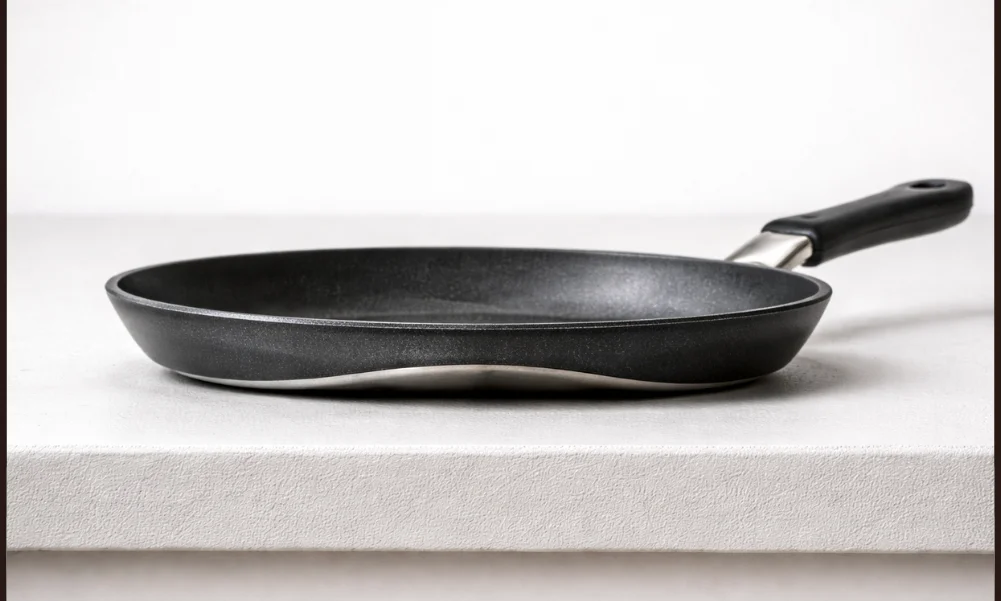
Empty heating primarily affects cookware structure rather than immediate safety. The most common changes involve shape stability, surface condition, and attachment reliability.
Uneven expansion can lead to gradual base distortion. This distortion reduces flat contact and contributes to instability, as explored in cookware warping causes and prevention.
Surface coatings experience higher strain without contents to moderate temperature rise. This strain can shorten performance lifespan without indicating danger.
Handle attachments also absorb stress as materials expand and contract at different rates. Attachment behavior under heat is discussed further in riveted vs welded cookware handles.
These effects usually appear incrementally rather than during a single heating event.
Material-Specific Response to Empty Heating
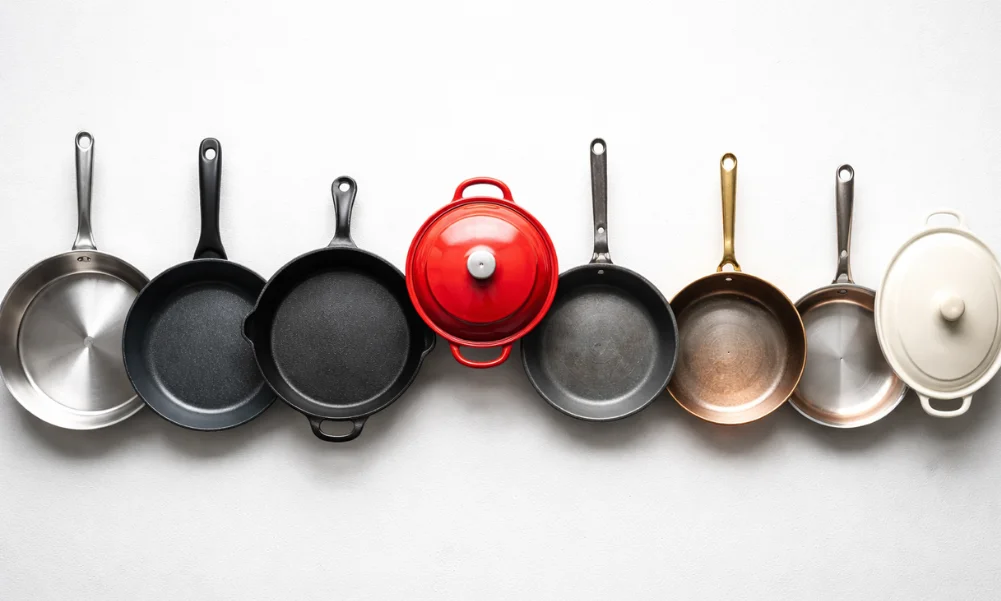
Different cookware materials respond to empty heating in distinct ways. These differences reflect construction, thickness, and surface treatment rather than brand or price.
Stainless Steel Cookware
Stainless steel cookware tolerates high temperatures structurally, but empty heating changes how stress distributes across the base. Without contents, heat concentrates at the center before spreading outward through the metal layers.
Thin or uneven bases expand faster in localized areas. Over time, this pattern increases the likelihood of gradual distortion rather than immediate damage.
Multi-layer construction moderates this effect by spreading heat more evenly. When distortion develops, it reflects mechanical stress accumulation, as described in cookware warping causes and prevention.
Stainless steel usually shows functional changes before any safety concerns emerge.
Non-Stick Cookware
In non-stick cookware, the surface coating becomes the limiting factor during empty heating. Coatings experience higher thermal strain without food or liquid to absorb energy.
Repeated empty heating accelerates surface instability. This often appears as reduced release performance or uneven heating rather than visible damage.
Structural safety typically remains intact at this stage. Replacement decisions usually relate to surface condition, as outlined in when to replace non-stick cookware.
This behavior explains why coating performance declines before base materials weaken.
Aluminum Cookware
Aluminum cookware responds quickly to heat due to high conductivity. When heated empty, temperature rises rapidly with limited resistance.
This rapid expansion places stress on the cookware’s shape stability. Over repeated exposure, permanent deformation becomes more likely than sudden failure.
Thicker aluminum distributes stress more evenly than thin stamped designs. Safety context for aluminum behavior is discussed in is aluminum cookware safe for everyday use.
Most concerns relate to shape changes rather than material composition.
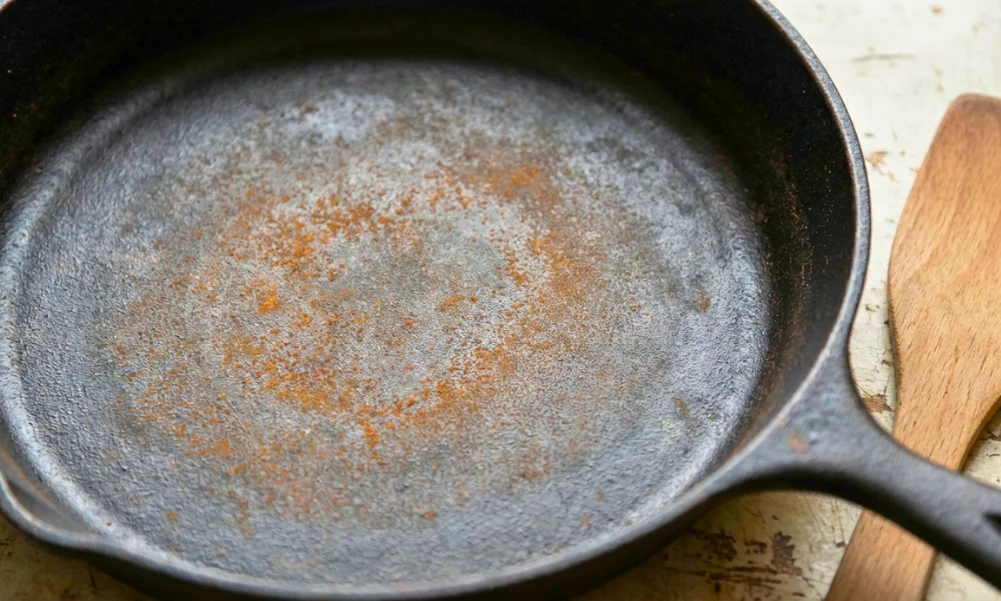
Cast Iron and Carbon Steel Cookware
Cast iron and carbon steel tolerate high heat better than many other materials. Their mass allows heat to spread gradually once temperature equalizes.
Empty heating primarily increases thermal shock risk rather than warping risk. Rapid expansion or contraction places stress on rigid structures.
Cast iron tends to crack when limits are exceeded. Carbon steel, being thinner, shows deformation sooner under uneven stress.
These differences are examined further in carbon steel vs cast iron cookware. Structural changes usually develop before safety becomes an issue.
Ceramic-Coated Cookware
Ceramic-coated cookware experiences stress at the coating level during empty heating. The coating expands differently from the metal beneath it.
Repeated exposure weakens adhesion over time. This results in declining surface performance rather than structural instability.
The underlying metal base continues to govern overall safety. Material behavior is explained further in ceramic cookware explained.
Glass and Stone Cookware
Glass and stone cookware respond poorly to empty heating due to thermal shock sensitivity. Without contents, temperature differences develop rapidly across the surface.
This uneven expansion creates internal stress. Cracks typically form before complete failure occurs.
These characteristics are discussed in glass cookware heat safety. Damage usually appears visibly before cookware becomes unsafe to handle.
Transition Note
Across materials, empty heating accelerates wear patterns that normally develop more slowly. Longevity is affected first, while safety implications emerge later.
Empty Heating Compared With Normal Cooking Heat
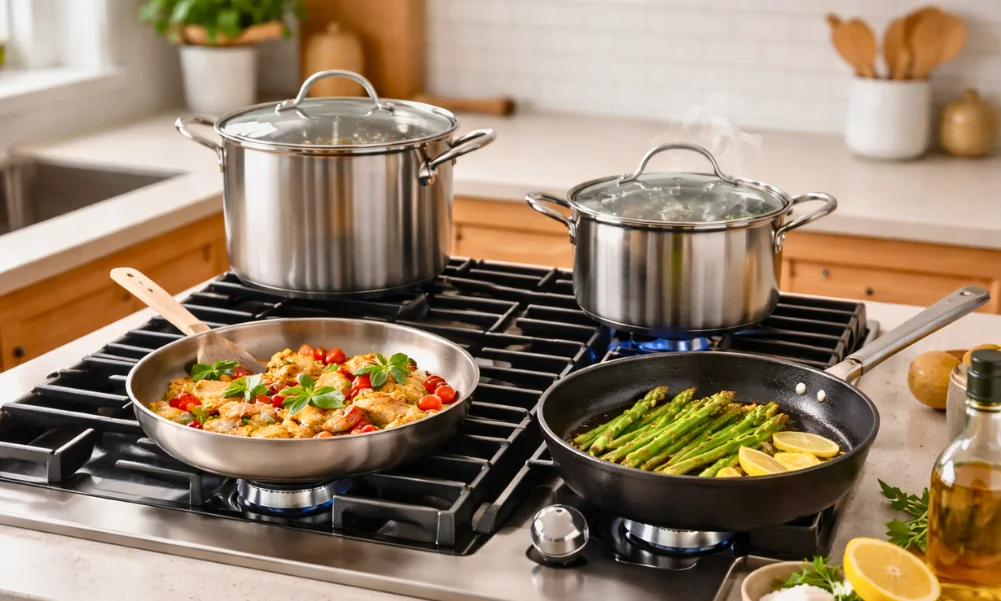
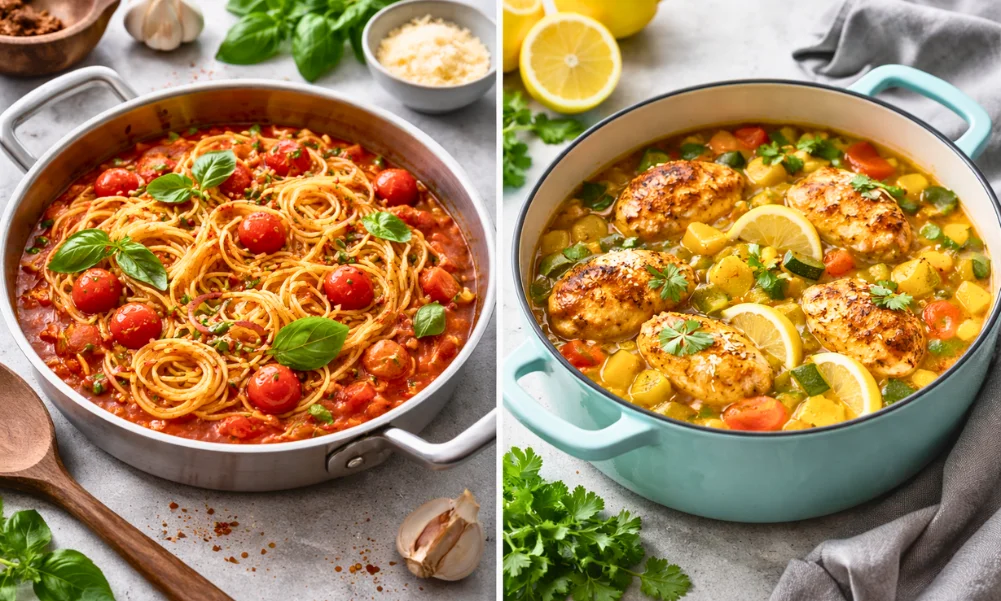
Empty heating creates different stress conditions than normal cooking. During typical cooking, food or liquid absorbs energy and redistributes heat across the cookware surface.
This buffering effect slows temperature rise and reduces localized expansion. As a result, stress spreads more evenly through the base and walls.
When cookware is empty, this moderation does not occur. Heat accumulates faster at contact points and edges, increasing internal strain.
This difference explains why cookware may tolerate high heat during cooking but show wear when heated empty. The behavior reflects stress distribution rather than absolute temperature.
Longevity and Safety Implications of Empty Heating

Empty heating affects cookware lifespan before it introduces safety concerns. Most changes develop gradually through repeated exposure rather than a single event.
Surface wear, base distortion, or attachment strain often appear first. These changes reduce performance predictability without immediately compromising safety.
Clear distinctions between wear and safety are discussed in how long should cookware last. Mechanical warning signs that indicate safety relevance are outlined in signs your cookware is no longer safe to use.
Understanding this sequence helps separate normal aging from conditions that require closer attention.
Modern Stovetops and Empty Heating Stress
Modern stovetops deliver heat faster than many older cooking systems. This increased energy transfer reduces the time cookware has to distribute heat evenly.
Induction cooking intensifies this effect by generating heat within the cookware itself. Empty cookware reaches high stress conditions more quickly under these circumstances.
Design limitations become apparent sooner, particularly in thinner or uneven cookware. This behavior is explored further in what is induction cookware and how does it work and induction cooking mistakes damage cookware.
The heat source does not create damage independently. It exposes how cookware responds to concentrated energy delivery.
Common Misunderstandings About Empty Heating
Empty heating is often misunderstood as immediately damaging or unsafe. In practice, most cookware tolerates brief exposure without lasting consequences.
Smoke during empty heating does not automatically indicate structural failure. It more often reflects surface conditions changing faster than during buffered cooking.
Discoloration that appears after empty heating is frequently cosmetic. Visual change alone does not determine whether cookware remains safe or functional.
Gradual deformation or instability develops over repeated exposure rather than a single incident. This distinction explains why cookware can appear unaffected before later changes emerge.
Surface appearance and safety should therefore be evaluated separately. Behavior over time provides clearer information than isolated visual cues.
Closing Summary
Heating empty cookware concentrates thermal stress because energy lacks a buffering medium. This stress affects shape stability, surface condition, and attachment reliability before safety becomes relevant.
Repeated empty heating accelerates wear patterns that normally develop more slowly during cooking. Longevity typically declines before cookware reaches conditions that compromise safe use.
Understanding these behavioral differences clarifies why empty heating matters without overstating risk. Cookware responds predictably to stress patterns when evaluated through structure rather than appearance.