Quick Answer
Non-stick cookware should be replaced when the coating no longer performs as intended or shows clear signs of breakdown. Replacement is not based on age, price, or brand reputation. It is based on surface condition and cooking behavior.
Loss of food release, visible peeling, or exposed base metal are practical signals that a non-stick pan has reached the end of its functional lifespan.
Why Non-Stick Cookware Has a Limited Lifespan
Non-stick cookware is designed around a surface coating rather than a permanent cooking material. The base metal, usually aluminum or stainless steel, can last for many years. The non-stick coating cannot.
During normal cooking, the coating experiences repeated heat cycles, utensil contact, and cleaning abrasion. Each cycle causes small changes that are not immediately visible. Over time, these changes reduce the coating’s ability to release food evenly and consistently.
This limited lifespan reflects how non-stick coatings differ from other cookware materials in structure and durability, a distinction explained in Cookware Types Explained: Materials, Uses, and Limitations.
This wear is expected. It is not a defect or a sign of misuse by default. Non-stick coatings are engineered for convenience and low friction, not indefinite durability. In practical terms, non-stick cookware behaves more like a consumable surface than a lifetime tool.
Understanding this helps reset expectations. Replacing non-stick cookware is not a failure of care. It is the normal conclusion of its design purpose.
What “Replacement” Actually Means for Non-Stick Cookware
Replacement does not mean the pan is unsafe the moment it looks imperfect. It means the cookware no longer performs its primary function reliably.
There is an important difference between cosmetic aging and functional decline. A pan can show discoloration, light marks, or exterior wear and still cook well. At the same time, a pan can look acceptable while food begins to stick unpredictably or heat becomes uneven due to coating breakdown.
For buyers, the most useful question is not “How old is this pan?” but “Does it still behave the way non-stick cookware should?” When that behavior changes in a way that affects cooking control, replacement becomes a practical decision rather than a precautionary one.
A helpful way to think about this is to compare non-stick cookware to running shoes. The shoes may still look intact, but once traction and support are gone, performance and safety both decline. Appearance lags behind function.
Clear Signs Non-Stick Cookware Should Be Replaced
Non-stick cookware gives practical signals when it is nearing the end of its useful life. These signals are based on behavior and surface condition rather than assumptions or fear-based thresholds.
Loss of Non-Stick Performance
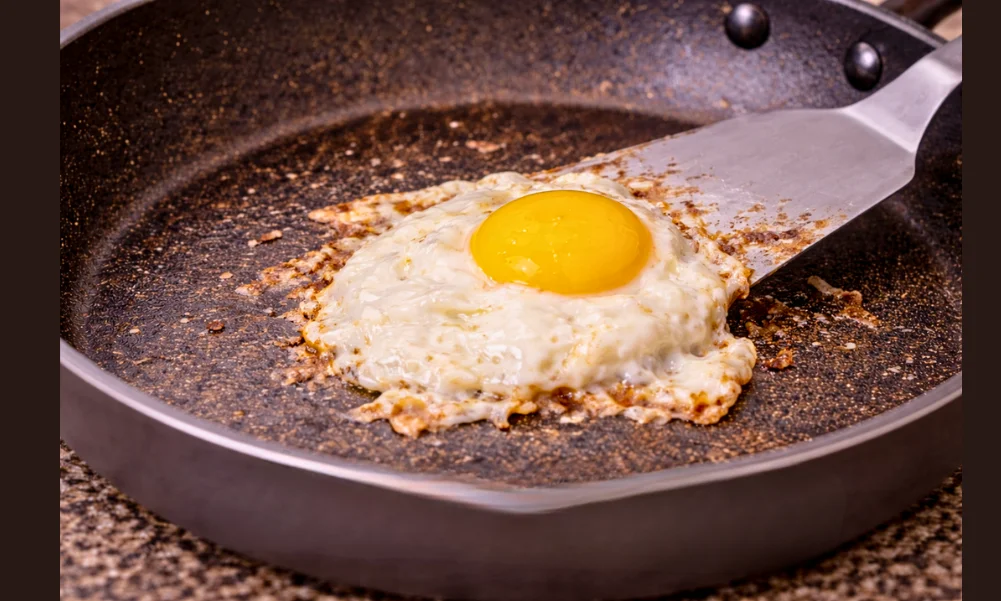
The most reliable indicator is a consistent loss of food release. When food begins to stick despite normal heat levels and appropriate oil use, the coating is no longer functioning as designed.
This change is often gradual. Eggs may start to drag instead of slide. Delicate foods may tear when flipped. These are not technique failures. They reflect a surface that has lost its low-friction properties.
When this behavior becomes repeatable rather than occasional, the coating has moved beyond normal wear.
Visible Coating Damage
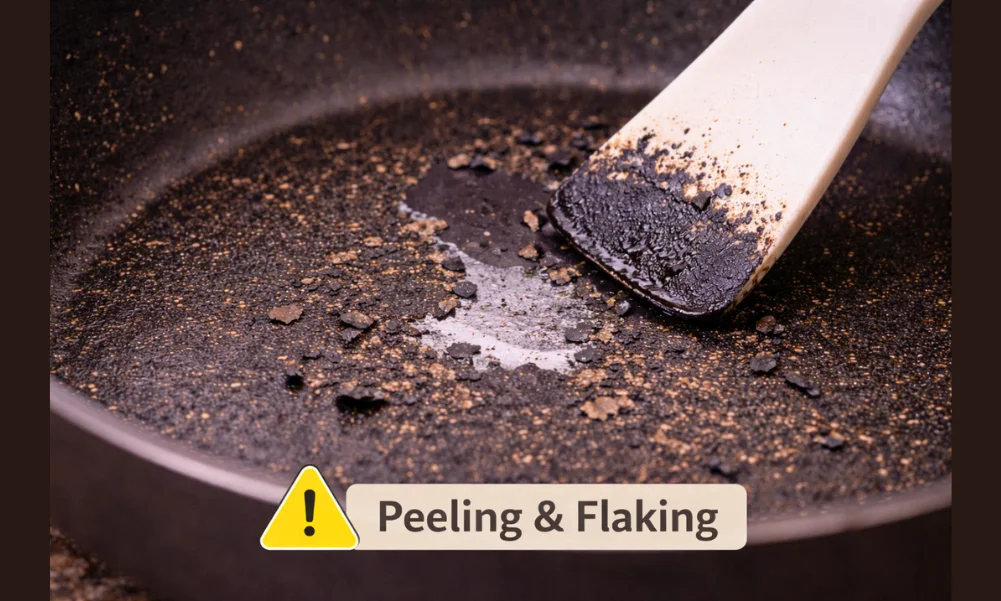
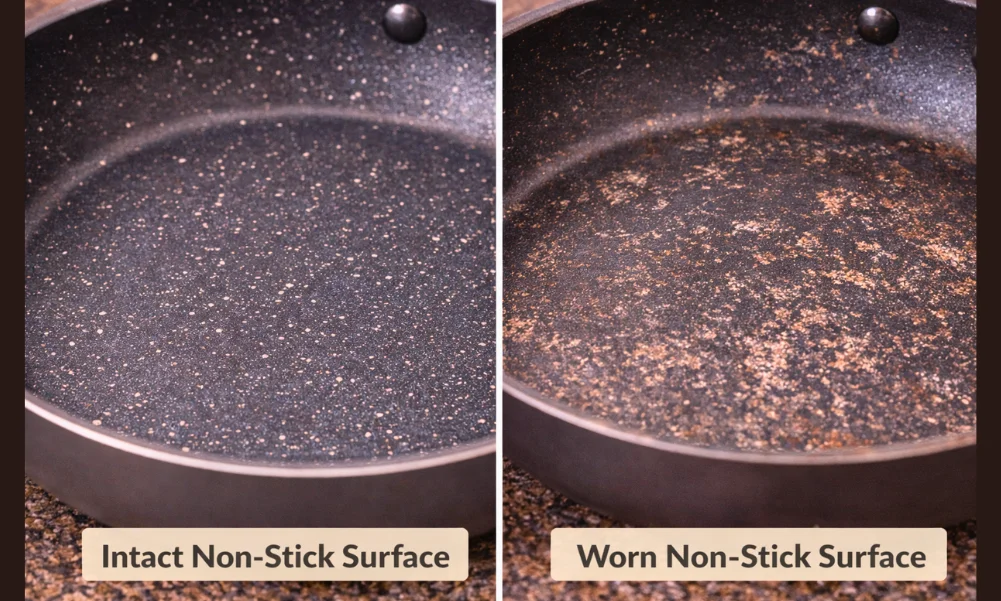
Peeling, flaking, or lifting of the coating is a clear replacement signal. These changes indicate that the coating has separated from the base material and can no longer provide a stable cooking surface.
Once coating failure reaches this stage, repair is not reliable or safe, a limitation discussed further in Can You Repair Scratched Cookware?.
Exposed base metal is another definitive endpoint. At that stage, the cookware is no longer non-stick in function, regardless of how much of the surface remains intact.
These forms of damage are structural, not cosmetic. Once present, performance does not recover.
Persistent Surface Roughness
A healthy non-stick surface feels smooth and uniform. When the surface becomes rough, uneven, or patchy, even without obvious peeling, cooking behavior changes.
Roughness increases friction and creates localized hot spots. This often shows up as uneven browning or sticking in specific areas of the pan. When this texture change is persistent, replacement is usually the more reliable option.
What Does Not Automatically Require Replacement
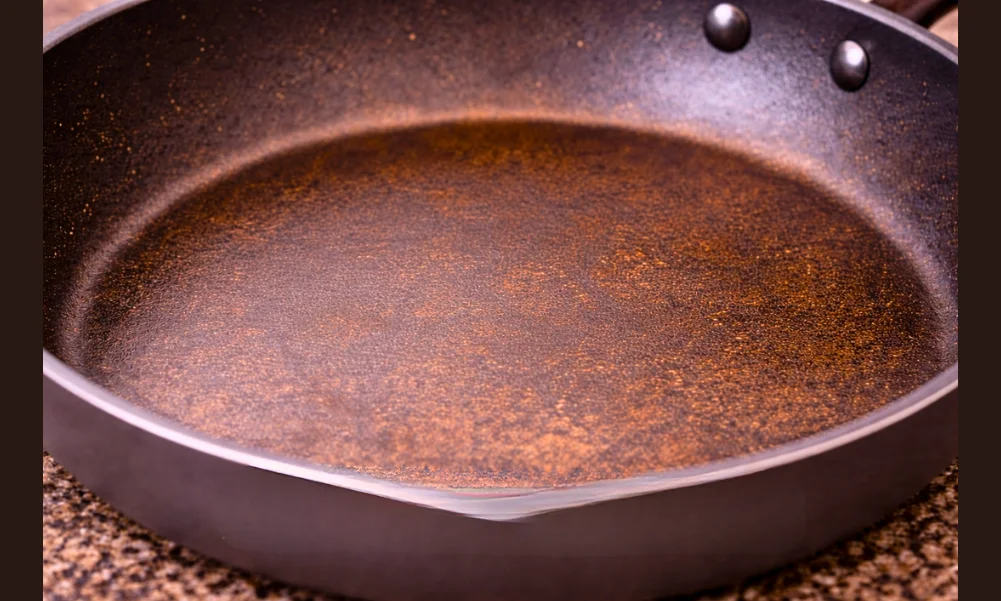
Not every visible change means a non-stick pan has failed. Some signs look concerning but do not affect function or safety on their own.
Discoloration is common, especially on light-colored coatings. Heat exposure and food oils can darken the surface without changing its performance. Staining alone does not indicate coating breakdown.
Light surface marks that do not penetrate the coating are also common. These marks may alter appearance, but they do not necessarily change cooking behavior.
Exterior wear, including scratches or heat marks on the outside of the pan, does not affect non-stick performance. Replacement decisions should focus on the cooking surface, not the exterior.
The key distinction is whether the pan still cooks predictably. If it does, cosmetic aging alone is not a reason to replace it.
Safety Context Without Fear Language
Modern non-stick cookware is designed to be stable under normal cooking conditions. Safety concerns are tied to use and condition, not to age alone.
An intact coating that is used within recommended heat ranges does not require replacement for safety reasons. Conversely, a damaged coating should be replaced because it no longer performs as intended, not because it creates an emergency.
This condition-based approach aligns with how non-stick cookware safety is explained in What Is the Safest Non-Stick Cookware for Home Cooking?, where use and surface integrity matter more than age.
This framing matters. Calm, evidence-based decisions lead to better outcomes than precautionary disposal driven by uncertainty.
A useful mental model is to treat non-stick cookware as condition-based equipment. When the condition supports its function, continued use is reasonable. When it does not, replacement is practical.
Common Misconceptions About Replacing Non-Stick Cookware
One common misconception is that any scratch makes a pan unsafe. In reality, light surface marks that do not breach the coating usually affect appearance more than performance.
Another misconception is that higher-priced non-stick cookware should last indefinitely. Price can reflect construction quality, but it does not change the fundamental limits of coating lifespan.
A third misunderstanding is that peeling only matters if food still releases. Peeling indicates coating failure even if some non-stick behavior remains. At that point, replacement is about predictability, not just convenience.
Factors That Shorten Non-Stick Lifespan
Several everyday habits consistently reduce non-stick lifespan.
High heat accelerates coating degradation, especially when pans are preheated empty. Metal utensils introduce localized abrasion. Dishwashers combine heat, chemicals, and movement in ways that increase wear. Stacking pans without protection adds repeated surface friction.
These factors do not ruin a pan overnight. They shorten its usable life through accumulation. Awareness, rather than perfection, makes the difference.
How Replacement Fits Into a Balanced Cookware Set
Non-stick cookware works best as a task-specific tool. It excels at low-friction cooking, not at durability.
Using other cookware materials for high-heat tasks, searing, or heavy stirring reduces wear on non-stick surfaces. This rotation extends lifespan and improves overall cooking outcomes.
Replacing non-stick cookware periodically is not wasteful when expectations are aligned. It reflects appropriate use of a convenience-focused material.
Closing Summary
Non-stick cookware should be replaced based on surface condition and cooking behavior, not age or appearance alone. Loss of release, visible coating damage, and persistent surface roughness are the most reliable indicators.
Cosmetic wear does not automatically signal failure. Safety decisions are best made calmly, with attention to how the cookware performs in real use.
When non-stick cookware is treated as a consumable surface rather than a permanent investment, replacement becomes a practical choice rather than a concern-driven one.