Quick Answer
Cookware is no longer safe to use when it becomes unstable, structurally compromised, or unpredictable under heat. Safety issues are usually mechanical rather than chemical and tend to appear gradually. Loose handles, severe warping, cracks, and material separation are the most reliable signals. Cosmetic wear alone does not make cookware unsafe.
This guide focuses on mechanical and behavioral safety signals rather than material chemistry or coating composition.
For how safety standards are defined, see Cookware Safety Certifications Explained.
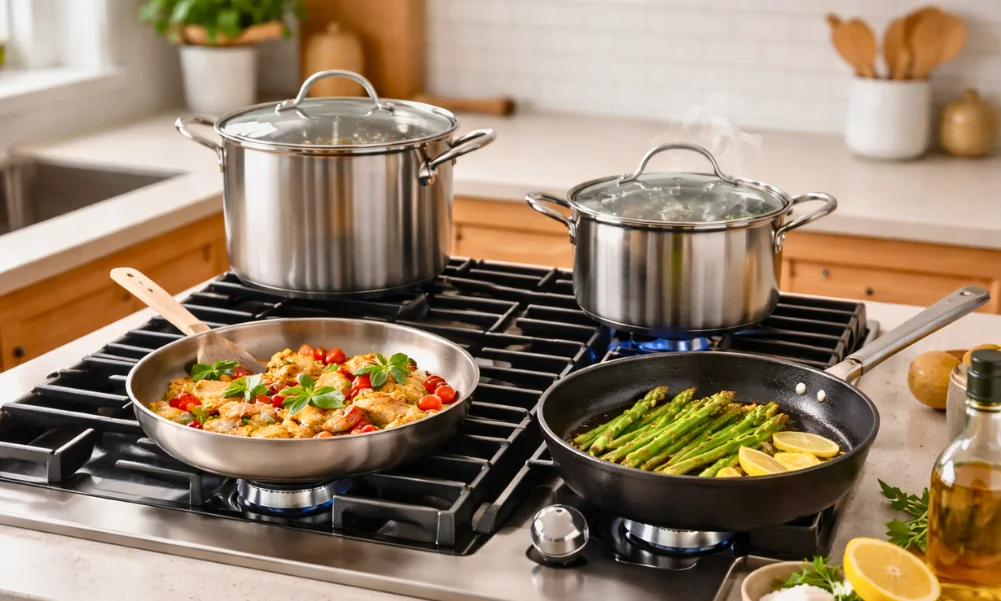
These safety considerations also influence which cookware performs best overall, especially when choosing the best cookware for everyday use.
What “Unsafe Cookware” Actually Means
Unsafe cookware is not defined by age, appearance, or minor wear. It is defined by loss of control.
Cookware is safe when it behaves predictably. It sits flat on the heat source. It supports its own weight when lifted. It maintains its shape as temperature changes. When those conditions change, risk increases, even if the cookware still looks usable.
Many buyers associate safety with surface appearance. Scratches, stains, or discoloration often raise concern. In most cases, these are cosmetic changes that do not affect structural integrity. At the same time, some serious safety issues are easy to overlook because they develop slowly.
A useful way to think about cookware safety is to compare it to a chair. A chair with worn fabric can still be safe. A chair with a loose leg is not. The risk comes from structural failure, not surface aging.
For buyers, the most important safety question is not “Does this look old?” It is “Does this still behave the way stable cookware should?”
These safety behaviors vary by cookware material and construction, which determine how cookware responds to heat and stress, as explained in Cookware Types Explained: Materials, Uses, and Limitations.
Structural Red Flags That Apply to All Cookware
Some safety signals are universal. They apply regardless of material, coating, or price.
Loose or Failing Handles

A handle that moves under load is one of the clearest safety warnings. Even slight movement can worsen quickly as heat and weight stress the attachment points.
Riveted handles may loosen gradually. Welded handles may crack at the joint. Both failure modes reduce control during lifting and pouring, especially when cookware is full and hot.
How and why handles fail over time depends on attachment method and load distribution, which is examined in Riveted vs Welded Cookware Handles: Which Lasts Longer.
Handle issues rarely improve with use. Once movement is noticeable, continued use increases the chance of sudden failure.
Severe Warping or Instability
Cookware that rocks, spins, or fails to sit flat on the cooktop introduces multiple risks. Heat becomes uneven. Spills become more likely. On some surfaces, especially induction or smooth tops, instability reduces heat transfer and increases tipping risk.
Minor movement during heating can be normal for thin cookware. Persistent instability after cooling is not. That behavior indicates permanent deformation.
Persistent instability is a sign of permanent deformation caused by uneven thermal stress, a process explained in Cookware Warping: Causes, Prevention, and Fixes.
Stability matters more than appearance. A pan that looks fine but wobbles is less safe than a pan that looks worn but sits solidly.
Cracks, Splits, or Material Separation
Cracks in metal, glass, or ceramic cookware are structural failures. They change how stress moves through the material and increase the chance of sudden breakage.
In layered cookware, separation between bonded layers is another critical signal. Once layers begin to separate, heat distribution becomes unpredictable and structural strength declines.
These issues cannot be reliably repaired in home kitchens. Continued use shifts risk from manageable to uncertain.
Material-Specific Safety Signals

Some safety issues are tied to how specific materials age and respond to heat. These signals are easier to interpret when viewed in context rather than as isolated flaws.
Non-Stick Cookware
Non-stick cookware becomes unsafe primarily when the coating loses integrity. Peeling, flaking, or bubbling coatings indicate separation from the base material. At that point, cooking behavior becomes unpredictable and replacement is the safer option.
These conditions align with practical replacement guidance outlined in When to Replace Non-Stick Cookware, where surface integrity defines end of safe use.
Loss of non-stick performance alone is not a safety issue. It is a functional one. Safety concerns arise when coating damage is visible or when base metal is exposed in areas that affect stability or heat behavior.
A smooth but worn surface can still be usable. A damaged surface that changes how the pan heats or releases food should not be ignored.
Glass Cookware
Glass cookware does not bend or deform gradually. It fails through accumulated stress.
Chips along edges and hairline cracks weaken the structure even if the cookware still looks intact. Over time, repeated heating and cooling increase the chance of sudden breakage.
Glass cookware that shows cracking or chipping is no longer predictable. Replacement is a matter of risk management rather than appearance.
Cast Iron
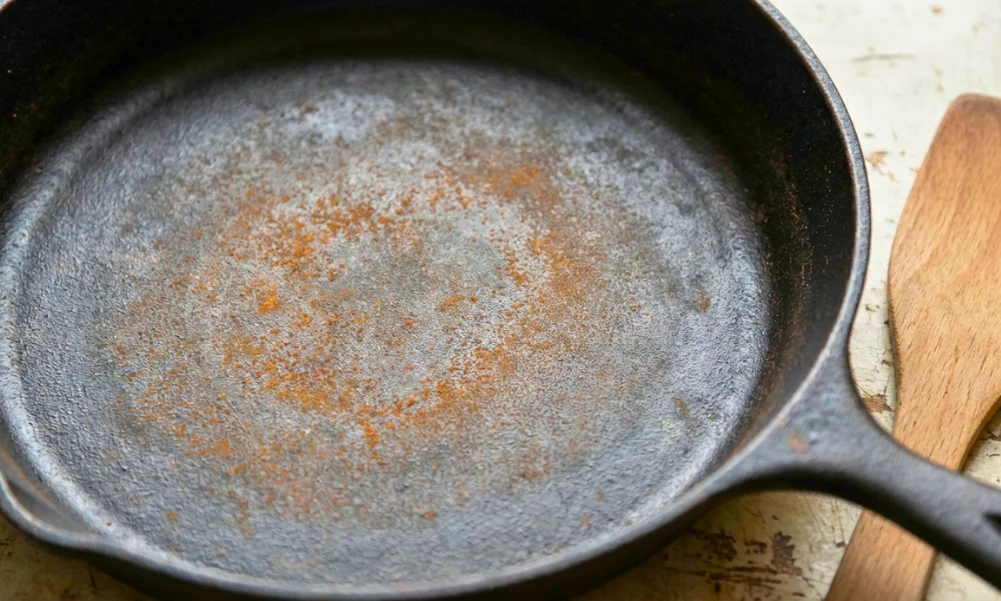
Cast iron safety issues are structural, not cosmetic. Surface rust, seasoning loss, and discoloration are maintenance concerns, not safety concerns.
Cracks in the body or handle are different. Even small cracks can propagate under heat and weight. Once cracked, cast iron should be retired from active use.
A stable, intact cast iron pan remains safe even when it looks heavily used. Structural integrity matters more than surface condition.
Stainless Steel and Clad Cookware
Stainless steel cookware is generally durable, but safety declines when construction layers separate or when handles fail.
Warping that prevents full contact with the heat source increases instability. Separation in multi-layer cookware changes heat behavior and weakens structure.
Visible gaps, bulging, or unusual flex are signals that the cookware no longer behaves as designed.
What Does Not Automatically Mean Cookware Is Unsafe
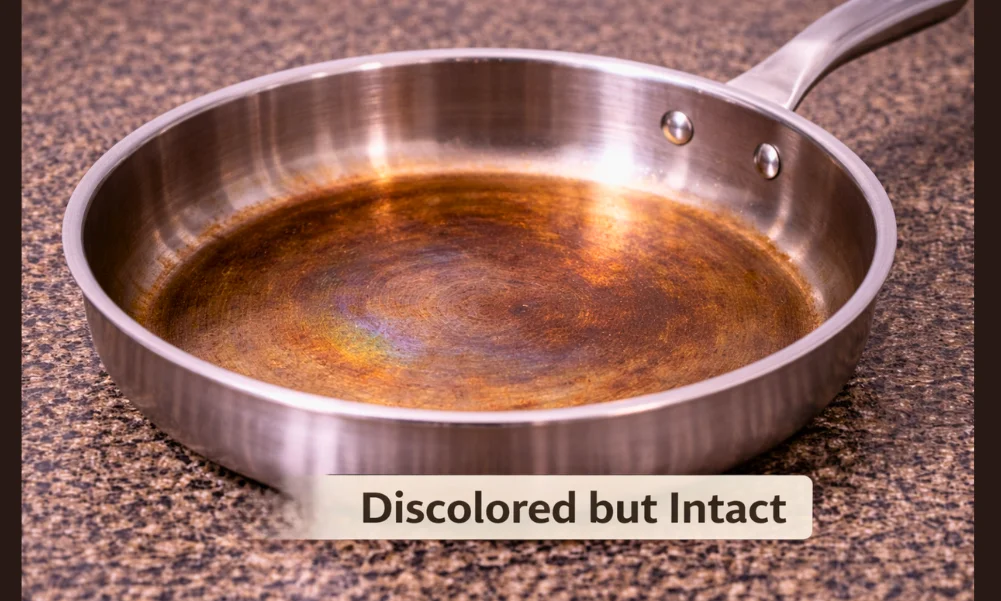
Many visible changes trigger concern but do not indicate danger on their own.
Discoloration from heat or mineral deposits is common, especially on stainless steel. It does not affect structural integrity.
Scratches that do not compromise the structure or coating are often cosmetic. Patina on cast iron or carbon steel is a normal outcome of use, not a safety failure.
Exterior wear rarely affects safety unless it reflects deeper structural damage. Buyers benefit from separating appearance changes from behavior changes.
A simple test helps clarify this distinction. If the cookware remains stable, heats evenly, and supports normal handling, cosmetic aging alone is not a reason to stop using it.
When Repair Is No Longer Appropriate
Some cookware issues can be addressed through maintenance. Others cannot.
Structural damage, including cracks, severe warping, or layer separation, is not reliably repairable. Attempts to fix these issues often introduce new stress points and reduce predictability.
Surface maintenance, such as re-seasoning or cleaning, restores function when the underlying structure is sound. Repair becomes inappropriate when the core integrity is compromised.
A practical rule is to avoid repairs that change how stress moves through the cookware. When structure is altered, safety becomes uncertain.
Common Safety Misconceptions Buyers Have
One misconception is that old cookware is automatically unsafe. Age does not determine safety. Condition does.
Another misconception is that scratches always indicate toxicity. Most scratches affect appearance or performance, not structural safety.
A third misunderstanding is that heavier cookware is inherently safer. Weight can improve stability, but it does not prevent handle failure or cracking.
Clearing these misconceptions helps buyers make calm, informed decisions instead of reactive ones.
How to Make Calm, Evidence-Based Safety Decisions
Regular inspection builds confidence. Checking handle tightness, pan flatness, and surface condition takes little time and prevents surprises.
Stability should be assessed on a flat surface. Handles should be tested gently before lifting heavy cookware. Surfaces should be evaluated for changes in texture or behavior.
These checks support judgment without creating anxiety. Safety decisions become routine rather than urgent.
How Safety Fits Into Long-Term Cookware Ownership
Cookware safety is an ongoing evaluation, not a one-time judgment. Most cookware becomes unsafe slowly, giving users time to respond.
Matching cookware to tasks reduces stress and extends safe use. Using appropriate heat levels and handling habits preserves predictability.
Replacing cookware when function declines is a responsible choice, not an overreaction.
Closing Summary
Cookware is no longer safe to use when it becomes unstable, structurally compromised, or unpredictable under heat. Safety signals are usually visible and mechanical rather than hidden or sudden.
Loose handles, severe warping, cracks, and material separation are the clearest indicators. Cosmetic wear alone does not define risk.
By focusing on function and behavior rather than appearance, buyers can make informed, calm decisions that prioritize safety without unnecessary replacement.