Quick Answer
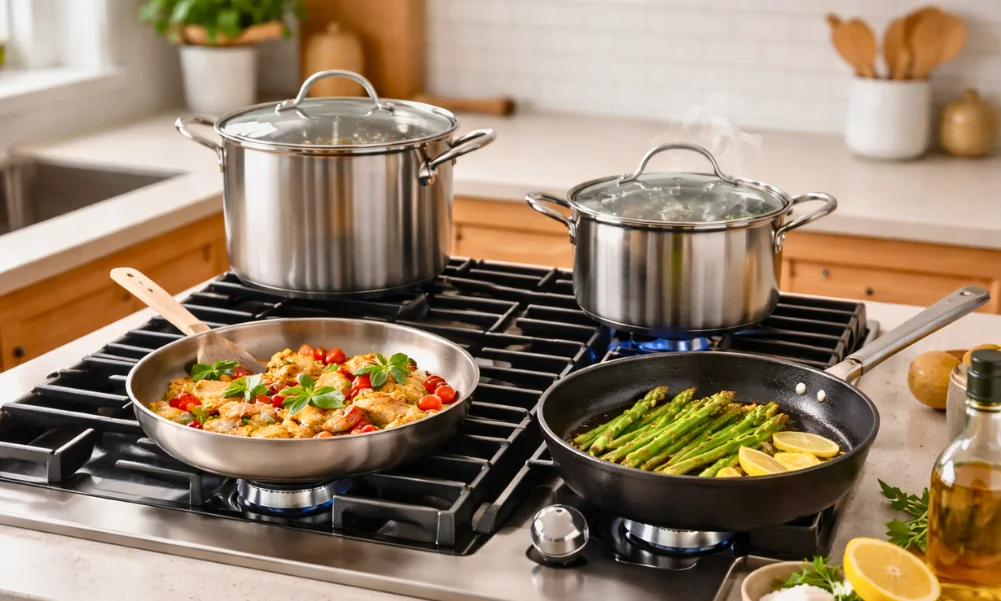
Cookware lifespan depends on material, construction quality, and how it is used. Some cookware, such as non-stick, is designed to wear out over time. Other materials, including stainless steel, cast iron, and carbon steel, can last decades when properly maintained.
Longevity should be evaluated in functional terms, not cosmetic appearance, and expectations should align with each material’s inherent limits.
These safety considerations also influence which cookware performs best overall, especially when choosing the best cookware for everyday use.
What “Cookware Lifespan” Really Means
Cookware lifespan is often misunderstood as how long a pan looks new. In practical terms, lifespan refers to how long cookware performs safely and predictably for its intended use.
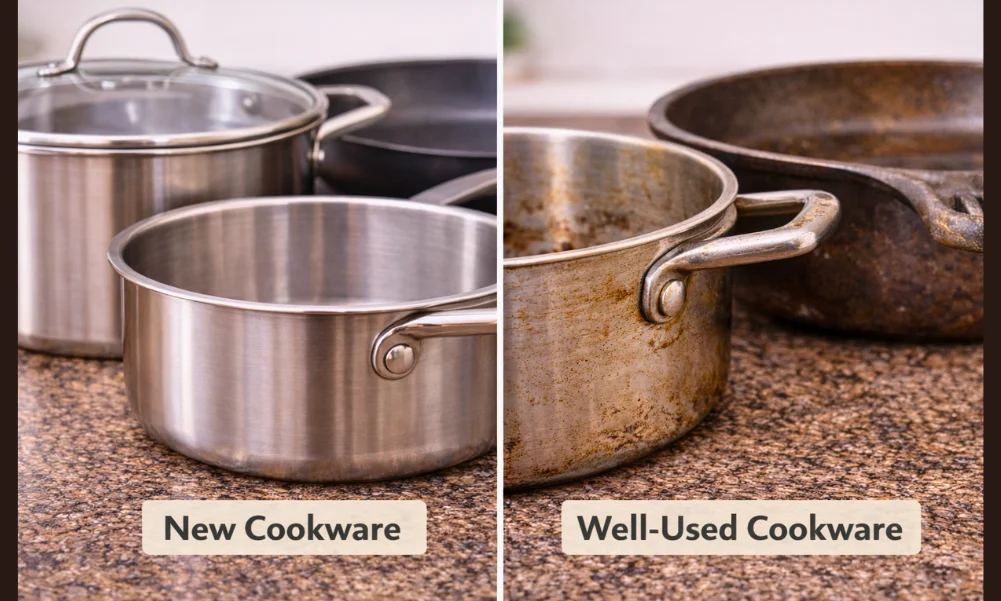
There are two different timelines at play. The first is functional lifespan, which describes how long cookware continues to heat evenly, remain stable, and support normal cooking tasks. The second is cosmetic lifespan, which reflects changes in appearance such as discoloration, scratches, or patina.
These timelines do not always align. Some cookware looks worn long before it stops functioning. Other cookware can appear intact while its performance has already declined. Non-stick cookware, in particular, often reaches the end of its functional lifespan while still appearing acceptable.
These differences in lifespan reflect how various cookware materials and constructions behave under heat and stress, a foundation explained in Cookware Types Explained: Materials, Uses, and Limitations.
Safety is another layer. Loose handles, warped bases, or compromised coatings can shorten usable lifespan regardless of how the cookware looks. In these cases, replacement is about risk management rather than aesthetics.
A useful way to think about cookware lifespan is as fit for purpose over time. When cookware no longer performs its role reliably, its lifespan has effectively ended, even if it remains visually intact.
Expected Lifespan by Material Type
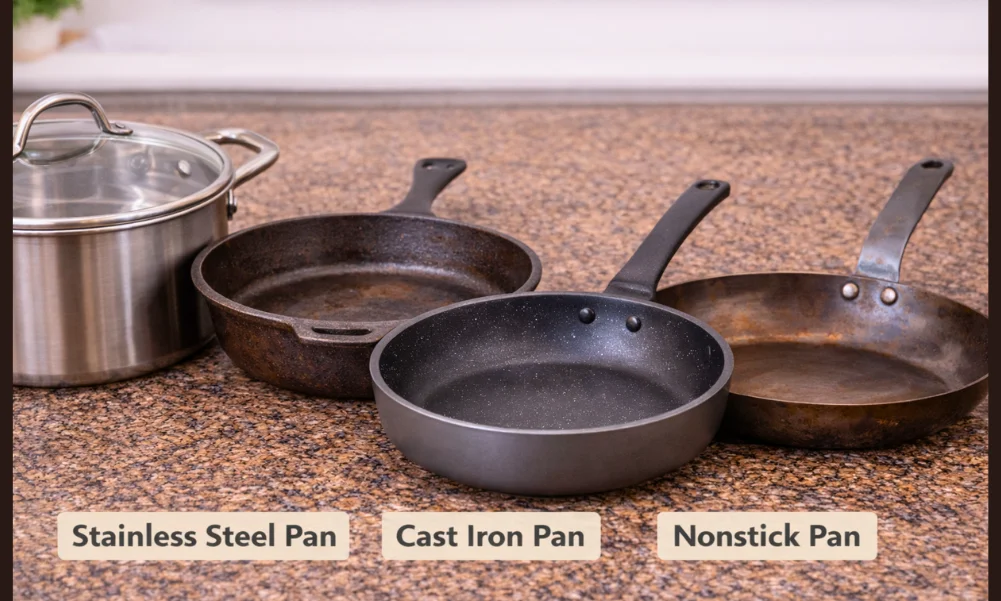
Cookware does not age uniformly across materials. Each material has a different failure point, and lifespan expectations should reflect those limits rather than ideal conditions.
Non-Stick Cookware
Non-stick cookware has the shortest functional lifespan by design. The limiting factor is the coating, not the base metal. Under normal home use, non-stick performance gradually declines as the surface wears, even when the pan looks intact.
Because non-stick lifespan is driven by coating condition rather than age, replacement decisions are discussed in more detail in When to Replace Non-Stick Cookware.
For many households, effective non-stick lifespan falls in the short to moderate term range. Gentle heat, non-metal utensils, and careful cleaning can extend usability, but eventual replacement should be expected. Once food release degrades or the coating shows visible damage, the functional lifespan is over.
Stainless Steel Cookware
Stainless steel cookware has a long functional lifespan when construction is sound. Because there is no coating to wear away, performance depends on structural integrity rather than surface condition.
Well-constructed stainless steel cookware can remain functional for decades. Cosmetic changes such as discoloration or surface marks do not affect performance. Lifespan usually ends only if the cookware warps severely, the core separates, or handles fail.
Cast Iron Cookware
Cast iron cookware often outlasts its original owner. Its thickness and structural simplicity make it extremely durable. With basic care, cast iron can remain functional indefinitely.
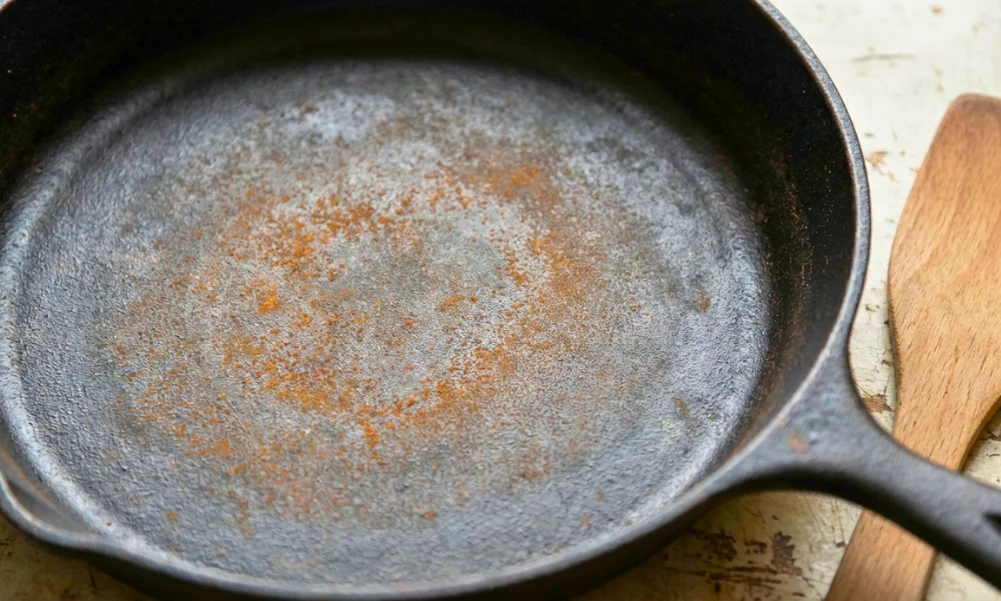
Rust, surface damage, and seasoning loss are usually reversible. Lifespan is limited mainly by cracking from extreme thermal shock or physical impact, which is uncommon under normal use.
Carbon Steel Cookware
Carbon steel shares many durability traits with cast iron but in a lighter form. It can last for many years to decades when properly seasoned and not abused.
Warping is the most common lifespan limiter, particularly in thinner pans exposed to high heat. When shape and stability are preserved, carbon steel remains functional long after cosmetic wear appears.
Severe warping is one of the most common structural reasons cookware reaches the end of its usable life, a process explained in Cookware Warping: Causes, Prevention, and Fixes.
Copper Cookware
Copper cookware’s lifespan is tied to its lining rather than the copper itself. The copper body can last for generations. The interior lining, whether stainless steel or tin, determines functional longevity.
Stainless-lined copper cookware can last decades with minimal intervention. Tin-lined cookware requires periodic re-lining, which extends lifespan but adds maintenance cost. With upkeep, copper cookware can remain functional for a very long time.
Glass Cookware
Glass cookware does not wear gradually in the same way metal cookware does. Its lifespan is limited by accumulated stress and physical damage rather than surface degradation.
With careful handling, glass cookware can last many years. Once chipped, cracked, or significantly scratched, replacement is the safer option, even if the cookware still appears usable.
Factors That Shorten Cookware Lifespan
Across all materials, certain behaviors consistently reduce lifespan.
High heat applied too quickly increases thermal stress. Rapid cooling, such as placing hot cookware under cold water, accelerates deformation and cracking. Improper utensil use damages coatings and surfaces. Stacking cookware without protection increases abrasion and structural stress.
These factors often interact. Lifespan rarely ends because of one mistake. It shortens through repeated, avoidable stress.
When Cookware Should Be Replaced
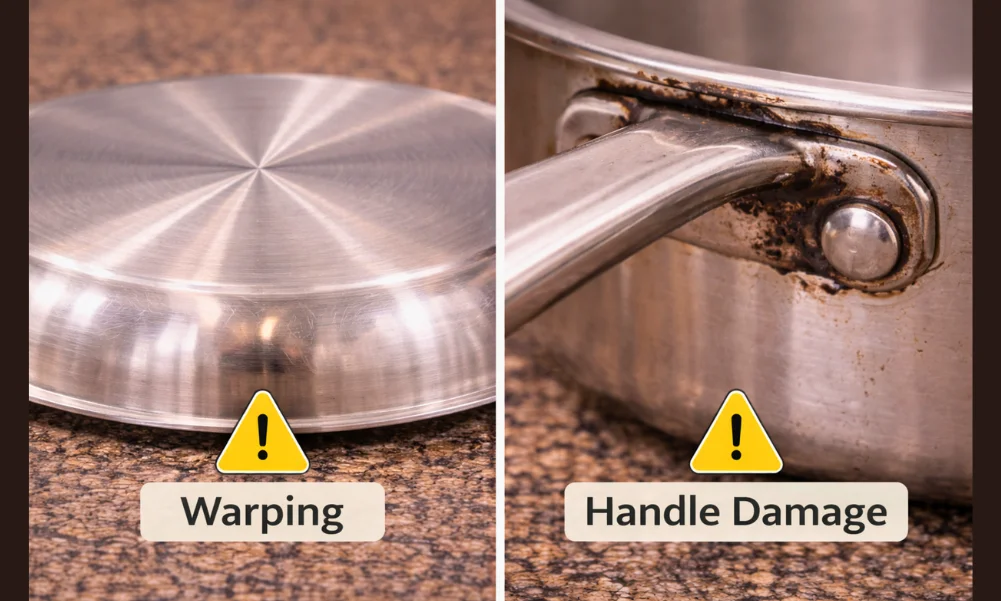
Cookware should be replaced when safety or performance is compromised. Indicators include unstable bases, loose or cracked handles, severe warping, or loss of intended surface behavior.
For coated cookware, loss of function often precedes visible failure. For uncoated cookware, visible wear may not indicate the end of lifespan at all.
Replacement decisions are best based on function and stability, not appearance alone.
When Cookware Can Be Restored
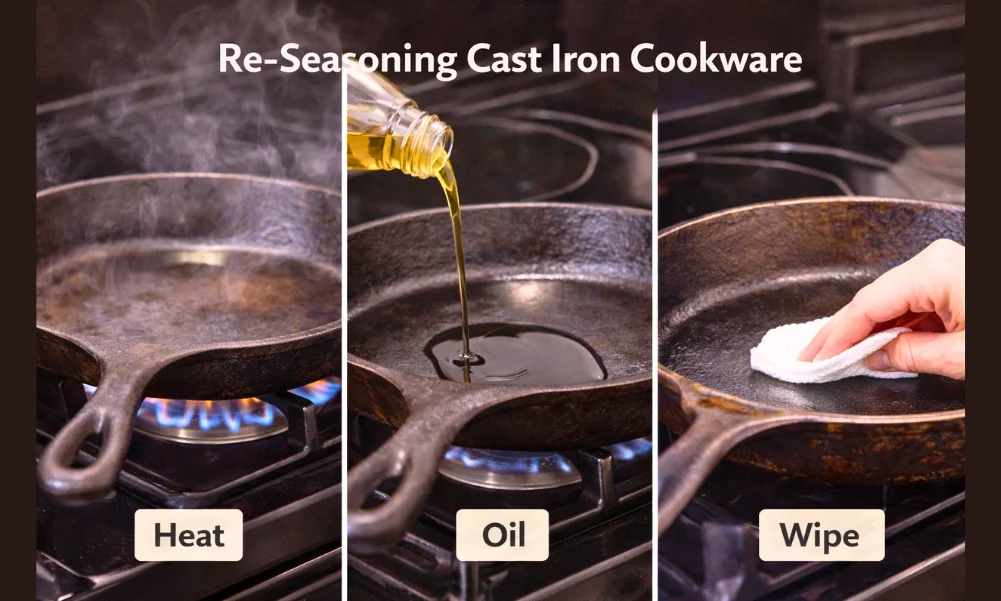
Some cookware can be restored rather than replaced. Cast iron and carbon steel can often be re-seasoned. Copper cookware can be re-lined. Stainless steel can usually be cleaned and continued in service.
Restoration makes sense when the core structure remains sound. When structural integrity is compromised, restoration is no longer reliable.
Restoration is only reliable when the underlying structure remains intact, a distinction also addressed in Can You Repair Scratched Cookware?.
How Lifespan Should Influence Buying Decisions
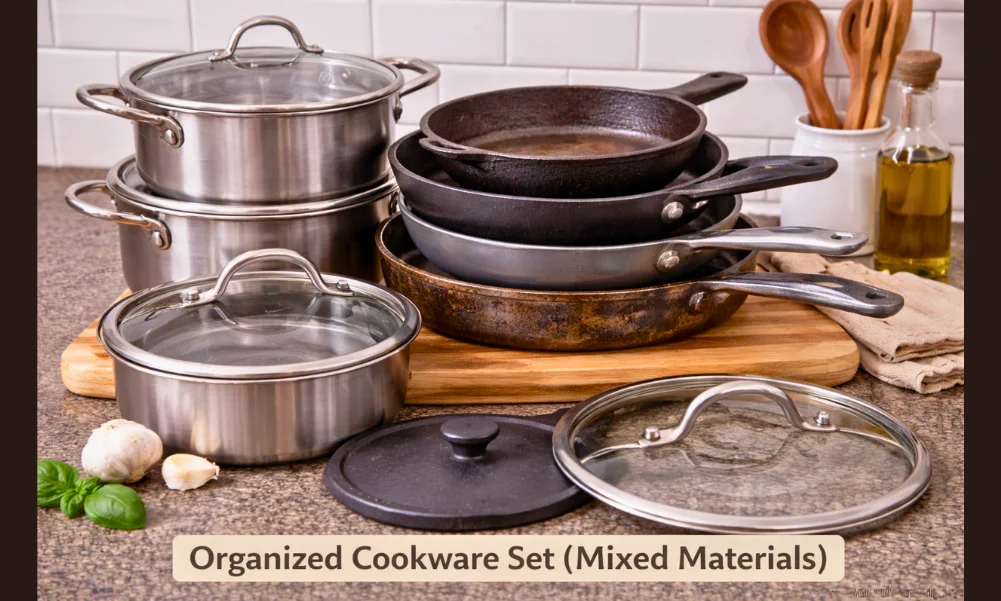
Understanding lifespan helps align expectations with materials. Shorter lifespan cookware can still be appropriate when convenience matters. Long lifespan cookware rewards patience and technique.
Buyers benefit from mixing materials rather than expecting one type to do everything. Longevity improves when cookware is matched to how it will actually be used.
Closing Summary
Cookware lifespan varies widely by material and use. Some cookware is meant to be replaced periodically. Other cookware can last for decades or longer with proper care.
The key is understanding what limits each material and recognizing when cookware no longer performs its role safely or effectively. When expectations align with material behavior, cookware decisions become clearer and more sustainable.