Quick Answer
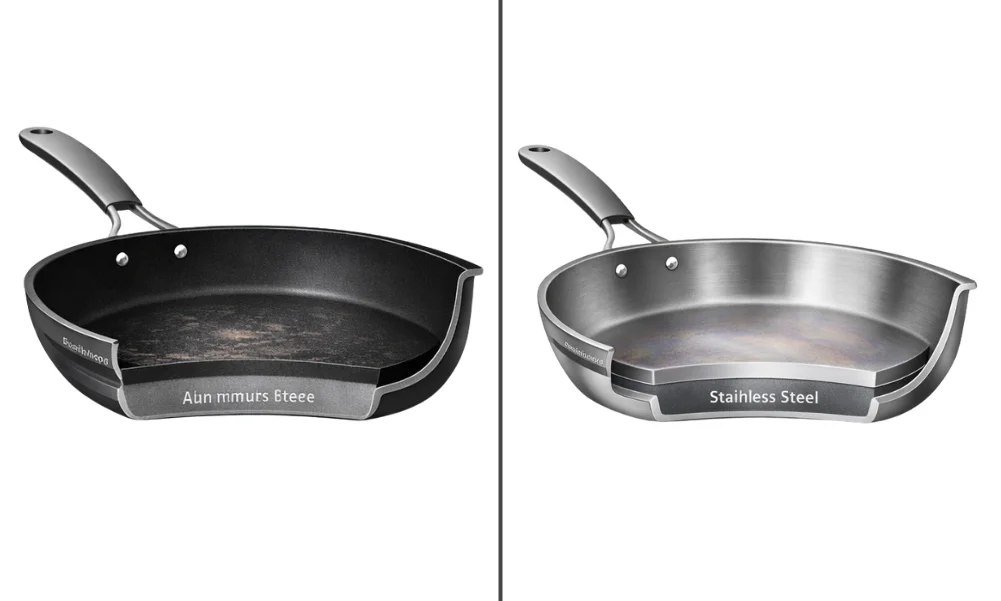
Calphalon cookware is offered primarily in two construction types: hard-anodized aluminum and stainless steel. These materials behave differently under heat, wear, and cleaning.
Hard-anodized aluminum emphasizes fast heat response and reduced sticking through surface treatment, while stainless steel emphasizes durability, heat tolerance, and structural longevity.
Safety and lifespan depend on surface condition, thickness, and heat management, not brand identity. Neither construction replaces the other; they serve different roles.
Why Calphalon Uses Two Distinct Construction Approaches

Calphalon does not represent a single cookware material system. Instead, it applies different construction strategies to meet different cooking behaviors.
Hard-anodized aluminum and stainless steel rely on fundamentally different material properties. Aluminum prioritizes conductivity and responsiveness. Stainless steel prioritizes durability and surface stability.
Understanding this split prevents misclassification. Calphalon cookware fits within existing cookware categories rather than defining a new one. Broader classification context is explained in Cookware Types Explained.
Hard-Anodized Aluminum: Construction and Behavior
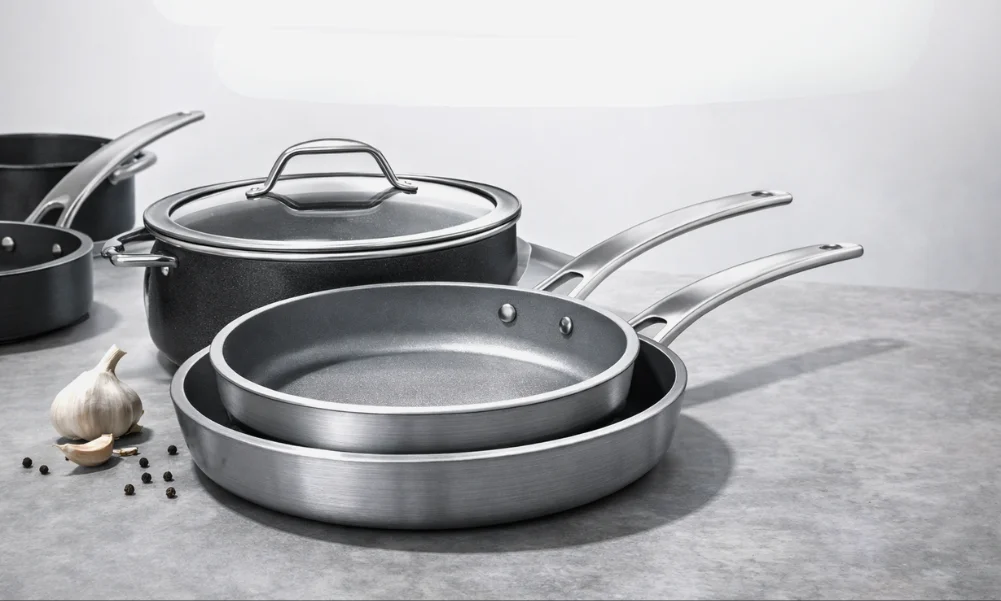
Hard-anodized aluminum cookware begins with aluminum that has been electrochemically treated to harden the surface. This process increases surface durability and corrosion resistance without changing the underlying metal’s conductivity.
Heat enters quickly and spreads evenly due to aluminum’s natural properties. Temperature changes occur rapidly, which supports responsive cooking at moderate heat levels.
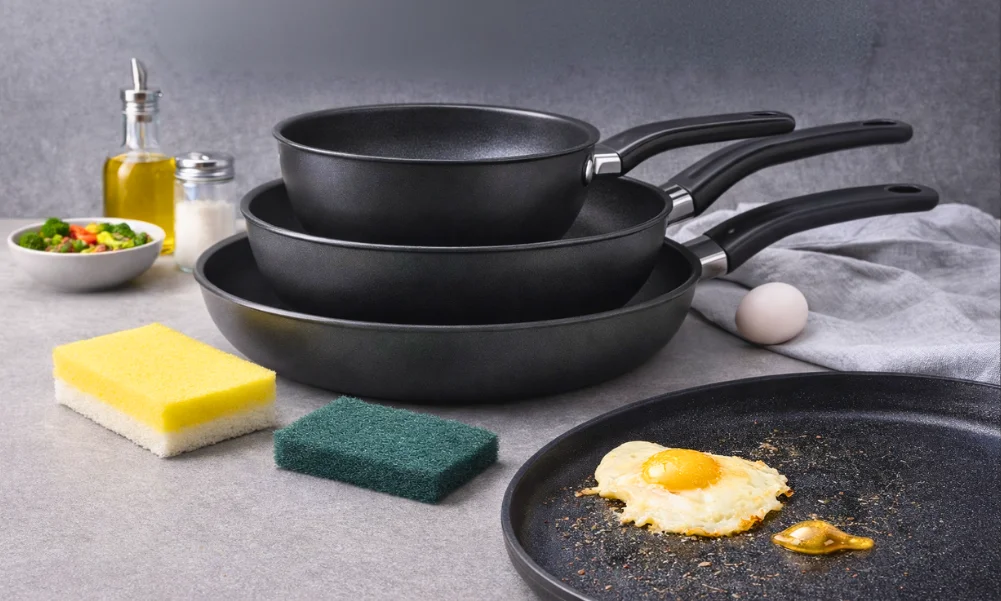
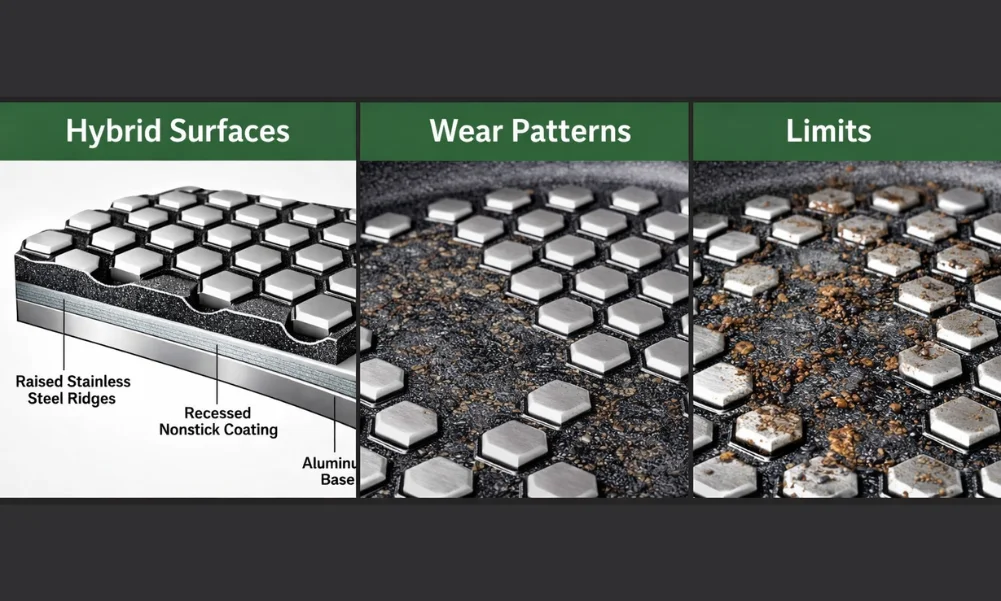
Many hard-anodized pans include a nonstick coating applied over the anodized surface. In these cases, performance and longevity are constrained by coating wear rather than the anodized layer itself. These wear patterns align with those discussed in When to Replace Non-Stick Cookware.
Stainless Steel: Construction and Behavior
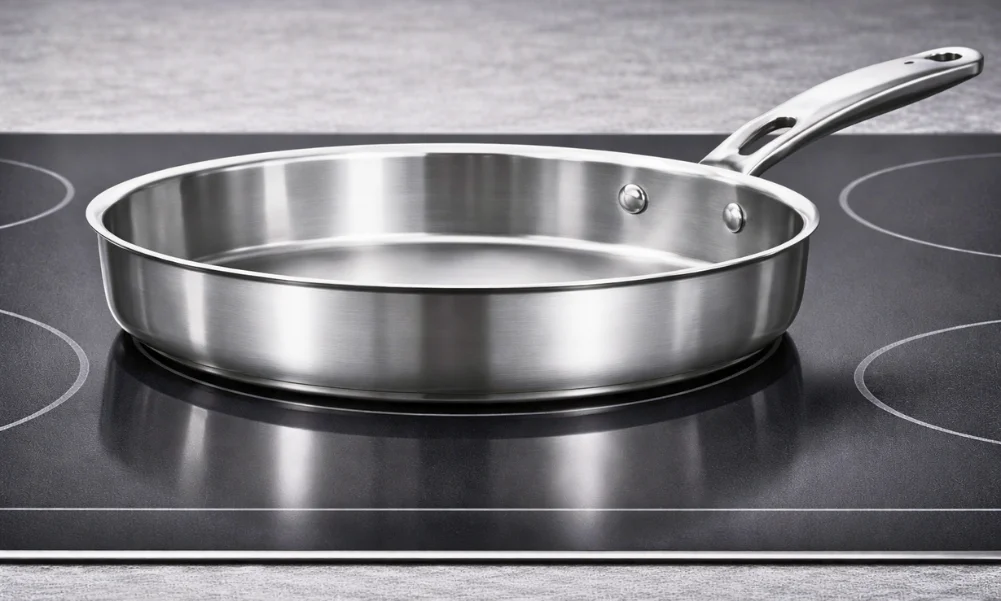
Calphalon stainless steel cookware relies on layered metal construction. Stainless steel forms the cooking surface, while aluminum or similar metals are bonded beneath to improve heat distribution.
Stainless steel heats more slowly than aluminum but tolerates higher temperatures without surface degradation. It does not rely on coatings for performance, which extends functional lifespan.
Food release depends on heat stabilization and moisture interaction rather than surface slickness. This behavior explains sticking patterns discussed in Why Food Sticks to Stainless Steel.
Heat Tolerance and Stability Differences

Hard-anodized aluminum cookware performs best at low to moderate heat. High heat accelerates coating wear and increases deformation risk, especially in thinner constructions. These limits reflect general heat patterns outlined in Maximum Safe Heat for Different Cookware Materials.
Stainless steel cookware tolerates higher heat structurally. Warping risk depends on thickness and bonding quality rather than surface chemistry. Rapid empty heating still introduces stress, as explained in Heating Empty Cookware: Why It’s Risky.
Neither construction benefits from uncontrolled heat. Differences lie in tolerance margins.
Longevity and Wear Patterns

Longevity for hard-anodized cookware is typically limited by surface condition. Nonstick coatings lose release performance gradually, even when the underlying anodized aluminum remains intact.
Stainless steel cookware shows wear primarily through structural changes rather than surface failure. Cosmetic discoloration does not affect safety or performance, as explained in Cookware Discoloration: Causes and Cleaning.
Expected lifespan differences align with broader patterns discussed in How Long Should Cookware Last.
Cleaning and Maintenance Considerations
Hard-anodized cookware requires gentler cleaning to preserve surface coatings. Abrasive scrubbing and dishwasher use accelerate wear, consistent with patterns discussed in Is Dishwasher Use Damaging Cookware.
Stainless steel tolerates more aggressive cleaning without structural harm. Appearance may change, but cooking performance remains stable.
Over-cleaning affects coated cookware more than uncoated systems, as explained in Can You Damage Cookware by Over-Cleaning.
Safety Perspective
Safety differences between hard-anodized and stainless steel cookware are mechanical rather than chemical. Both materials are widely used and stable under intended cooking conditions.
Safety concerns arise when surface degradation or deformation alters control or stability. These indicators develop gradually and are outlined in Signs Your Cookware Is No Longer Safe to Use.
Material choice does not eliminate the need for inspection and appropriate heat management.
How These Materials Fit Within a Kitchen System
Hard-anodized cookware suits tasks that benefit from quick response and reduced sticking. Stainless steel suits tasks requiring high heat tolerance, durability, and versatility.
Many kitchens use both materials to distribute wear and match cookware behavior to cooking tasks. This system-level approach reflects broader cookware role definitions discussed in Cookware Types Explained.
Understanding these roles prevents misuse and unrealistic expectations.
Practical Limitations to Consider
Hard-anodized cookware has a shorter functional lifespan when nonstick coatings are present. Stainless steel cookware requires active heat management to prevent sticking. Performance depends on construction quality and use habits rather than brand name.
Who Calphalon Cookware Is Best Suited For
Calphalon hard-anodized cookware suits cooks who value quick heat response and reduced sticking for everyday tasks. Calphalon stainless steel cookware suits cooks who prioritize durability, high heat tolerance, and long-term versatility.
Kitchens that cook frequently often benefit from using both materials for different tasks rather than relying on one construction alone.
Closing Summary
Calphalon cookware spans hard-anodized aluminum and stainless steel construction types. Hard-anodized cookware emphasizes responsiveness and ease of release with shorter surface lifespan.
Stainless steel emphasizes durability, heat tolerance, and long-term structural stability.
Safety and longevity depend on surface condition, thickness, and heat behavior rather than brand labeling. When matched to appropriate tasks, both constructions perform predictably within their material limits.