Cuisinart Stainless Steel Cookware Explained: Construction, Heat Behavior, and Longevity

Quick Answer
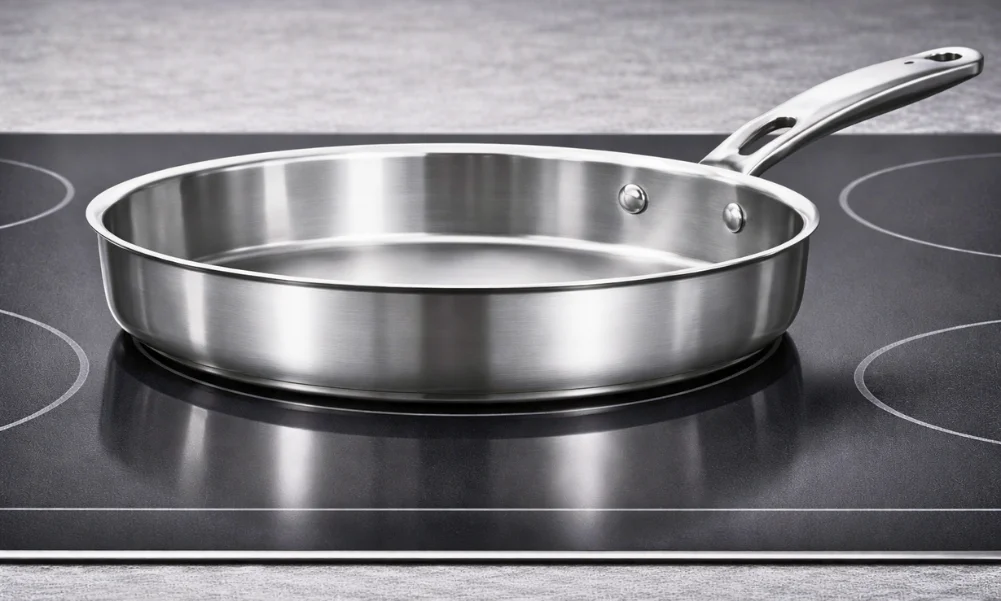
Cuisinart stainless steel cookware is defined by layered metal construction rather than surface coatings. Performance depends on core material, thickness, and bonding quality more than brand labeling.
Stainless steel offers high heat tolerance and long structural lifespan, but cooking behavior depends on heat management and pan design. Longevity depends on resistance to warping, handle stability, and layer integrity rather than appearance. Safety remains stable as long as structural condition is maintained.
What Defines Cuisinart as a Stainless Steel Cookware Entity
Cuisinart stainless steel cookware represents a conventional approach to multi-layer metal construction. The defining characteristic is the use of stainless steel as the cooking surface combined with conductive core materials beneath.
Stainless steel itself is not highly conductive. Heat performance depends on aluminum or similar metals bonded within the pan body. This construction approach places Cuisinart squarely within the stainless steel cookware category rather than creating a distinct material system.
Understanding this classification helps separate brand identity from material behavior. Broader context for stainless steel cookware construction is outlined in Cookware Types Explained.
Layered Construction and Heat Distribution

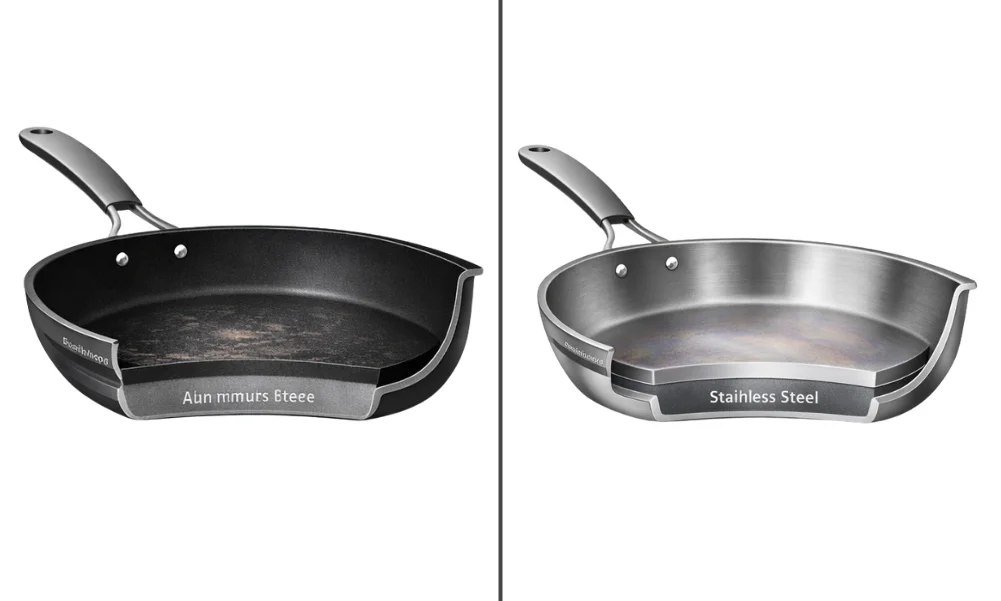
Most Cuisinart stainless steel cookware uses a layered design. Stainless steel forms the interior and exterior surfaces. A conductive core, often aluminum, is bonded between these layers.
Heat enters through the base and spreads according to core thickness and bonding quality. Even heating depends on continuous contact between layers rather than surface finish.
Thin or poorly bonded cookware develops hot spots more easily. Thicker, well-bonded construction slows temperature swings and improves stability. These relationships between thickness and heat control are described in Cookware Thickness: Why It Affects Heat Control.
Cooking Surface Behavior
Stainless steel cooking surfaces are non-reactive and durable. They tolerate high heat without degrading and do not rely on coatings for performance.
Food release depends on surface temperature, moisture, and oil interaction rather than surface slickness. Sticking occurs when proteins bond to metal before sufficient heat stabilization.
This behavior explains why stainless steel cookware behaves differently from nonstick systems. Surface interaction patterns are discussed further in Why Food Sticks to Stainless Steel.
Stainless steel does not lose safety or structural integrity when food sticks. Sticking reflects cooking conditions rather than material failure.
Heat Tolerance and Stability
Stainless steel cookware tolerates higher heat than coated cookware because it lacks temperature-sensitive surface layers. Structural limits depend on base thickness and core bonding rather than surface chemistry.
Warping risk increases when cookware is thin or heated unevenly. Rapid heating, especially when empty, introduces localized stress. These patterns are explained in Heating Empty Cookware: Why It’s Risky.
When constructed adequately, stainless steel maintains flatness and stability over long use. Cosmetic discoloration does not indicate performance decline, as described in Cookware Discoloration: Causes and Cleaning.
Longevity and Wear Patterns
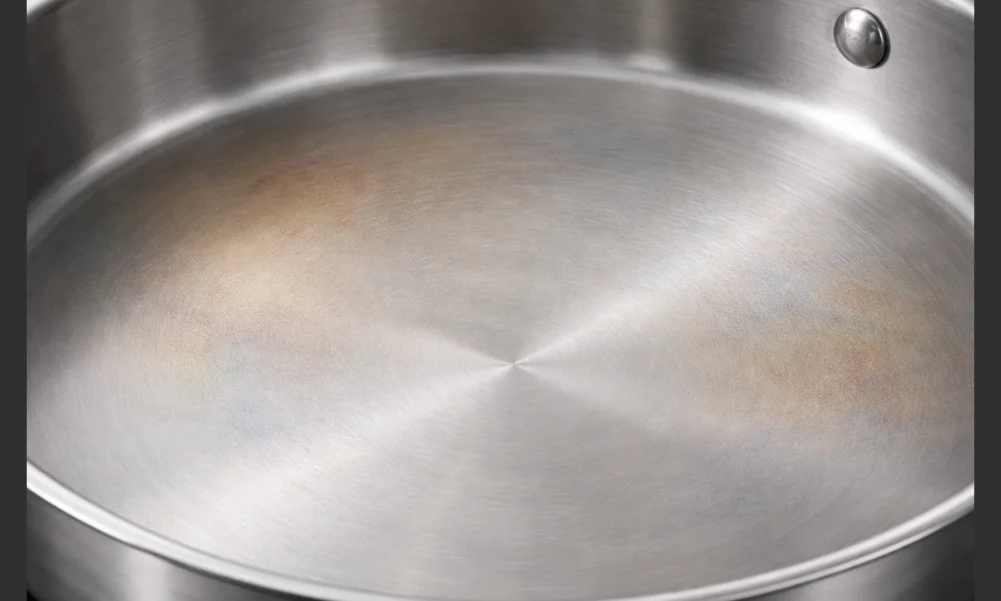
Stainless steel cookware lifespan is typically long because the cooking surface does not wear out in normal use. Longevity depends on structural factors rather than surface degradation.
Layer separation, persistent warping, or handle loosening signal decline. These changes develop gradually through repeated heat cycles and mechanical stress.
Expected lifespan patterns are outlined in How Long Should Cookware Last. Safety indicators tied to stability and attachment integrity are discussed in Signs Your Cookware Is No Longer Safe to Use.
Cleaning Behavior and Surface Maintenance
Stainless steel tolerates aggressive cleaning better than coated cookware. Scrubbing removes residue without damaging the metal surface.
However, repeated abrasive cleaning can affect surface finish and appearance. This does not compromise safety or cooking performance.
Chemical cleaners alter appearance rather than structure. Dishwasher use influences cosmetic wear but does not shorten structural lifespan, as discussed in Is Dishwasher Use Damaging Cookware.
Induction Compatibility and Cooktop Fit
Most stainless steel cookware works well on induction cooktops when magnetic layers are present. Flat bases and adequate thickness improve performance.
Induction exposes weaknesses in thin or uneven cookware more quickly due to rapid energy transfer. These effects are explained in What Is Induction Cookware and How Does It Work and Induction Cooking Mistakes That Damage Cookware.
Cooktop compatibility does not change core material behavior.
How Cuisinart Stainless Steel Fits Within a Kitchen System
Cuisinart stainless steel cookware suits tasks requiring heat tolerance, durability, and flexibility. It handles searing, deglazing, and long cooking without surface limitations.
It does not replace nonstick cookware for low-friction tasks. Balanced kitchens distribute tasks across materials rather than relying on one surface type.
This system-based approach aligns with cookware role definitions outlined in Cookware Types Explained.
Safety and Certification Context
Stainless steel cookware meets established safety standards for household use. Safety depends on mechanical stability rather than chemical exposure.
Certifications confirm baseline material compliance rather than unlimited tolerance. These frameworks are explained in Cookware Safety Certifications Explained.
Daily usage habits determine how long cookware remains within predictable performance ranges.
Practical Limitations to Consider
Cuisinart stainless steel cookware requires active heat management to prevent sticking. Thin or lower-tier constructions are more sensitive to warping under uneven heat.
Performance depends on pan design and use habits rather than stainless steel alone.
Who Cuisinart Stainless Steel Cookware Is Best Suited For
Cuisinart stainless steel cookware suits cooks who value durability, high heat tolerance, and flexibility across cooking techniques. It performs well for searing, deglazing, and repeated daily use where surface coatings would wear quickly.
Cooks who prioritize easy food release or low-attention cooking may prefer complementary nonstick cookware.
Closing Summary
Cuisinart stainless steel cookware is defined by layered metal construction rather than surface coatings. Performance depends on thickness, core bonding, and heat management rather than brand identity.
Stainless steel offers high heat tolerance and long lifespan, with wear limited to structural factors rather than surface degradation. When used within its material limits, it provides stable, predictable performance over time.