Quick Answer
Cookware discoloration is usually cosmetic rather than a safety problem. It occurs when heat, minerals, oils, or detergents change the surface appearance of cookware.
In most cases, discoloration does not affect performance, stability, or longevity. Cleaning decisions should be based on the cause of the discoloration, not how dramatic it looks.
Durability and maintenance are key factors when choosing the best cookware for long-term use.
What Cookware Discoloration Actually Means
Discoloration describes a change in appearance, not a change in structure. It happens when cookware surfaces react to heat, oxygen, minerals in water, or cooking residues. These reactions are visible, but they are often shallow.
Many buyers associate visual change with damage. That reaction is understandable. Cookware is one of the few kitchen tools that sits directly over high heat, so color shifts feel alarming. In practice, most discoloration is similar to wrinkles on leather. It reflects use, not failure.
Discoloration also tends to exaggerate itself. Light reflects differently off altered surfaces, which makes marks appear deeper or more severe than they are. This visual contrast often creates concern before any functional issue exists.
Those differences are rooted in material behavior rather than surface condition, which is explained in Cookware Types Explained: Materials, Uses, and Limitations.
The key distinction is between appearance change and behavior change. If cookware still heats evenly, sits flat, and cooks predictably, discoloration alone is not a safety signal. This distinction is central to understanding cookware discoloration without unnecessary replacement.
Common Causes of Cookware Discoloration
Discoloration rarely has a single cause. It is usually the result of repeated, normal cooking conditions.
Heat oxidation is one of the most common factors. When metal is heated, especially above medium temperatures, its surface structure changes slightly. These changes alter how light reflects, creating rainbow tints or darkened patches.
Burned oils and food residues are another contributor. Oils polymerize when overheated, leaving behind thin layers that bond to the surface. These layers darken over time and resist normal washing.
Minerals in water also play a role. Hard water leaves behind calcium and magnesium deposits that appear as white or chalky marks, particularly on stainless steel and aluminum.
Detergents can add to the effect. Alkaline cleaners remove some residues while leaving others behind, sometimes creating dull or cloudy patches. This is more common with frequent dishwasher use and connects closely to is dishwasher use damaging your cookware.
Each of these causes affects appearance differently. As a result, effective cleaning starts with identifying the source rather than scrubbing harder.
Discoloration by Cookware Material

Discoloration looks different depending on the cookware material. Understanding these patterns helps separate normal aging from actual problems.
Stainless Steel Cookware
Stainless steel often develops rainbow-colored heat tint or blue and gold patches. These colors form when the surface oxidizes at higher temperatures. They look dramatic, but they sit on the surface and do not weaken the metal.
White or cloudy marks are usually mineral deposits from water or detergent residue. These marks do not affect cooking performance and are common on pans that see frequent dishwasher use.
In practical terms, stainless steel can look worn long before it stops performing. This is why many long-lasting pans show visible discoloration but remain reliable.
Aluminum Cookware
Aluminum tends to darken or dull over time. Bare aluminum reacts readily with oxygen and cleaning chemicals, which changes its color even under normal use.
When discoloration remains smooth, it is cosmetic. When the surface becomes rough or pitted, the issue shifts from appearance to structure. Pitting changes how heat spreads and can make cleaning more difficult.
Most aluminum discoloration is visual. Structural changes develop slowly and are usually easy to detect by touch.
Non-Stick Cookware
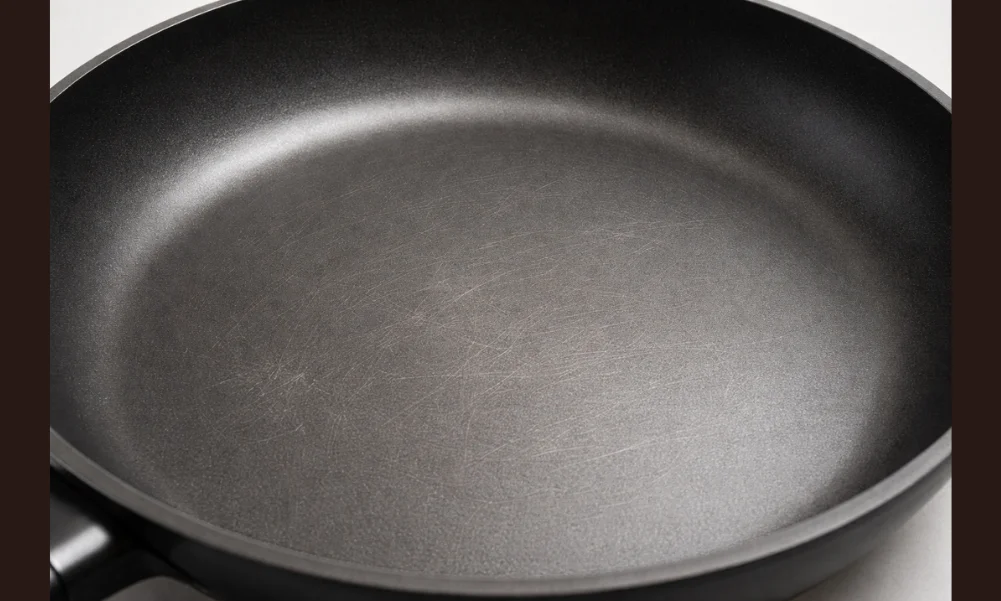
Non-stick cookware can stain from oils, spices, or repeated heat exposure. These stains often look like coating damage, but they are not the same thing.
Color change alone does not mean the coating has failed. The more important signals are texture changes, peeling, or loss of predictable release. Those indicators connect more closely to when to replace non-stick cookware than to discoloration itself.
A stained but smooth non-stick surface can still cook normally. A damaged surface cannot.
Cast Iron and Carbon Steel
Cast iron and carbon steel are expected to darken. This darkening is part of seasoning development and is often desirable.
Uneven color, blotches, or deep black areas usually reflect layers of polymerized oil rather than damage. Rust introduces orange or red patches, which indicate exposure to moisture rather than failure.
Discoloration on these materials often signals use history, not decline. Many high-performing pans look uneven by design.
Copper Cookware
Copper develops tarnish as it reacts with air. This creates brown, purple, or green tones on the surface.
Tarnish affects appearance but not structural integrity. The copper underneath remains unchanged. Many users choose to polish copper for aesthetics rather than performance.
Understanding copper discoloration helps prevent unnecessary concern about cookware that is still fully functional.
What Discoloration Does Not Mean
Discoloration does not automatically mean cookware is unsafe. It does not indicate toxicity. It does not mean cookware must be replaced. It does not mean performance has declined.
This distinction matters because visual change is often mistaken for risk. In reality, most cookware becomes unsafe due to structural issues, not color changes. Those issues are discussed in signs your cookware is no longer safe to use, not in surface appearance alone.
A simple test helps reframe the concern. If cookware remains stable, heats evenly, and behaves predictably, discoloration is a cosmetic issue. If behavior changes, further evaluation is warranted.
Safe Cleaning Methods by Cause
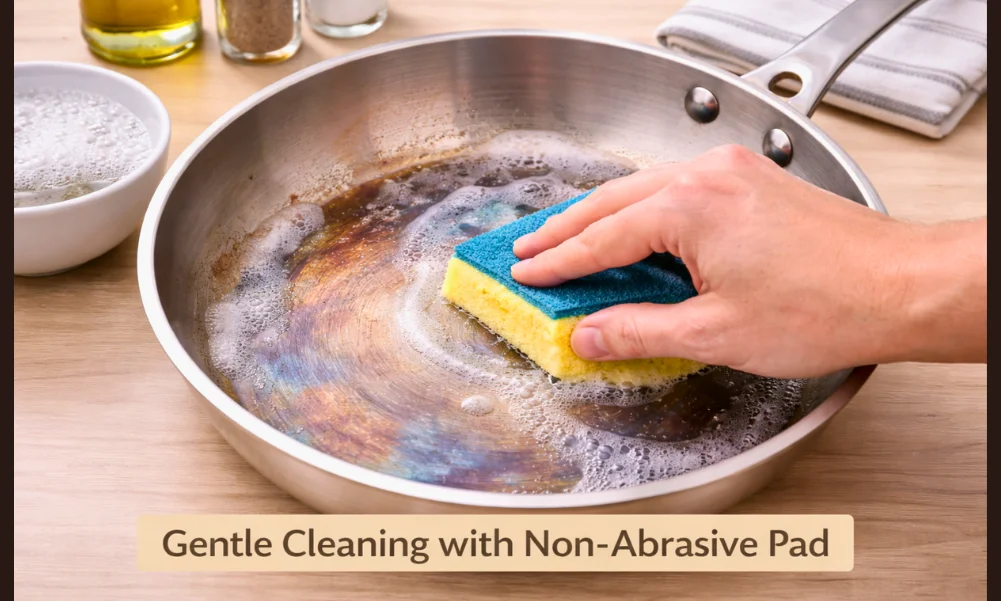
Cleaning is most effective when it targets the cause of discoloration rather than the mark itself.
Heat tint on stainless steel responds well to mild acidic cleaning. Mineral deposits dissolve with gentle acid exposure. Burned oil layers require patience and controlled abrasion rather than force.
The goal is removal without altering the underlying surface. Over-scrubbing can create permanent texture changes that are worse than discoloration.
This approach aligns cleaning effort with material limits instead of chasing a like-new appearance at the expense of longevity.
Cleaning Methods to Avoid
Aggressive abrasives remove discoloration quickly but also remove surface material. Over time, this thins cookware and creates roughness that traps residue.
Harsh chemical cleaners can attack finishes, coatings, and bonded layers. Their short-term visual improvement often leads to long-term damage.
Repeated dishwasher cleaning compounds both effects by combining heat, chemistry, and abrasion. This connection reinforces the trade-offs discussed in is dishwasher use damaging your cookware.
Avoiding these methods protects both appearance and performance.
When Discoloration Signals a Bigger Issue

Discoloration becomes more concerning when it coincides with texture changes. Pitting, roughness, or flaking indicate surface breakdown rather than simple color change.
In these cases, cleaning alone will not restore performance. Further use may accelerate wear or affect heat behavior.
This distinction helps identify when discoloration is a surface issue and when it points to deeper material stress.
How Discoloration Fits Into Cookware Lifespan

Long-lasting cookware often looks imperfect. Visual aging reflects repeated exposure to heat and food rather than decline.
Many pans that last decades show stains, darkening, or patina. These marks tell a story of use, not failure. Judging cookware by function rather than appearance supports realistic expectations about how long cookware should last.
Normalizing visible use reduces unnecessary replacement and builds confidence in ownership decisions.
Common Buyer Misconceptions About Discoloration
One common misconception is that dark or rainbow colors indicate danger. Another is that clean cookware should always look new. A third is that discoloration equals neglect.
These assumptions create pressure to over-clean or replace cookware prematurely. In reality, controlled wear is part of normal use.
Replacing anxiety with understanding leads to better outcomes and longer-lasting cookware.
Closing Summary
Cookware discoloration is usually a cosmetic result of heat, minerals, oils, and cleaning habits. In most cases, it does not affect safety, performance, or lifespan.
Effective cleaning starts with identifying the cause and choosing gentle, material-appropriate methods. Aggressive cleaning often creates more problems than it solves.
By focusing on behavior and structure rather than appearance, buyers can maintain cookware confidently and avoid unnecessary replacement.