Quick Answer
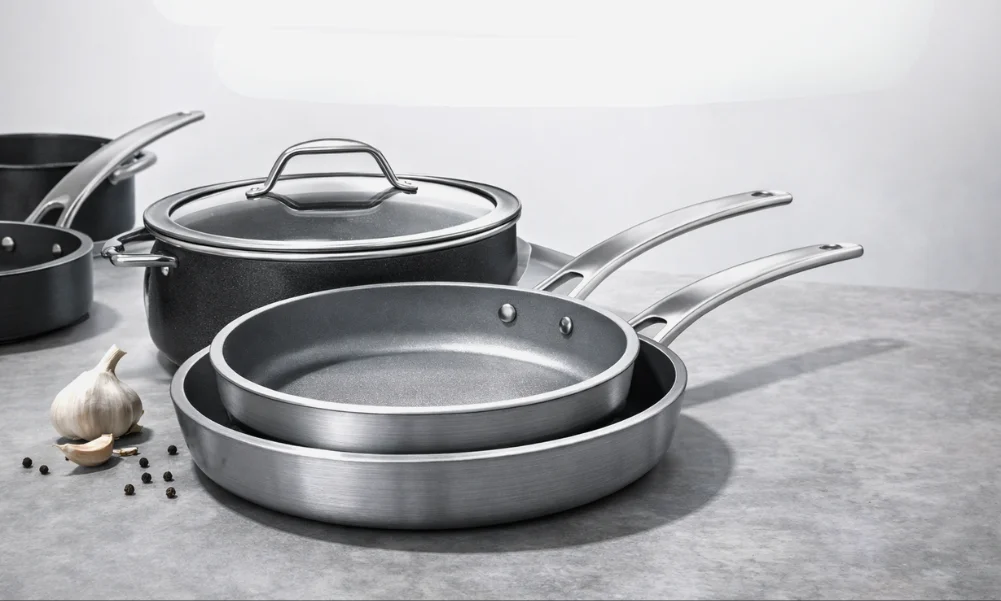
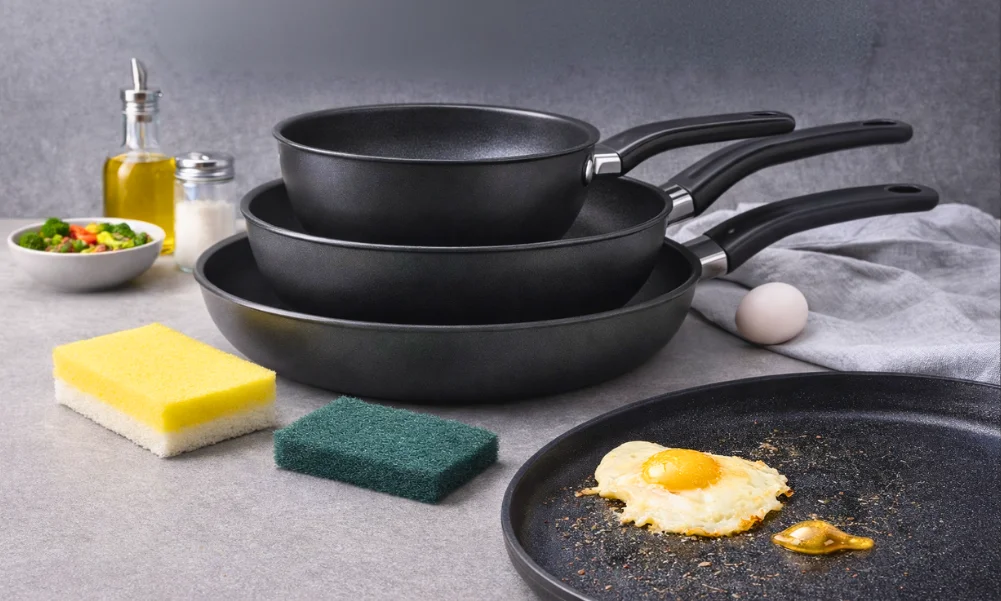
T-Fal cookware sets rely on aluminum construction paired with PTFE-based non-stick coatings. Performance depends on coating condition more than base metal strength.
Non-stick release is strongest early in the cookware’s life and declines gradually with heat exposure, cleaning abrasion, and surface contact.
Safety remains stable when coatings are intact and heat is controlled. Longevity is limited by coating wear rather than structural failure.
What Defines T-Fal as a Non-Stick Cookware Entity
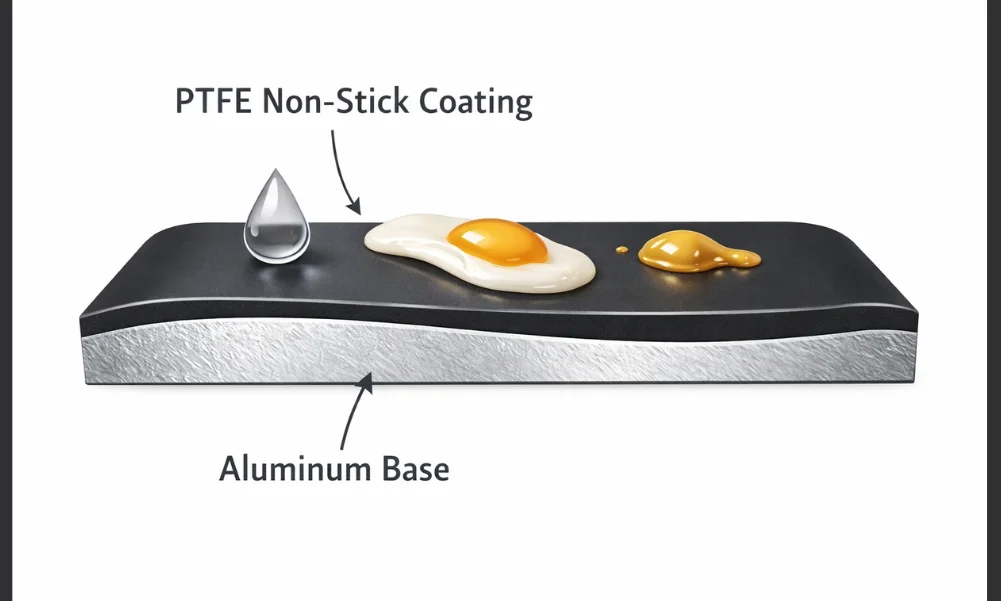
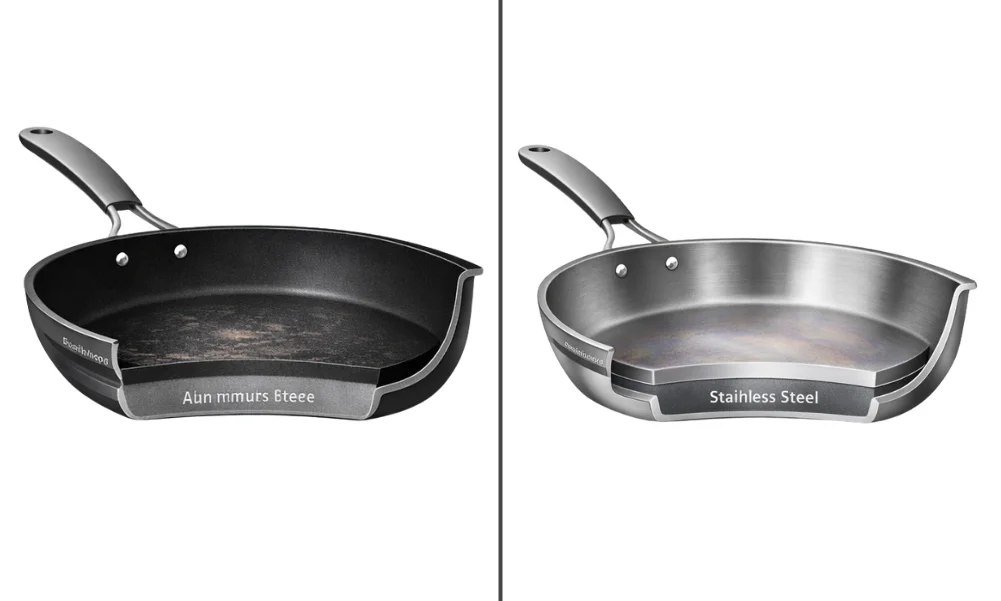
T-Fal is best understood as a non-stick cookware system rather than a material innovation. Its defining characteristic is the combination of lightweight aluminum bodies and factory-applied non-stick coatings.
The aluminum base governs heat responsiveness. The coating governs food release and cleaning behavior. Together, these elements determine how cookware performs over time.
T-Fal cookware does not introduce a unique category. It operates within the same coated cookware framework described in Cookware Types Explained.
Early-Life Non-Stick Performance
New non-stick cookware delivers high release performance due to intact surface chemistry and smooth coating structure. Food slides easily with minimal oil, and cleanup is simple.
This phase reflects optimal surface condition rather than permanent capability. Performance during early use should be understood as a baseline, not a guarantee.
As heat cycles accumulate, microscopic surface changes begin. These changes are not visible at first but influence how food interacts with the coating.
How Non-Stick Performance Changes With Use
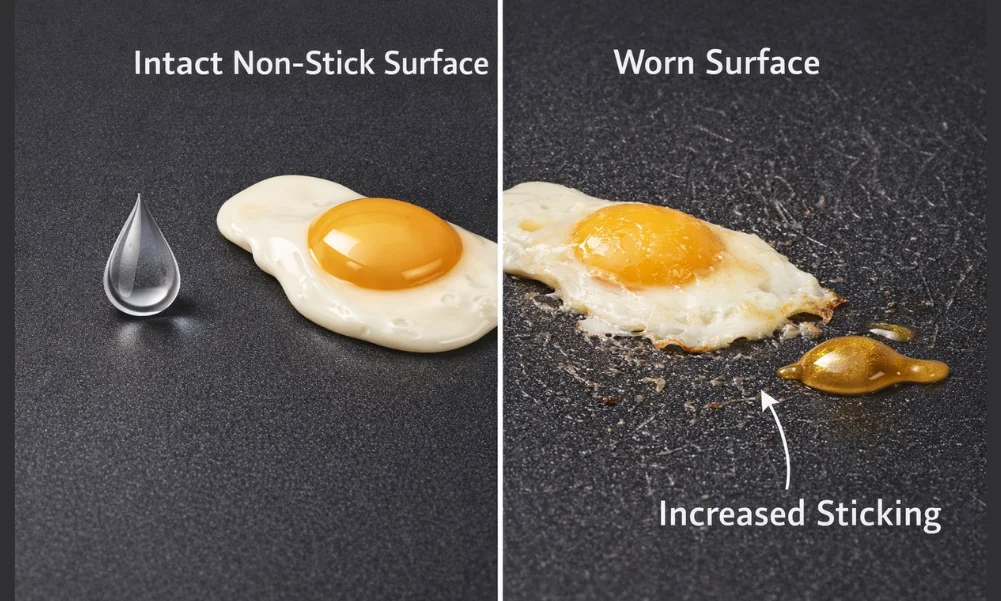
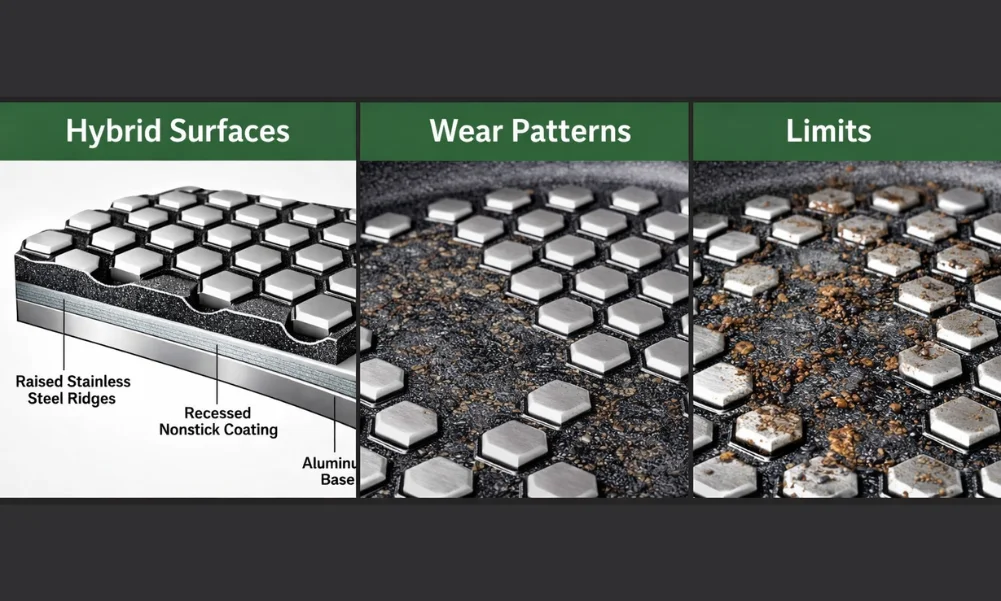
Non-stick coatings degrade gradually rather than failing suddenly. Heat exposure, especially at higher outputs, accelerates this process. Cleaning friction contributes by removing small amounts of surface material over time.
As coatings wear, food release becomes less consistent. Sticking increases unevenly rather than across the entire surface at once. These patterns align with general replacement guidance outlined in When to Replace Non-Stick Cookware.
This decline reflects functional wear rather than safety failure.
Heat Sensitivity and Cooking Limits
T-Fal cookware performs best at low to moderate heat. High heat does not damage the aluminum body immediately but stresses the non-stick coating.
Repeated overheating shortens coating lifespan even when no visual damage appears. Empty heating increases stress by allowing surface temperature to rise rapidly, as explained in Heating Empty Cookware: Why It’s Risky.
Heat limits follow the same patterns discussed in Maximum Safe Heat for Different Cookware Materials.
Longevity Expectations for Cookware Sets
T-Fal cookware sets are designed for convenience and accessibility rather than decades-long service. Structural lifespan of the aluminum body often exceeds the usable lifespan of the coating.
Once non-stick performance declines, replacement becomes a practical decision rather than a safety response. Continuing to use worn cookware affects cooking experience more than risk.
Expected lifespan patterns align with broader cookware longevity guidance in How Long Should Cookware Last.
Cleaning Practices and Wear Acceleration
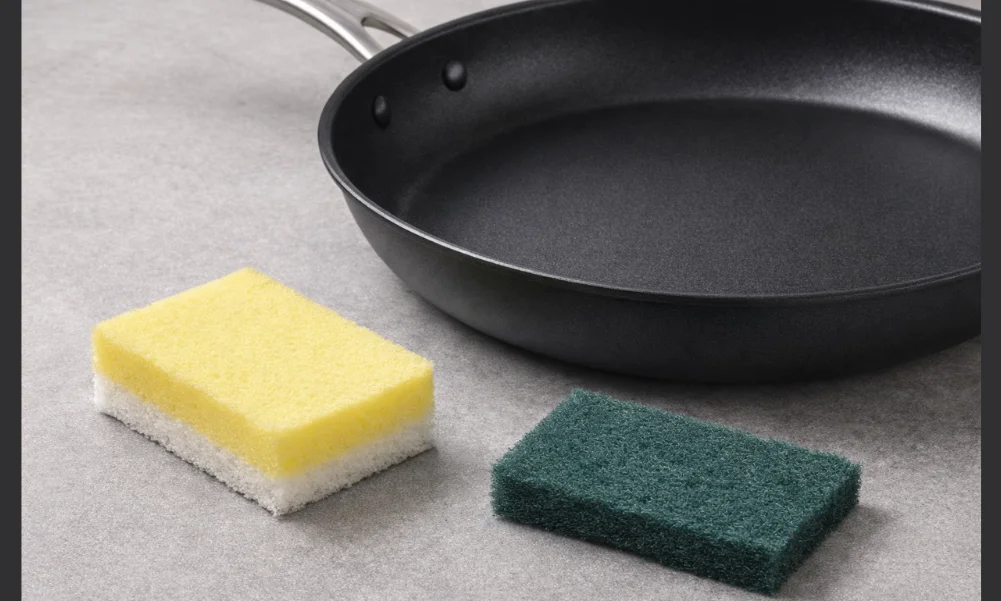
Cleaning method strongly influences non-stick lifespan. Abrasive sponges remove coating material gradually, even when no scratches appear.
Dishwashers accelerate wear through heat, detergents, and water pressure. These effects mirror patterns discussed in Is Dishwasher Use Damaging Cookware.
Over-cleaning contributes more to early failure than light residue, as explained in Can You Damage Cookware by Over-Cleaning.
Safety Perspective
Safety for non-stick cookware depends on surface integrity and predictable heat response. T-Fal coatings are manufactured without PFOA and are widely used under normal cooking conditions.
Safety concerns arise when coatings are visibly degraded or when heat misuse alters control. These indicators develop gradually and are described in Signs Your Cookware Is No Longer Safe to Use.
Non-stick cookware does not become unsafe suddenly. Behavior changes precede replacement needs.
How T-Fal Fits Within a Kitchen System
T-Fal cookware sets suit everyday cooking tasks that benefit from easy release and low maintenance. They perform well for quick meals, reheating, and low-friction cooking.
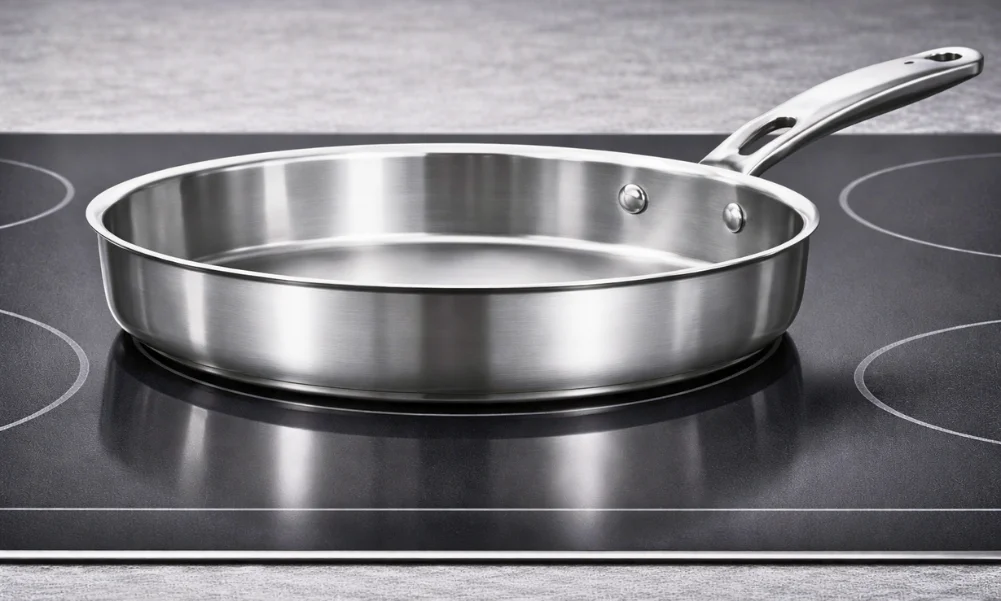
They are less suited to high-heat searing, aggressive utensil use, or long-term durability expectations. Many kitchens pair non-stick cookware with stainless steel or cast iron to distribute wear across materials.
This system-based approach reflects broader cookware role definitions discussed in Cookware Types Explained.
Practical Limitations to Consider
T-Fal cookware does not provide permanent non-stick performance. Coating lifespan is shortened by high heat, abrasive cleaning, and dishwasher use.
Structural durability does not extend usable life once non-stick performance declines.
Who T-Fal Cookware Sets Are Best Suited For
T-Fal cookware sets suit cooks who prioritize convenience, easy food release, and low-effort cleanup. They perform best for everyday tasks that use low to moderate heat and minimal surface abrasion.
Cooks who frequently use high heat or expect long non-stick lifespan may prefer other cookware materials for those tasks.
Closing Summary
T-Fal cookware sets rely on aluminum construction and non-stick coatings to deliver convenient cooking performance. Non-stick release is strongest early and declines gradually with heat exposure and cleaning abrasion.
Longevity is limited by coating wear rather than structural failure. Safety remains stable when coatings are intact and heat is controlled. Understanding these patterns supports realistic expectations and predictable use over time.