Quick Answer
Cookware works when it matches how you cook, not how it is marketed. Material, weight, and shape determine performance far more than brand or price. Most cookware problems come from mismatch, not poor quality.
Who This Guide Is For
This guide is for home cooks who feel their cookware underperforms despite being “good quality.” It applies to buyers upgrading selectively, households with mixed cooking habits, and anyone replacing cookware without understanding why earlier pieces failed.
It is not written for collectors or cooks building display sets. The focus is daily function.
What Problem This Solves
Many cookware purchases are driven by aspiration instead of behavior. High-heat cooks buy coated pans that degrade quickly. Low-and-slow cooks choose thin cookware that struggles with temperature stability. The result is frustration, premature replacement, and unnecessary spending.
This guide aligns cookware choice with actual cooking patterns, reducing misuse and extending lifespan.
How This Guide Works
Cooking styles are defined by behavior: heat level, frequency, volume, and tolerance for maintenance. Each section explains what cookware performs reliably in that context and why other options tend to fail.
There are no product rankings here. The goal is fit, not optimization.
Why Cooking Style Matters More Than Skill Level
Skill level is often used as a shortcut in cookware advice, but it is a poor predictor of success. A skilled cook using cookware outside its intended stress profile will encounter the same failures as a beginner.
Cooking style determines:
- How much heat cookware must tolerate
- How often it is lifted, moved, or stored
- Whether cleanup and maintenance friction accumulates
High-heat, fast cooking stresses coatings and thin metals regardless of experience. Long simmering exposes weaknesses in heat retention and lid design. Frequent weekday cooking rewards predictability and manageable weight more than performance extremes.
Most misuse is contextual. Cookware fails quietly when it is asked to do the wrong job repeatedly. See: cookware types explained and cookware thickness heat control.
Choosing cookware based on cooking style reduces these mismatches and makes performance more consistent over time.
High-Heat, Fast Cooking (Searing, Stir-Fry, Quick Sauté)
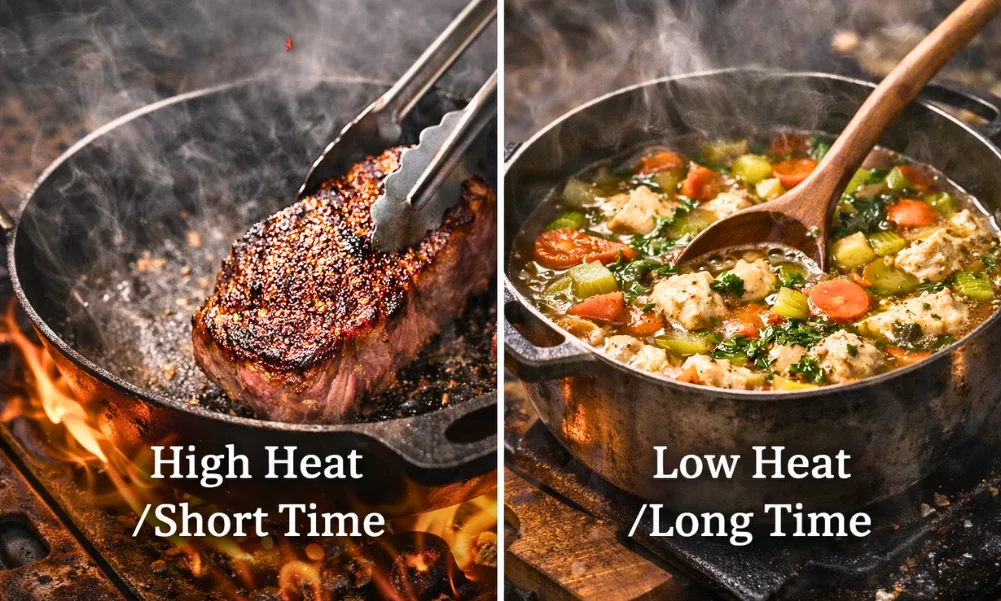
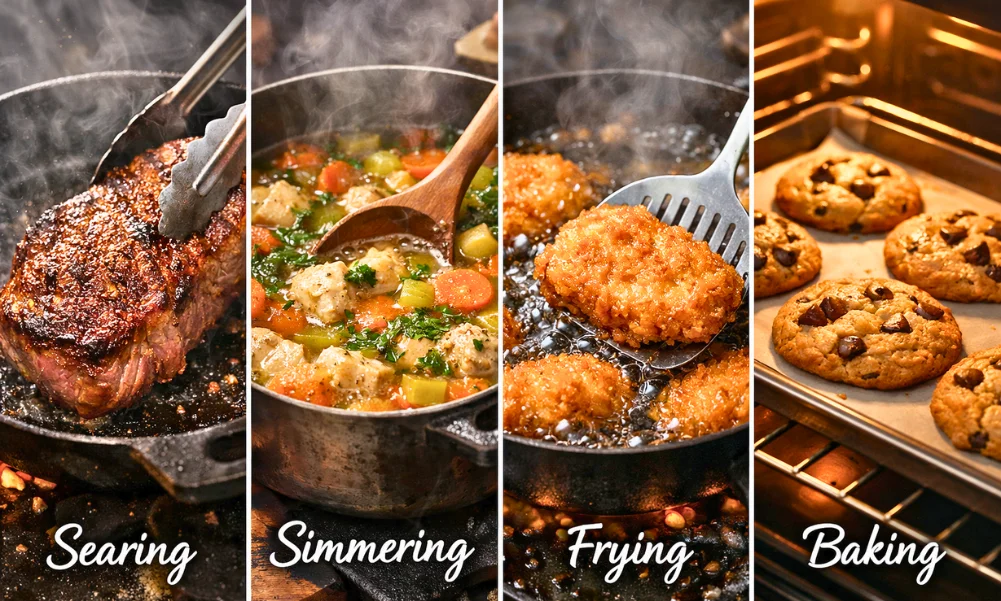
This style is defined by short cook times and frequent temperature changes. Pans are heated aggressively, ingredients are added quickly, and heat is adjusted often. Cookware in this category fails when it cannot respond fast enough or tolerate repeated high-heat exposure.
The key requirement is heat tolerance with responsiveness. Materials that hold too much heat can overshoot temperatures. Coatings designed for moderate heat degrade when pushed repeatedly. Lightweight cookware that responds quickly but lacks thermal stability can scorch unevenly.
Common failures in this style include:
- Nonstick coatings overheated beyond their design limits
- Enameled cookware used dry at high burner settings
- Thick cookware that stays too hot after heat is reduced
Fast cooking rewards cookware that can handle high temperatures without relying on coatings and that cools predictably when heat is reduced.
See: maximum safe heat cookware materials and heating empty cookware risk.
Mismatch here does not show up immediately. It appears as gradual coating wear, persistent sticking, or heat control that feels increasingly inconsistent.
See: carbon steel vs cast iron cookware.
Low-and-Slow Cooking (Braising, Stews, Long Simmering)
Low-and-slow cooking stresses cookware differently. Heat is applied for extended periods, moisture is retained, and acidic ingredients are common. Performance depends less on responsiveness and more on thermal stability and surface tolerance.
Cookware struggles in this style when it loses heat too easily or reacts poorly to acidity. Thin pots fluctuate in temperature. Bare reactive surfaces degrade seasoning when exposed to long tomato- or wine-based cooking.
Reliable cookware for this style emphasizes:
- Even heat distribution over long durations
- Stable lids that manage evaporation
- Surfaces that tolerate acidity without frequent intervention
Common failures include:
- Bare cast iron used repeatedly with acidic braises
- Lightweight cookware that requires constant heat adjustment
- Lids that trap too much or too little moisture
Low-and-slow cooking rewards cookware that behaves consistently for hours, not minutes. See: acidic foods cookware materials and enameled cast iron cookware pros cons care.
When cookware is mismatched here, the result is not dramatic failure but steady frustration: uneven cooking, excessive reduction, or increased maintenance.
Everyday Multi-Task Cooking (Weeknight Meals)
This is the most common cooking style and the most poorly served by cookware advice. Everyday cooking prioritizes repetition, mixed techniques, and cleanup efficiency. Cookware here is used often, moved frequently, and expected to behave predictably without constant adjustment.
The defining requirement is forgiveness. Pans need to handle moderate heat, varied ingredients, and rushed timing without punishing small mistakes. Extreme performance—very high heat tolerance or ultra-thin responsiveness—matters less than consistency.
Cookware tends to fail in this context when it is over-specialized. Highly reactive materials demand attention that weeknight cooking rarely allows. Heavy cookware becomes fatiguing. Fragile coatings accumulate wear quickly under daily use.
Common mismatches include:
- Overreliance on single-purpose cookware
- Heavy pieces that discourage frequent use
- Surfaces that require precise heat or oil control
Everyday cooking benefits from cookware that feels familiar quickly and behaves the same way each time. See: stainless steel vs non stick cookware and cookware set vs individual pieces.
When cookware fits this style, it fades into the background. When it doesn’t, it becomes the reason meals feel harder than they should.
Frequent Frying (Shallow or Deep Frying)
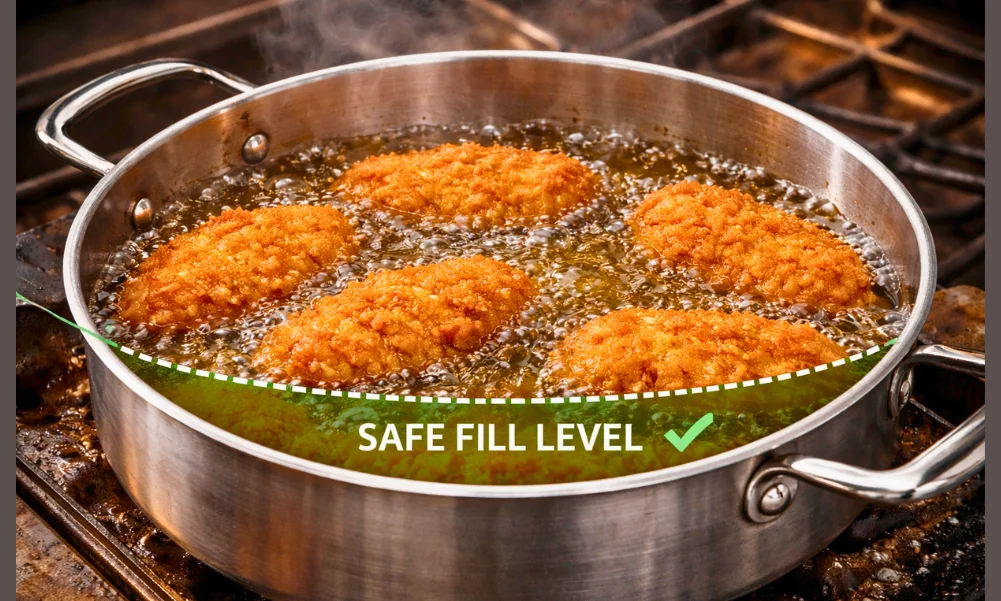
Frying places narrow but intense demands on cookware. Oil temperature stability, vessel depth, and base stability matter more than surface finish. Cleanup stress is high, and handling errors carry more risk than in most other cooking styles.
The core requirement is thermal mass with containment. Thin cookware struggles to maintain oil temperature. Shallow pans increase splatter and spill risk. Lightweight vessels shift when food is added.
Frequent failures include:
- Thin pans that cool oil too quickly
- Unstable bases that increase tipping risk
Frying cookware should be chosen for depth and stability first, not ease of storage or visual appeal. See: cookware for frying materials and best oils for cookware materials.
Most frying problems are not caused by oil choice or technique. They come from cookware that cannot hold temperature or volume safely.
Baking and Oven-First Cooking
Oven-first cooking shifts the performance burden away from responsiveness and toward heat stability over time. Once food is in the oven, cookware is expected to hold temperature evenly with minimal intervention. Thin or highly responsive cookware offers little advantage here.
Failure in this style usually comes from cookware designed primarily for the stovetop. Lightweight pans warp, hot spots develop across large surfaces, and temperature swings become visible in uneven browning. Over long cook times, these inconsistencies compound.
Cookware suited to oven-first cooking emphasizes:
- Even heat distribution across broad surfaces
- Resistance to warping at sustained temperatures
- Construction that tolerates long preheats and cooldowns
Common mismatches include:
- Thin stovetop pans repurposed for baking
- Cookware with uneven bases or lightweight cores
- Pieces chosen for quick heating rather than stability
Oven-first cooking rewards cookware that stays steady once hot, not cookware that reacts quickly. See: cookware discoloration causes cleaning and waterless cookware explained.
When cookware is mismatched here, the issue is rarely safety. It is inconsistent results that make baking feel unreliable.
Family-Scale, High-Volume Cooking
High-volume cooking introduces constraints that smaller households rarely face. Larger portions increase weight, handling risk, and storage stress. Cookware is filled closer to capacity, moved while heavy, and stored more frequently under load.
The defining requirement is stability under weight. Handles, rims, and bases matter as much as material. Cookware that feels manageably empty can become unsafe when full.
Common failure points include:
- Oversized cookware without adequate handle support
- Tall, narrow vessels that become top-heavy
- Storage systems not designed for weight and volume
In family kitchens, cookware often fails through accumulation rather than misuse. Minor handling strain, repeated stacking, and rushed cleanup accelerate wear.
See: cookware safety homes with children and cookware hooks vs racks.
Cookware chosen for high-volume cooking should prioritize balance, grip, and storage realism over maximum capacity claims.
Occasional or Minimalist Cooking
Occasional cooking places different demands on cookware than daily use. Long gaps between sessions, limited tolerance for maintenance, and extended storage periods shape what works reliably. Performance extremes matter less than stability between uses.
Cookware fails in this style when it requires frequent upkeep to stay usable. Bare reactive surfaces develop rust if neglected. Complex care rules are forgotten. Heavy pieces feel unnecessary and discourage use altogether.
Cookware that fits this style emphasizes:
- Resistance to corrosion and staining
- Simple cleaning routines
- Minimal seasoning or conditioning requirements
Common mismatches include:
- High-maintenance materials stored for long periods
- Cookware that requires reconditioning before use
- Heavy pieces that feel disproportionate to cooking frequency
Minimalist cooking benefits from cookware that tolerates neglect without degrading. See: is dishwasher use damaging cookware and damage cookware by over cleaning.
Infrequent use magnifies friction. The best cookware here is the least demanding.
Quick Cookware Matches by Cooking Style
If you’re unsure which cookware fits your kitchen best, the following patterns provide a simple starting point.
| Cooking Style | Cookware That Works Best |
|---|---|
| High-heat cooking | Stainless steel, carbon steel, cast iron |
| Low-and-slow cooking | Enameled cast iron, heavy stainless steel |
| Everyday weeknight cooking | Stainless steel with one nonstick pan |
| Frequent frying | Deep, heavy-bottomed pans or Dutch ovens |
| Oven-first cooking | Cast iron, enameled cast iron, thick stainless |
| Family-scale cooking | Larger stainless steel pots and stable handles |
| Occasional cooking | Low-maintenance stainless steel or ceramic-coated cookware |
These patterns provide a starting point rather than strict rules. Most kitchens benefit from a small mix of materials rather than relying on one type alone.
Cross-Style Considerations That Affect Every Kitchen
Weight, Storage, and Handling
Cookware performance does not end when cooking stops. Lifting, pouring, and storing stress materials and joints more often than heat does. Pieces that are difficult to store safely accumulate damage faster, regardless of material quality.
See: cookware storage ideas protect pots pans and riveted vs welded cookware handles.
Safety Versus Marketing Language
Terms like “safe,” “non-toxic,” or “healthy” are often used without context. Real safety comes from predictable behavior under heat, not from broad claims. Misuse boundaries matter more than certifications alone.
See: cookware safety certifications explained and signs cookware not safe to use.
Building a Cookware System Around Your Style
Most kitchens perform best when cookware is selected around one dominant cooking style, with a small number of complementary pieces. Adding cookware only makes sense when it introduces a new capability, not when it duplicates an existing one.
In mixed-style kitchens, overlap is the main risk. Limiting the total number of pieces reduces misuse, simplifies storage, and extends lifespan.
See: cookware set vs individual pieces and budget vs premium cookware sets.
Cookware systems succeed when they reflect behavior, not aspiration.
Closing Summary
Cookware works when it matches how you cook. Most frustration comes from mismatch, not material quality. High-heat cooks need tolerance. Slow cooks need stability. Everyday cooking needs forgiveness. Occasional cooking needs simplicity.
Understanding cooking style reduces replacement, improves safety, and makes cookware feel easier to live with. The right choice is rarely the most marketed one—it is the one that fits your habits quietly.