Quick Answer
Budget and premium cookware sets differ primarily in construction consistency, material thickness, and long-term stability, not basic usability. Both categories are capable of everyday cooking tasks when used within design limits.
The real differences appear over time through heat behavior, wear patterns, and replacement timing rather than immediate cooking results.
What “Budget” and “Premium” Mean in Cookware Sets
Budget and premium describe price positioning rather than material categories. Both can include similar base materials, such as stainless steel or aluminum.
In budget cookware sets, cost control shapes design choices. Material thickness, bonding quality, and finishing tolerance are often adjusted to manage affordability.
Premium cookware sets tend to reflect greater consistency. Thickness, layer alignment, and handle attachment tend to follow tighter tolerances.
These differences rarely affect short-term cooking outcomes. They influence how predictably cookware behaves as stress accumulates.
Understanding this distinction helps separate initial performance from long-term ownership behavior. Price reflects design priorities more than fundamental safety differences.
Construction Differences That Shape Behavior
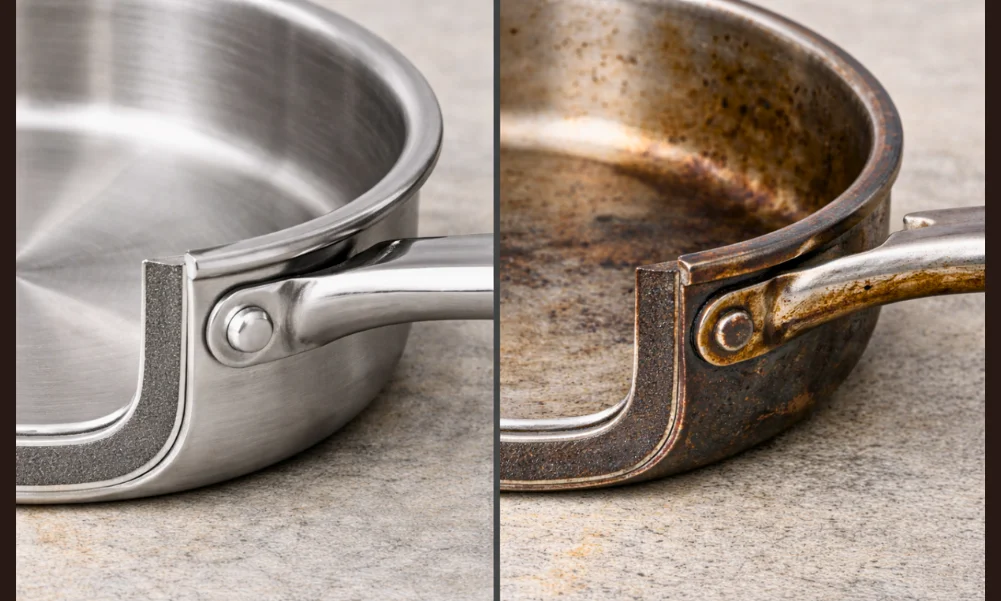
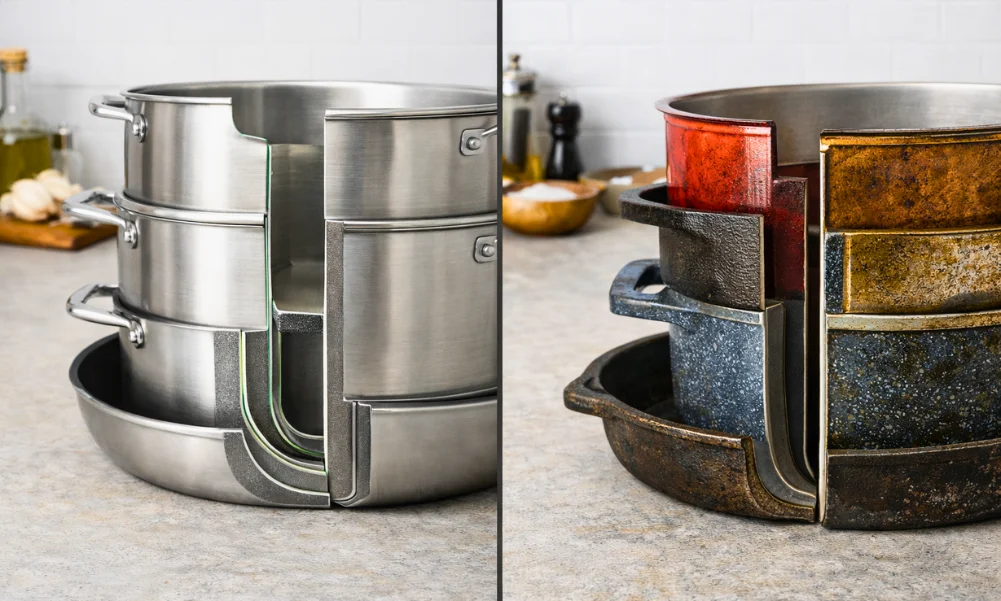
Construction details explain most performance differences between budget and premium cookware sets. Material choice alone does not determine outcomes.
Thicker bases tend to distribute heat more evenly. They tend to limit localized stress during heating and cooling cycles.
Thinner construction often responds faster to heat changes. It also reaches deformation thresholds sooner under repeated use.
Layer bonding matters in multi-layer cookware. Poor bonding can increase the likelihood of separation over time.
Handle attachment quality influences stability. Repeated heating and handling stress loosen weaker connections sooner.
These construction factors shape durability more than brand positioning. They determine how cookware ages rather than how it cooks on day one.
Longevity and Wear Patterns Over Time
Budget and premium cookware sets age differently because of how stress distributes across materials and joints. The difference becomes visible only after repeated heating, cooling, and handling cycles.
In budget cookware sets, thinner materials may accumulate stress more quickly. Warping, surface wear, and handle loosening often appear earlier under frequent use.
Premium cookware sets distribute stress more evenly. Thicker construction can slow deformation and delay joint fatigue.igue.
This does not mean budget cookware fails suddenly. It means performance changes appear sooner and progress more quickly.
Wear patterns often remain cosmetic at first. Functional changes emerge gradually through reduced stability or heat predictability.
Longevity expectations align more closely with construction tolerance than with price alone. These patterns follow broader lifespan behavior discussed in how long should cookware last.
Safety Boundaries in Budget Versus Premium Sets
Safety differences between budget and premium cookware sets are incremental rather than categorical. Both categories meet baseline safety expectations under typical household use.
Safety concerns emerge when structural changes affect stability. Warped bases, loose handles, or uneven contact define practical boundaries.
In budget cookware sets, these changes may appear earlier due to material limits. In premium sets, they appear later but follow the same mechanical pathways.
Surface coatings behave similarly across price ranges. Heat misuse and abrasion shorten coating lifespan regardless of cost.
Safety signals remain consistent across categories. Clear indicators are outlined in signs your cookware is no longer safe to use.
Price influences how quickly boundaries are reached. It does not redefine what makes cookware safe or unsafe.
How Use Patterns Amplify Price Differences
Use frequency influences how quickly price-related differences surface. Occasional use can mask many construction differences between categories.
Frequent cooking accelerates stress accumulation. Thin materials and lighter joints show change sooner under repeated cycles.
In premium cookware sets, higher tolerances slow this progression. Performance remains consistent longer under the same use intensity.
This amplification effect explains mixed buyer experiences. Light users report similar outcomes across price ranges.
Heavy users observe divergence over time. Price differences tend to translate into durability differences through sustained use.
Storage, Handling, and System-Level Effects
Cookware sets function as systems rather than isolated items. Uniform design influences how pieces interact during storage and handling.
Budget sets may show more variability in rim alignment or lid fit. Small inconsistencies increase contact stress during stacking.
Premium sets tend to maintain tighter dimensional consistency. This reduces cumulative contact stress between pieces.
These differences remain subtle. They influence wear progression rather than immediate usability.
Storage-related stress interacts with construction quality. Together, they shape long-term condition across the set.
These system-level effects connect closely with cookware storage practices discussed in cookware storage ideas that protect pots and pans.
Common Assumptions About Budget and Premium Sets
Premium cookware sets are often assumed to be safer by default. In practice, safety depends on condition rather than price category.
Budget sets are sometimes assumed to be disposable. Many remain serviceable for years when used within limits.
Price differences reflect design margin and finish tolerance. They do not redefine how cookware materials behave under heat.
These assumptions obscure practical differences. Ownership patterns determine outcomes more than labels.
Is Premium Cookware Worth It?
Premium cookware sets are not inherently necessary for all kitchens. For light or occasional use, budget sets often meet functional needs without meaningful drawbacks.
For frequent cooking, premium sets tend to maintain stability and consistency longer due to higher construction tolerance.
Closing Summary
Budget and premium cookware sets differ primarily in construction tolerance and stress distribution. These differences shape how cookware ages rather than how it performs initially.
Both categories meet baseline safety expectations. Longevity and stability diverge gradually through repeated use and handling.
Understanding these real differences helps frame realistic expectations. Price becomes a signal of durability margin rather than immediate capability.