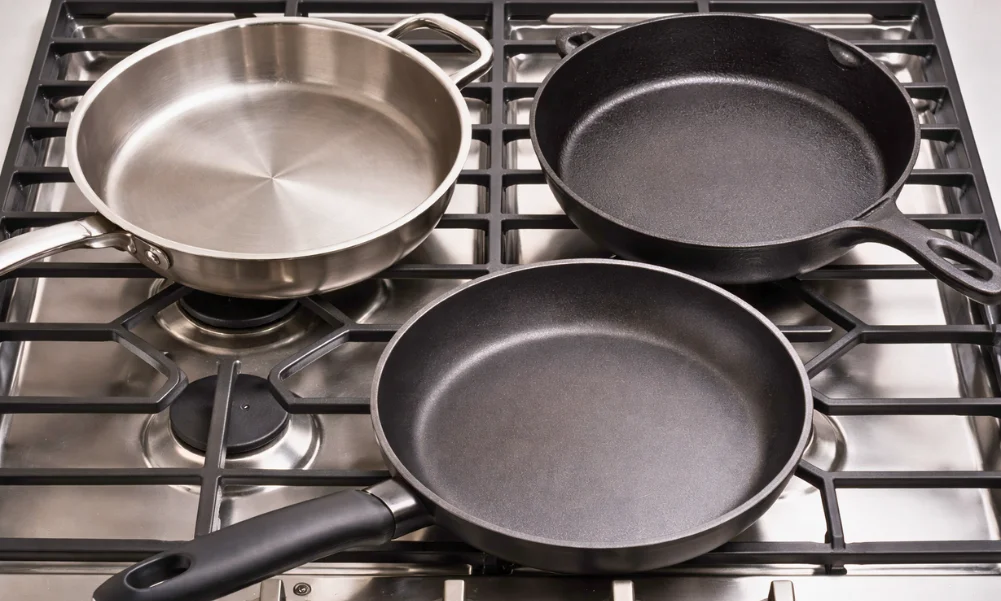
Quick Answer
Frying places concentrated stress on cookware because it involves direct surface contact, rapid heat transfer, and repeated thermal cycling. Materials perform differently based on how they distribute heat, tolerate surface interaction, and recover between uses.
No single cookware material suits all frying situations, as suitability varies by durability, surface behavior, and stress tolerance.
In practice, the best material depends on whether frying prioritizes durability (stainless steel, cast iron), responsiveness (carbon steel), or surface release (non-stick) over repeated use.
What “Frying” Means in Cookware Terms
In cookware terms, frying is defined by sustained surface contact rather than liquid immersion. Heat transfers directly through the pan surface into the food with limited buffering.
This contact concentrates thermal energy at the surface. It creates higher localized stress than methods where liquid moderates temperature change.
Frying also involves repeated contact and release cycles. Each cycle places mechanical and thermal demands on the cooking surface.
Residue formation is more likely under these conditions. Cleaning after frying adds another layer of surface interaction.
Because of this combination, frying challenges cookware more than boiling or steaming. Material behavior under surface stress becomes the dominant performance factor.
Why Frying Is Harder on Cookware Than Other Methods
Frying exposes cookware to rapid heating followed by cooling. This expansion and contraction repeats across multiple cooking sessions.
Surface contact concentrates wear at specific points. Unlike boiling, stress does not distribute evenly across the cookware.
Residue buildup further alters surface interaction. Removing that residue introduces additional abrasion over time.
These factors compound gradually rather than causing immediate failure. Cookware often appears intact while performance changes quietly.
Longevity patterns shaped by repeated surface stress are discussed further in how long should cookware last, where use intensity matters more than appearance.
Stainless Steel for Frying
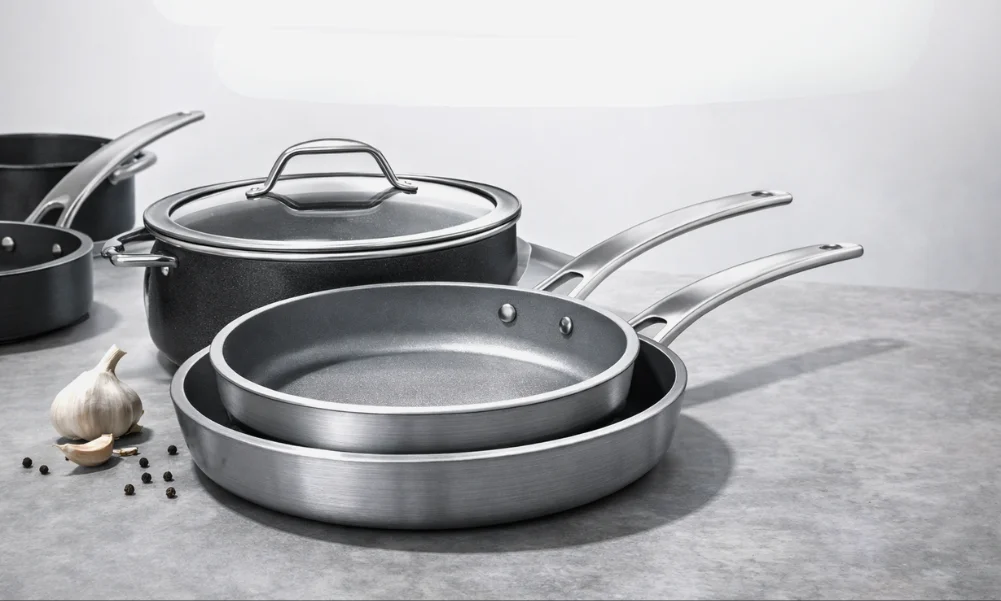
Stainless steel handles frying demands through structural durability rather than surface protection. Its uncoated surface tolerates repeated thermal cycling without degrading chemically.
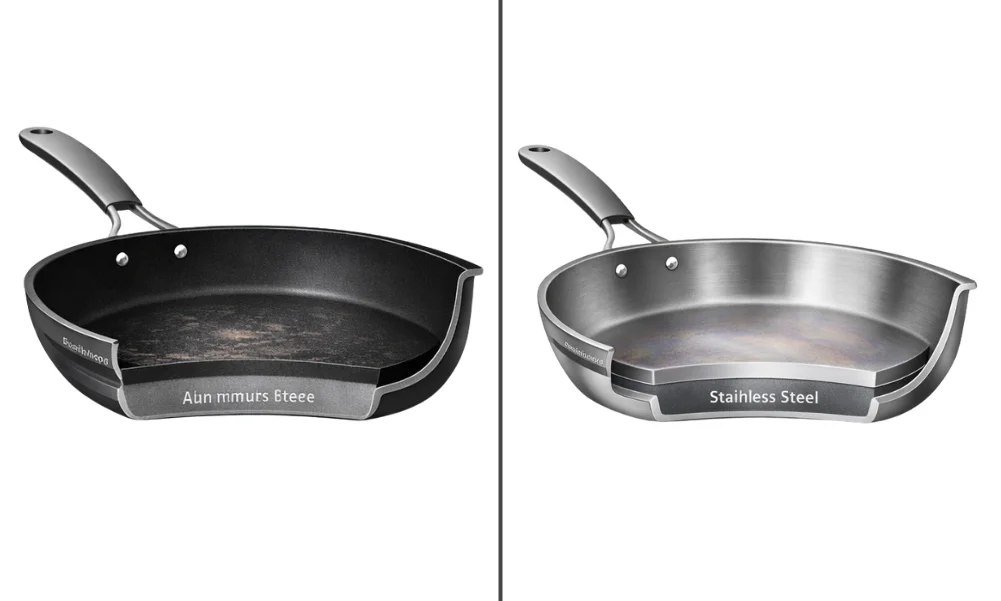
Heat behavior depends strongly on construction quality. Multi-layer or clad designs distribute energy more evenly across the surface.
Thin stainless steel concentrates heat at contact points. This increases localized stress and uneven surface interaction during frying.
Stainless steel accepts surface wear without losing structural reliability. Performance changes appear before any safety concern develops.
This behavior helps explain why stainless steel remains common in kitchens where surface stress is frequent. Longevity depends more on thickness and bonding than on alloy labeling.
Heat distribution differences are explained further in cookware thickness heat control, where construction shapes performance.
Cast Iron and Carbon Steel for Frying
Cast iron and carbon steel perform well under frying stress because of their mass and surface behavior. Their weight slows temperature swings and reduces localized stress.
Cast iron absorbs heat gradually and retains it consistently. This stability supports repeated surface contact without rapid fluctuation.
Carbon steel responds faster to heat changes. Its thinner profile narrows the margin for uneven stress during frying.
Both materials rely on conditioned surfaces rather than coatings. Surface behavior evolves over time rather than degrading abruptly.
Weight and rigidity reduce warping risk. Handling stress and thermal shock remain the primary limitations.
The performance differences between these materials are explored further in carbon steel vs cast iron cookware, where responsiveness and mass are compared.
Non-Stick Cookware and Frying Limits
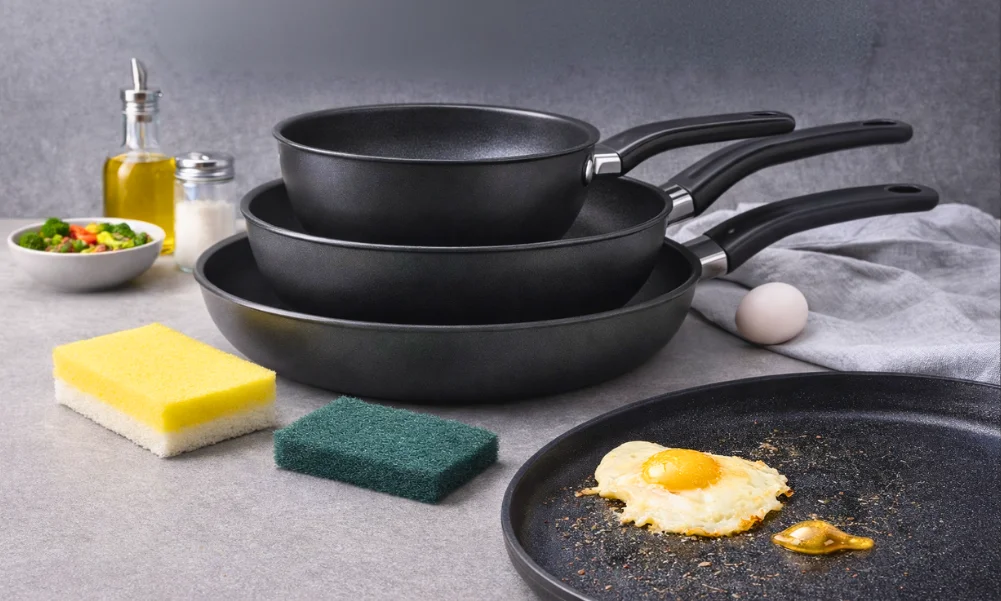
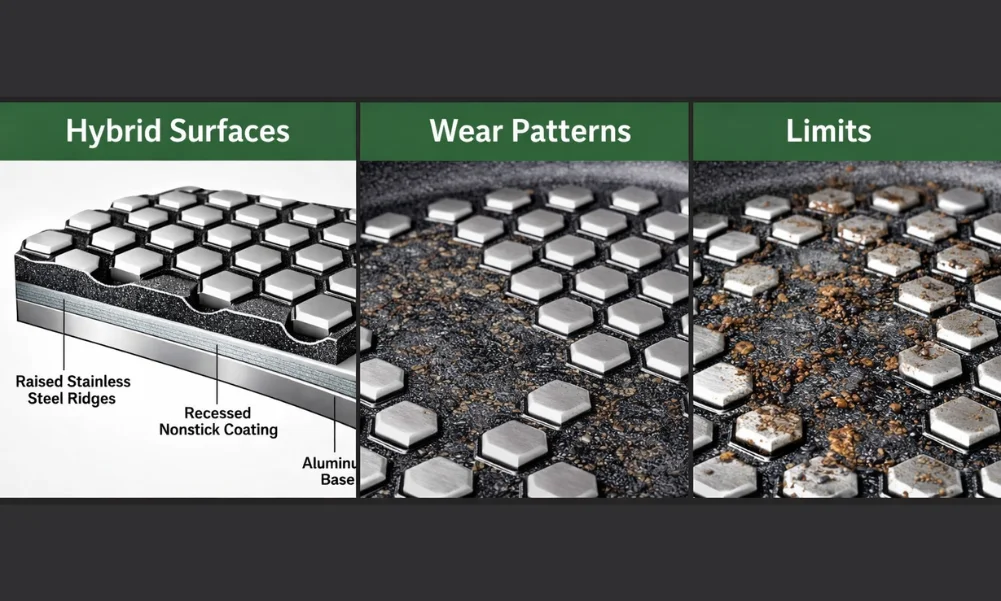
Non-stick cookware approaches frying through surface protection rather than structural tolerance. The coating reduces adhesion but introduces a narrower margin for surface stress.
Frying concentrates heat at the cooking surface. This accelerates coating wear compared to gentler cooking methods.
Performance decline appears gradually. Food release becomes uneven before any visible coating damage is present.
Structural safety is not immediately affected. The limitation is functional lifespan rather than sudden failure.
This behavior explains why non-stick cookware often feels effective initially while having a shorter functional lifespan. Coating durability, not base metal strength, defines frying performance.
Surface stability and longevity boundaries are discussed further in when to replace non-stick cookware and what is the safest non-stick cookware. Non-stick cookware performs best for shallow, moderate-heat frying rather than sustained high-temperature surface contact.
Aluminum and Clad Cookware for Frying
Aluminum responds quickly to heat changes. This responsiveness increases sensitivity to uneven surface stress across the cooking surface.
Thin aluminum bases are more likely to deform under repeated frying cycles. Localized expansion can lead to permanent shape change over time.
Clad cookware improves aluminum performance by adding structural layers. These layers distribute heat more evenly and resist deformation.
Frying exposes weaknesses in bonding quality. Poorly bonded layers separate sooner under repeated thermal cycling.
Warping patterns related to surface stress are explained further in cookware warping causes prevention, where deformation develops gradually rather than suddenly.
Frying, Longevity, and Safety Separation
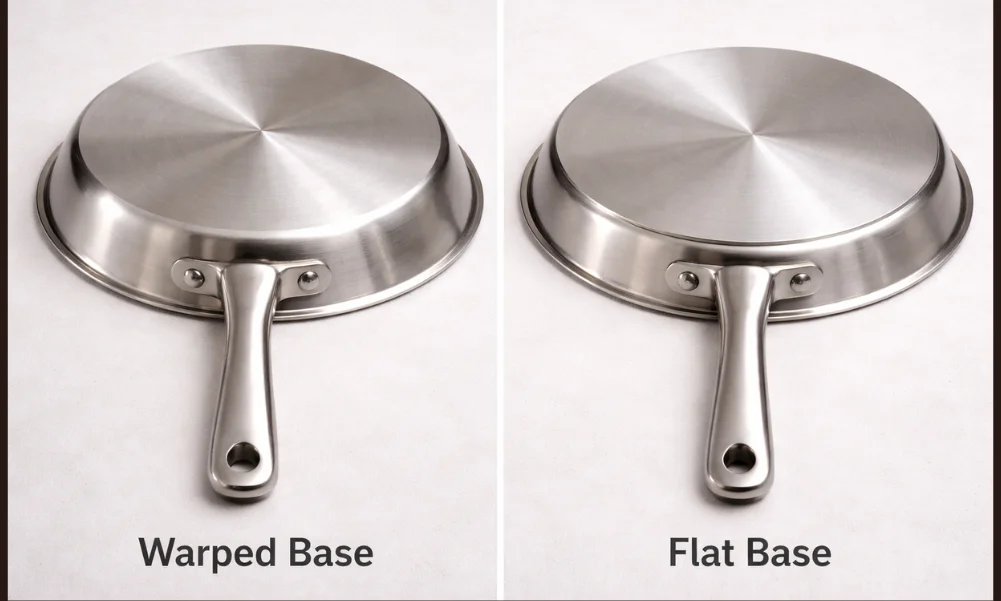
Frying accelerates wear because it concentrates stress at the cookware surface. Wear develops incrementally across repeated sessions.
Surface changes affect performance before safety. Stability, handle attachment, and base flatness define safety boundaries.
Cookware becomes a safety concern only when structure is compromised. Surface wear alone does not create instability.
Clear mechanical warning signs are outlined in signs your cookware is no longer safe to use, where function matters more than appearance.
Understanding this separation helps clarify when performance change differs from structural safety.
Matching Frying Tasks to Cookware Materials
Heavy searing benefits from cast iron or thick stainless steel. Fast pan-frying favors carbon steel or clad cookware. Low-friction frying favors non-stick with controlled heat.
Closing Summary
Frying places higher and more concentrated stress on cookware than many other cooking methods. Materials perform differently based on how they manage surface interaction and thermal cycling.
No single cookware material behaves optimally across every frying situation. Each material carries tradeoffs between release behavior, durability, and longevity.
Evaluating frying performance through material behavior rather than labels supports more reliable cookware choices over time.