All-Clad Cookware Sets Explained: Construction, Heat Behavior, and Longevity

Quick Answer
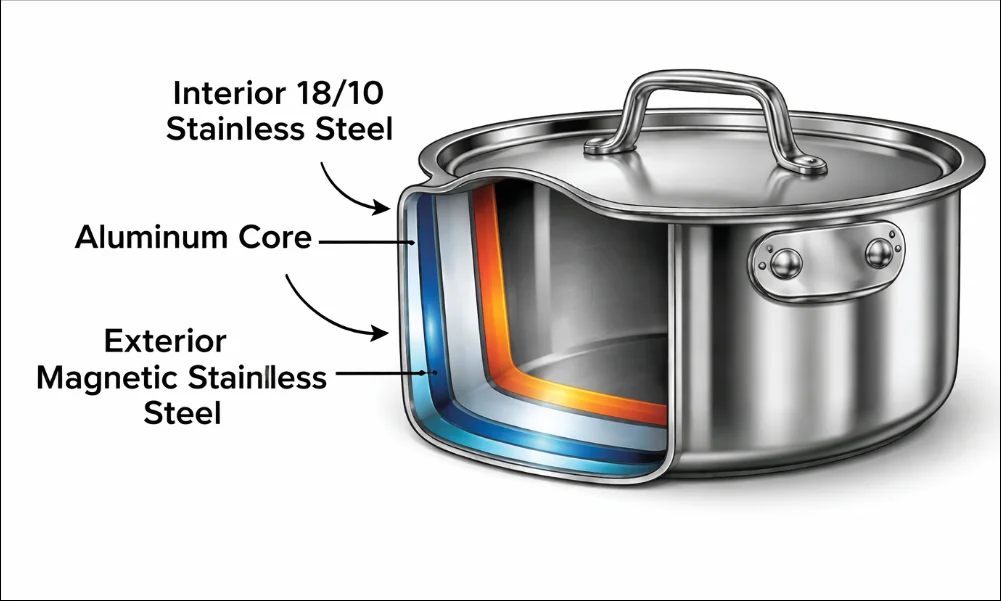
All-Clad cookware sets are defined by fully bonded multi-layer metal construction rather than coatings or surface treatments. Their performance comes from how stainless steel and conductive core layers are bonded across the entire pan, not from branding alone.
Heat control, durability, and lifespan reflect material physics and construction consistency.
All-Clad cookware remains mechanically stable under normal household use, with limitations related to weight, responsiveness, and cost rather than safety.
What “All-Clad” Means as a Cookware Entity
All-Clad is best understood as a cookware system built around full-surface cladding rather than a single material identity.
The term “clad” refers to multiple metal layers permanently bonded together across the base and sidewalls. This differs from cookware that uses a conductive disc only at the bottom.
In cookware classification, materials such as cast iron or stainless steel describe the substance that directly governs heat behavior and longevity.
All-Clad cookware does not function as a standalone material category, which aligns with how cookware categories are defined in Cookware Types Explained. It behaves as stainless steel cookware with fully bonded conductive layers because that is how it is constructed.
Entity recognition for All-Clad comes from consistency in construction rather than surface appearance or coating type. The cookware’s behavior remains predictable because the bonded structure does not vary across the cooking surface.
Core Construction Logic Behind All-Clad Cookware
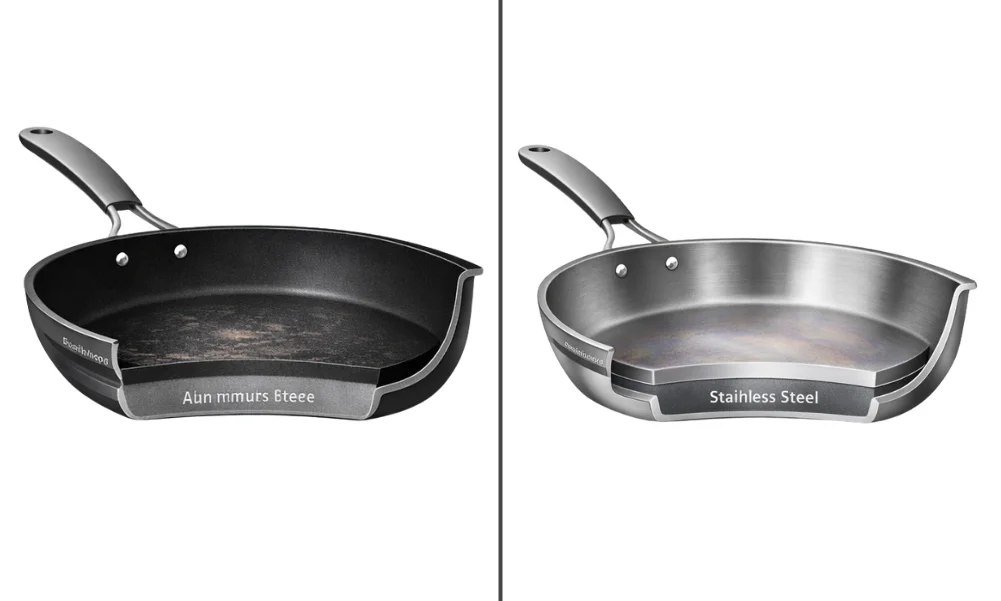
All-Clad cookware relies on permanently bonded metal layers rather than applied coatings. Stainless steel typically forms the interior cooking surface and exterior shell, while aluminum or copper layers sit between them to improve heat movement.
Because the layers extend through the sidewalls, heat does not concentrate only at the base. Temperature changes propagate across the entire pan rather than pooling at the center. This reduces localized overheating and improves surface consistency during active cooking.
Thickness and bonding quality determine how quickly the cookware responds to heat changes. Thicker constructions slow temperature swings and distribute stress more evenly, a relationship explained further in Cookware Thickness & Heat Control.
This construction approach prioritizes predictability rather than rapid responsiveness.
Heat Performance Characteristics
All-Clad cookware responds steadily to heat input and maintains surface consistency once heated. Conductive core layers allow energy to spread before surface temperatures spike. Stainless steel surfaces remain chemically stable under normal cooking conditions.
High heat tolerance depends more on construction thickness than on material naming. All-Clad cookware tolerates a wide range of cooking temperatures but performs best when heat is increased gradually rather than abruptly.
Repeated exposure to extreme heat shortens lifespan through cumulative stress, consistent with patterns described in Maximum Safe Heat for Different Cookware Materials.
This behavior mirrors broader guidance outlined in Best Oils to Use With Different Cookware Materials.
Performance remains stable even as cosmetic changes appear. Discoloration does not affect safety or heat behavior, which aligns with broader observations in Cookware Discoloration: Causes and Cleaning.
Compatibility With Modern Cooktops
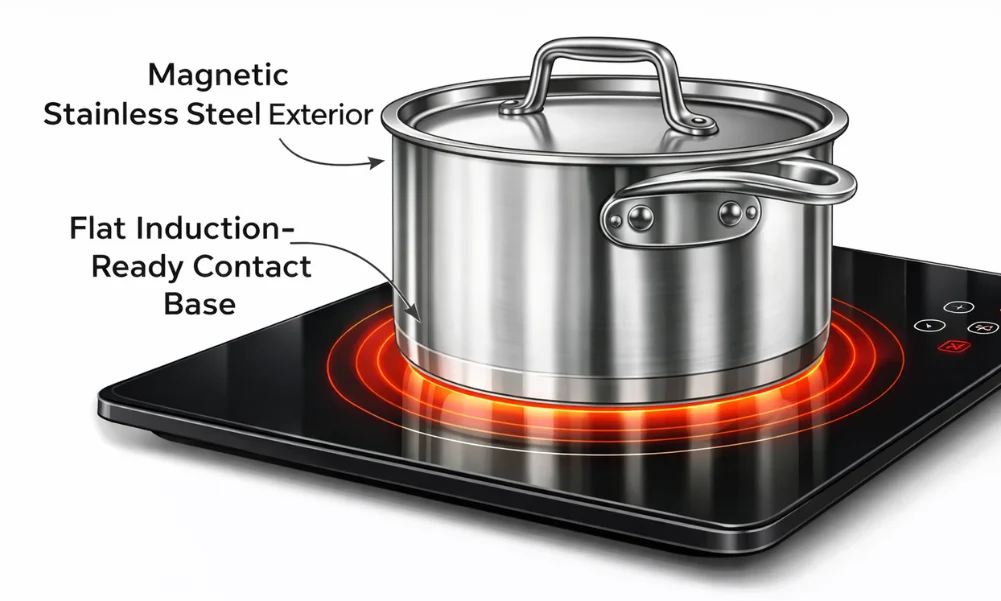
All-Clad cookware performs reliably across gas, electric, and induction cooktops. Fully clad construction improves flat contact with induction surfaces and reduces hot spots caused by uneven magnetic coupling.
Induction cooking delivers energy rapidly, which narrows the margin for delayed response. Well-bonded cookware distributes this energy more evenly, but misuse still accelerates stress.
This relationship is explained further in What Is Induction Cookware and How Does It Work and Induction Cooking Mistakes That Damage Cookware.
Matching pan size to cooktop zone size remains important. Even well-constructed cookware deforms faster when repeatedly overheated or mismatched to burner dimensions.
Longevity and Wear Patterns
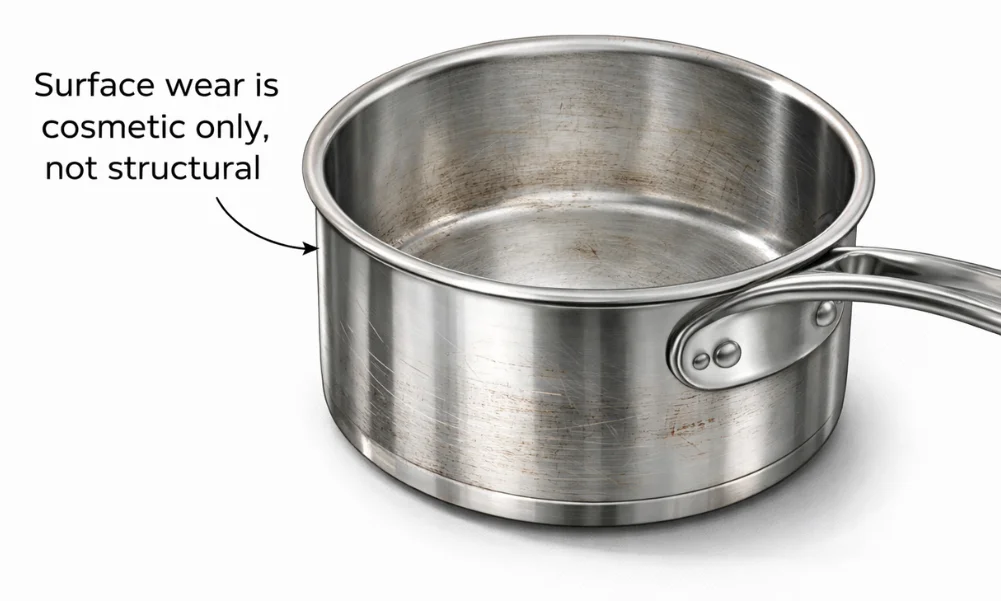
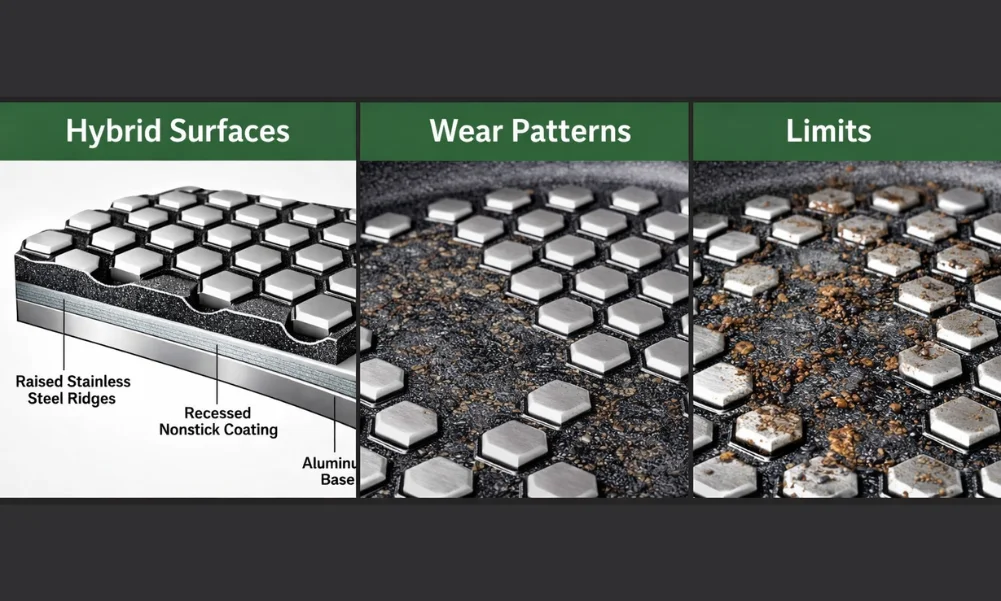
All-Clad cookware has a long structural lifespan because it does not rely on coatings that wear away. Stainless steel surfaces tolerate abrasion without compromising safety or heat behavior. Scratches remain cosmetic rather than functional.
Warping risk is lower than in thin stainless steel cookware but not eliminated entirely. Repeated high heat, empty heating, or rapid cooling can still introduce stress, following patterns outlined in Cookware Warping: Causes, Prevention, and Fixes.
Longevity depends on cumulative use rather than single events. This aligns with broader lifespan expectations discussed in How Long Should Cookware Last.
What All-Clad Cookware Is Not
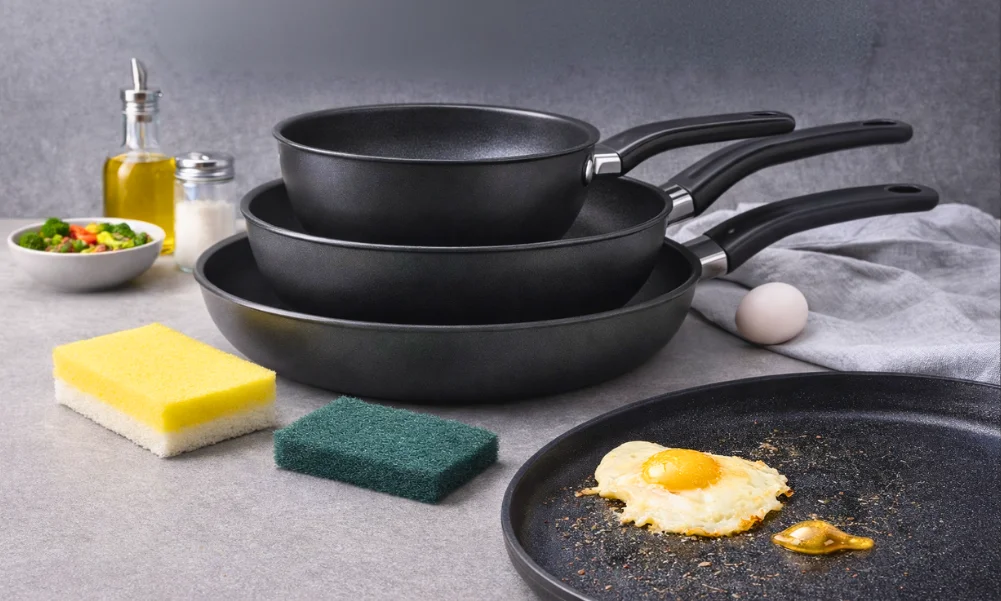
All-Clad cookware is not non-stick cookware. Food release depends on heat control and surface condition rather than coating chemistry. It is not lightweight cookware and requires deliberate handling during cooking.
It is not optimized for low-skill or hands-off cooking tasks. Stainless steel surfaces demand attention to heat timing and moisture control. The cookware is also not immune to misuse. Empty heating and extreme temperature swings shorten lifespan even when no immediate damage appears.
Clarifying these limits prevents expectation mismatch rather than diminishing performance.
Set Composition and Use Logic
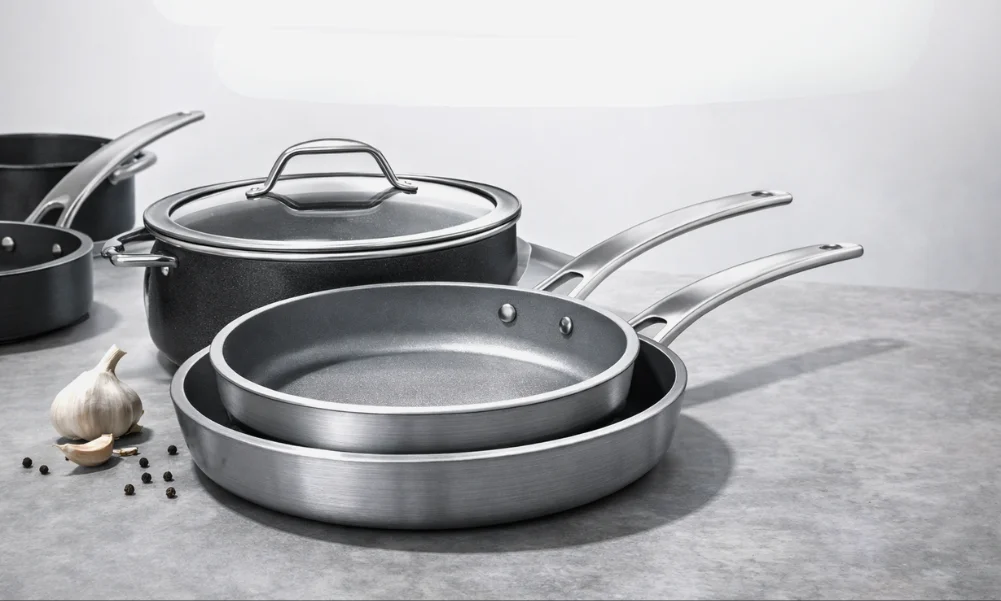
All-Clad cookware sets typically include multiple pan sizes and shapes designed to cover a range of cooking tasks. Practical value depends on how frequently each piece is used rather than total piece count.
Large sets can concentrate wear on a few frequently used pans while leaving others underutilized. This pattern mirrors broader cookware set behavior explained in Cookware Set vs Individual Pieces and Budget vs Premium Cookware Sets.
Set ownership does not replace task-specific cookware selection. Many kitchens benefit from combining clad cookware with other materials rather than relying on one system exclusively.
Safety Perspective
All-Clad cookware safety is mechanical rather than chemical. Stainless steel surfaces remain stable under normal household cooking conditions. Safety concerns arise only when structural integrity changes.
Indicators such as persistent rocking, handle loosening, or severe deformation signal functional decline. These warning signs develop gradually and are outlined in Signs Your Cookware Is No Longer Safe to Use.
Surface scratches, discoloration, or cosmetic wear do not indicate safety risk.
Where All-Clad Fits Within a Balanced Kitchen
All-Clad cookware suits cooks who value controlled heat and consistent surface behavior. It rewards deliberate cooking habits and offers predictable performance across heat sources.
It is often paired with non-stick cookware for delicate tasks and heavier materials for sustained high-heat applications. This mixed-material approach distributes stress and extends overall cookware lifespan, aligning with system-level behavior described in Cookware Types Explained.
Understanding how All-Clad fits within a broader cookware system prevents overreliance and improves long-term outcomes.
Practical Limitations to Consider
All-Clad cookware is heavier than many alternatives and requires attentive heat control to prevent sticking. Its performance advantages do not eliminate the need for complementary cookware materials in a balanced kitchen. Cost reflects construction complexity rather than expanded functionality for all cooking styles.
Who All-Clad Cookware Is Best Suited For
All-Clad cookware suits cooks who value controlled heat response, surface consistency, and long-term structural durability. It is best suited to kitchens where deliberate heat management is practiced and cookware is used across multiple heat sources.
Cooks seeking lightweight cookware or low-attention food release may find other materials more convenient for certain tasks.
Closing Summary
All-Clad cookware sets are defined by fully bonded multi-layer construction rather than coatings or surface treatments.
Performance outcomes follow material physics and bonding quality, not branding. Longevity depends on cumulative heat exposure and use patterns rather than cosmetic appearance.
When matched to appropriate cooking tasks and heat sources, All-Clad cookware provides stable, predictable behavior over time without introducing unique safety concerns.