Carbon Steel vs Non-Stick Cookware: Heat Limits, Surface Wear, and Longevity

Quick Answer
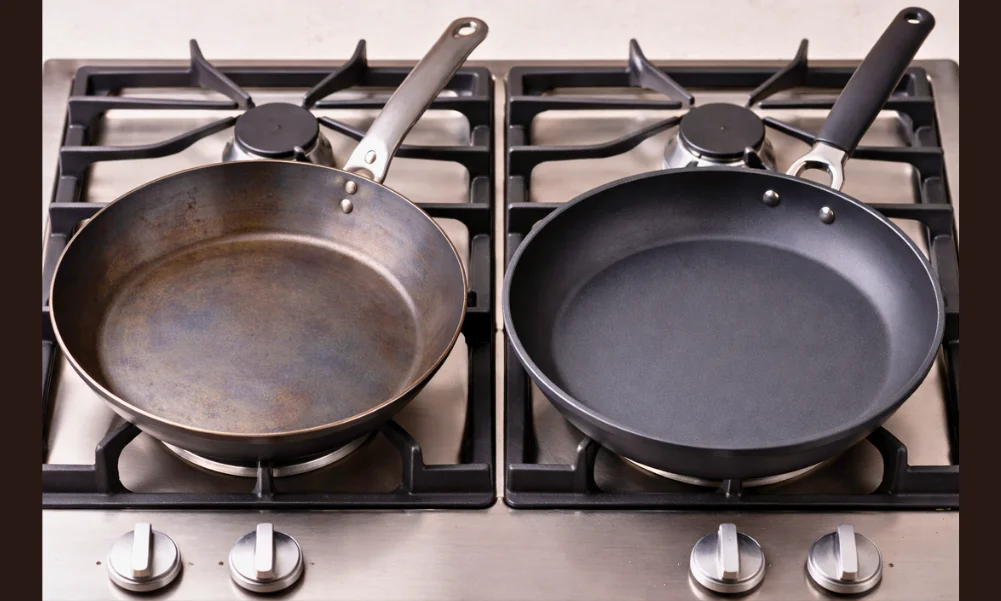
Carbon steel and non-stick cookware differ in surface design, heat tolerance, and how performance changes with use. Carbon steel relies on a developing seasoning layer over bare metal, while non-stick cookware relies on a factory-applied coating to reduce food adhesion.
Neither category is universally superior. Their differences appear most clearly in heat response, cooking interface wear patterns, and long-term predictability.
How Surface Design Shapes Cooking Behavior
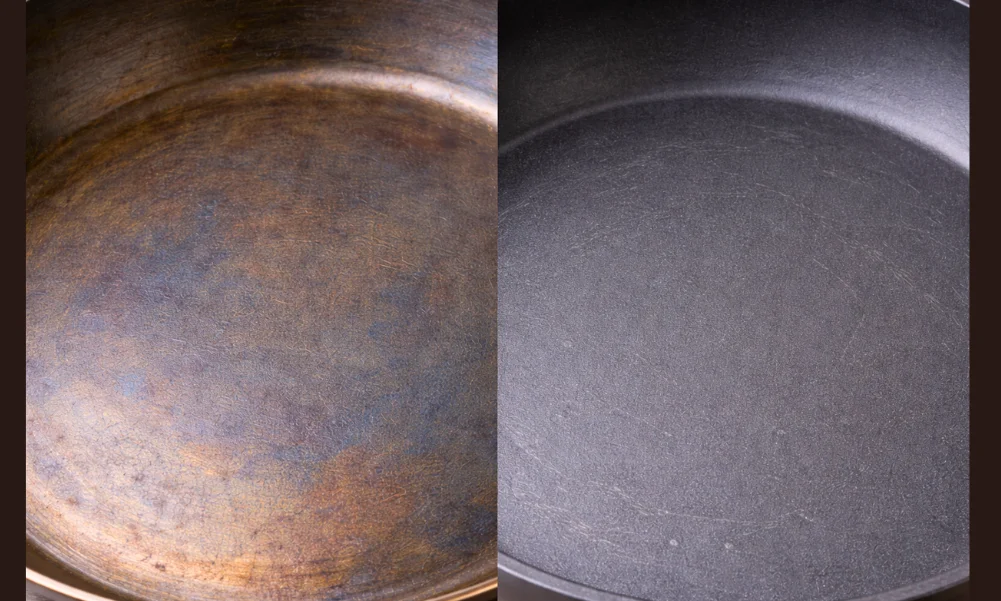
The primary distinction between carbon steel and non-stick cookware lies at the cooking surface. Each contact layer interacts with food through a different mechanism.
Carbon steel exposes metal beneath a thin seasoning layer. This layer forms gradually and changes with repeated heating and contact.
Cooking interface behavior evolves over time. Food release improves or declines depending on how the surface develops.
Non-stick cookware relies on a fixed coating. Food release is immediate and consistent while the coating remains intact.
As the coating wears, performance changes unevenly. Release declines before any structural issues appear.
These surface differences explain why the two cookware types feel distinct during use despite similar base metals in some designs.
Heat Tolerance and Stress Response
Carbon steel and non-stick cookware respond differently to heat stress. The difference reflects surface limits rather than metal strength alone.
Carbon steel tolerates high heat at the metal level. Its thin construction allows rapid temperature change, which narrows margins under abrupt heating.
Non-stick cookware has narrower heat tolerance. cooking interface coatings degrade under repeated high heat or empty heating.
This does not imply immediate danger. Performance decline develops gradually with cumulative stress.
Heat exposure patterns influence longevity more than short-term cooking results. Surface condition changes appear before structural instability in most cases.
Longevity and Wear Patterns Over Time
Carbon steel and non-stick cookware age through fundamentally different surface processes. The difference lies in whether the cooking interface evolves or erodes with use.
Carbon steel surfaces change gradually. Seasoning layers form, thin, and rebuild as heat exposure and contact repeat.
This evolution alters contact layer behavior without compromising the metal itself. The underlying steel remains structurally stable unless deformed by impact or extreme thermal stress.
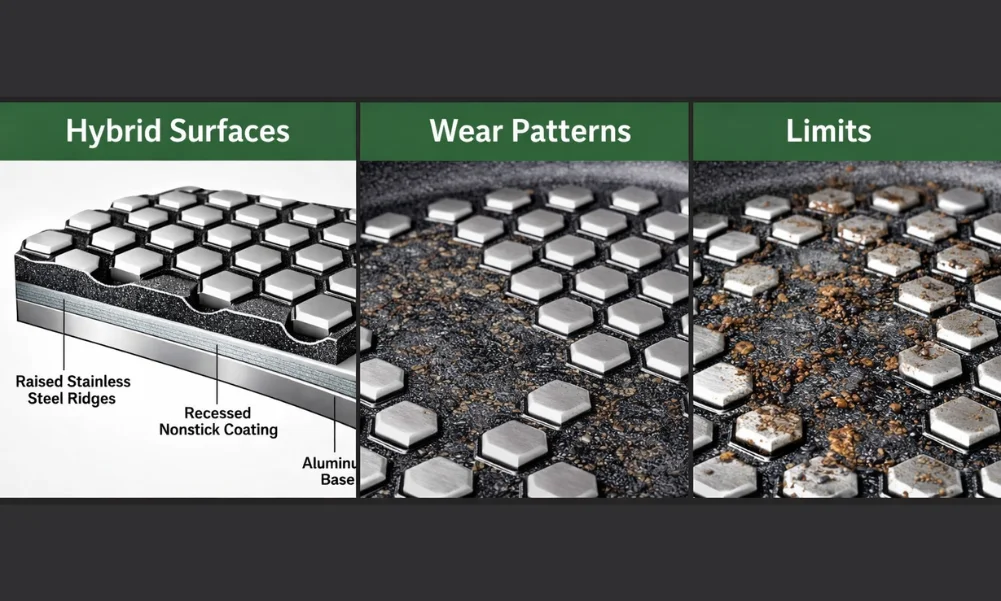
Non-stick cookware shows wear in a different way. The coating thins and loses consistency over time rather than regenerating.
Performance decline often appears unevenly. Some areas lose release earlier than others while the structure remains intact.
Longevity expectations depend on cooking interface limits rather than cookware age alone. The base metal often outlasts the usable surface in non-stick cookware.
These surface lifespan differences align with broader expectations discussed in how long should cookware last.
Safety Boundaries in Carbon Steel and Non-Stick Cookware
Safety considerations for both cookware types are primarily mechanical and behavioral. Neither category presents inherent risk when surfaces and structure remain intact.
For carbon steel, safety concerns relate to shape and stability. Warping or cracking compromises control and predictability.
For non-stick cookware, safety concerns center on coating condition. Significant coating breakdown alters heat response and cooking interface behavior.
Scratches or cosmetic marks alone rarely indicate immediate safety loss. Behavioral changes provide more reliable indicators over time.
These boundaries develop gradually. Sudden failure is uncommon under normal household use.
Clear mechanical and behavioral warning signs are outlined in signs your cookware is no longer safe to use.
How Use Patterns Influence Surface Differences
Use frequency shapes how carbon steel and non-stick cookware diverge over time. Occasional use minimizes practical differences between the two surfaces.
With frequent use, carbon steel surfaces continue to evolve. Seasoning responds to heat cycles, moisture exposure, and cleaning contact.
Non-stick surfaces change in a more linear way. Each cooking cycle contributes incremental coating wear.
High heat amplifies these differences. Abrupt temperature changes stress thin carbon steel and degrade non-stick coatings.
These patterns explain varied ownership experiences. They reflect cooking interface behavior under repeated stress rather than material quality.
Storage, Handling, and System-Level Effects
Storage and handling affect carbon steel and non-stick cookware differently. The difference lies in surface resilience rather than structural strength.
Carbon steel tolerates stacking and contact predictably. cooking interface marks often reflect cosmetic change rather than performance loss.
Non-stick surfaces are more sensitive to contact. Repeated friction accelerates coating wear even without visible damage.
Handling stress affects both cookware types. Warping or attachment loosening alters stability regardless of surface design.
These effects accumulate gradually. They influence long-term condition alongside cooking behavior.
Common Assumptions About Carbon Steel and Non-Stick Cookware
Carbon steel is sometimes viewed as difficult to maintain. In practice, surface change is expected rather than exceptional.
Non-stick cookware is often perceived as short-lived. Lifespan reflects surface limits rather than overall construction quality.
Ease of release does not equal durability. Surface regeneration differs from contact layer erosion.
These assumptions oversimplify material behavior. Surface design explains tradeoffs more reliably than labels.
So, Which Is Better for Most Home Cooks?
For most home cooks, carbon steel and non-stick cookware serve different cooking priorities rather than competing directly. Carbon steel suits cooks comfortable managing heat and surface development over time.
Non-stick suits cooks who prioritize immediate release and controlled, lower-heat cooking with predictable short-term performance.
Closing Summary
Carbon steel and non-stick cookware differ primarily in how their surfaces respond to heat and wear. These differences shape performance, longevity, and predictability over time.
Carbon steel relies on a contact layer that evolves with use. Non-stick relies on a surface that degrades gradually.
Neither category is universally superior. Understanding their contact layer limits supports realistic expectations and long-term reliability.