Quick Answer
Camp cookware sets face different stresses than indoor cookware because outdoor cooking environments are less controlled. Performance depends on stability, material tolerance, weight distribution, and resistance to mechanical stress rather than cooking results.
Camp cookware suitability is defined by how well it maintains predictable behavior under uneven heat, transport, and repeated handling.
In practice, camp cookware performs best when stability and structural tolerance are prioritized over lightweight convenience or surface coatings.
What “Camp Cookware” Means in Practical Terms
Camp cookware is not defined by recipes or heat output. It is defined by exposure to variable conditions.
Outdoor cooking environments introduce uneven heat sources. Cookware must tolerate contact that is less uniform than household stovetops.
Camp cookware is also handled more frequently. It is lifted, stacked, packed, and transported between uses.
These movements introduce mechanical stress beyond normal kitchen routines. Rims, bases, and handle attachments experience repeated load changes.
As a result, camp cookware performance depends less on surface finish. Structural reliability becomes the dominant factor.
Why Outdoor Cooking Stresses Cookware Differently
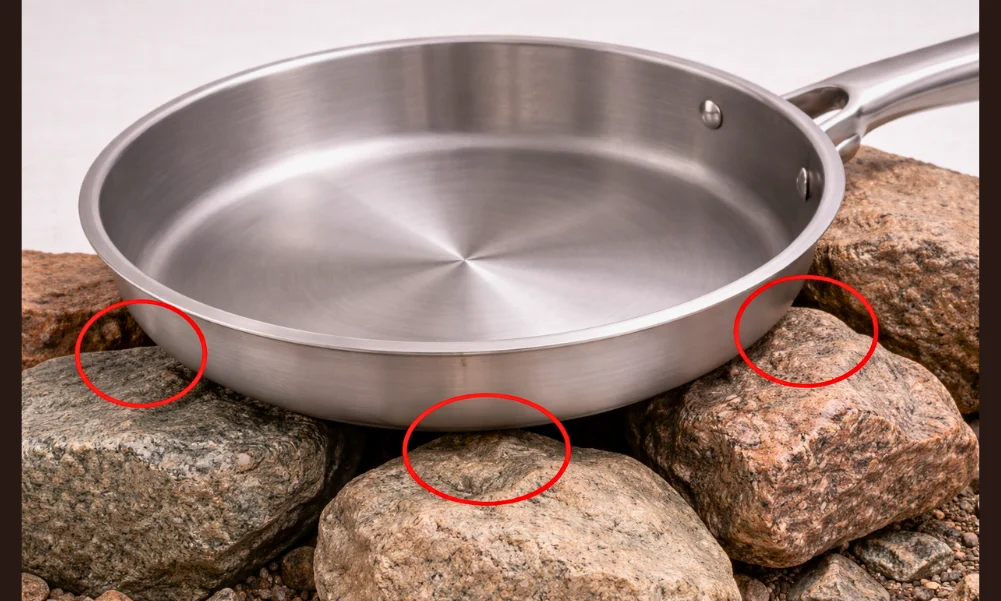
Outdoor heat sources apply energy inconsistently. Cookware may contact flames, grates, or uneven surfaces.
This creates localized hot spots. Thermal stress concentrates at contact points rather than spreading evenly.
Weight distribution also matters more outdoors. Cookware may rest on narrow supports or unstable surfaces.
Movement during cooking increases spill and impact risk. Repeated minor impacts contribute to gradual deformation.
These stresses accumulate quietly over time. Cookware may appear functional while stability changes slowly.
Longevity patterns shaped by uneven heat and handling are discussed further in how long should cookware last, where usage environment matters as much as frequency.
Material Behavior Under Outdoor Conditions
Camp cookware materials face different demands than indoor cookware because conditions vary constantly. Uneven heat, wind exposure, and surface contact change how materials respond.
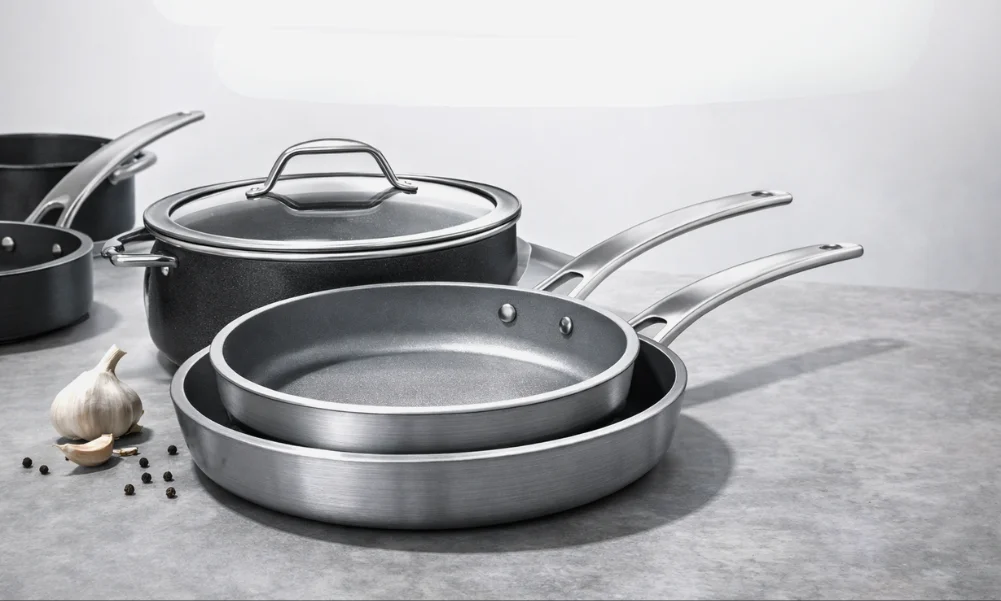
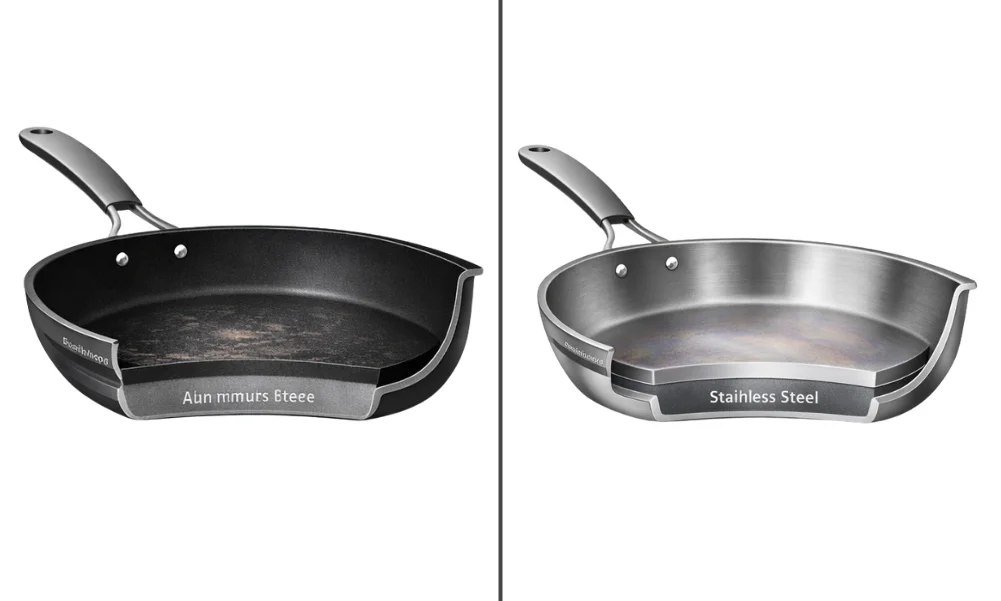
Stainless steel tolerates repeated thermal cycling and physical handling well. Its durability supports frequent packing and unpacking without surface degradation.
Aluminum cookware offers lighter weight but less structural stiffness. Thin aluminum is more sensitive to localized heat and impact stress.
Anodized aluminum improves surface hardness. It does not eliminate deformation risk under uneven support.
Cast iron provides excellent structural stability. Its weight and brittleness increase handling and transport stress.
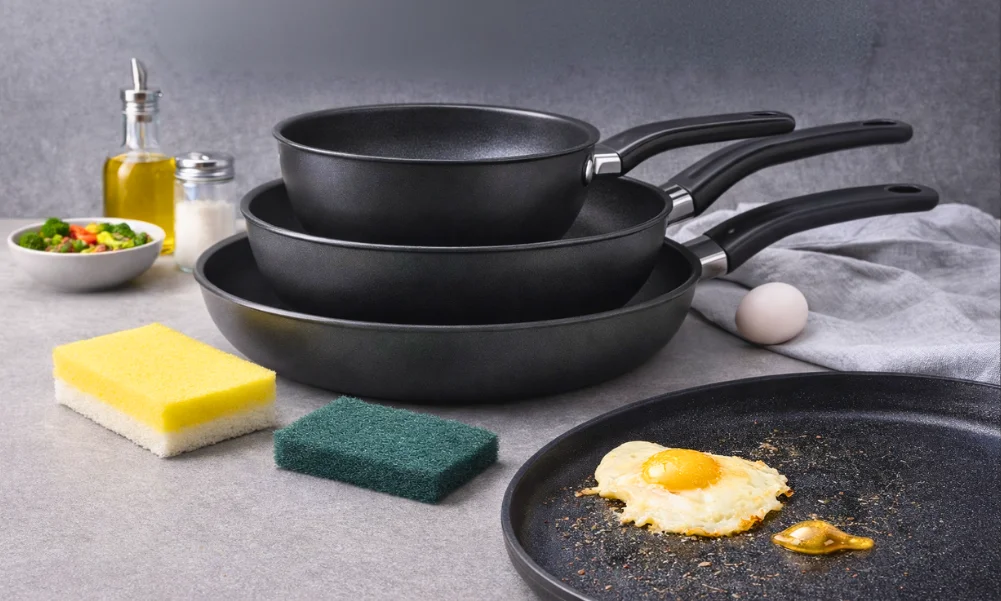
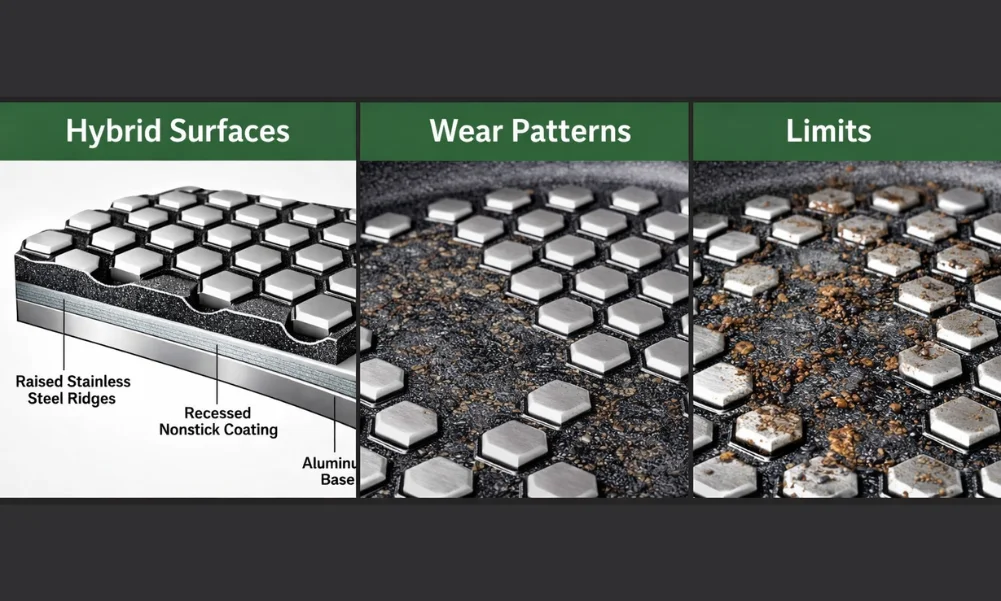
Non-stick cookware prioritizes surface convenience over durability. Outdoor conditions accelerate coating wear through abrasion and uneven heating.
Material suitability depends on tolerance for instability rather than cooking performance. Materials that rely on surface treatments rather than mass or structure tend to show wear sooner under outdoor conditions.
Construction Features That Matter Outdoors
Construction quality plays a larger role outdoors than in controlled kitchens. Thin walls and bases deform more easily under uneven support.
Rim thickness influences how cookware tolerates impact during packing. Thin rims bend sooner when stressed repeatedly.
Handle attachment design affects safety. Loose or flexible handles increase instability on uneven surfaces.
Riveted handles distribute stress more predictably than welded attachments. This matters when cookware is lifted or repositioned frequently.
Lids experience additional stress outdoors. Improper fit allows movement that accelerates rim wear.
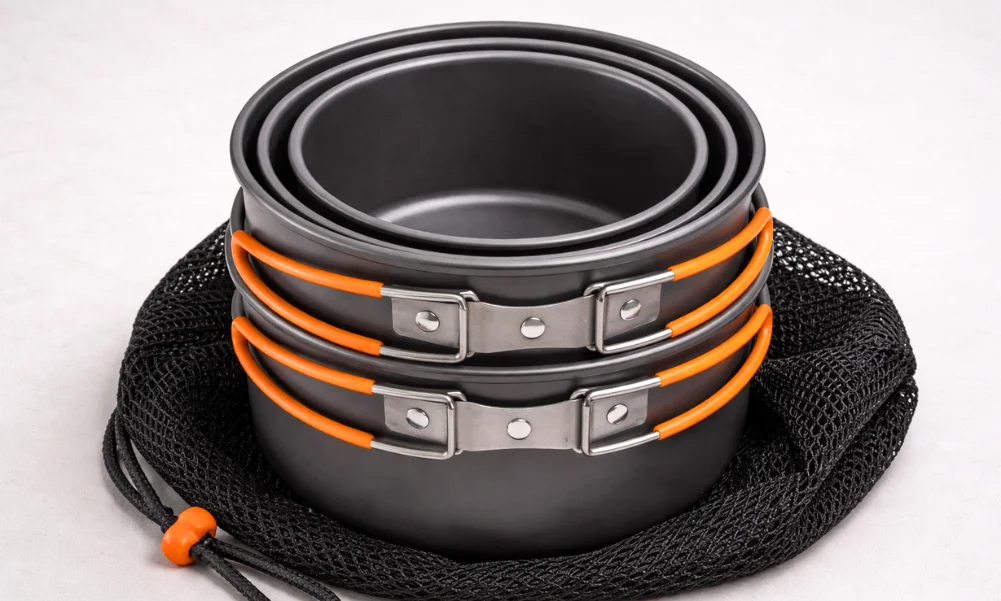
Stackable designs concentrate load on fewer contact points. This increases wear during transport rather than during cooking.
Handle construction differences are explained further in riveted vs welded cookware handles, where attachment design shapes durability.
Transport, Storage, and Long-Term Wear
Camp cookware experiences more movement than household cookware. Packing, unpacking, and transport introduce repeated contact between pieces.
Stacked cookware concentrates pressure at rims and edges. This pressure contributes to gradual deformation over time.
Surface finishes wear faster when cookware rubs during transport. Non-stick coatings are especially sensitive to this form of abrasion.
Storage conditions also vary outdoors. Temperature swings and moisture exposure influence material stability.
These factors affect longevity more than occasional high heat. Wear accumulates through handling rather than cooking intensity alone.
Storage-related stress patterns are discussed further in cookware storage ideas protect pots pans, where protection between uses matters.
Camp Cookware Longevity and Safety Boundaries
Longevity for camp cookware depends on structural resilience rather than appearance. Cosmetic wear does not indicate immediate safety concern.
Safety becomes relevant when stability changes. Warped bases, loose handles, or bent rims reduce control.
These changes develop gradually. They reflect cumulative stress rather than isolated misuse. Outdoor environments expose weaknesses sooner. Design limits become visible faster under variable conditions.
Clear mechanical warning signs are outlined in signs your cookware is no longer safe to use, where structure defines safety.
Occasional camp cooking places less cumulative stress on cookware than repeated outdoor use.
Suitability becomes more critical as frequency and load variability increase.
Common Misunderstandings About Camp Cookware Sets
Camp cookware is often assumed to be rugged by default. In practice, durability varies widely by material and construction.
Lightweight designs prioritize portability over longevity. Heavier designs prioritize stability but introduce handling strain.
Non-stick coatings do not improve structural performance outdoors. They trade surface convenience for reduced wear tolerance.
Set size does not indicate suitability. Individual component behavior matters more than included quantity. Understanding these tradeoffs reduces disappointment and premature replacement.
Closing Summary
Camp cookware sets perform best when structural stability aligns with outdoor conditions. Material behavior, construction quality, and handling stress define suitability.
Uneven heat and frequent movement accelerate wear compared to indoor use. Longevity improves when cookware tolerates these stresses predictably.
Evaluating camp cookware through durability and stability supports safer, longer-lasting use over time.