Quick Answer
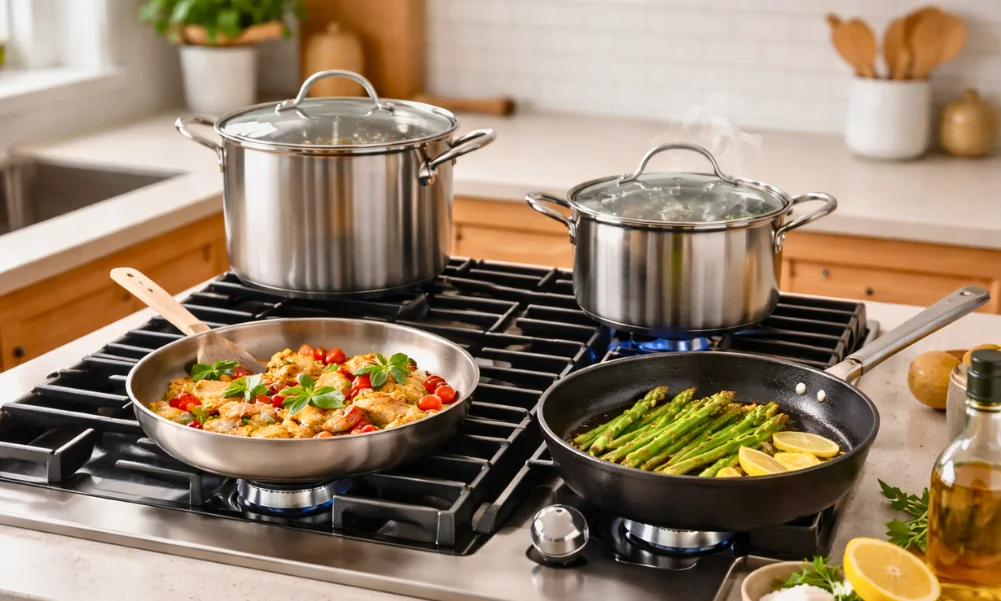
Cookware safety in homes with children relates to stability, heat retention, and attachment strength rather than material danger.
Risks develop when cookware behaves unpredictably under movement, contact, or residual heat. Condition, placement, and structural integrity matter more than cookware type alone.
These safety considerations also influence which cookware performs best overall, especially when choosing the best cookware for everyday use.
What “Safety” Means in a Household With Children
In households with children, safety refers to how objects behave when interacted with unexpectedly. For cookware, this behavior involves balance, surface temperature persistence, and resistance to tipping or sliding.
Cookware materials do not become inherently unsafe because children are present. The difference lies in exposure and interaction rather than composition.
A stable, predictable object presents fewer risks than one that shifts, tips, or retains heat unevenly. This framing places safety in mechanical response rather than in material labels or warnings.
Understanding safety this way helps separate cookware design from household context.
How Cookware Becomes a Safety Factor Around Children
Cookware becomes a safety factor when its physical behavior intersects with movement or contact. Heat retention plays a role after cooking ends, as surfaces may remain hot longer than expected.
Stability on cooking surfaces influences how cookware responds to contact or vibration. Bases with limited contact area are more likely to rock or shift under minor force.
Handle design affects leverage and rotation. Long or elevated handles change how force transfers to the cookware body.
Lid fit and movement also matter. Poorly seated lids can slide or shift, altering balance and heat containment.
These factors interact gradually rather than creating immediate hazards. Predictability, not danger, defines cookware safety in shared household environments.
Material Properties That Affect Safety Predictability
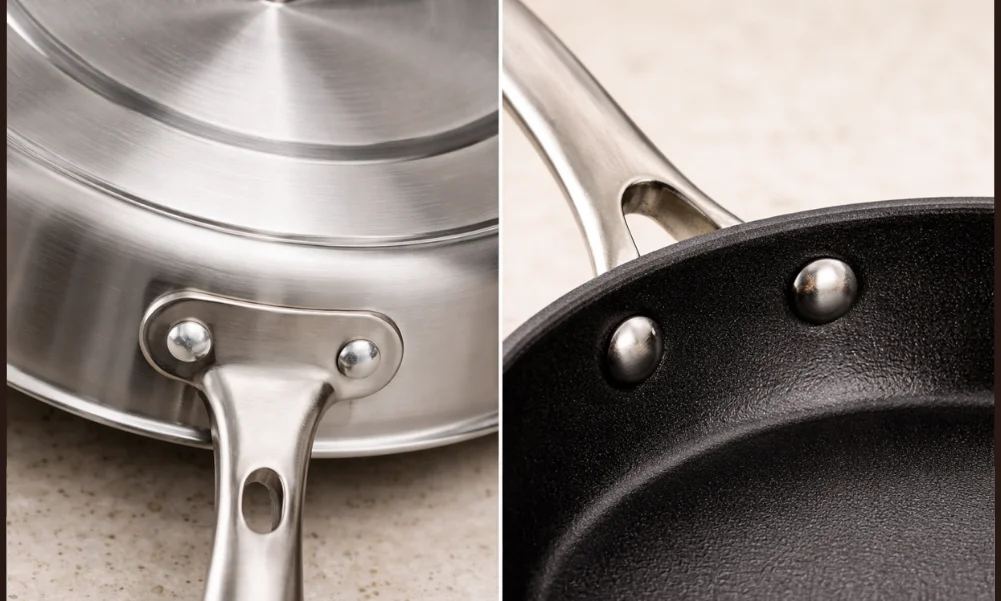
Cookware safety in shared households depends on how physical properties influence movement and heat behavior. These properties affect predictability rather than introducing inherent danger.
Weight and Mass
Heavier cookware resists sudden movement due to greater inertia. This resistance increases stability but also increases force if movement occurs.
Lighter cookware moves more easily when contacted. Lower mass reduces impact force but increases the likelihood of shifting or tipping.
Neither characteristic defines safety on its own. Predictability depends on how mass interacts with base contact and balance.
Heat Retention and Cooling Rate
Some materials retain heat longer after cooking ends. This persistence influences surface temperature during periods of inactivity.
Residual heat does not indicate danger. It reflects how efficiently a material stores and releases energy.
In shared spaces, longer cooling periods extend the window during which cookware remains warm to the touch. This behavior affects exposure timing rather than safety classification.
Handle Design and Attachment
Handles transfer force from contact points to the cookware body. Attachment method influences how predictably that force is absorbed.
Rigid attachments distribute stress differently than articulated or hollow designs. Over time, repeated stress can alter handle stability.
Attachment behavior and long-term reliability are examined in riveted vs welded cookware handles. Changes in handle integrity often appear gradually rather than abruptly.
Base Flatness and Contact Area
Cookware bases with broad, flat contact distribute weight evenly. This distribution reduces rocking when external force is applied.
Uneven or warped bases reduce contact area. Reduced contact increases movement under minor disturbance.
Base deformation and its effect on stability are discussed further in cookware warping causes and prevention. Stability loss typically develops through wear rather than isolated events.
Cookware Types and Household Safety Behavior
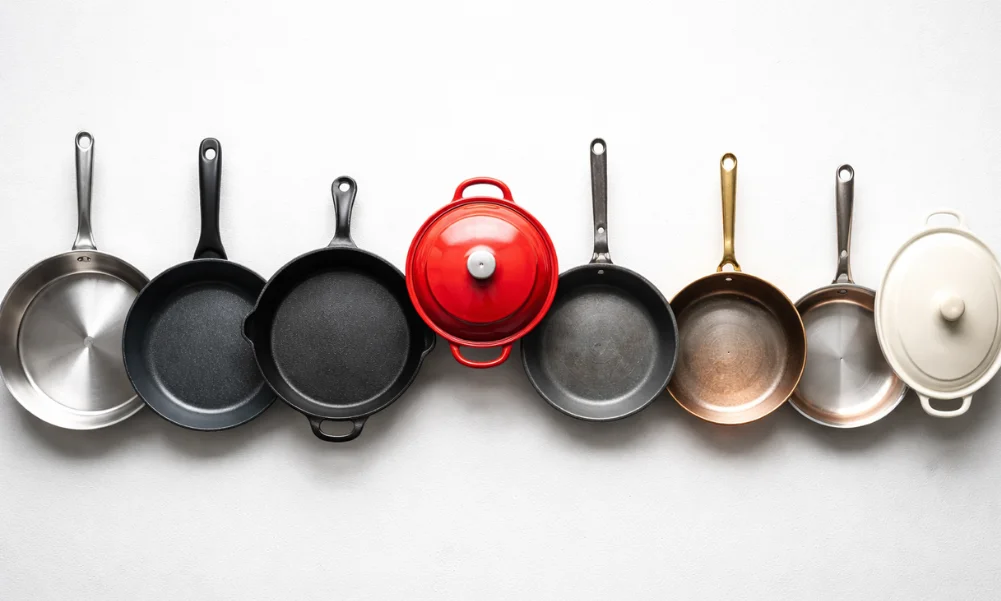
Different cookware types exhibit predictable patterns based on construction and material properties. These patterns influence how cookware behaves under movement and heat exposure.
Stainless Steel Cookware
Stainless steel cookware often balances moderate weight with stable base construction. Heat retention varies with thickness and layering rather than surface material.
Well-distributed mass supports stable placement. Predictability remains consistent unless distortion or attachment wear develops.
Cast Iron and Carbon Steel Cookware
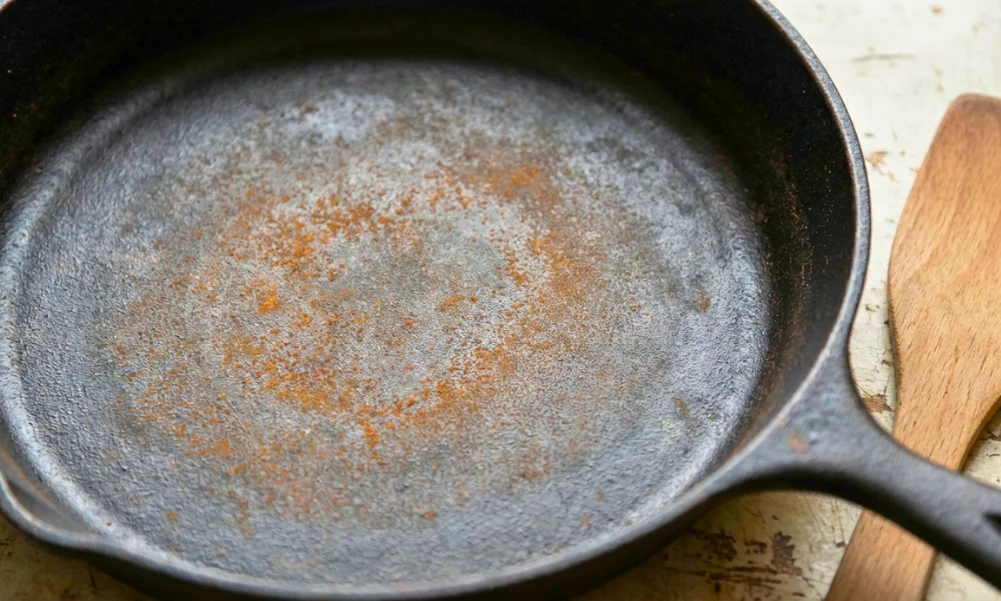
Cast iron and carbon steel cookware exhibit high mass and heat retention. This combination increases stability while extending cooling time.
Movement requires greater force. When movement occurs, momentum is higher due to mass.
Material differences and behavior contrasts are discussed in carbon steel vs cast iron cookware. Safety relevance depends on condition and placement rather than material identity.
Non-Stick and Lightweight Cookware
Non-stick and lightweight cookware typically have lower mass. Lower mass allows easier movement under contact or vibration.
Surface coatings influence performance rather than stability. Structural safety relates to base shape and handle condition.
Replacement context for worn surfaces is addressed in when to replace non-stick cookware. Predictability decreases when bases deform or handles loosen.
Glass and Ceramic Cookware
Glass and ceramic cookware are chemically inert but mechanically sensitive. Breakage risk relates to impact and thermal stress rather than material toxicity.
Weight varies by design. Stability depends on base shape and placement.
Thermal and impact behavior are discussed further in glass cookware heat safety. Visible cracks often precede loss of safe use.
Longevity, Condition, and Safety Signals
Cookware condition influences safety predictability more than age or material type. Wear alters how cookware responds to movement and heat.
Loose handles, warped bases, and unstable lids reduce control. These changes often develop gradually through repeated use.
Mechanical indicators that affect safety relevance are outlined in signs your cookware is no longer safe to use. Expected lifespan patterns are discussed in how long should cookware last.
Evaluating condition supports calm replacement decisions rather than reactive responses.
Common Misunderstandings About Children and Cookware Safety
Cookware safety in homes with children is often framed as a material problem. This framing overlooks how cookware behaves in real household environments.
Some materials are assumed to be unsafe simply because they retain heat longer. Heat retention alone does not define safety without considering stability and exposure.
Lightweight cookware is sometimes viewed as safer due to lower mass. In practice, lower mass can increase movement and reduce predictability under contact.
Another common assumption is that safety concerns end when cooking stops. Residual heat and structural instability may persist beyond active use.
These misunderstandings arise from focusing on labels rather than behavior.
Internal Context and Broader Safety Framework
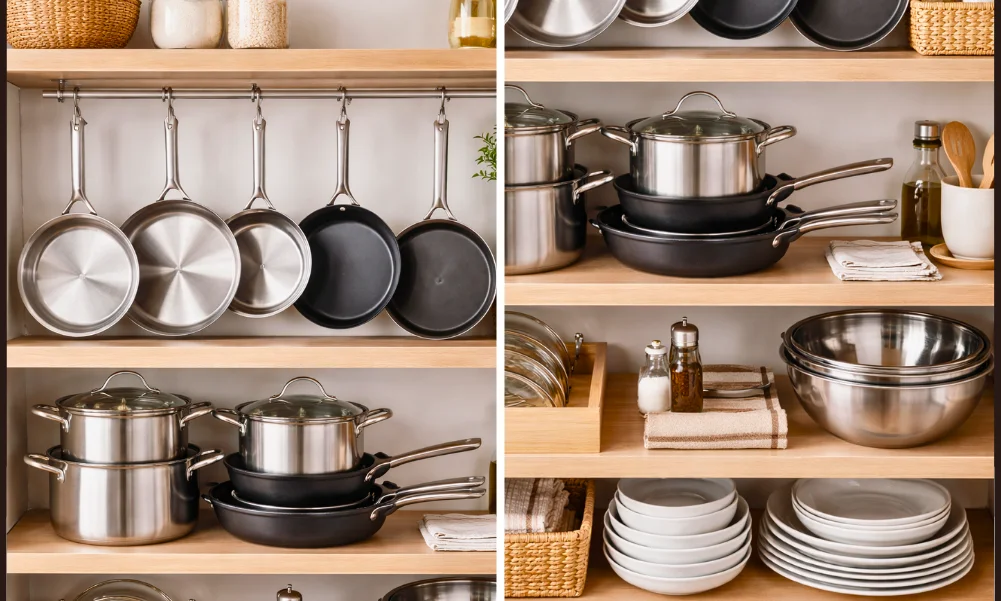
Cookware safety interacts with storage, layout, and household movement patterns. Material choice alone does not determine risk or predictability.
Broader context around cookware safety standards and testing helps frame expectations. Relevant frameworks are outlined in cookware safety certifications explained.
Storage and placement influence how cookware behaves between uses. Structural protection and organization are discussed in cookware storage ideas protect pots pans.
Viewing safety as a system helps explain why condition and stability matter more than category.
These safety considerations also influence which cookware performs best overall, especially when choosing the best cookware for everyday use.
Closing Summary
Cookware safety in homes with children depends on mechanical behavior rather than material danger. Stability, heat retention, and attachment integrity shape predictability during use and rest.
Condition matters more than age or cookware type. Wear alters behavior gradually before safety becomes relevant.
Understanding these patterns supports calm evaluation without overstating risk.