Quick Answer
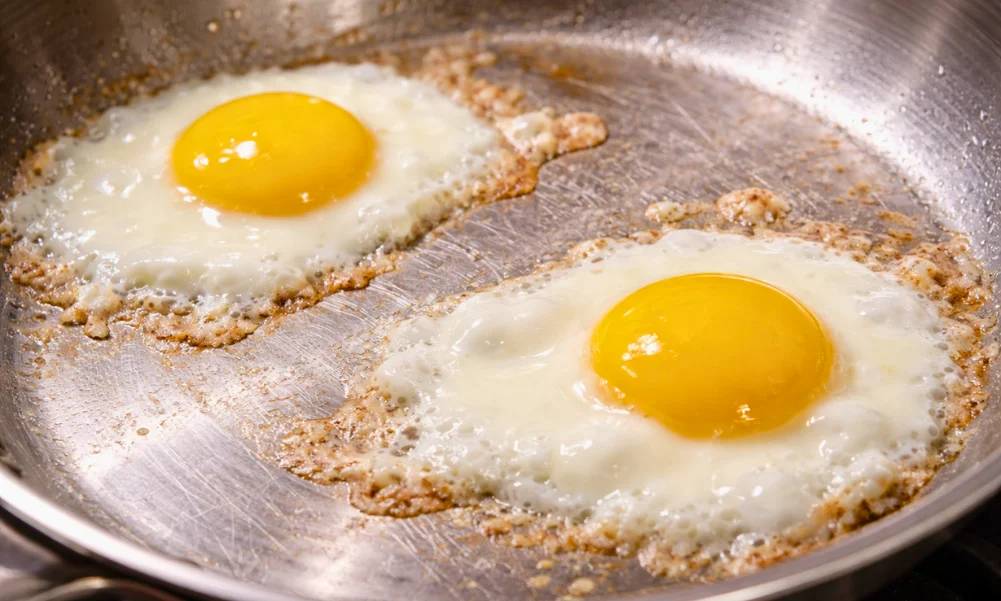
Eggs stick to stainless steel because their proteins bond strongly to bare metal during early heat exposure. This bonding is temporary and reflects normal interaction between egg proteins, moisture loss, and heat transfer. Sticking affects timing and surface behavior, not cookware safety or structural integrity.
This article explains why eggs stick to stainless steel and when release occurs. It does not cover cleaning or cookware selection.
Why Eggs Stick More Than Other Foods
Eggs behave differently from many other foods when they contact stainless steel. Their proteins unfold and bind readily to metal surfaces under heat.
Unlike vegetables or meats, eggs contain proteins that coagulate quickly. This rapid change increases early adhesion at the point of contact.
Moisture loss occurs faster at the egg–metal interface. As moisture thins, proteins encounter the bare stainless steel surface directly.
This interaction makes eggs feel more “attached” during early cooking. The effect is strongest before structural changes within the egg are complete.
Sticking at this stage reflects protein chemistry rather than cookware condition. It does not indicate misuse, damage, or a defect in the pan.
What Happens at the Egg–Stainless Steel Interface
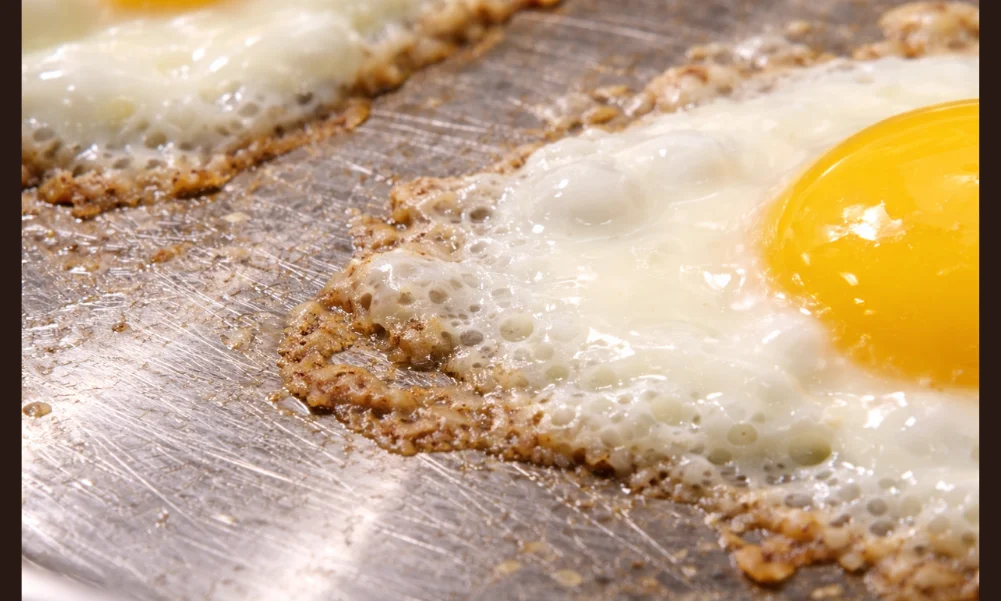
Egg sticking begins at microscopic contact points between the egg and the metal surface. Proteins at the bottom layer bond temporarily to stainless steel as heat transfers upward.
During this phase, adhesion increases before visible changes occur. The egg appears fixed to the surface even though no damage is happening.
As heat continues to move through the egg, proteins coagulate and reorganize. This structural change reduces their ability to remain bonded to the metal.
Moisture redistribution also alters contact conditions. Liquid and steam begin to separate the egg from the surface.
Release follows naturally once these changes complete. The process reflects material interaction rather than a need for intervention.
Surface Condition and Residue Effects
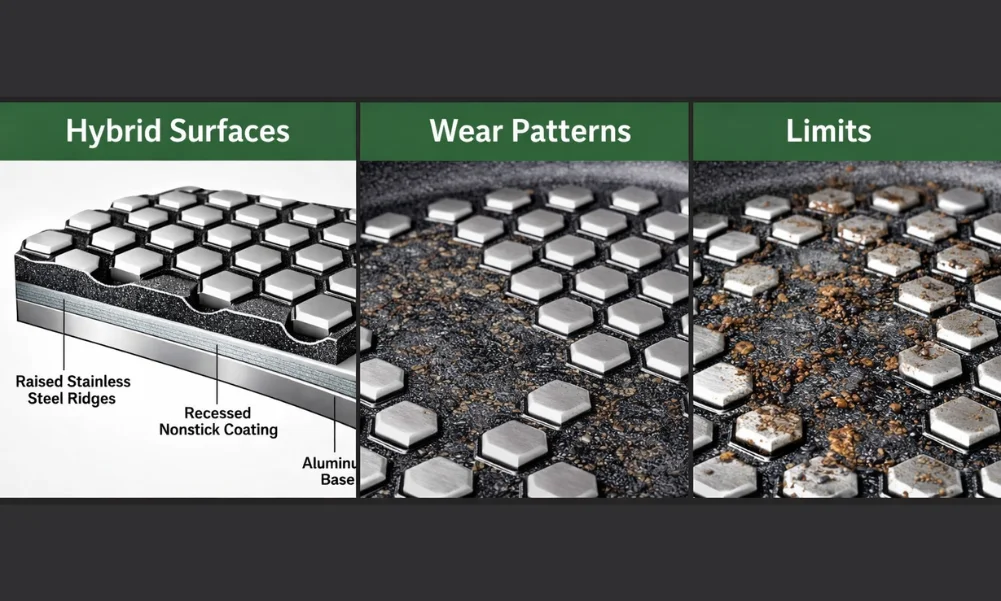
Surface condition plays a meaningful role in how eggs interact with stainless steel. Even minor texture changes alter how proteins contact the metal.
Scratches and micro-wear increase surface area at the contact point. This increases the number of bonding sites available to egg proteins.
Residue from prior cooking can also influence early adhesion. Thin films change how moisture spreads across the surface.
Visual cleanliness does not fully describe surface behavior. A pan may appear clean while still presenting uneven interaction zones.
These factors affect how strongly eggs bond during early contact. They influence performance without affecting cookware safety or durability.
Context on surface wear and appearance is discussed further in repair scratched cookware, where cosmetic change and function are separated.
Heat Behavior and Egg Release Timing
Preventing eggs from sticking on stainless steel is primarily about allowing structural change to complete before movement. When eggs are moved before proteins coagulate and moisture redistributes, adhesion feels strongest.
Heat behavior shapes how quickly egg proteins change structure. Stainless steel transfers energy directly into the egg at the contact surface.
Uneven heat distribution creates localized bonding zones. These zones intensify adhesion before structural change completes.
As heat moves upward through the egg, proteins coagulate and firm. This change reduces their affinity for the metal surface.
Release follows once internal structure stabilizes. The timing depends on material interaction rather than cookware quality.
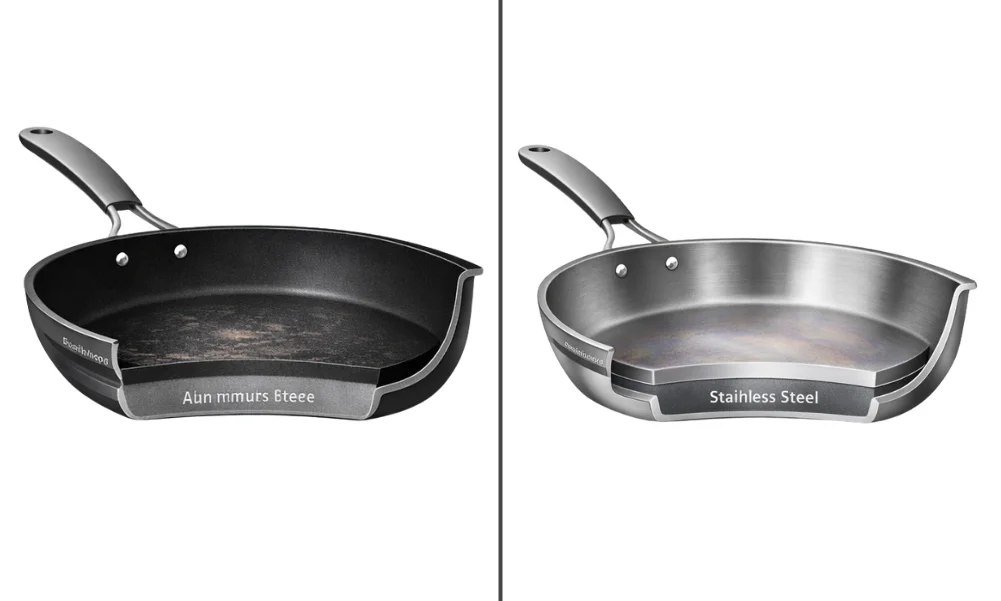
Stainless steel construction influences how evenly this process unfolds. Thicker bases distribute energy more uniformly across the surface.
Heat distribution differences are explained further in cookware thickness heat control, where construction affects predictability.
Longevity vs Safety When Eggs Stick
Eggs sticking to stainless steel does not damage the cookware. The adhesion reflects surface interaction rather than material failure.
Stainless steel is designed to tolerate direct protein contact under heat. Temporary egg adhesion does not weaken the metal or alter structural integrity.
Longevity concerns arise only when sticking leads to aggressive force. Repeated scraping introduces surface wear before any safety issue exists.
These surface changes affect appearance and cooking behavior rather than stability. Mechanical safety remains unchanged unless deformation or attachment failure occurs.
Clear indicators of structural concern are outlined in signs your cookware is no longer safe to use, where safety relates to stability rather than surface condition.
Eggs on Stainless Steel Compared With Other Cookware Materials
Stainless steel behaves differently with eggs than coated cookware. Its uncoated surface allows direct protein contact during early cooking.
Non-stick cookware reduces egg adhesion by adding a surface barrier. That barrier improves release but limits heat tolerance and long-term durability.
Cast iron and carbon steel rely on seasoned surfaces to reduce adhesion. These bonded layers change egg interaction but require ongoing surface renewal.
Material tradeoffs are explored further in what is the safest non-stick cookware and carbon steel vs cast iron cookware, where release and durability are balanced differently.
Stainless steel prioritizes structural reliability over effortless egg release. This design choice explains why egg sticking can occur without indicating a problem.
Common Misunderstandings About Eggs and Sticking
Eggs sticking to stainless steel is often seen as user error. In reality, it reflects predictable protein behavior on uncoated metal.
Another misconception is that sticking signals overheating or damage. Temporary adhesion occurs within normal operating conditions.
Forceful removal is sometimes assumed to be necessary. This response increases surface wear without improving outcomes.
These misunderstandings come from expecting stainless steel to behave like non-stick cookware rather than evaluating it on its own terms.
Cookware thickness and heat distribution influence how evenly egg proteins transition, which is why pan construction matters for stainless steel egg performance.
For proper cleanup after sticking without harming the surface, see How to Clean Stainless Steel Cookware Without Damage.
Closing Summary
Eggs stick to stainless steel because their proteins bond temporarily to bare metal during early heat exposure. This interaction reflects normal material behavior and resolves as egg structure changes.
Sticking affects timing and surface interaction, not cookware safety or durability. Understanding these interactions supports realistic expectations and confident use of stainless steel cookware.