Quick Answer
Bar Keepers Friend can help remove certain surface residues from cookware, especially mineral deposits and heat-related discoloration. Its benefit depends on cookware material, surface finish, and how often it is used rather than its cleaning strength. Repeated or inappropriate use increases surface wear and can shorten cookware lifespan without improving safety.
What Bar Keepers Friend Actually Is
Bar Keepers Friend is an abrasive, acid-based cleaner designed to remove surface residue. It works by mechanically breaking down buildup rather than restoring material or repairing damage.
The product does not rebuild metal, seal surfaces, or reverse wear. It removes a thin layer of material along with the residue it targets.
This distinction matters for cookware. Residue removal can improve appearance, but it also alters the surface condition.
Bar Keepers Friend should be understood as a corrective cleaner. It is not a maintenance product and does not improve cookware performance on its own.
What “Helps” Means in a Cookware Context
When Bar Keepers Friend “helps,” it improves visual uniformity rather than structural condition. Improved appearance should not be confused with restored performance or extended lifespan.
It reduces discoloration, mineral haze, and oxidation that sit on the surface.
These changes affect how cookware looks, not how it conducts heat or releases food. Performance behavior remains defined by material, thickness, and surface integrity.
Removing surface residue can make cookware appear renewed. It does not extend lifespan or increase safety margins.
Discoloration patterns and their causes are explained further in cookware discoloration causes cleaning, where appearance and function are separated.
Cookware Materials Where It Can Be Appropriate
As a general rule, Bar Keepers Friend is best reserved for occasional corrective cleaning on hard, uncoated metal surfaces. If a surface relies on a coating or finish for performance, abrasive cleaning introduces tradeoffs that outweigh cosmetic benefit.
Bar Keepers Friend is most compatible with hard, uncoated metal surfaces. These surfaces tolerate limited abrasion without immediate performance loss.
Stainless steel cookware often falls into this category. Its passive oxide layer can be refreshed visually when surface residue is removed.
Copper cookware exteriors may also benefit cosmetically. Oxidation and tarnish sit on the surface and respond predictably to abrasion.
In these cases, Bar Keepers Friend addresses residue rather than damage. The underlying metal structure remains unchanged.
Material behavior across cookware categories is outlined in cookware types explained, where surface hardness and coating presence determine compatibility.
Cookware Surfaces Where It Creates Tradeoffs
Bar Keepers Friend introduces tradeoffs on coated or finished surfaces. Abrasive action removes material regardless of whether that material is residue or coating.
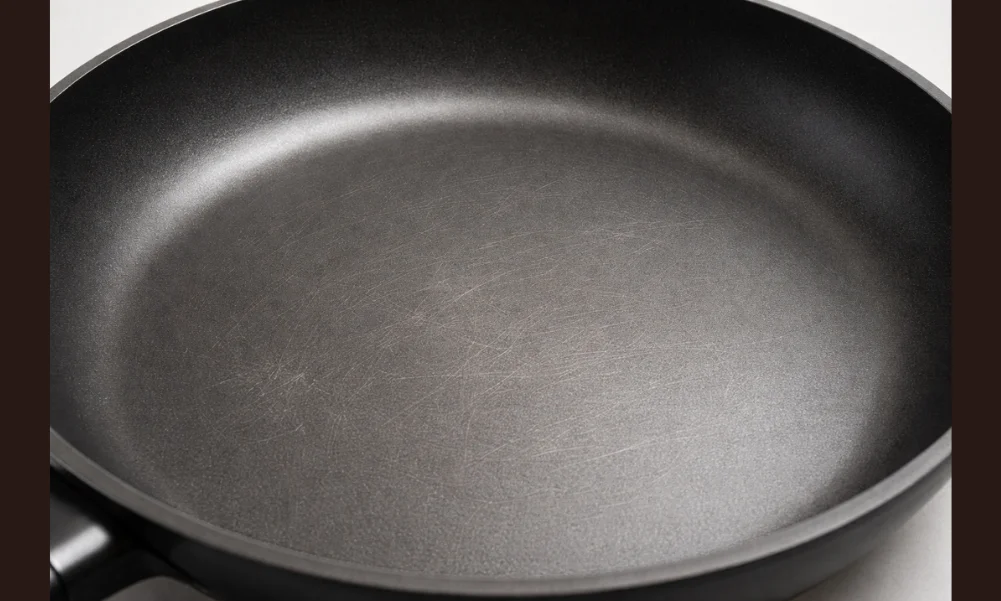
Non-stick coatings are especially vulnerable. Even light abrasion accelerates coating wear and reduces release performance.
Ceramic and granite-style coatings behave similarly. Their surface layers degrade gradually under repeated abrasive contact.
Polished or brushed metal finishes also change under abrasion. Visual improvement may come at the cost of altered texture and reflectivity.
Surface wear cannot be reversed once material is removed. This limitation is explored further in repair scratched cookware, where cosmetic correction differs from structural repair.
Surface Wear vs Safety: An Important Separation
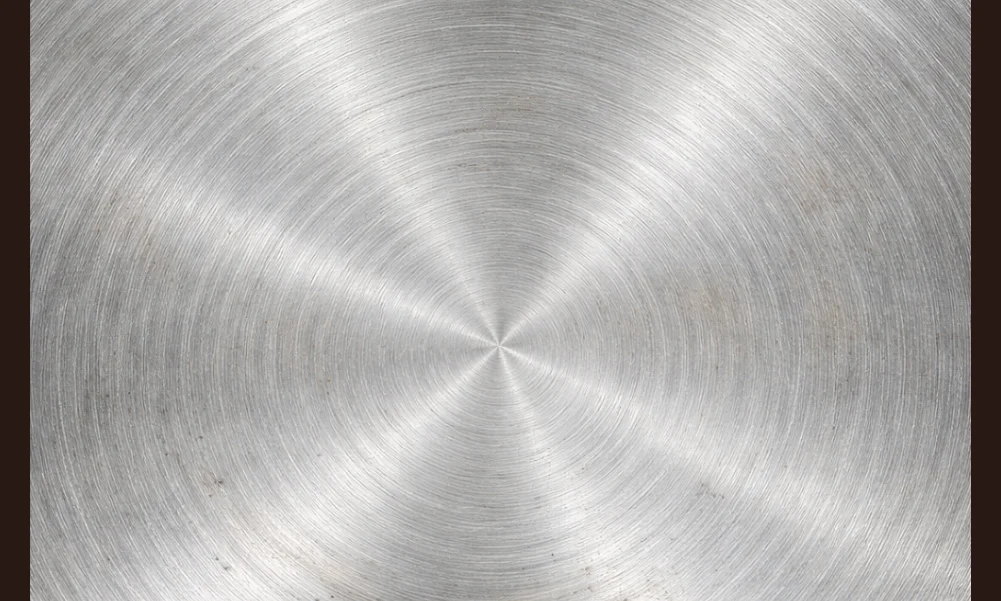
Surface wear caused by abrasive cleaners does not immediately create a safety issue. It changes how cookware looks and behaves before it affects structural stability.
Bar Keepers Friend removes material at a microscopic level. That removal affects surface texture and finish rather than core strength.
Safety concerns emerge only when wear progresses into deformation, instability, or attachment failure. Abrasion alone does not cause these conditions.
This separation matters because cosmetic improvement can mask gradual wear. A pan may appear cleaner while losing surface consistency over time.
Clear indicators of when wear becomes a safety concern are outlined in signs your cookware is no longer safe to use, where structure matters more than appearance.
Frequency Matters More Than Product Choice
The long-term impact of Bar Keepers Friend depends more on how often it is used than on the product itself. Occasional corrective use produces different outcomes than repeated reliance.
Each abrasive interaction removes a small amount of surface material. These effects accumulate even when no immediate damage is visible.
Repeated use prioritizes short-term appearance over long-term preservation. This tradeoff becomes more pronounced on thinner cookware and coated surfaces.
Understanding this pattern helps explain why cookware can look clean but perform differently. Wear develops quietly through repetition rather than through single events.
When Bar Keepers Friend Does Not Help
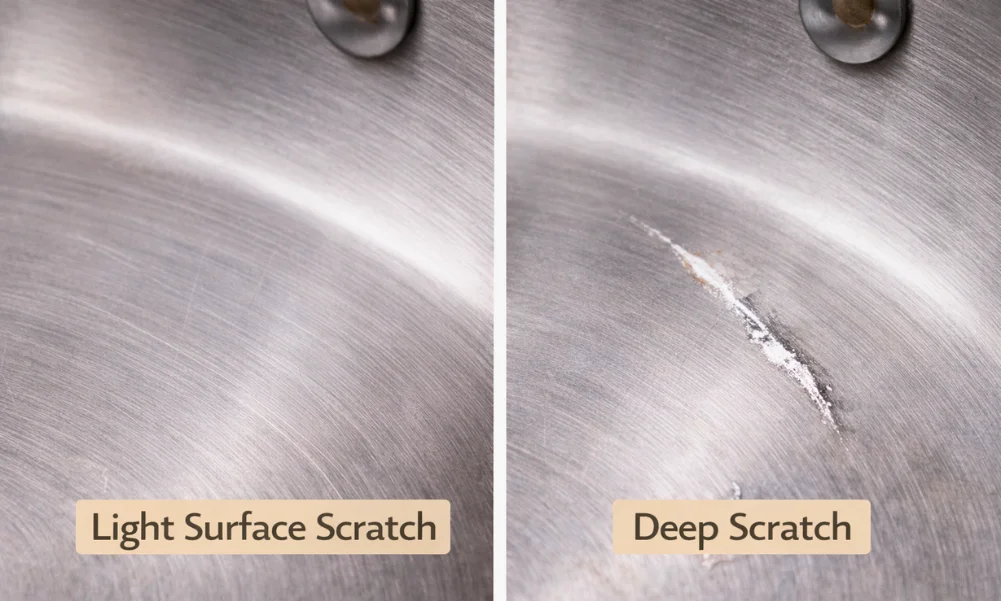
Bar Keepers Friend cannot repair physical damage. Scratches, pitting, and coating loss remain unchanged after cleaning.
Warping and deformation also fall outside its scope. Material removal does not restore shape or stability.
In some cases, abrasive cleaning can make damage more visible. By removing surrounding residue, underlying wear stands out more clearly.
Structural issues related to heat stress are discussed further in cookware warping causes prevention, where cleaning and deformation are clearly separated.
When residue becomes persistent or surface wear accumulates, cookware material and finish matter more than cleaner choice.
Closing Summary
Bar Keepers Friend can improve cookware appearance by removing surface residue and discoloration. Its effect is cosmetic and depends on surface hardness, coatings, and frequency of use.
Abrasive cleaning introduces wear that accumulates gradually. Longevity is most affected by how much surface removal accumulates over time.
Understanding where Bar Keepers Friend helps and where it creates tradeoffs supports calmer care decisions and more realistic expectations over time.