Quick Answer: How to Choose Cookware Material at a Glance
Cookware material choice depends on heat behavior, maintenance tolerance, weight, and cooking style. No single material performs best in every kitchen or cooking task.
Each option balances heat distribution, durability, and ease of use differently. Materials that excel at high heat often require more care and handling effort.
Lower-maintenance materials trade long-term performance for convenience. The right choice reflects how often you cook, not what looks most versatile.
Understanding these tradeoffs simplifies decisions before comparing sets or brands.
For a full recommendation based on these material differences, see the best cookware for home kitchens.
What This Material Matrix Is (And What It Is Not)
This material matrix is a comparison framework designed to reduce decision friction. It organizes cookware materials by behavior rather than marketing categories.
The goal is clarity, not rankings or recommendations. This guide does not label any material as best or safest overall.
It does not replace detailed material guides or product evaluations. Instead, it helps readers narrow options before exploring deeper resources.
If you already know your preferred material, deeper guides offer better specificity. If you feel uncertain or overwhelmed, this matrix provides orientation first.
It supports informed decisions without pushing upgrades or replacements. This structure keeps comparisons fair, neutral, and grounded in real use.
How to Read the Cookware Material Matrix

The material matrix compares cookware based on behavior rather than brand or price. Each row represents a performance trait that affects daily cooking.
Heat distribution reflects how evenly heat spreads across the cooking surface. Heat retention describes how long cookware holds heat once warmed.
Maximum safe heat tolerance indicates typical limits before damage risk increases. Reactivity explains whether a material interacts with acidic or alkaline foods.
Maintenance level reflects cleaning effort and ongoing care needs. Weight and handling describe how cookware feels during regular use.
Durability considers resistance to warping, cracking, or surface failure. Typical lifespan reflects how long cookware performs well under normal use.
Replacement triggers explain what usually signals end of service life. Reading the matrix horizontally compares materials across one trait.
Reading vertically reveals how one material behaves across many conditions. This approach highlights tradeoffs without simplifying them into rankings.
The Cookware Material Matrix

This matrix summarizes how common cookware materials behave under everyday conditions. It focuses on practical performance rather than laboratory metrics.
Materials included reflect what most home kitchens actually use. The matrix works best as a visual reference rather than detailed instruction.
Example Matrix Table
| Material | Heat Distribution | Heat Retention | Max Heat | Maintenance | Typical Lifespan |
|---|---|---|---|---|---|
| Stainless steel | Medium–High | Medium | Very high | Moderate | Long |
| PTFE nonstick | Medium | Low | Low–Medium | Easy | Short |
| Ceramic nonstick | Medium | Medium | Medium | Easy–Moderate | Medium |
| Cast iron | Medium | Very high | Very high | High | Very long |
| Enameled cast iron | Medium | High | High | Moderate | Long |
| Carbon steel | Medium–High | High | Very high | High | Very long |
| Aluminum | High | Low–Medium | Medium | Easy | Medium |
| Copper | Very high | Low–Medium | Medium | High | Long |
| Glass/ceramic | Medium | Medium | Medium | Easy | Long |
Note: Exact performance varies depending on thickness, construction, and cookware design.
Materials Included
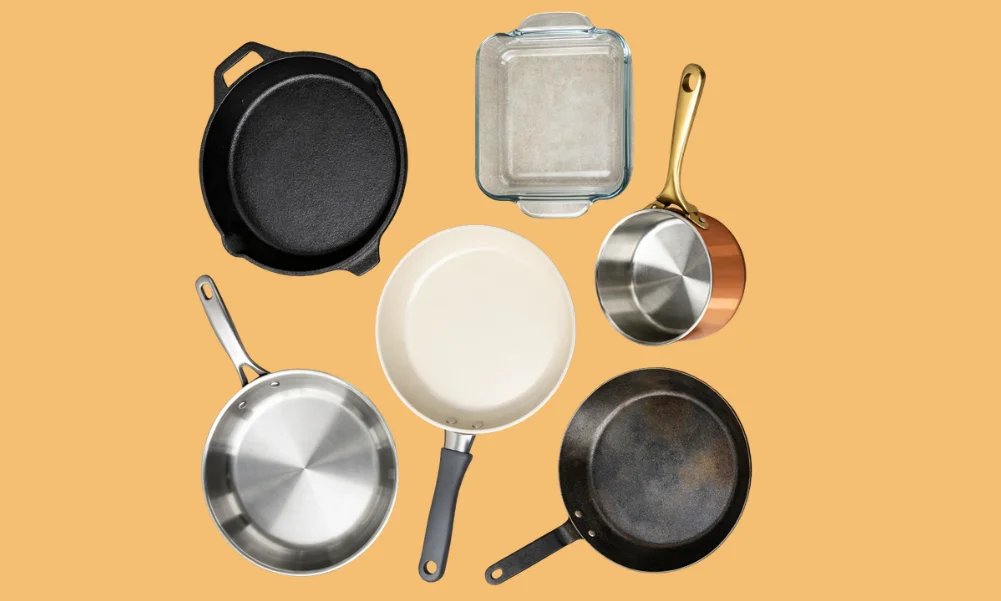
- Stainless steel
- Nonstick (PTFE)
- Ceramic-coated nonstick
- Cast iron
- Enameled cast iron
- Carbon steel
- Aluminum (bare or hard-anodized)
- Copper (lined)
- Glass and ceramic bakeware
Matrix Categories
- Heat distribution
- Heat retention
- Maximum safe heat tolerance
- Reactivity with food
- Maintenance effort
- Weight and handling
- Scratch sensitivity
- Typical lifespan
- Common replacement triggers
Each category reflects a real kitchen constraint rather than a performance claim. Used together, they explain why materials behave differently in daily cooking.
Material-by-Material Interpretation
This section translates the matrix into short, behavior-focused summaries. Each material overview stays brief and points to a deeper guide when more detail helps.
Stainless Steel
Stainless steel offers strong structure with predictable performance across many tasks. It resists warping, handles high heat, and tolerates frequent use.
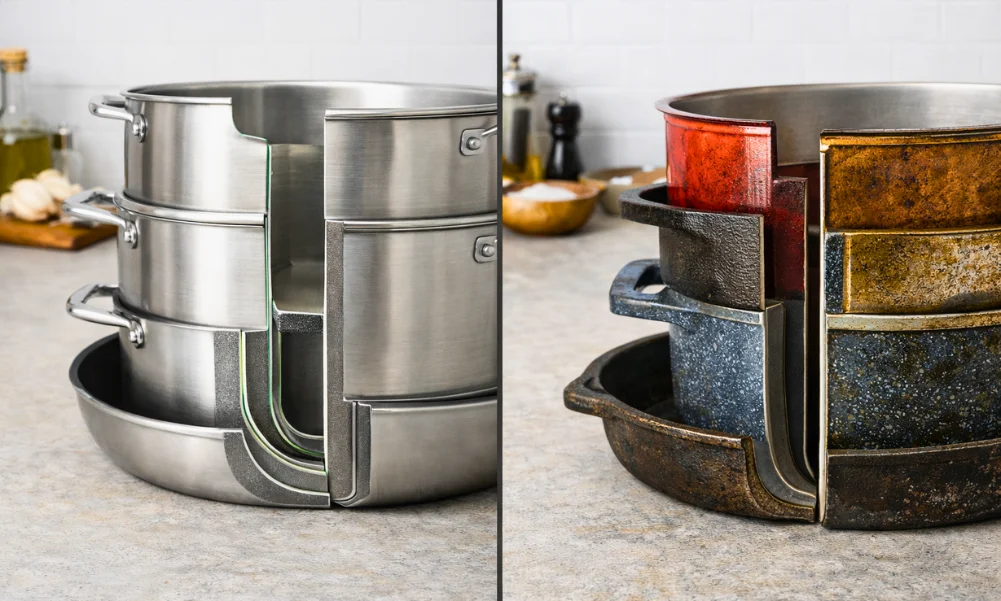
Heat distribution depends heavily on thickness and core construction. Maintenance remains moderate, with cleaning effort tied to heat control rather than fragility.
This material suits cooks who value durability and long-term flexibility. Deeper construction and set considerations are covered in stainless-steel-cookware-sets.
Nonstick (PTFE)
PTFE nonstick prioritizes easy food release and low-effort cleanup. It performs best at moderate heat and short cooking durations.
Heat tolerance and surface lifespan define its primary limitations. Maintenance focuses on avoiding overheating and abrasive cleaning.
This material fits convenience-focused kitchens rather than high-heat routines. Replacement timing is explained further in when to replace non stick cookware.
Ceramic-Coated Nonstick
Ceramic-coated nonstick balances easier cleanup with slightly higher heat tolerance. Surface performance declines gradually rather than failing suddenly.
Maintenance remains important to preserve coating longevity. This material works well for lighter daily cooking with occasional oven use.
Long-term behavior and care details appear in ceramic cookware explained.
Cast Iron
Cast iron emphasizes heat retention and cooking stability. It performs best after preheating and rewards consistent technique.
Weight and maintenance define its main tradeoffs. This material suits cooks comfortable with seasoning and handling heavier cookware.
Selection and use considerations are outlined in best cast iron cookware.
Enameled Cast Iron
Enameled cast iron combines thermal stability with easier maintenance. The enamel surface limits reactivity and simplifies cleaning.
Heat tolerance depends on enamel condition and hardware components. This material fits steady oven cooking and long simmering tasks.
Care and durability details are explained in enameled cast iron cookware pros cons care.
Carbon Steel
Carbon steel balances faster response with solid heat retention. It behaves similarly to cast iron with reduced weight.
Seasoning maintenance remains necessary for performance stability. This material suits high-heat cooking with more responsiveness.
Comparative behavior is discussed in carbon steel vs cast iron cookware.
Aluminum (Bare or Hard-Anodized)
Aluminum conducts heat quickly and reacts rapidly to adjustments. Hard-anodized versions improve durability and reduce reactivity.
Warping risk increases with thinner construction. This material works well for moderate oven and stovetop use.
Safety considerations are detailed in is aluminum cookware safe for everyday use.
Copper (Lined)
Copper provides exceptional heat responsiveness. Lining material determines reactivity and maintenance needs.
Heat control benefits cooks who adjust frequently and precisely. Care requirements limit its appeal for low-maintenance kitchens.
Performance and upkeep are covered in copper cookware performance maintenance.
Glass and Ceramic Bakeware
Glass and ceramic prioritize stable oven heating over stovetop use. Thermal shock sensitivity defines handling limitations.
These materials suit baking and controlled temperature environments. Heat safety considerations are explained in glass cookware heat safety.
If You Want a Quick Starting Point
If you’re unsure where to start, most kitchens benefit from a combination of materials rather than relying on one type.
A balanced system often includes:
- Stainless steel for high-heat cooking and durability
- One nonstick or ceramic pan for delicate foods
- Cast iron or carbon steel for searing and oven use
- Glass or ceramic bakeware for baking
This approach balances convenience, heat tolerance, and long-term durability.
More detailed guidance appears in Choose Cookware Based on Cooking Style.
Common Material Myths This Matrix Clears Up
Many cookware decisions rely on assumptions that do not hold up in daily use. Heavier cookware does not automatically heat more evenly.
Weight improves heat retention but does not guarantee better distribution. Nonstick cookware is not unsafe by default when used within heat limits.
Stainless steel does not heat evenly without sufficient thickness or a conductive core. Cast iron resists damage but still responds poorly to sudden temperature changes.
Ceramic coatings do not fail instantly but lose performance gradually. Copper performance depends more on lining than exterior appearance.
This matrix replaces those myths with behavior-based comparisons. Clear expectations reduce frustration and misuse over time.
Choosing Materials Based on Cooking Style
Cooking habits shape which materials perform best over the long term. Daily home cooking benefits from balanced materials with moderate maintenance needs.
High-heat cooking favors cookware that tolerates thermal stress without surface damage. Low-maintenance kitchens prioritize easy cleanup over maximum heat capability.
Small kitchens benefit from lighter cookware that stores efficiently. Families cooking daily value durability and predictable performance.
Matching material behavior to routine reduces replacement and adjustment cycles. Decision patterns align naturally with choose cookware by cooking style guidance.
Safety and Longevity Perspective
Cookware safety depends on predictable material behavior rather than appearance. Cosmetic wear does not automatically signal unsafe use.
Functional failure usually follows repeated misuse rather than normal aging. Heat misuse remains the primary factor reducing cookware lifespan.
Understanding limits improves safety without encouraging unnecessary replacement. Longevity expectations vary by material and cooking frequency.
Replacement decisions are typically performance-based rather than safety-driven. Service life benchmarks are discussed in how long should cookware last.
How This Matrix Connects to the Rest of KitchenMarks
This matrix serves as a starting point rather than a conclusion. Each material summary links to deeper guides for focused exploration.
Those guides connect further to buyer pages when selection becomes specific. This structure prevents repetition while maintaining context across articles.
Readers can enter at any level without losing orientation. The matrix keeps comparisons consistent across the site. It supports long-term navigation without sales pressure.
Closing Summary
Cookware materials differ by behavior, not by universal quality. Tradeoffs define performance more than labels or trends.
This matrix simplifies complex choices into visible patterns. Understanding material behavior improves cooking outcomes and confidence.
Better decisions start with context rather than comparison alone.