Staub Cookware Sets Explained: Enameled Cast Iron, Moisture Control, and Longevity

Quick Answer
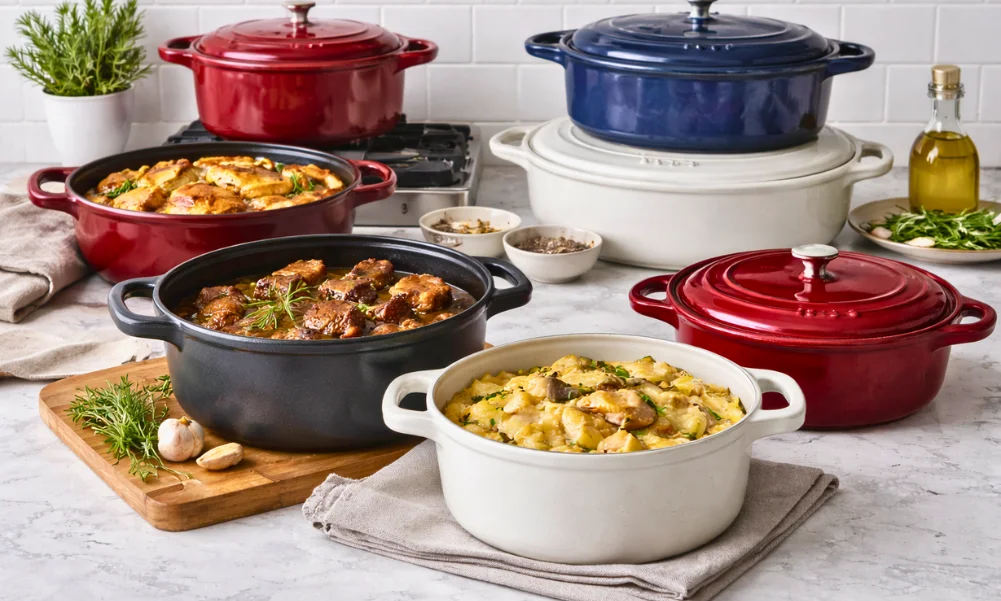
Staub cookware sets are defined by enameled cast iron construction with design features that influence moisture retention and thermal stability. Performance differences come from material mass, interior enamel texture, and lid geometry rather than coatings or layered metals.
Cooking behavior reflects slow heat response and consistent temperature retention. Longevity depends on enamel integrity and handling practices rather than age or frequency of use. Limitations relate to weight, responsiveness, and impact sensitivity rather than safety.
What Makes Staub a Distinct Cookware Entity
Staub represents a specific design approach within the enameled cast iron cookware category. The brand identity is tied to repeatable construction features rather than surface coatings or multi-layer metal bonding.
Staub cookware behaves according to the same physical principles as enameled cast iron cookware more broadly. Differences appear in how moisture is managed during covered cooking and how heat is retained during long cooking sessions. These distinctions do not create a new material category but shape how the cookware performs in practice.
Understanding Staub as a variation within enameled cast iron cookware helps clarify expectations. This category context is explained further in Enameled Cast Iron Cookware: Pros, Cons, and Care.
Core Material and Construction Logic
Cast Iron Base Behavior
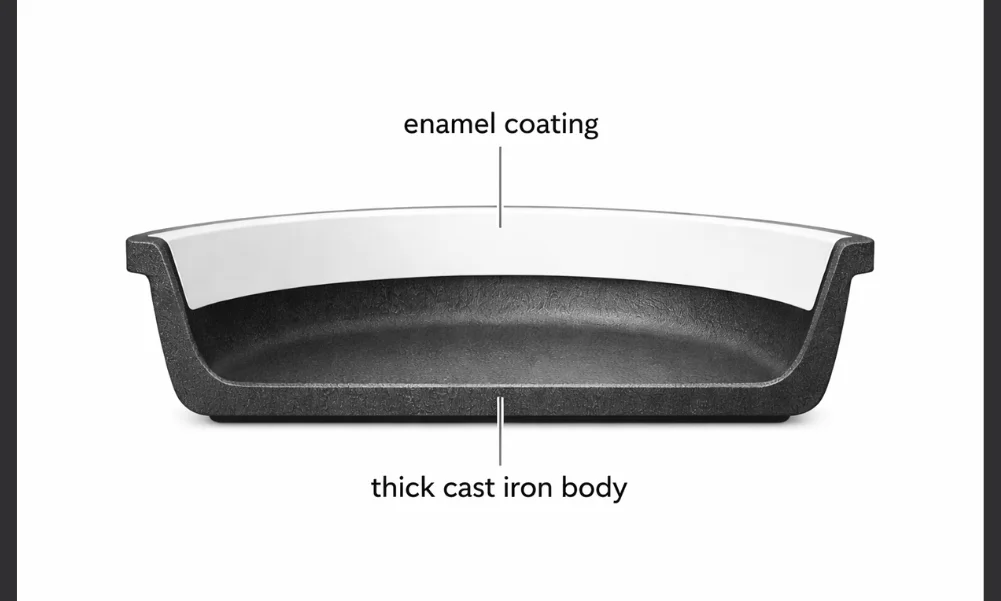
Staub cookware relies on a thick cast iron body that stores heat rather than responding quickly to burner changes. Temperature increases occur gradually and spread evenly through the cookware mass. This behavior reduces localized hot spots and limits rapid expansion during extended cooking.
Structural rigidity is high. Cast iron resists warping under normal household use, even during long cooking sessions. Performance outcomes reflect thermal stability rather than speed.
Enamel Surface Characteristics
The enamel surface creates a non-reactive barrier between food and iron. It prevents rust and limits direct metal interaction during cooking. Interior enamel texture influences how moisture and food contact the surface but does not create non-stick behavior.
Surface condition matters more than appearance. Chips or cracks alter predictability and control even when the underlying iron remains intact. These material distinctions are clarified further in Cast Iron vs Enameled Cast Iron.
Lid Design and Moisture Retention Behavior
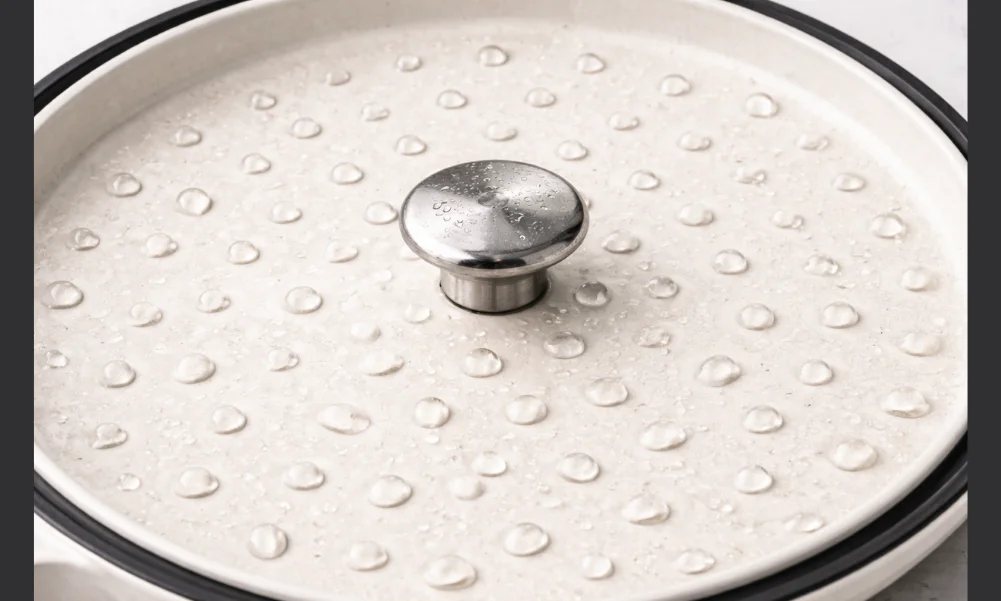
Staub cookware incorporates lid geometry that influences condensation patterns during covered cooking. As steam rises, moisture collects on the lid interior and redistributes back into the food.
This behavior affects texture and moisture balance rather than safety or heat tolerance. Results depend on cooking duration, ingredient composition, and temperature stability. Lid design does not increase cooking speed or reduce required heat.
Moisture retention should be understood as a functional characteristic rather than a performance advantage across all tasks.
These effects interact closely with oil and moisture behavior discussed in Best Oils to Use With Different Cookware Materials.
Heat Performance Characteristics
Staub cookware performs best under steady, sustained heat conditions. High thermal mass allows temperatures to remain consistent once established. This supports long cooking processes where stability matters more than rapid adjustment.
Heat response is slow. Burner changes do not immediately translate to surface temperature changes. This lag reduces fluctuation but limits responsiveness during fast cooking.
Safe heat behavior depends on gradual increases rather than maximum output. Repeated exposure to extreme heat shortens enamel lifespan through cumulative stress, consistent with patterns outlined in Maximum Safe Heat for Different Cookware Materials.
Compatibility With Modern Cooktops
Staub cookware is compatible with gas, electric, and induction cooktops. Cast iron’s magnetic properties allow efficient induction heating, producing strong and direct energy transfer.
Because induction delivers energy rapidly, controlled power increases matter. Sudden high output can stress enamel before heat distributes evenly through the cookware mass. These behaviors align with broader induction mechanics explained in What Is Induction Cookware and How Does It Work.
Misuse patterns such as empty heating or abrupt temperature changes accelerate wear even in heavy cookware. These risks are described further in Induction Cooking Mistakes That Damage Cookware.
Weight and flat base contact influence stability across all cooktop types.
Longevity and Wear Patterns
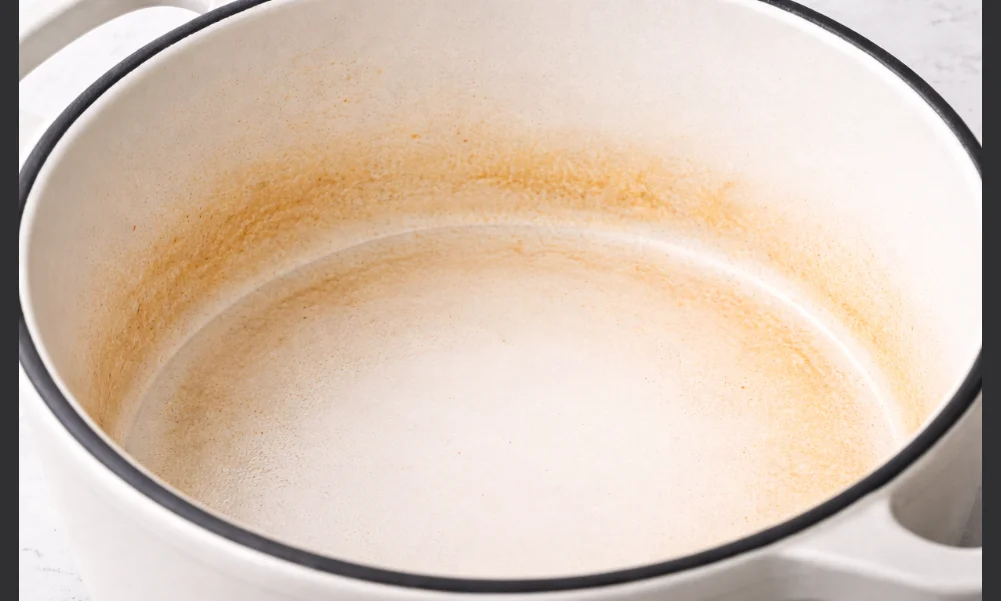
Staub cookware has a long structural lifespan when enamel remains intact. The cast iron body does not degrade under normal cooking conditions. Performance decline typically begins at the surface rather than within the structure.
Interior staining reflects cooking residue rather than functional damage. Enamel chips or cracks reduce predictability and signal functional limits. Impact damage introduces more risk than heat exposure alone.
Lifespan expectations align with broader guidance in How Long Should Cookware Last. Observable safety indicators appear gradually and are outlined in Signs Your Cookware Is No Longer Safe to Use.
What Staub Cookware Is Not
Staub cookware is not lightweight. Handling requires stability and deliberate movement. It is not fast-responding cookware and does not suit tasks requiring rapid heat modulation.
It is not non-stick cookware. Food release depends on moisture, temperature control, and surface condition. It is also not immune to impact damage. Structural issues typically arise from handling rather than cooking.
Clarifying these limits prevents expectation mismatch rather than reducing usability.
Set Composition and Use Logic
Staub cookware sets typically emphasize core shapes intended for covered, slow, or moderate cooking tasks. Practical value depends on how often each piece is used rather than total set size.
Large sets increase storage demands and handling stress without improving functionality for many kitchens. Selective use alongside other cookware types is common. This pattern aligns with broader observations in Cookware Set vs Individual Pieces.
Using enameled cast iron selectively distributes wear and reduces unnecessary strain on heavy cookware.
Safety Perspective
Staub cookware safety is mechanical rather than chemical. Enamel surfaces are inert under normal household cooking conditions. Safety concerns arise when surface integrity changes.
Cracked or chipped enamel compromises predictability and control rather than introducing toxicity. These changes develop gradually and are observable. Certification standards establish baseline material stability, as explained in Cookware Safety Certifications Explained.
Cosmetic wear alone does not indicate safety risk.
Where Staub Fits Within a Balanced Kitchen
Staub cookware suits cooking tasks that benefit from heat retention and moisture stability. It performs best during long, covered cooking sessions rather than quick temperature shifts.
Most kitchens pair enameled cast iron with stainless steel or non-stick cookware to cover a wider range of tasks. This mixed-material approach distributes stress and improves overall cookware lifespan. System-level context is outlined further in Cookware Types Explained.
Understanding where Staub fits prevents overreliance and supports predictable long-term use.
Practical Limitations to Consider
Staub cookware is heavy and requires careful handling to avoid enamel damage from impact. Its slow heat response limits suitability for fast, high-adjustment cooking tasks.
Performance advantages apply primarily to cooking methods aligned with sustained, covered heat.
Who Staub Cookware Is Best Suited For
Staub cookware suits cooks who prioritize moisture retention, steady heat, and long, covered cooking methods. It performs best for braising, slow cooking, and dishes where temperature stability matters more than responsiveness.
Cooks who prefer lightweight cookware or frequent heat adjustments may find other materials more practical for everyday use.
Closing Summary
Staub cookware sets are defined by enameled cast iron construction with moisture-influencing design features. Performance reflects thermal mass, enamel behavior, and lid geometry rather than branding. Longevity depends on surface integrity and handling practices.
Differences are mechanical, not promotional. When used for tasks aligned with its material behavior, Staub cookware delivers stable, predictable performance over time.