Quick Answer
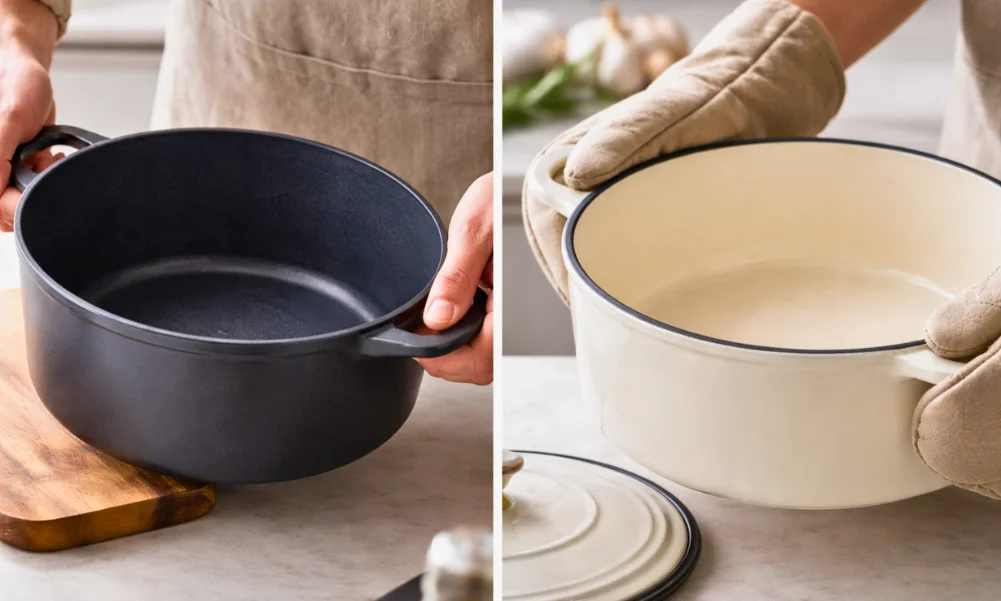
Staub and Le Creuset cookware are both built from enameled cast iron, but they differ in design choices that affect cooking behavior rather than safety or durability. Differences appear in interior enamel texture, lid geometry, heat response feel, and weight distribution.
Both rely on thermal mass for stable heat and perform best during slow, covered cooking. Longevity depends on enamel integrity and handling, not brand identity. The choice between them reflects cooking style preferences rather than material superiority.
Why Comparing Staub and Le Creuset Requires Context
Staub and Le Creuset are often compared as competing brands, but the comparison only makes sense within the enameled cast iron category. Both cookware systems follow the same foundational material principles.
Cast iron provides thermal mass and structural rigidity. Enamel provides corrosion resistance and non-reactive cooking surfaces. Within that shared framework, design decisions shape how each behaves during use.
Understanding these brands as design interpretations rather than opposing technologies prevents over-simplified conclusions. This category context is explained further in Enameled Cast Iron Cookware: Pros, Cons, and Care.
Shared Material Foundation
Both Staub and Le Creuset cookware rely on thick cast iron bodies coated with vitreous enamel. This combination produces similar baseline characteristics.
Heat enters slowly, spreads evenly, and remains stable. Temperature changes lag behind burner adjustments. Warping risk is low under normal household use.
These shared traits define enameled cast iron cookware as a category, which is contrasted against bare cast iron in Cast Iron vs Enameled Cast Iron.
The differences between Staub and Le Creuset emerge above this shared foundation.
Key Design Differences at a Glance
- Interior enamel: Staub (darker, matte) vs Le Creuset (lighter, smoother)
- Lid behavior: Staub (condensation redistribution) vs Le Creuset (traditional steam retention)
- Visual feedback: Easier with Le Creuset during cooking
- Handling feel: Both heavy; balance and lid weight differ slightly
Interior Enamel Texture and Cooking Interaction
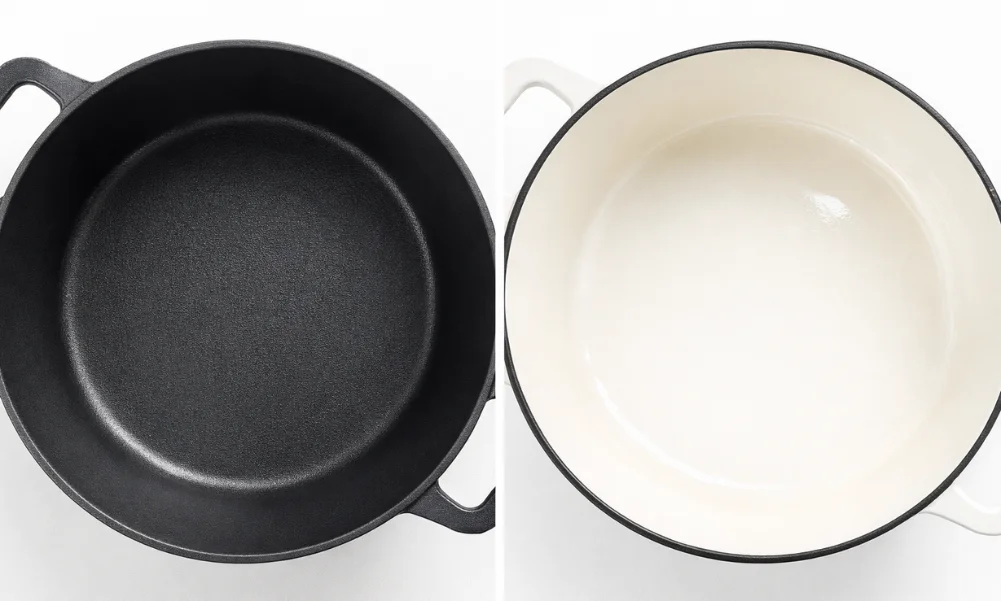
Staub cookware typically features a darker, matte interior enamel. This texture affects how moisture and food interact with the surface during long cooking sessions. It does not create non-stick behavior, but it influences how residue forms and releases over time.
Le Creuset cookware often uses a lighter, smoother interior enamel. This surface makes visual monitoring easier and tends to show residue more clearly. Release behavior still depends on moisture and temperature control rather than surface slickness.
Neither surface changes heat tolerance or safety. Differences relate to visual feedback and surface feel during cooking rather than performance limits.
Lid Geometry and Moisture Management

Lid design is one of the most discussed differences between Staub and Le Creuset. Staub lids often emphasize internal condensation redistribution. Le Creuset lids rely on traditional domed designs that trap steam more generally.
Both approaches retain moisture during covered cooking. The distinction lies in how condensation returns to food, not whether moisture is retained at all.
These differences influence texture outcomes during braising or stewing but do not reduce required heat or cooking time. Lid behavior should be understood as a texture influence, not a cooking shortcut.
Heat Response and Control Feel
Staub and Le Creuset cookware share similar heat response characteristics because both rely on cast iron mass. Heat builds slowly and remains stable once established.
Perceived differences in responsiveness often result from weight distribution and base geometry rather than material composition. Heavier lids and thicker walls increase thermal inertia.
Neither cookware is suited to rapid temperature changes or quick cooking tasks. Both perform best when heat is increased gradually and maintained steadily, consistent with guidance in Maximum Safe Heat for Different Cookware Materials.
Weight, Handling, and Kitchen Fit
Both Staub and Le Creuset cookware are heavy. Weight contributes to stability but affects handling comfort and storage demands.
Handling differences become noticeable during lifting, cleaning, and storage rather than during cooking itself. These factors influence daily usability more than performance.
For many kitchens, enameled cast iron functions best as a task-specific tool rather than an all-purpose replacement. This selective use aligns with broader system logic discussed in Cookware Types Explained.
Longevity and Wear Expectations
Longevity patterns for Staub and Le Creuset are similar because both depend on enamel integrity. The cast iron body does not wear out under normal cooking conditions.
Performance decline begins when enamel chips or cracks. Surface staining remains cosmetic and does not indicate failure. Impact damage introduces more risk than heat exposure alone.
Lifespan expectations align with general guidance in How Long Should Cookware Last. Safety indicators develop gradually and are described further in Signs Your Cookware Is No Longer Safe to Use.
Safety Perspective
Safety differences between Staub and Le Creuset are minimal. Both use inert enamel surfaces designed for household cooking. Safety concerns relate to mechanical condition rather than brand choice.
Cracked or chipped enamel compromises predictability and control but does not introduce sudden hazards. Visual inspection remains the most reliable safety check.
Material compliance and testing frameworks are outlined in Cookware Safety Certifications Explained.
How Choice Relates to Cooking Style
Choosing between Staub and Le Creuset reflects preferences in surface feel, visual feedback, and handling comfort rather than performance capability.
Cooks who prioritize long, covered cooking benefit similarly from either system. Differences become meaningful only when specific design traits align with individual habits.
Neither cookware replaces faster, lighter materials. Balanced kitchens distribute tasks across materials, reducing wear and improving efficiency.
So, Which Is Better for Most Home Cooks?
For most home cooks, Staub and Le Creuset perform similarly because both rely on enameled cast iron and thermal mass. Staub may appeal to cooks who prefer darker interiors and moisture-redistribution lid designs.
Le Creuset may appeal to cooks who value visual monitoring and slightly smoother interior surfaces. Neither option offers a universal performance advantage; suitability depends on cooking habits and handling preferences.
Closing Summary
Staub and Le Creuset cookware share the same enameled cast iron foundation, delivering stable heat and long structural lifespan. Differences arise from interior enamel texture, lid geometry, and weight distribution rather than material quality or safety.
Both perform best during slow, steady cooking and require deliberate handling. Understanding these design trade-offs helps align cookware choice with cooking habits rather than brand narratives.