Quick Answer
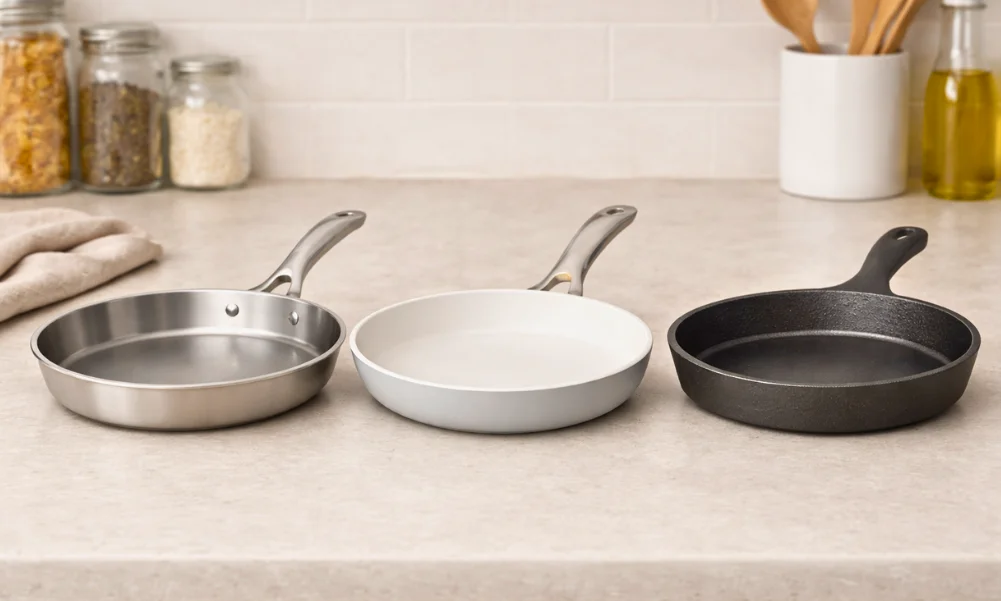
The safest non-toxic cookware options are made from materials that remain chemically and structurally stable during everyday cooking.
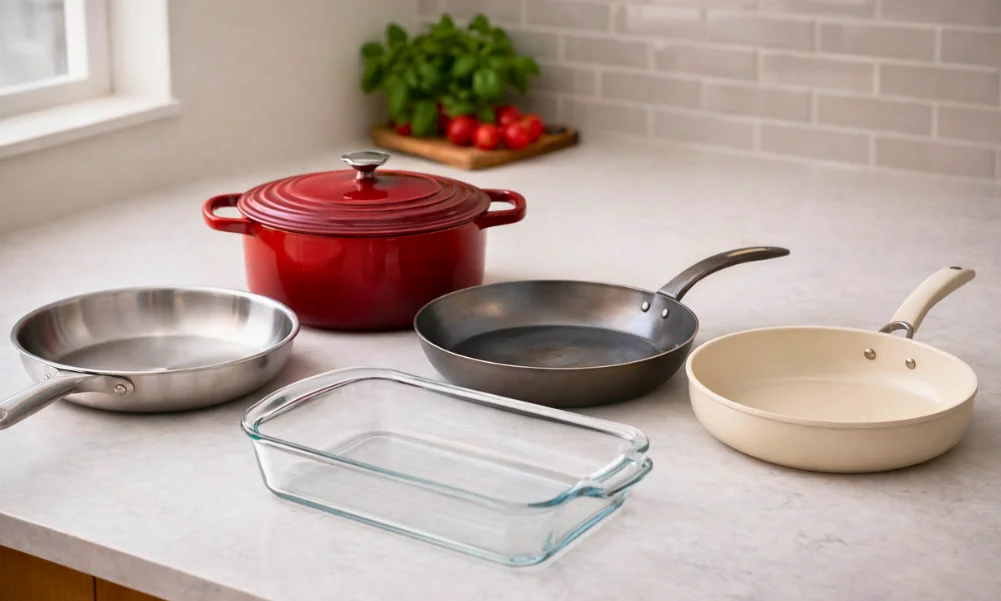
Stainless steel, enameled cast iron, carbon steel, glass cookware, and ceramic-coated cookware all offer low exposure risk when used within their heat and care limits.
Safety depends less on brand claims and more on material stability, surface condition, and timely replacement.
What “Non-Toxic Cookware” Actually Means
The term non-toxic cookware is often used loosely, but in practical terms it does not mean cookware that is completely free of risk. Instead, it refers to cookware made from materials that remain stable under normal cooking conditions and do not release harmful substances as they age.
This guide evaluates cookware materials based on long-term stability and predictable behavior during everyday cooking. It does not assess individual non-stick coatings or regulatory labels in isolation.
All cookware materials have limits. Exposure risk increases when surfaces degrade, coatings break down, or cookware is repeatedly used outside its intended temperature range. Because of this, non-toxic cookware should be evaluated based on material behavior over time, not marketing language or ingredient lists alone.
Certifications such as FDA or similar food-contact standards establish baseline safety, but they do not guarantee indefinite performance.
Cookware safety remains tied to surface condition, heat management, and mechanical stability. When cookware becomes warped, chipped, or unpredictably reactive, replacement becomes a practical safety decision rather than a cosmetic one.
For additional safety context, see Cookware Safety Certifications Explained and What Is the Safest Non-Stick Cookware for Home Cooking.
Related: Signs Your Cookware Is No Longer Safe to Use.
Materials With the Lowest Exposure Risk in Home Cooking
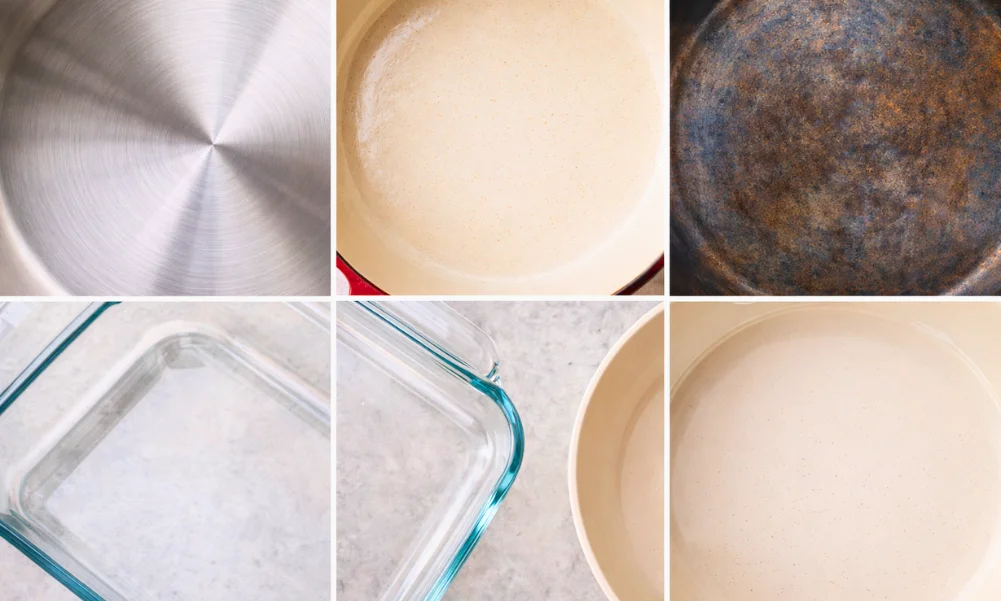
Cookware materials differ widely in how they respond to heat, moisture, and repeated use. Materials that perform best from a non-toxic perspective share one key trait: they do not rely on fragile surface chemistry to function.
Below are the cookware materials most commonly associated with low exposure risk when used correctly.
Stainless Steel (Uncoated)
Stainless steel is one of the most stable cookware materials available for home cooking. It does not rely on coatings for performance, and its surface remains chemically inert under normal cooking temperatures.
Because stainless steel lacks a non-stick layer, its safety profile does not change as the cookware ages. Scratches and discoloration are cosmetic rather than functional. Safety concerns arise only when structural issues develop, such as persistent warping or loose handles, not from surface wear.
Stainless steel tolerates high heat well, making it less sensitive to temperature misuse than coated cookware. This stability is why stainless steel is often considered a foundational non-toxic cookware material for everyday kitchens.
Enameled Cast Iron
Enameled cast iron combines the thermal stability of cast iron with a glass-based enamel coating that separates food from the metal. The enamel surface is inert and non-reactive under normal cooking conditions, reducing direct food-metal interaction.
Unlike bare cast iron, enameled cookware does not require seasoning to prevent rust. Its non-toxic behavior depends primarily on the integrity of the enamel surface. Chips or cracks alter predictability and should be treated as functional limits rather than cosmetic flaws.
Enameled cast iron remains structurally stable for long periods, but it is more sensitive to impact damage than uncoated iron. Careful handling and gradual heat changes help preserve enamel integrity.
Carbon Steel
Carbon steel cookware shares many characteristics with cast iron but in a thinner, lighter form. It relies on a seasoned surface rather than a factory-applied coating. That seasoning acts as a barrier between food and metal and evolves with use.
From a non-toxic perspective, carbon steel performs predictably when properly seasoned and maintained. Because there is no synthetic coating to degrade, exposure risk does not increase abruptly over time. Instead, performance changes gradually based on how the surface is managed.
Carbon steel does require deliberate heat control and maintenance. Its safety profile is closely tied to user habits rather than material instability.
Glass Cookware
Glass cookware is among the most chemically inert options available. It does not react with food, does not require coatings, and does not degrade through normal cooking contact.
Its primary limitation is thermal behavior rather than toxicity. Glass cookware must be used within its temperature limits and protected from thermal shock. It is best suited for oven, microwave, and storage use rather than direct stovetop cooking.
When used appropriately, glass cookware presents minimal exposure risk and does not change chemically as it ages.
Ceramic-Coated Cookware (With Limits)
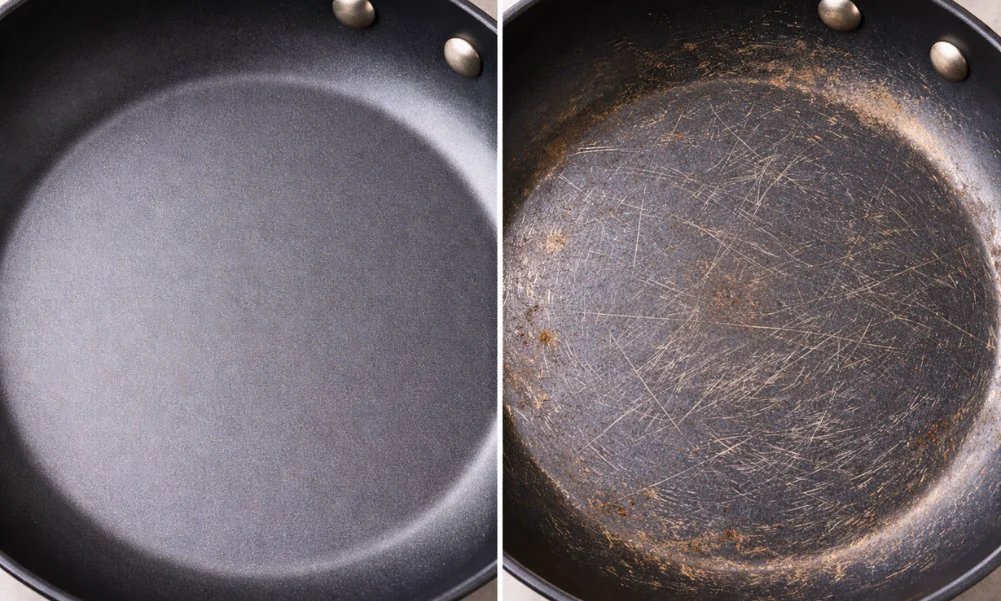
Ceramic-coated cookware uses inorganic coatings that differ from traditional PTFE-based non-stick surfaces. These coatings are chemically stable at moderate cooking temperatures and do not rely on fluoropolymer chemistry.
However, ceramic coatings wear over time. As the surface degrades, non-stick performance declines, and replacement becomes necessary. This wear is functional rather than immediately hazardous, but it defines the realistic lifespan of ceramic-coated cookware.
From a non-toxic standpoint, ceramic-coated cookware is safest when used at moderate heat and replaced once surface performance declines rather than pushed beyond its limits.
How We Evaluated Non-Toxic Cookware Options
Evaluating non-toxic cookware requires a different approach than evaluating performance cookware. Instead of focusing on speed, browning, or convenience alone, the emphasis shifts to material stability over time and predictable behavior under normal home use.
For this guide, cookware was evaluated using the following criteria:
- Material stability under heat: whether the cookware material remains chemically and structurally stable across typical cooking temperatures
- Surface degradation behavior: how performance changes as cookware ages, including coating wear or seasoning loss
- Maintenance and replacement expectations: whether safety depends on careful upkeep or timely replacement
- Certification and compliance context: adherence to established food-contact safety standards
- Realistic home cooking patterns: repeated daily use rather than occasional or professional-level conditions
Cookware that fails gradually and predictably is generally safer than cookware that performs well initially but degrades abruptly.
This approach aligns with broader cookware lifespan guidance discussed in How Long Should Cookware Last and heat-related limits outlined in Maximum Safe Heat for Different Cookware Materials.
Best Stainless Steel Non-Toxic Cookware Option
Demeyere Industry 5-Ply 12.5-Inch Stainless Steel Fry Pan
Fully clad stainless steel cookware remains one of the most reliable non-toxic options because it does not depend on a surface coating to function. The Demeyere Industry 5-ply fry pan uses layered stainless steel and aluminum bonded across the cooking surface and sidewalls, allowing heat to distribute evenly without exposing food to degradable coatings.
From a safety perspective, the stainless steel cooking surface remains chemically stable under normal household cooking conditions.
Scratches, discoloration, and surface wear do not alter its non-toxic properties. Safety concerns only arise if structural issues such as persistent warping or handle instability develop.
This type of cookware tolerates higher heat than coated alternatives, making it less sensitive to accidental overheating.
Its main trade-offs are weight and the need for basic heat management to control sticking behavior.
Best suited for: cooks seeking a non-toxic, long-term cookware option with minimal exposure risk and predictable behavior over time.
Best Enameled Cast Iron Non-Toxic Option
Lodge 6-Quart Enameled Cast Iron Dutch Oven
Enameled cast iron offers a distinct non-toxic advantage by placing an inert glass-based enamel layer between food and metal. The Lodge 6-quart enameled Dutch oven provides thermal stability similar to bare cast iron while eliminating the need for seasoning to prevent rust.
The enamel surface remains chemically stable during normal cooking, reducing direct iron exposure and limiting reactivity with acidic foods.
Non-toxic performance depends on maintaining enamel integrity. Chips or cracks compromise predictability and signal the practical end of safe use rather than a cosmetic issue.
While enameled cast iron handles long cooking sessions well, it is sensitive to impact damage and sudden temperature changes. Gradual heating and careful handling extend usable lifespan.
Best suited for: cooks who want a stable, low-reactivity cookware option for simmering, braising, and oven cooking without relying on synthetic coatings.
Best Carbon Steel Non-Toxic Option
De Buyer Mineral B Carbon Steel Fry Pan
Carbon steel cookware relies on a seasoned surface rather than a factory-applied coating. The De Buyer Mineral B pan begins with a beeswax coating that burns off during initial use, allowing a seasoning layer to develop through cooking.
From a non-toxic perspective, carbon steel performs predictably when seasoning is maintained. There is no synthetic surface to degrade chemically. Instead, surface behavior changes gradually as seasoning builds or wears, giving clear feedback when maintenance is needed.
Because carbon steel is thinner than cast iron, it responds more quickly to heat changes. This responsiveness requires deliberate heat control to avoid surface stress. When used within its limits, carbon steel remains a stable and low-exposure cookware option.
Best suited for: experienced home cooks who are comfortable maintaining seasoning and managing heat for consistent results.
Best Glass Non-Toxic Cookware Option
Pyrex Deep 9×13-Inch Glass Baking Dish with Lid
Glass cookware is one of the most chemically inert cookware materials available. Pyrex glass bakeware does not rely on coatings, does not interact with food chemically, and does not degrade through normal cooking contact.
Its non-toxic performance remains consistent over time as long as it is used within its thermal limits. Glass cookware is best suited for oven, microwave, refrigeration, and storage use rather than direct stovetop cooking.
The primary risk associated with glass cookware is thermal shock. Sudden temperature changes can cause cracking or breakage, so gradual heating and cooling are essential.
Best suited for: cooks seeking a fully inert option for baking, roasting, food storage, and reheating without surface degradation concerns.
Best Ceramic-Coated Non-Toxic Option (With Limits)
GreenPan Valencia Pro Ceramic Saute Pan
Ceramic-coated cookware offers an alternative non-stick approach that does not rely on traditional PTFE chemistry. The GreenPan Valencia Pro uses a ceramic-based coating designed to remain chemically stable at moderate cooking temperatures.
From a non-toxic standpoint, ceramic coatings are safe when intact and used within heat limits. However, surface wear is inevitable. As the coating degrades, non-stick performance declines, and replacement becomes a functional necessity.
This cookware performs best at low to moderate heat and with gentle cleaning practices. Overheating and abrasive cleaning shorten surface lifespan but do not typically cause sudden safety failure.
Best suited for: cooks who want easy cleanup and reduced sticking while accepting realistic replacement expectations.
Materials Often Misunderstood as “Non-Toxic”
Discussions about non-toxic cookware often become polarized by marketing language or incomplete information. Some materials are frequently misunderstood as either dangerous or completely risk-free, when in reality their safety depends on how they are used and maintained.
PTFE-Based Non-Stick Cookware
Traditional PTFE-based non-stick cookware is often labeled as toxic, but this framing oversimplifies material behavior. PTFE coatings are stable at normal cooking temperatures and are widely regulated for household use.
Safety concerns arise primarily from heat misuse. Repeated overheating or empty heating accelerates coating breakdown and shortens usable lifespan.
When used within recommended heat ranges and replaced once surface degradation becomes evident, PTFE cookware does not introduce unique exposure risks compared to other coated systems.
Aluminum Cookware
Bare aluminum cookware is often assumed to be unsafe due to its reactivity. In practice, most modern aluminum cookware uses anodized surfaces or is paired with stainless steel or coating barriers that reduce food interaction.
Safety concerns relate more to surface condition than to aluminum itself. Deep pitting, severe deformation, or coating failure change cooking behavior and should prompt replacement. These patterns are explained further in Is Aluminum Cookware Safe for Everyday Use.
Marketing Labels and Absolute Claims
Terms such as chemical-free, 100% safe, or forever non-toxic do not reflect how cookware materials behave over time. All cookware experiences wear. Non-toxic performance depends on recognizing limits and replacing cookware when predictable behavior changes.
Understanding material behavior offers more protection than relying on labels alone.
How to Choose Non-Toxic Cookware for Your Kitchen
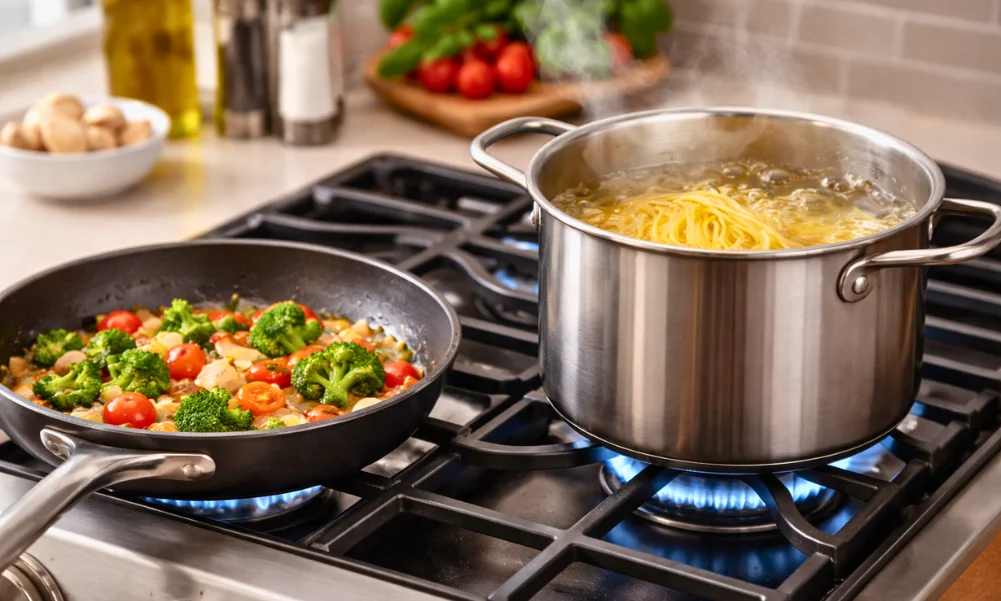
Choosing non-toxic cookware is less about finding a single perfect product and more about building a balanced system that matches cooking habits and maintenance comfort.
Key considerations include:
- Choose stable materials first: Stainless steel, cast iron, carbon steel, and glass offer the most predictable long-term behavior.
- Use coatings selectively: Ceramic and non-stick cookware are useful tools but should not be relied on exclusively.
- Match cookware to tasks: Use heavy cookware for long cooking, lighter cookware for convenience, and inert cookware for baking and storage.
- Replace cookware when behavior changes: Declining release, instability, or surface damage are functional signals, not failures.
A mixed-material kitchen reduces overuse of any single surface and minimizes exposure risks created by pushing cookware beyond its intended role.
Closing Summary
Non-toxic cookware is best understood through material stability, surface behavior, and realistic use limits rather than absolute claims. Stainless steel, enameled cast iron, carbon steel, glass cookware, and ceramic-coated cookware each offer low exposure risk when used within appropriate heat and care boundaries.
Safety depends on predictable behavior over time. Cookware that remains stable, degrades gradually, and signals its limits clearly is more reliable than cookware that promises permanent performance.
By selecting materials thoughtfully and replacing cookware when surface or structural changes appear, home cooks can maintain a kitchen that supports both safety and long-term usability.