Quick Answer
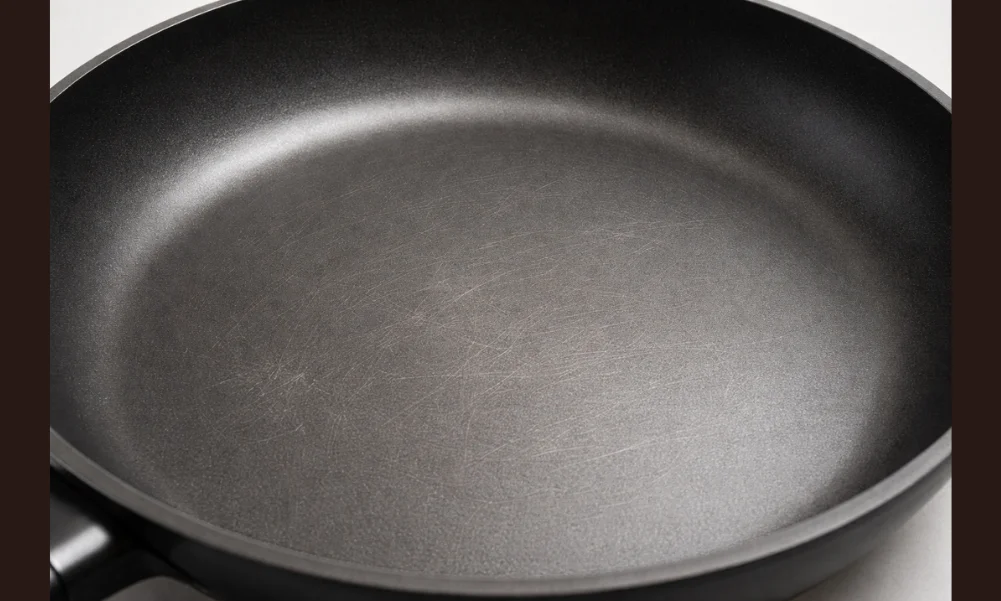
Whether scratched cookware can be repaired depends on the material and the depth of the scratch. Light surface marks on some cookware are cosmetic and do not affect performance.
Deep scratches that cut into coatings or structural layers usually cannot be repaired in a way that restores original function.
In those cases, continued use or replacement becomes a judgment call based on performance and predictability, not appearance alone.
Durability and maintenance are key factors when choosing the best cookware for long-term use.
What Counts as a “Scratch” in Cookware
Not all scratches mean the same thing. The word is used broadly, but the implications vary.
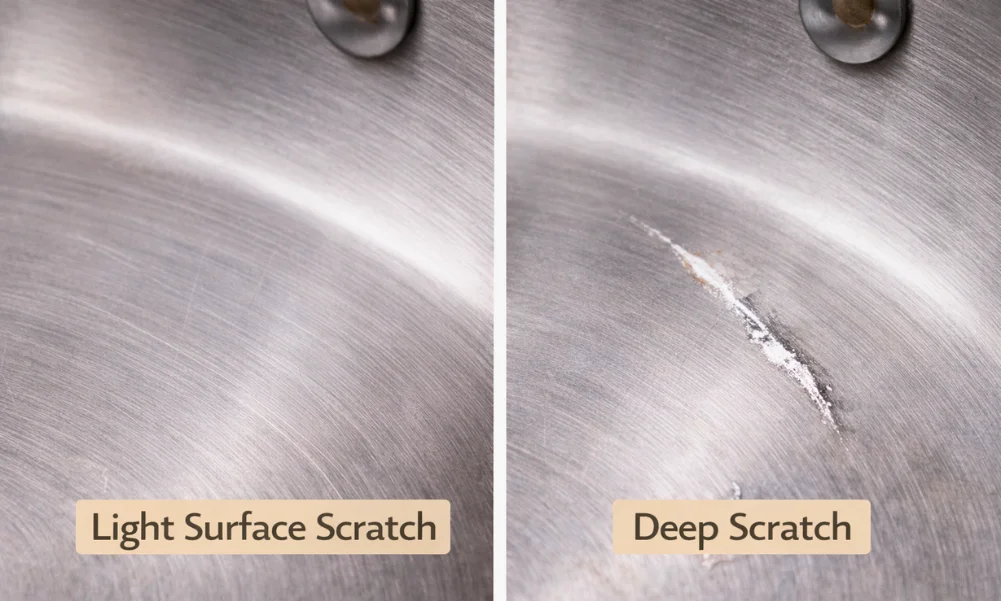
A surface mark affects appearance without changing how the cookware behaves. These marks are shallow and do not alter texture in a way that food or heat responds differently. Many stainless steel pans develop this type of wear early and continue to perform well for years.
A functional scratch changes the surface in a way that affects cooking. This usually involves depth. When a scratch creates a groove, exposes a different material, or alters smoothness, it can change how heat spreads or how food releases.
Depth matters more than length. A short, deep scratch can be more consequential than several light marks. Texture matters more than color. A rough surface changes cooking behavior even if it looks minor.
A useful way to think about scratches is to compare them to tire tread. Scuffs on the sidewall look concerning but often do not affect performance. Worn tread changes how the tire grips the road. In cookware, performance changes signal when a scratch matters.
Understanding this distinction helps buyers avoid unnecessary worry while recognizing real limits. It also connects closely with signs your cookware is no longer safe to use, which focuses on behavior rather than surface appearance.
Why Scratch Repair Is Often Misunderstood
Scratch repair is frequently framed as a surface problem. Online advice often focuses on smoothing, polishing, or coating over damage. This framing misses how cookware actually works.
Cookware surfaces are engineered for specific behaviors. Non-stick coatings are designed to reduce friction. Stainless steel relies on controlled sticking and release. Seasoned iron depends on a built-up polymer layer. When these systems are cut through, polishing alone does not recreate the original structure.
Appearance repair and functional repair are not the same. A scratch can be made less visible without restoring performance. In some cases, aggressive repair attempts remove more material and shorten lifespan.
This misunderstanding leads to frustration. Buyers expect a repair to “fix” the cookware, but the result only masks wear. Recognizing material limits early leads to better decisions and less disappointment.
Scratch repair is best viewed as management, not reversal. The goal is to maintain predictable behavior within the limits of the material.
Scratch Repair by Cookware Material
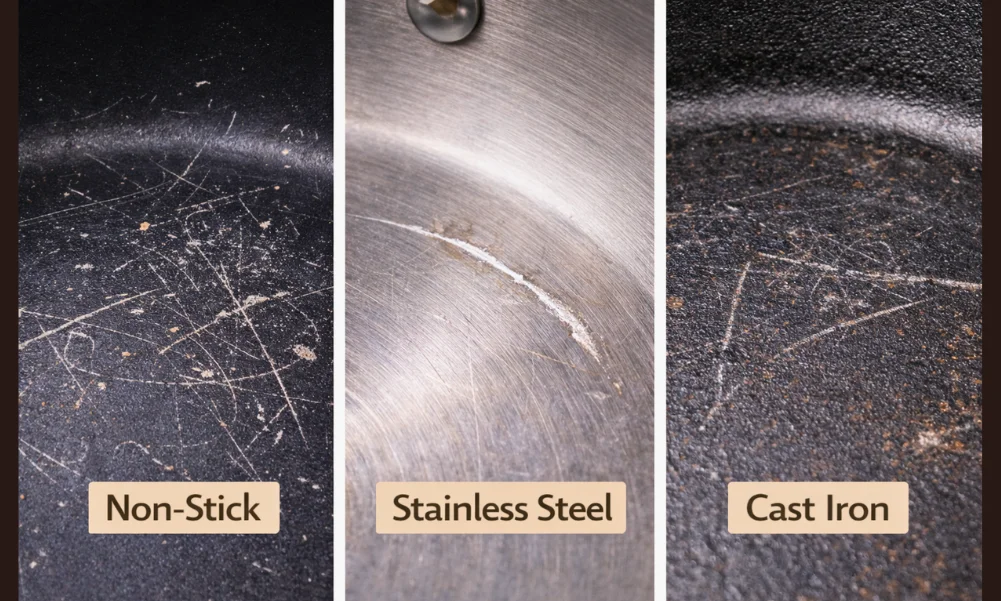
Scratch repair outcomes depend heavily on the material involved. Some cookware tolerates surface wear well. Other cookware relies on intact layers that cannot be rebuilt once damaged.
Scratch repair outcomes depend heavily on the cookware material involved, because each material has different structural layers and performance limits described in Cookware Types Explained: Materials, Uses, and Limitations.
Non-Stick Cookware
Non-stick cookware is the least repairable when scratched. The coating is a functional layer, not just a finish. When a scratch cuts through that layer, the low-friction surface is permanently disrupted.
Light marks that do not penetrate the coating are often cosmetic. These marks may look concerning but do not always change cooking behavior. Once the coating is breached, however, repair is not realistic. Polishing removes more coating. Re-coating at home does not recreate factory bonding.
At that point, the decision shifts to use versus replacement. That decision aligns closely with when to replace non-stick cookware, which focuses on performance and predictability rather than visual perfection.
Stainless Steel Cookware
Stainless steel handles scratches differently. Because there is no coating to fail, most scratches are cosmetic.
Light to moderate scratches can often be blended visually through gentle polishing. This improves appearance but rarely changes performance, because stainless steel cooking relies on heat control rather than surface smoothness.
Deep gouges are uncommon in quality stainless steel cookware. When they occur, they may trap residue or affect cleaning ease, but they rarely create safety issues. Function usually remains intact long after appearance changes.
This durability explains why many long-lasting pans look heavily used but continue to cook reliably.
Cast Iron Cookware
In cast iron, most scratches occur in the seasoning layer rather than the iron itself. These scratches are repairable through re-seasoning.
When the underlying iron is intact, repeated seasoning cycles rebuild the protective surface and restore cooking behavior. In this context, scratches are part of normal ownership rather than damage.
Cracks are a different matter. Once iron itself is cracked, repair is no longer reliable. That condition relates more to signs your cookware is no longer safe to use than to surface repair.
Carbon Steel Cookware
Carbon steel behaves similarly to cast iron but responds more quickly. Scratches in the seasoning layer are common and usually reversible.
Re-seasoning restores function as long as the steel remains flat and intact. Over-aggressive sanding or grinding, however, can thin the metal and increase warping risk.
Here, restraint matters. Gentle maintenance preserves longevity better than aggressive repair attempts.
Aluminum Cookware
Aluminum scratches easily, especially when thin. Light scratches are cosmetic. Deeper scratches can alter heat distribution and cleaning behavior.
Once aluminum is pitted or deeply scored, repair options are limited. Polishing removes material and can worsen performance. In these cases, replacement often provides a more predictable outcome.
This limitation explains why aluminum cookware tends to have a shorter practical lifespan despite being structurally sound at first.
Copper Cookware
Copper scratches on the exterior are cosmetic and can be polished. Scratches that affect the interior lining are more significant.
If the lining is stainless steel, function usually remains acceptable. If the lining is thin or damaged, performance and safety decline. Repair then depends on relining, which is a specialized process rather than a surface fix.
When Scratches Matter for Safety
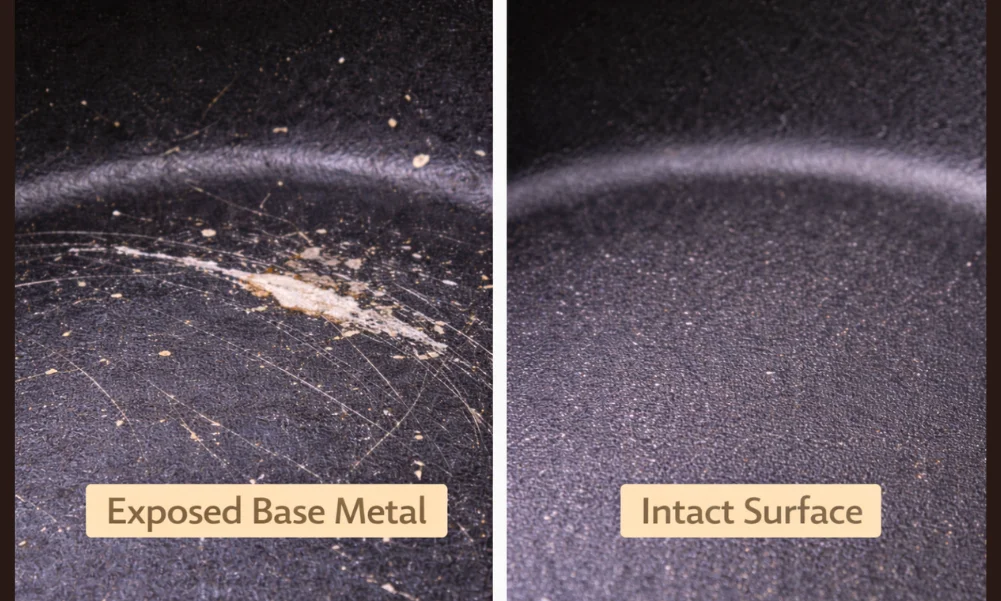
Scratches matter for safety when they compromise structure or intended surface behavior.
On coated cookware, deep scratches can expose base material and create uneven heating. On glass or ceramic cookware, scratches that turn into cracks increase breakage risk. On metal cookware, scratches rarely affect safety unless they coincide with deformation or separation.
The key factor is predictability. If cookware still heats evenly, remains stable, and supports normal handling, scratches alone are not a safety issue. When scratches coincide with instability or performance loss, further use should be reconsidered.
This distinction helps separate normal wear from meaningful risk without creating unnecessary concern.
What Scratch Repair Cannot Do
Scratch repair cannot recreate original non-stick performance. It cannot rebond coatings. It cannot restore separated layers in clad cookware.
Repairs also cannot reverse metal fatigue or warping. Attempting to do so often removes material and shortens lifespan.
Understanding these limits prevents wasted effort and unrealistic expectations.
When Replacement Is the Better Option
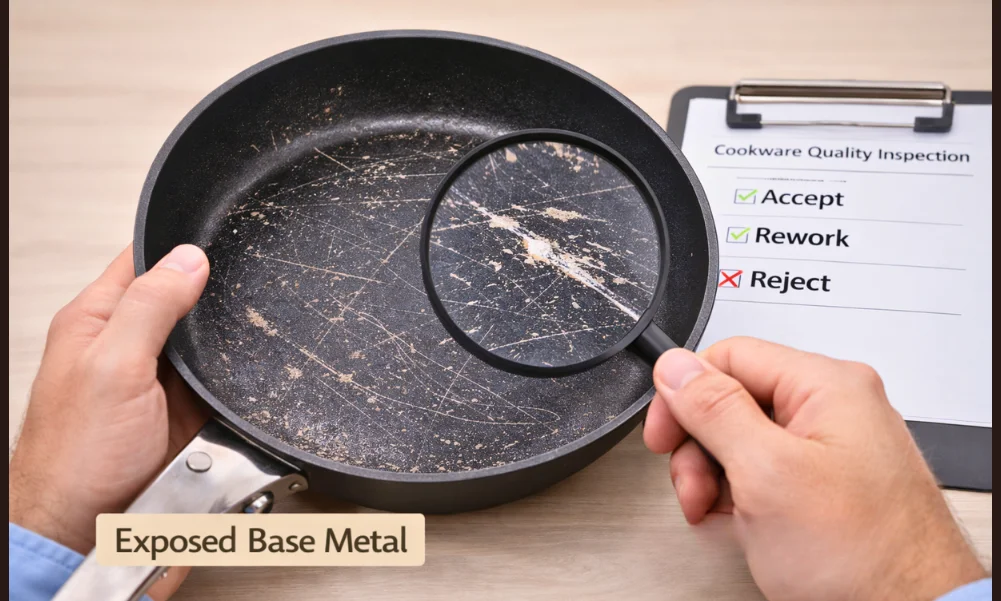
Replacement becomes the better option when repair does not restore predictable performance.
If cooking behavior changes, heat distribution becomes uneven, or cleaning becomes consistently difficult, repair has reached its limit. Cost also matters. When repair effort approaches replacement cost without equivalent results, replacement is the more practical choice.
This evaluation fits naturally into broader expectations about how long cookware should last, which vary by material and use.
How Scratches Fit Into Cookware Lifespan
Scratches are part of normal cookware aging. Long-lasting cookware often accumulates visible wear without losing function.
Judging cookware by behavior rather than appearance supports realistic ownership. It also reduces unnecessary replacement driven by cosmetic concern.
A pan that cooks well but looks used is still doing its job.
Closing Summary
Whether scratched cookware can be repaired depends on material and depth. Many scratches are cosmetic and do not affect performance. Others permanently change how cookware behaves.
Non-stick cookware has the least repair flexibility. Stainless steel, cast iron, and carbon steel tolerate surface wear better. Aluminum and copper sit between those extremes.
By focusing on function and predictability rather than appearance, buyers can make calm, informed decisions that respect both safety and longevity.