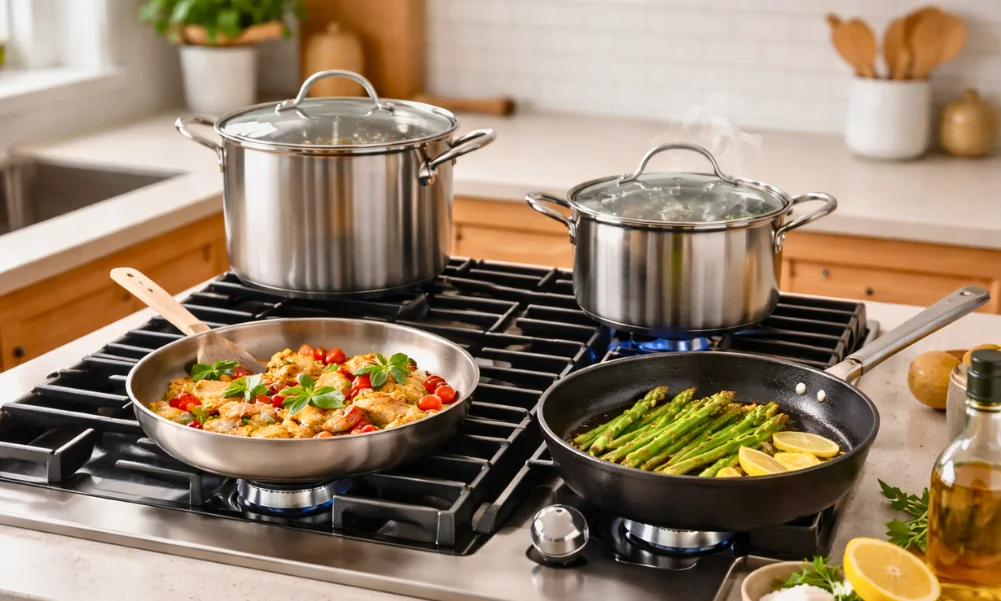
Cookware safety certifications can help you understand labels such as FDA-compliant, PFOA-free, PTFE-coated, LFGB-tested, Prop 65 warning, and non-toxic. These claims look reassuring, but they do not all mean the same thing.
Some labels describe the materials used in the cookware. Others refer to changes in how it’s made. Some show that the cookware meets food-safety standards, and others are simply marketing terms that don’t have a clear standard behind them.
This guide explains what these common safety labels mean, what they don’t tell you, and how to use them to compare cookware.
Quick Answer: Do Cookware Safety Certifications Mean a Product Is Safe?
Cookware safety labels show that a product meets certain standards for materials, food safety, or manufacturing. But these labels don’t always mean the product is 100% safe for all situations.
For example, a label might say a pan is PFOA-free, meaning it was made without a certain chemical. It might also say it meets FDA rules for food-contact safety. But this doesn’t mean the pan is safe to use at any temperature, or that it won’t wear out or get damaged.
The best way to stay safe is to check the label, but also think about the material, the type of coating, how hot the pan can get, and how you care for it.
Cookware Safety Label Cheat Sheet
| Label or Term | What It Means | What It Does Not Prove |
|---|---|---|
| PTFE | A synthetic non-stick coating material | Not a certification or proof of safety |
| PFOA-free | PFOA was not used in making the cookware | Does not mean PFAS-free or damage-proof |
| FDA-compliant | Meets U.S. food-contact safety standards | Does not mean the FDA personally tested or approved the product |
| LFGB-tested | Meets food-contact rules in the EU | Does not cover misuse, overheating, or long-term wear |
| Prop 65 warning | A California warning about possible chemical exposure | Does not mean it’s unsafe for normal use |
| ISO-certified factory | The manufacturer follows good production practices | Does not mean the cookware is food-safe |
| Non-toxic | A broad marketing term | Not a standard certification |
| Chemical-free | Marketing language | All materials are chemicals, so this is misleading |
What Counts as a Cookware Safety Certification
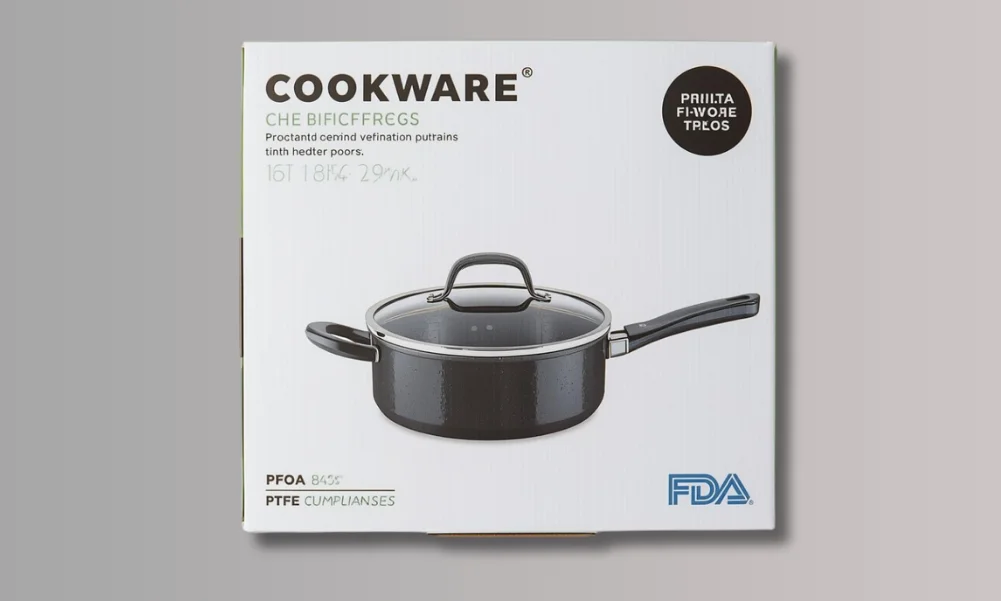
Before we dive into individual labels, let’s talk about what counts as a real safety certification and what doesn’t. Some terms you see on cookware labels aren’t certifications, even though they sound official.
Certifications vs Regulations vs Marketing Claims

- Certifications: A certification means that a product has passed certain tests and meets specific standards. These standards are set by government agencies or independent organizations. Examples include FDA compliance, LFGB testing, and ISO certification.
- Regulations: Regulations are rules that companies must follow by law. These rules set limits on what materials can be used in products, especially those that come into contact with food.
- Marketing Claims: Marketing claims are statements made by the manufacturer. These aren’t always checked by independent organizations. Examples include terms like “non-toxic,” “chemical-free,” and “eco-safe.”
PTFE Explained: A Material, Not a Safety Certification
What PTFE Means in Cookware
PTFE (polytetrafluoroethylene) is a material used for non-stick coatings. It helps prevent food from sticking to cookware.
But PTFE is not a safety certification. It’s just a coating material. So, when you see PTFE on cookware, it tells you what the coating is made of, not whether it’s safe to use.
What PTFE Does Not Represent
Just because a pan has a PTFE coating, it doesn’t automatically mean it’s safe. The safety of PTFE cookware depends on how the material behaves when it’s used, how it’s treated, and whether it meets food-contact safety standards.
For a deeper explanation of PTFE and Teflon-style coatings, read KitchenMarks’ guide on Teflon-coated cookware safety.
PFOA-Free: Why This Label Exists
What PFOA Was Used For
PFOA (perfluorooctanoic acid) was once used during the making of some non-stick coatings. It was not part of the coating itself, but was used as a manufacturing aid.
Because of health and environmental concerns, companies now avoid using PFOA in cookware.
What PFOA-Free Indicates Today
When cookware is labeled PFOA-free, it means that PFOA was not used in its production. This is a good change, but it doesn’t mean the cookware is perfect. The label doesn’t tell you how the cookware will perform over time, how it handles heat, or how long the coating lasts.
Why PFOA-Free and PFAS-Free Are Not the Same
PFOA-free means one specific chemical was not used. PFAS-free is a broader claim, as PFAS includes a large group of similar chemicals.
A pan can be PFOA-free but still contain PFAS chemicals, like PTFE. So, if you want to avoid all fluorinated chemicals, look for labels like PFAS-free or PTFE-free.
If you want to compare broader fluorinated coating claims, see the PFAS-free cookware guide.
FDA-Compliant Cookware: What FDA Language Really Covers
The phrase “FDA-approved cookware” is often used incorrectly. A more accurate phrase is “FDA-compliant food-contact material.”
The FDA controls materials that are used in cookware that comes into contact with food. If a material meets FDA standards, it is safe for normal cooking.
However, FDA compliance does not mean the product was personally tested or approved by the FDA.
For material-level concerns, especially around aluminum bases and coatings, see Is Aluminum Cookware Safe for Everyday Use?
What FDA Compliance Does Not Mean
FDA compliance doesn’t mean the FDA tested each specific product. It also doesn’t mean the cookware will be safe if it’s overheated, scratched, or used incorrectly.
For cookware, the better question is: “What material is used? Does it meet FDA food-contact rules? What instructions does the manufacturer give for use and care?”

LFGB Testing
LFGB is a standard used in Europe to test food-contact safety. It checks whether cookware materials are safe to use with food by testing if substances transfer from the cookware into food.
LFGB testing is helpful, but it doesn’t guarantee safety in every situation. It doesn’t cover problems like misuse, overheating, or wear and tear.
California Proposition 65 Warnings
A Prop 65 warning on cookware means that the product could expose users to chemicals listed by California as potentially harmful. This warning is required by California law.
However, it does not automatically mean the product is unsafe during normal use. The warning simply tells you that there is a chemical in the product that could be harmful if exposed in certain ways.
ISO Standards and Manufacturing Labels
ISO standards focus on how a product is made. They show that the manufacturer follows quality control procedures, but they don’t guarantee the cookware’s safety when used.
ISO certification is not the same as food-contact safety.
How to Evaluate Cookware Safety Claims Before Buying
Safety labels are helpful, but they should guide your questions, not make the decision for you. Here’s what to check before buying cookware:
Inspect Replacement Signs
Scratches, warping, or coating breakdown are signs that the cookware may no longer be safe to use.
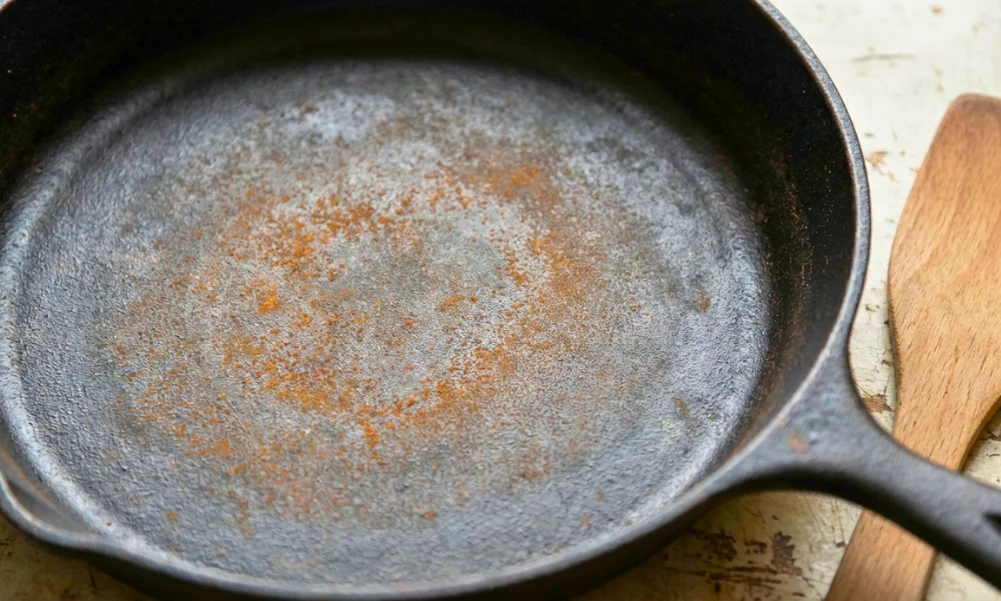
If the coating is scratched, flaking, rusty, or warped, compare it with these signs cookware is not safe to use.
Identify the Main Material
Is it stainless steel, cast iron, aluminum, or non-stick? Different materials behave differently in cooking and wear over time.
Check the Coating Type
If the cookware is non-stick, find out whether it’s made of PTFE, ceramic, or seasoned metal. “Non-stick” is a performance claim, not a material.
For a broader material comparison, use the cookware material matrix.
Look for Food-Contact Compliance
FDA-compliant, LFGB-tested, and other food-contact standards are more trustworthy than vague claims like “eco-safe” or “chemical-free.”
Read Heat and Care Limits
Every cookware material has a safe heat limit. Overheating can damage cookware, especially non-stick.
Heat limits matter most with coated cookware, so it helps to check the guide on maximum safe heat for cookware materials.
How Cookware Safety Certifications Relate to Real-World Use
While certifications are helpful, they do not guarantee cookware will stay safe forever. Even if a pan passes all tests, it can become dangerous if it’s misused or damaged.
Certification Plus Proper Use
Even certified cookware can become unsafe if it’s overheated, scratched, or used incorrectly. Use cookware according to the manufacturer’s instructions, and replace it when it’s worn out.
Why Certifications Cannot Prevent Misuse
No certification can protect against misuse, like leaving a pan on high heat without food or using abrasive cleaning tools. The condition of the cookware matters more than the label.
Common Myths About Cookware Safety Certifications
“Certified Means Safe Forever”
Certifications are valid at the time of manufacturing, but cookware can degrade over time. Wear and tear can affect its safety.
“More Labels Mean Better Cookware”
More labels do not mean higher quality. It’s more important to understand what each label really means.
“Expensive Cookware Is Automatically Safer”
Price doesn’t guarantee safety. Even expensive cookware can be unsafe if it’s not used correctly or if it wears out over time.
How to Use Certifications When Choosing Cookware
Certifications should help you make a better decision, not replace it. Look for clear material disclosures and food-contact standards.
Labels Worth Checking
The most trustworthy labels focus on food-contact safety and material transparency, such as FDA-compliant, LFGB-tested, and PFAS-free.
How These Labels Should Influence Your Cookware Choice
Safety labels should help narrow your options, not make the decision alone. If you want low-maintenance everyday cookware, stainless steel, cast iron, carbon steel, enamel, glass, and clearly disclosed PFAS-free options are easier to evaluate than products relying only on vague “non-toxic” language.
For non-stick cookware, look beyond PFOA-free claims. Check whether the pan is PTFE-based, ceramic-coated, PFAS-free, or designed for lower-heat cooking. Also check the replacement guidance, because non-stick safety and performance depend heavily on the condition of the coating.
For a full material-based comparison, see KitchenMarks’ guide to non-toxic cookware materials.
Frequently Asked Questions
Is FDA-approved cookware the same as FDA-compliant cookware?
No. FDA-compliant means the material meets the FDA’s food-contact safety standards. It does not mean the FDA personally tested or approved the cookware.
Does PFOA-free mean PFAS-free?
No. PFOA-free means only that one specific chemical was not used. PFAS-free refers to a broader group of chemicals.
Is PTFE a safety certification?
No. PTFE is a non-stick material, not a certification. Its safety depends on use and the materials it’s made from.
What is the most trustworthy cookware safety label?
Look for FDA-compliant, LFGB-tested, and other food-contact certifications. “Non-toxic” or “chemical-free” are vague and unreliable.
Should I avoid cookware with a Prop 65 warning?
Not necessarily. Prop 65 warnings are required by California law and are designed to inform you about potential chemical exposure. Always check what substance is involved and where it’s located.
Can certified cookware become unsafe over time?
Yes. Cookware that’s certified at the time of purchase may not remain safe if it’s scratched, overheated, or damaged. Always follow care instructions and replace cookware when necessary.


Content is researched and written by Engr. Jamal & KitchenMarks Editorial team based on hands-on product use, maintenance experience, and long-term household performance evaluation.