Quick Answer
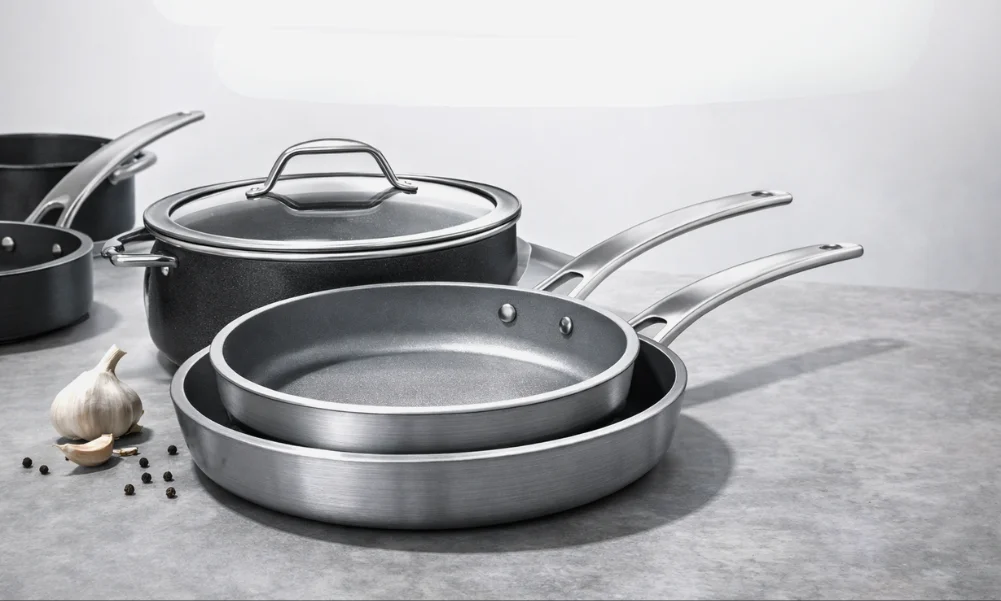
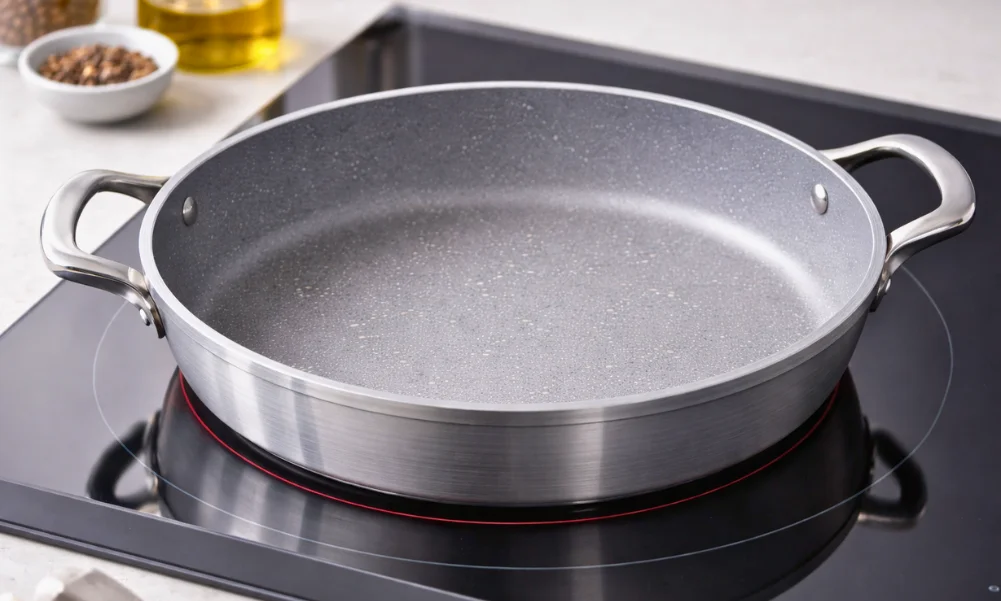
GreenPan cookware is defined by a ceramic-based nonstick coating applied over a metal base, most commonly aluminum. Its safety profile depends on coating stability, heat control, and surface condition rather than branding or marketing claims.
Ceramic coatings resist chemical reaction but wear faster and differently than PTFE coatings. Longevity is limited by coating degradation rather than structural failure. Performance and safety change gradually as the surface wears.
What Makes GreenPan a Distinct Cookware Entity
GreenPan represents a specific approach within the coated cookware category. The defining feature is its use of a ceramic-based nonstick coating rather than a PTFE-based formulation.
This distinction affects how the surface behaves under heat, how it wears over time, and how safety considerations are framed. GreenPan does not introduce a new cookware material category. It remains coated cookware with performance governed by surface chemistry and base metal behavior.
Understanding GreenPan as a ceramic-coated system rather than a “chemical-free” alternative clarifies expectations. Broader cookware classification context is outlined in Cookware Types Explained.
Ceramic Coating Behavior in Practical Use
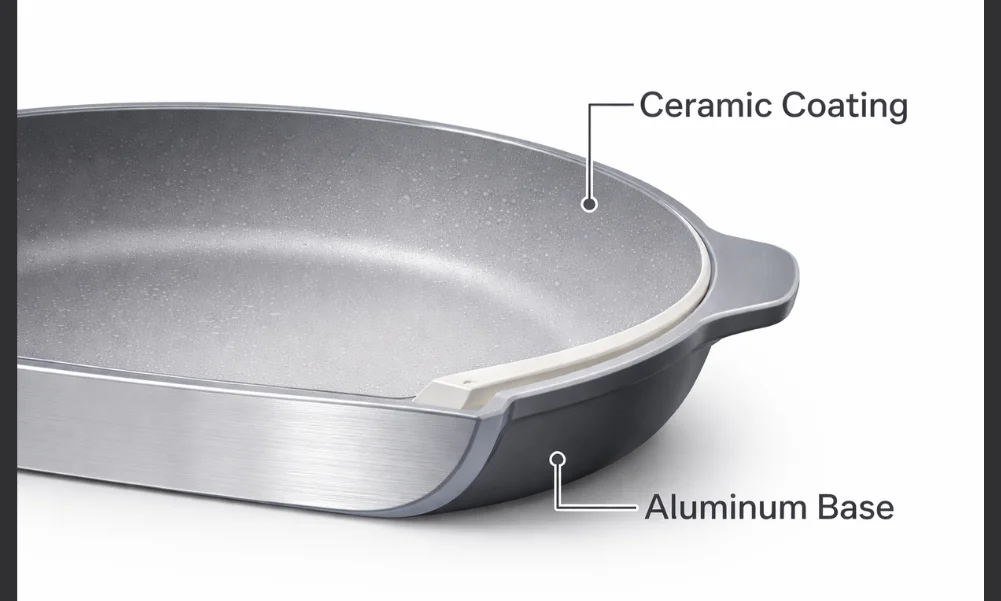
Ceramic coatings used in GreenPan cookware are inorganic and chemically stable at typical cooking temperatures. They do not rely on PTFE chemistry to create food release.
Initial nonstick performance is often strong due to surface smoothness. Over time, ceramic coatings tend to lose release properties gradually rather than peeling dramatically. This decline reflects surface wear rather than contamination or safety failure.
Ceramic coatings tolerate moderate heat but remain sensitive to overheating. Excessive heat accelerates surface breakdown and shortens functional lifespan. These limits mirror patterns discussed in Maximum Safe Heat for Different Cookware Materials.
Base Metal and Heat Behavior
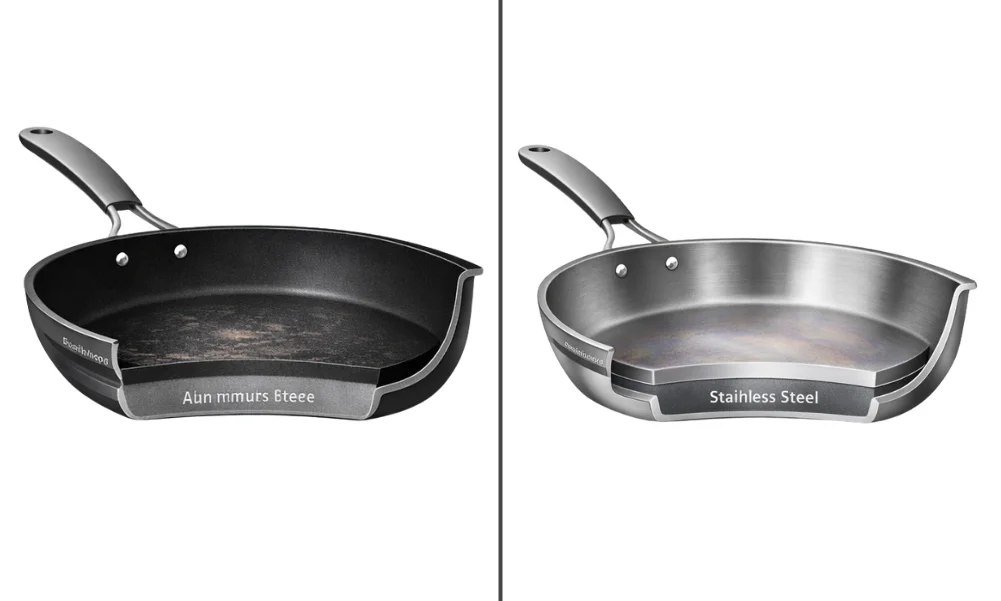
Most GreenPan cookware uses aluminum as its base metal. Aluminum conducts heat efficiently and responds quickly to burner changes. This improves temperature control during routine cooking.
At the same time, aluminum’s lower structural stiffness increases sensitivity to uneven heat or rapid temperature changes. Thin bases are more prone to deformation under high output. These behaviors align with general aluminum cookware characteristics described in Is Aluminum Cookware Safe for Everyday Use.
The coating does not compensate for base metal limitations. Heat behavior reflects construction quality rather than coating type alone.
Safety Perspective: What Ceramic Coatings Do and Do Not Change
GreenPan cookware safety is often discussed in terms of what the coating avoids rather than how it behaves. Ceramic coatings do not rely on PTFE chemistry and are manufactured without PFOA.
This does not make them immune to misuse. Safety remains tied to predictable surface behavior and structural integrity. Overheating, surface wear, and deformation still influence performance and control.
Safety concerns arise when surface degradation alters heat response or food interaction. These changes develop gradually and are observable, consistent with patterns outlined in Signs Your Cookware Is No Longer Safe to Use.
Ceramic coatings do not introduce unique hazards. They introduce different wear patterns.
Longevity and Wear Patterns
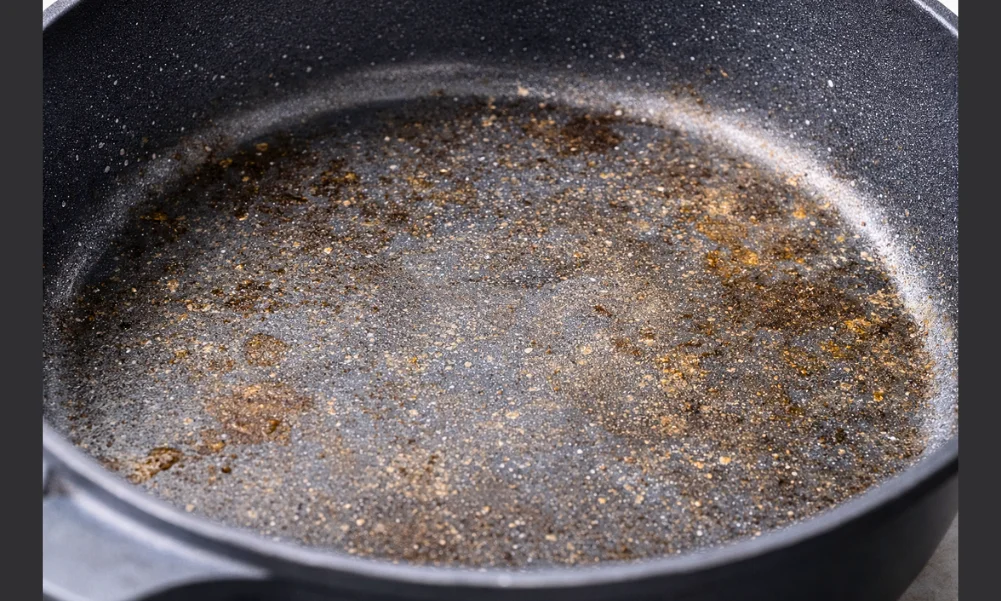
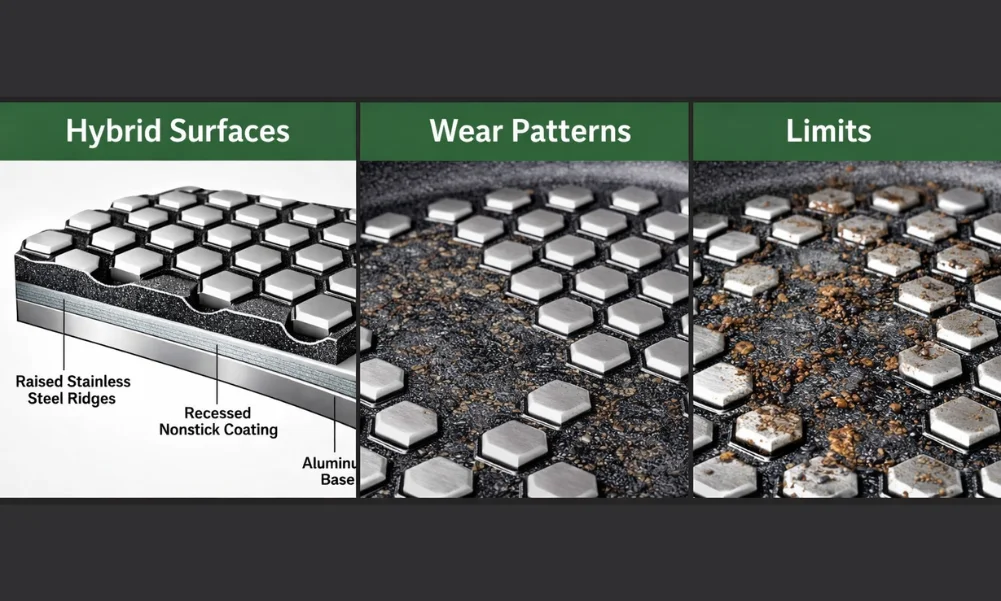
Longevity is the primary trade-off for ceramic-coated cookware. Release performance typically declines faster than with well-maintained PTFE coatings, even when no visible damage appears.
Surface wear shows up as increased sticking rather than flaking. Once this decline begins, performance does not recover. Replacement decisions are functional rather than safety-driven, similar to patterns described in When to Replace Non-Stick Cookware.
Structural lifespan of the base metal often exceeds coating lifespan. This mismatch defines realistic ownership expectations.
Heat Management and Cooktop Compatibility
GreenPan cookware performs best at low to moderate heat. Rapid preheating or empty heating accelerates coating wear. These risks align with broader coated cookware behavior explained in Heating Empty Cookware: Why It’s Risky.
On induction cooktops, fast energy transfer increases stress on thin or uneven cookware. Controlled heat increases matter more than maximum output, consistent with induction behavior described in What Is Induction Cookware and How Does It Work.
Cooktop compatibility does not change coating limits.
Cleaning, Care, and Surface Preservation
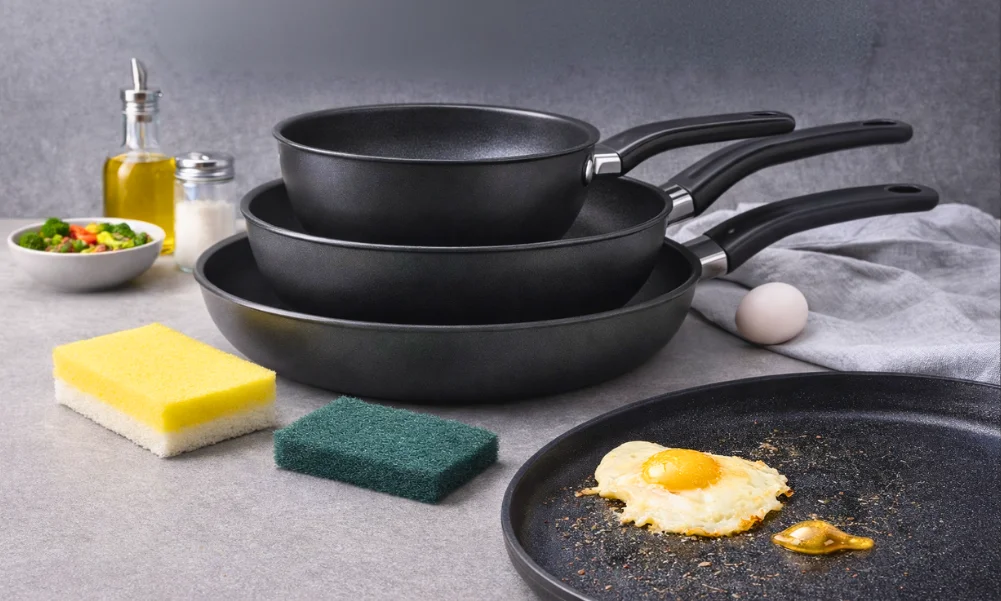
Ceramic coatings benefit from gentle cleaning practices. Abrasive scrubbing removes small amounts of surface material even when no damage is visible.
Dishwashers accelerate wear through heat and detergents. This effect mirrors general nonstick care patterns discussed in Is Dishwasher Use Damaging Cookware.
Over-cleaning shortens lifespan more reliably than under-cleaning, a relationship outlined further in Can You Damage Cookware by Over-Cleaning.
How GreenPan Fits Within a Balanced Kitchen
GreenPan cookware suits cooks who prioritize easy cleanup and moderate heat cooking. It performs well for everyday tasks where sticking is undesirable and temperature demands are modest.
It is less suited to high-heat searing, aggressive preheating, or long-term durability expectations. Many kitchens pair ceramic-coated cookware with stainless steel or cast iron to distribute stress across materials. System-level balance is explained in Cookware Types Explained.
Understanding this role prevents disappointment and misuse.
Safety Certifications and Compliance Context
GreenPan cookware meets standard safety certification requirements for household cookware. Certifications establish baseline material stability rather than unlimited tolerance.
Certification does not override wear behavior or usage limits. These boundaries are explained further in Cookware Safety Certifications Explained.
Daily habits determine how closely cookware stays within certified performance ranges.
Practical Limitations to Consider
GreenPan cookware has a shorter nonstick lifespan than many traditional coated options. Ceramic coatings are sensitive to overheating and abrasive cleaning.
Performance depends heavily on controlled heat and careful surface preservation.
Who GreenPan Cookware Is Best Suited For
GreenPan cookware suits cooks who prioritize easy cleanup, low-to-moderate heat cooking, and reduced reliance on traditional nonstick coatings. It performs best for everyday tasks where sticking is undesirable and temperature demands are controlled.
Cooks who frequently use high heat or expect long nonstick lifespan may prefer other cookware materials.
Closing Summary
GreenPan cookware is defined by ceramic-based nonstick coatings applied over aluminum bases. Safety depends on surface condition, heat control, and predictable behavior rather than marketing language. Ceramic coatings offer chemical stability but shorter nonstick lifespan.
Longevity is limited by coating wear rather than structural failure. When used within moderate heat and care boundaries, GreenPan cookware provides practical performance with realistic expectations.