


Cookware safety labels appear simple at first glance, yet they often create more confusion than clarity. Terms such as PFOA-free, FDA approved, PTFE, or non-toxic are frequently displayed on packaging, but they do not all represent the same type of assurance.
Some labels describe materials. Others refer to manufacturing processes. A few indicate regulatory compliance rather than independent testing.
For home cooks, the challenge is understanding what these certifications actually mean in real-world cooking. This article explains the most common cookware safety certifications and labels, who sets the standards behind them, and how much weight they deserve when choosing cookware for everyday use.
The goal is not to rank certifications but to place them in context, so buyers can interpret safety claims accurately and avoid relying on labels alone.
This guide explains which cookware safety labels reflect real standards, which are manufacturing disclosures, and which are marketing language—so you can judge claims without relying on labels alone.
Quick Answer: Do Cookware Safety Certifications Mean a Product Is “Safe”?
Cookware safety certifications indicate that a product meets specific regulatory or material standards, but they do not guarantee absolute safety under all conditions.
Most certifications focus on food-contact compliance, material composition, or manufacturing limits. They do not account for misuse, overheating, surface damage, or long-term wear.
In practice, certifications establish a baseline. Safe use still depends on how cookware is selected, used, and maintained over time.
What Counts as a Cookware Safety Certification
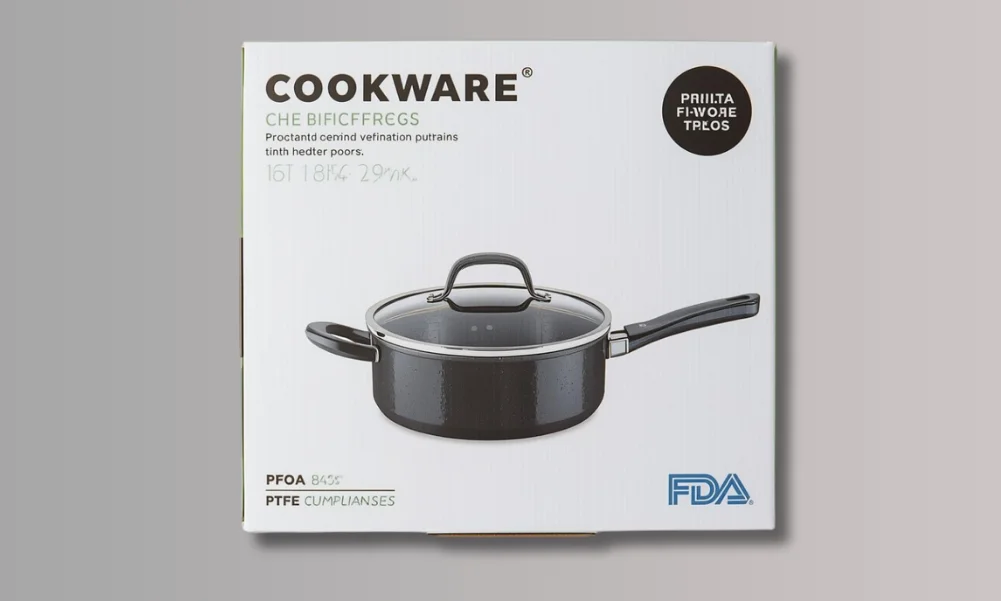
Before examining individual labels, it is important to understand what qualifies as a cookware safety certification and what does not. Many terms used on cookware packaging are not certifications at all, even though they appear authoritative.
Certifications vs Regulations vs Marketing Claims

A certification usually indicates that a product meets a defined standard or testing requirement. This standard may come from a regulatory body, an industry organization, or an independent testing framework. Certifications typically focus on food-contact safety, material composition, or manufacturing limits.
A regulation is a legal requirement. Regulations define what materials and processes are allowed in products sold within a specific market. Compliance is mandatory rather than optional.
A marketing claim is a statement made by the manufacturer. These claims are not certifications and may not be verified by a third party. Terms such as “non-toxic,” “chemical-free,” or “eco-safe” often fall into this category.
Understanding this distinction helps explain why cookware can carry multiple labels that appear meaningful but provide different levels of assurance.
PTFE Explained: A Material, Not a Safety Certification
PTFE is one of the most frequently misunderstood terms in cookware safety discussions. It is often treated as a certification, even though it describes a material rather than a safety rating.
What PTFE Means in Cookware
PTFE, or polytetrafluoroethylene, is a synthetic material used as a non-stick coating. In cookware, PTFE forms a thin surface layer that reduces friction and prevents food from bonding to the pan.
PTFE does not indicate approval, testing, or certification on its own. It simply identifies the type of coating applied to the cookware.
What PTFE Does Not Represent
The presence of PTFE does not imply toxicity or safety by default. Safety depends on how the material behaves under normal cooking conditions and whether it complies with food-contact regulations.
Confusion often arises when PTFE is discussed without context. It functions as a performance material, not a safety label.
🔗 Related: Is Teflon-Coated Cookware Still Safe to Use
PFOA-Free: Why This Label Exists
The term PFOA-free appears on many non-stick cookware products and is often interpreted as a certification of safety. In reality, it reflects a change in manufacturing practices rather than a guarantee of performance or longevity.
What PFOA Was Used For
PFOA, or perfluorooctanoic acid, was once used as a processing aid during the production of certain non-stick coatings. It was not the cooking surface itself and was not intended to be present in finished cookware.
Environmental concerns led to industry-wide efforts to eliminate PFOA from cookware manufacturing.
What PFOA-Free Indicates Today
Modern cookware labeled as PFOA-free is produced without this substance. This aligns with current regulatory expectations in many regions.
However, the PFOA-free label does not describe how the cookware performs over time, how it handles heat, or how long the coating lasts. It addresses one specific manufacturing concern rather than overall cookware safety.
🔗 Related: Is Aluminum Cookware Safe for Everyday Use
FDA Approval: What It Actually Covers
The term FDA approved is commonly used in cookware descriptions, but it is often misunderstood. The FDA does not approve cookware in the way it approves drugs or medical devices.
What the FDA Regulates in Cookware
The FDA regulates food-contact materials. This includes coatings, metals, and surface treatments that come into direct contact with food during normal use.
For cookware, FDA compliance means that materials meet established limits for substance migration into food under expected cooking conditions. These limits are based on typical use rather than extreme scenarios.
When cookware materials comply with FDA food-contact regulations, they are considered acceptable for use in food preparation.
What FDA Compliance Does Not Mean
FDA compliance does not indicate that a cookware product has been individually tested or endorsed by the agency. It also does not guarantee safety under all conditions, such as overheating, prolonged misuse, or severe surface damage.
In practical terms, FDA compliance sets a minimum standard. It does not replace proper use, care, or replacement when cookware becomes worn.
Other Common Cookware Safety Labels Explained

Beyond PTFE, PFOA-free, and FDA compliance, cookware may display additional labels that suggest safety or quality. These labels vary widely in scope and reliability.
LFGB Certification
LFGB is a European food-contact standard that applies to materials intended to touch food. It focuses on migration testing and ensures that substances released during normal use stay within defined limits.
Cookware that meets LFGB standards has passed testing designed to simulate real-world food contact. However, like other standards, LFGB certification does not account for misuse or long-term wear beyond the testing parameters.
California Proposition 65 Warnings
Proposition 65 warnings appear on many cookware products sold in California. These warnings indicate that a product contains substances known to the state to potentially cause health concerns at certain exposure levels.
The presence of a Prop 65 warning does not automatically mean cookware is unsafe when used as intended. Manufacturers often include warnings to comply with broad labeling requirements rather than to signal a specific risk during normal cooking.
Understanding this context helps prevent overinterpretation of these warnings.
ISO Standards and Manufacturing Labels
ISO standards relate primarily to manufacturing processes and quality control. They indicate that a manufacturer follows consistent production practices.
ISO certification does not evaluate food-contact safety directly. It provides insight into how cookware is made rather than how it behaves during cooking.
“Non-Toxic” and “Chemical-Free”: Why These Are Not Certifications
Many cookware products use terms such as non-toxic, chemical-free, or eco-safe. These phrases are persuasive, but they are not regulated certifications and often lack standardized testing requirements. Because they do not follow a consistent definition, they should be interpreted cautiously rather than treated as verified safety assurances.
Because these terms lack standardized testing requirements, they should be interpreted cautiously.
How to Evaluate These Claims Critically
When encountering such labels, it is more useful to look for concrete information about materials, coatings, and compliance with recognized food-contact regulations. Specific disclosures provide more value than broad safety language.
🔗 Related: Best Non-Toxic Cookware Options (Materials-Based)
How Certifications Relate to Real-World Cooking Safety
Certifications provide context, but they do not replace informed use. Real-world safety depends on how cookware is handled over time.
Certification Plus Proper Use
Even cookware that meets recognized standards can become problematic if overheated, damaged, or used beyond its intended lifespan. Certifications establish conditions under which materials are considered acceptable, not guarantees under all circumstances.
Why Certifications Cannot Prevent Misuse
No certification can account for leaving an empty pan on high heat, using abrasive tools repeatedly, or ignoring visible surface degradation. These factors influence performance and safety more than labels.
Common Myths About Cookware Safety Certifications
Misconceptions persist because certifications are often treated as absolute assurances.
“Certified Means Safe Forever”
Certifications apply to materials at the time of manufacture. They do not extend indefinitely through years of wear and tear.
“More Labels Mean Better Cookware”
An abundance of labels does not necessarily indicate higher quality. Clear material disclosure and proper use guidance matter more.
“Expensive Cookware Is Automatically Safer”
Price reflects design and construction, not guaranteed safety. Even premium cookware requires appropriate use and maintenance.
How to Use Certifications When Choosing Cookware
Certifications should inform decisions, not replace judgment.
Labels Worth Checking
Food-contact compliance, material transparency, and clear manufacturing disclosures provide the most useful information.
What Matters More Than Labels
Material choice, cooking habits, and maintenance practices often influence safety and satisfaction more than certifications alone.
For material-level safety comparisons, see Best Non-Toxic Cookware Options (Materials-Based Guide).
Certifications establish baseline compliance, but cookware safety in daily use depends on material choice, surface condition, and realistic cooking habits.
Final Takeaway: How Much Should You Rely on Cookware Certifications?
Cookware safety certifications establish important baselines, but they do not eliminate the need for informed use. They indicate compliance with specific standards rather than universal or permanent safety.
Understanding what certifications cover, and what they do not, allows buyers to interpret labels realistically. Combined with appropriate cookware selection and use, certifications can support safer everyday cooking decisions.
Frequently Asked Questions
Is FDA-compliant cookware completely safe?
FDA compliance indicates that materials meet food-contact standards, but it does not guarantee safety under all cooking conditions.
Does PFOA-free mean non-toxic?
PFOA-free refers to manufacturing practices and does not describe overall cookware performance or lifespan.
Are European certifications stricter than U.S. standards?
European standards such as LFGB emphasize food-contact testing, but both regions focus on defined safety limits rather than absolute guarantees.
Should cookware without certifications be avoided?
Lack of visible certification does not automatically indicate risk. Material transparency and proper use remain more important factors.
