Stainless Steel vs Non-Stick Cookware: Surface Behavior, Heat Limits, and Longevity

Quick Answer
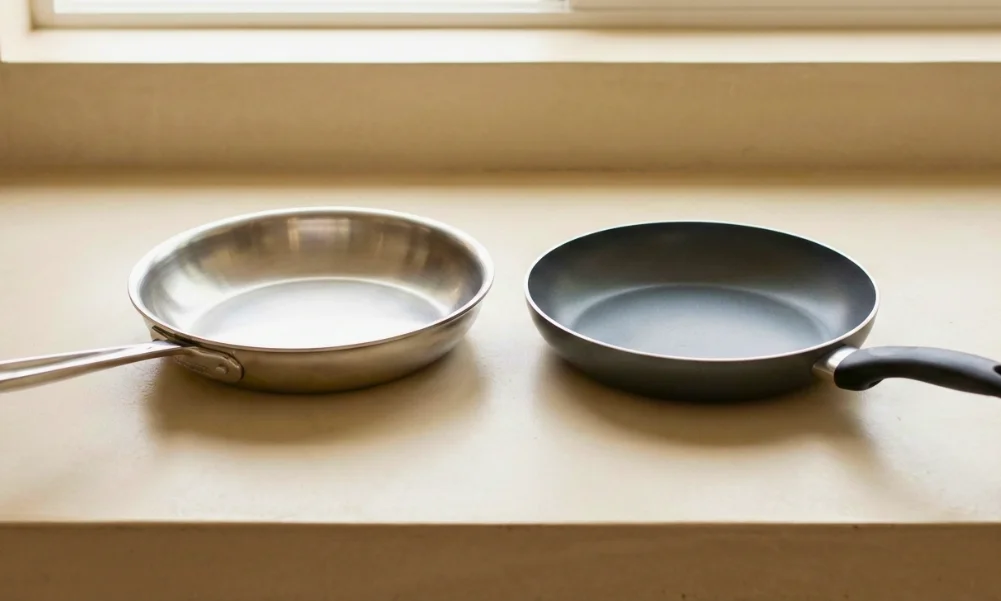
Stainless steel and non-stick cookware differ in cooking interface behavior, heat tolerance, and long-term wear rather than basic cooking capability. Stainless steel tends toward durability and surface stability, while non-stick tends toward ease of release and controlled heat use.
Neither category is universally superior. Their differences often become clearer through wear patterns, heat exposure, and maintenance expectations over time.
How Surface Behavior Shapes Cooking Outcomes
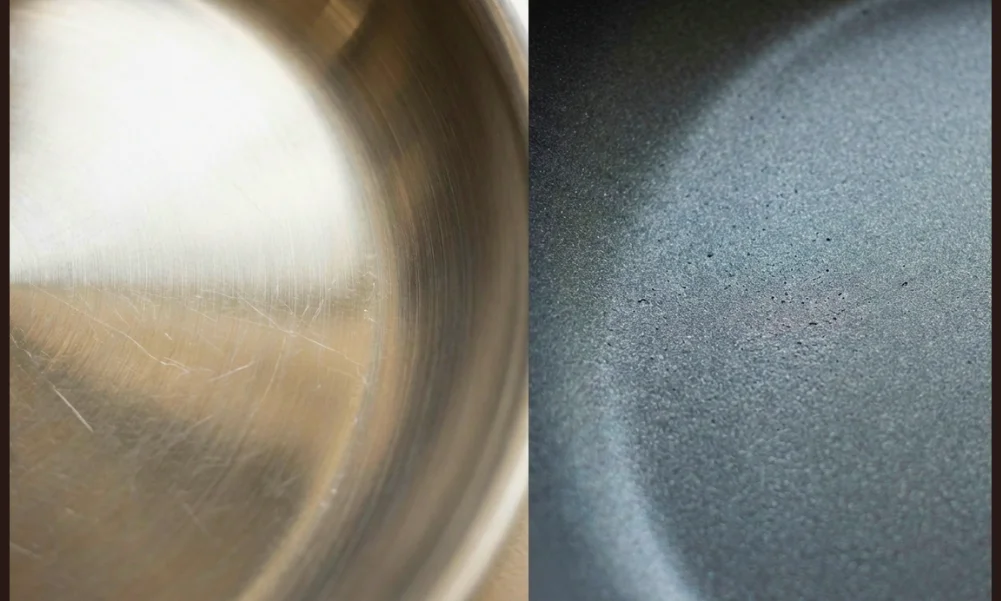
The primary difference between stainless steel and non-stick cookware lies at the cooking surface. Each cooking interface responds differently to heat, moisture, and food contact.
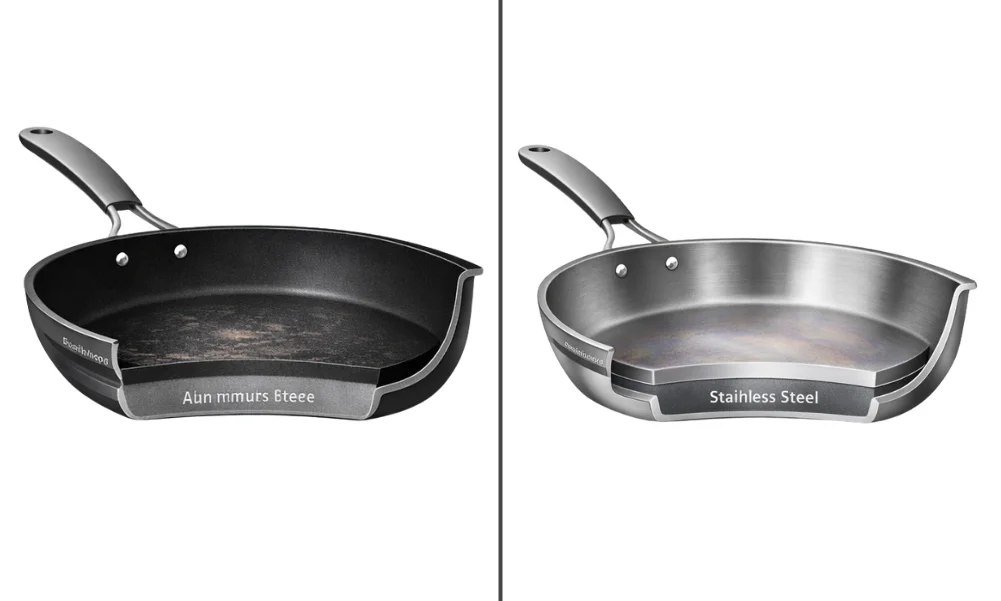
Stainless steel relies on a bare metal contact layer. Food interaction often reflects temperature control and surface condition rather than coating alone.
Non-stick cookware relies on a coated surface. The coating reduces adhesion by design across most food types.
These differences affect how food releases during cooking. They also influence how surfaces change as wear accumulates.
Stainless steel surfaces generally remain mechanically stable as they age. Changes appear gradually as discoloration or altered sticking behavior.
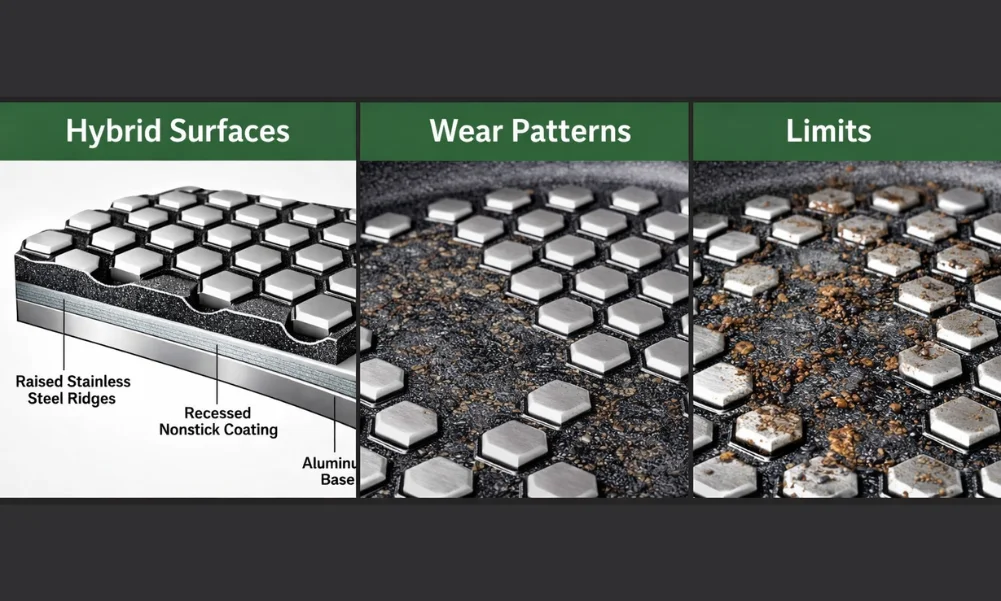
Non-stick surfaces change primarily through coating wear. Release performance often declines before structural issues appear.
Understanding these cooking interface behaviors helps explain why each material excels under different conditions without implying preference.
Heat Tolerance and Stress Response
Heat exposure affects stainless steel and non-stick cookware differently. The difference reflects surface limits rather than base material strength.
Stainless steel generally tolerates higher heat exposure structurally. Its surface does not rely on a coating that degrades with temperature.
Non-stick cookware typically has narrower heat margins. contact layer coatings degrade when exposed to repeated high heat or empty heating.
This does not make non-stick cookware unsafe by default. This means performance decline may appear sooner under heat misuse.
Heat stress accumulates gradually. Visible damage often appears after functional changes have already begun.
These heat-related behaviors influence longevity expectations more than short-term cooking results.
Longevity and Wear Patterns Over Time
Stainless steel and non-stick cookware age through different mechanisms. The difference lies in what changes first as stress accumulates.
Stainless steel tends to retain its structure over long periods. Wear appears mainly as cooking interface discoloration or altered sticking behavior.
These changes are gradual. They rarely affect structural integrity or stability.
Non-stick cookware shows change at the surface level first. Coating wear reduces release performance before any structural issues develop.
This decline often appears unevenly. Some areas lose effectiveness earlier than others.
Longevity often reflects how surfaces are stressed rather than how often cookware is used. Heat exposure and abrasion often play larger roles than cooking frequency alone.
These patterns align with broader lifespan behavior discussed in how long should cookware last.
Safety Boundaries in Stainless Steel and Non-Stick Cookware
Safety differences between stainless steel and non-stick cookware are practical rather than categorical. Neither category typically presents inherent risk when cookware remains structurally intact.
For stainless steel, safety concerns relate to stability and attachment integrity. Loose handles or warped bases reduce control during handling.
For non-stick cookware, safety concerns relate to cooking interface condition. Significant coating breakdown alters heat response and predictability.
Scratches or cosmetic marks alone rarely indicate immediate safety loss. Behavioral changes provide clearer signals.
These warning signs apply regardless of cookware category. Clear mechanical indicators are outlined in signs your cookware is no longer safe to use.
Safety boundaries are crossed when cookware behavior becomes unpredictable. That change usually develops gradually rather than suddenly.
How Use Patterns Influence Surface Differences
Use frequency shapes how stainless steel and non-stick cookware diverge over time. Occasional use minimizes visible differences between the two surfaces.
Under frequent use, non-stick coatings show change sooner. Repeated heat exposure and contact gradually reduce release consistency.
Stainless steel surfaces change more slowly. Wear accumulates through cooking interface interaction rather than coating loss.
Heavy use amplifies these differences. Light use narrows them considerably.
These patterns explain why experiences vary across kitchens. They reflect surface behavior under stress rather than material superiority.
Storage, Handling, and System-Level Effects
Storage and handling affect both stainless steel and non-stick cookware. The impact differs because of surface sensitivity.
Non-stick surfaces are more vulnerable to abrasion during stacking. Repeated contact accelerates coating wear even without visible damage.
Stainless steel tolerates contact more predictably. Surface abrasion changes appearance before performance.
Handling stress affects attachment points in both categories. Loose handles and rim distortion alter stability regardless of cooking interface type.
These effects develop gradually. They shape long-term condition alongside cooking behavior. These surface-related effects connect closely with cookware storage practices discussed in cookware storage ideas that protect pots and pans.
Common Assumptions About Stainless Steel and Non-Stick
Stainless steel cookware is often viewed as maintenance-free. In practice, surface behavior still changes with use.
Non-stick cookware is sometimes viewed as fragile or unsafe. Most issues reflect surface wear rather than inherent risk.
Ease of release does not equal durability. Structural stability does not equal convenience.
These assumptions simplify a more complex reality. cooking interface design defines tradeoffs rather than quality.
Stainless steel sticking reflects surface behavior rather than a flaw, as explained in How to Cook Eggs on Stainless Steel Without Sticking.
So, Which Is Better for Most Home Cooks?
For most home cooks, stainless steel and non-stick cookware serve different roles rather than competing directly. Stainless steel suits cooks who value durability, higher heat tolerance, and long-term stability.
Non-stick suits cooks who prioritize easy food release and controlled, lower-heat cooking.
If you want a full breakdown of how these materials compare in real kitchens, see this complete guide to the best cookware.
Closing Summary
Stainless steel and non-stick cookware differ primarily in surface behavior and heat tolerance. These differences shape how cookware ages and performs over time.
Stainless steel emphasizes structural durability and surface stability. Non-stick emphasizes release performance within narrower heat limits.
Neither category is universally superior. Understanding their tradeoffs supports realistic expectations and predictable long-term use.