Quick Answer
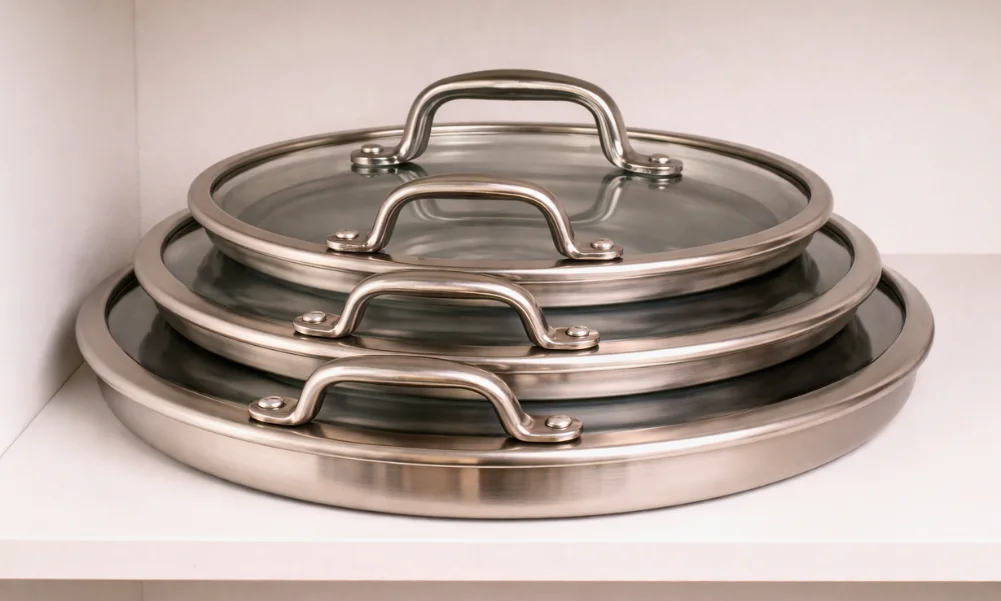
Cookware lid storage affects more than space usage. Poor storage increases rim stress, surface wear, and impact damage over time. Practical lid storage solutions focus on stability, protection, and predictable handling rather than compactness alone.
In practice, lid storage that limits edge contact and prevents shifting reduces damage more effectively than maximizing compactness.
What “Lid Storage” Means for Cookware Behavior
Cookware lids are structurally different from pots and pans. They combine rigid surfaces with fragile edges and attachment points.
Lids experience stress primarily during storage rather than cooking. Stacking, sliding, and contact with other cookware shape wear patterns.
Rims and edges are especially vulnerable. Repeated contact concentrates force on narrow surfaces.
Handles add another stress point. They create uneven contact when lids rest flat or lean against adjacent items.
Because of this, lid storage influences longevity as much as daily use. Damage often develops quietly between cooking sessions.
Why Lid Storage Creates Space and Stress Tradeoffs
Space-efficient storage often compresses items together. Compression increases contact frequency and pressure at edges.
Vertical storage shifts stress away from surface stacking. However, it can introduce instability if lids shift or tip.
Horizontal stacking shifts weight distribution across contact areas. It also increases friction between surfaces over time.
Movement during cabinet access adds impact stress. Each contact event is minor but cumulative.
These tradeoffs explain why lid damage appears even without visible misuse. Storage behavior shapes wear patterns just as much as cooking behavior.
Longevity patterns related to handling and storage are discussed further in cookware storage ideas protect pots pans, where protection between uses matters.
Common Lid Storage Approaches and Their Tradeoffs
Different lid storage approaches change how stress is distributed rather than eliminating it. Each method shifts pressure to different contact points.
Stacked lid storage concentrates force at rims and knobs. Weight transfers vertically and compounds when multiple lids are grouped.
Side-by-side storage shifts load away from vertical stacking. It increases lateral movement and edge contact instead.
Hanging or leaning storage shifts stress away from broad surface contact. It introduces point-load stress at handle or rim contact areas.
Drawer-style storage shifts impact patterns away from vertical drops. Repeated sliding increases abrasion at edges and handles.
No storage approach is stress-free. Practical solutions manage where stress occurs rather than removing it entirely. Across all methods, uncontrolled movement causes more damage than static contact.
Material Sensitivity in Lid Storage
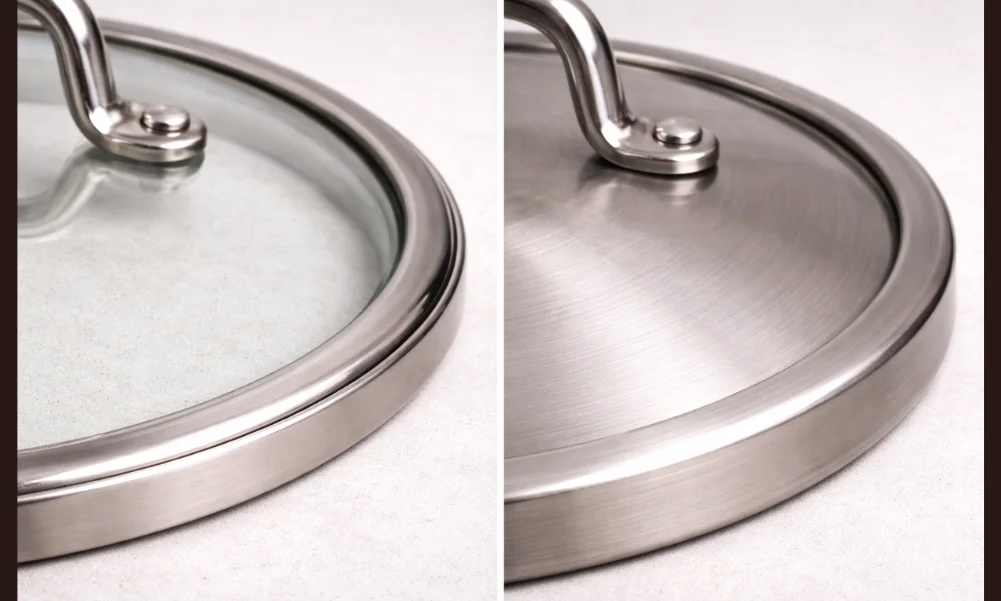
Lid materials respond differently to storage stress. Glass lids are most sensitive to edge impact. Small rim chips weaken structural integrity over time. Damage often occurs during storage rather than use.
Metal lids tolerate abrasion better. They still deform when pressure concentrates at thin rims.
Enamel-coated lids introduce another layer of vulnerability. Chipping exposes base metal and accelerates wear.
Handle attachments represent a common failure point. Repeated contact loosens fasteners and increases instability.
Material sensitivity explains why similar storage setups produce different outcomes. Construction details shape durability more than storage density.
How Lid Storage Affects Long-Term Cookware Longevity
Lid storage influences cookware lifespan through repeated low-level stress. These stresses accumulate more quietly than cooking-related wear.
Edges absorb the majority of contact during storage. Over time, this contact weakens rims and changes lid fit.
Poor fit alters how lids sit during cooking. Steam escape, wobble, and uneven contact develop gradually.
Handle attachments also experience storage-related stress. Repeated pressure and movement loosen fasteners faster than heat exposure alone.
Longevity patterns shaped by handling rather than cooking are discussed further in how long should cookware last, where non-heat stress plays a larger role than expected.
When Lid Storage Becomes a Safety Issue
Lid storage becomes a safety concern when structural integrity changes. Cracked glass, bent rims, or loose handles reduce control.
These issues often appear without a single damaging event. They reflect cumulative contact and pressure over time.
Glass lids present the clearest safety boundary. Small chips can propagate into larger fractures under heat.
Metal lids remain usable longer but lose stability when rims deform. Poor seating increases the risk of slipping during handling.
Clear mechanical warning signs are outlined in signs your cookware is no longer safe to use, where stability matters more than appearance.
Lid storage stress accumulates faster in tight or frequently accessed cabinets. Larger kitchens naturally reduce contact frequency, lowering wear even with simpler storage.
Space Efficiency Versus Protection Tradeoffs
Space-saving storage often prioritizes density over protection. Density increases contact frequency between lids.
Protection-oriented storage reduces contact but uses more space. This tradeoff explains why compact kitchens see faster lid wear.
No storage system fully avoids compromise. Stress is relocated rather than removed.
Understanding this balance helps set realistic expectations. Longevity is shaped by how much contact stress accumulates over time.
Closing Summary
Cookware lid storage affects durability, fit, and safety over time. Stress develops primarily through contact, pressure, and movement between uses.
Different storage approaches shift where stress occurs rather than eliminating it. Material sensitivity and construction details shape outcomes more than space efficiency alone.
Viewing lid storage as a longevity factor supports calmer maintenance decisions and safer cookware handling.