Quick Answer:
Aluminum cookware can be safe for everyday use when the surface is intact and the pan is used at normal household temperatures. Bare aluminum should not be used for long cooking with acidic or salty foods, while anodized or coated aluminum is usually more stable for daily cooking.
How Aluminum Cookware Behaves During Cooking
Aluminum cookware safety is best understood by examining how the material behaves under heat and repeated use. Aluminum is a highly conductive metal, meaning it transfers heat quickly and responds rapidly to temperature changes. This behavior shapes both its strengths and its limitations.
During cooking, aluminum distributes heat evenly across the pan surface. This reduces localized hot spots and supports consistent results during short, moderate-heat tasks. Because aluminum heats quickly, it also cools quickly when heat is reduced, which limits prolonged thermal stress during everyday cooking.
Changes in aluminum cookware typically develop gradually. Surface appearance may dull, discolor, or show light wear over time. These changes reflect normal interaction between heat, cleaning, and handling rather than sudden loss of safety. Functional behavior remains predictable when the surface remains intact and cooking conditions stay within ordinary household use.
What “Safe” Means in Aluminum Cookware Context
In cookware evaluation, safety does not imply zero interaction with food or permanent material stability. It describes cookware that behaves consistently and signals its limits clearly as those limits approach.
In practical terms, aluminum cookware is considered safe when:
Aluminum cookware remains within safe boundaries when:
- heat distribution stays even
- surface interaction with food remains controlled
- wear develops slowly and visibly
Safety concerns arise only when surface behavior becomes unpredictable. This may occur if the aluminum surface is left unprotected during extended contact with reactive foods or if surface wear progresses far enough to alter cooking behavior. These changes are generally noticeable through flavor interaction, surface discoloration, or altered performance before they raise meaningful concern.
This behavior-based definition aligns with how cookware longevity and safety interact across materials, as discussed in how long should cookware last.
Why Aluminum Is So Widely Used in Cookware
Aluminum is common in cookware because it balances responsiveness, usability, and cost in ways that suit everyday cooking. Its physical properties make it well suited for tasks that require fast heating and frequent temperature adjustment.
Because aluminum is lightweight, cookware made from it is easier to handle during daily use. It also heats quickly, distributes heat evenly, and is affordable. Many modern pans use aluminum as a core under non-stick or ceramic coatings to balance heat performance and usability. For more context, see Cookware Types Explained.
This affects not only comfort but also control during cooking and cleaning. For many households, this usability factor influences cookware choice as much as performance.
Aluminum’s accessibility also explains its widespread use. It allows manufacturers to produce cookware that performs reliably without the expense or weight of thicker steel-based alternatives. This does not inherently make aluminum cookware inferior. Instead, it places aluminum within a specific performance category that emphasizes responsiveness over long-term resistance to surface interaction.
Broader context on how aluminum fits among cookware materials is explained in cookware types explained.
Bare Aluminum Cookware and Surface Reactivity
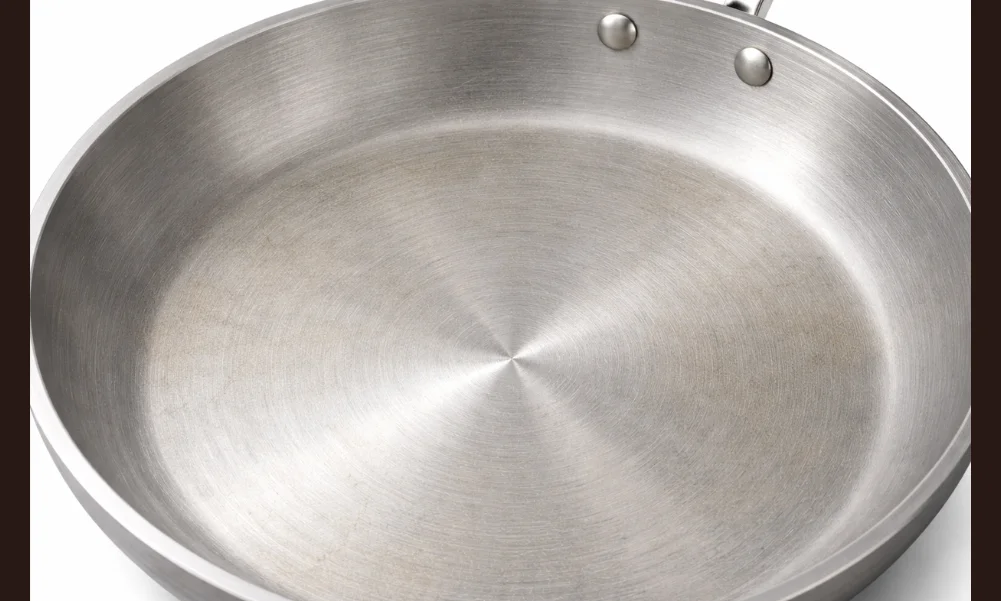
Bare aluminum cookware uses untreated aluminum as the cooking surface. While it performs well for short, neutral cooking, it reacts with acidic or salty foods, which can change flavor, discolor the pan, or cause minor pitting over time.
Bare aluminum is best for short, low-acid cooking. Avoid simmering tomato sauces, citrus-heavy dishes, vinegar-based recipes, or heavily salted foods in bare aluminum. For more details, see Acidic Foods and Cookware Materials.
Aluminum is a reactive metal. When it comes into prolonged contact with acidic or salty foods, a chemical interaction can occur at the surface. This interaction may alter flavor slightly and cause visible surface discoloration. The reaction is not sudden or catastrophic. It develops gradually and is most noticeable during long cooking times.
In everyday cooking scenarios that involve neutral foods and short exposure, bare aluminum behaves predictably. Interaction remains limited, and performance is stable. As exposure becomes more frequent or prolonged, surface wear increases and predictability declines. These changes provide clear behavioral signals about the cookware’s limits rather than hidden safety failures.
Because of this surface reactivity, bare aluminum cookware occupies a narrower use range than treated aluminum. It performs best in controlled contexts where food contact is brief and acidity is low.
Anodized Aluminum and Stability Over Time
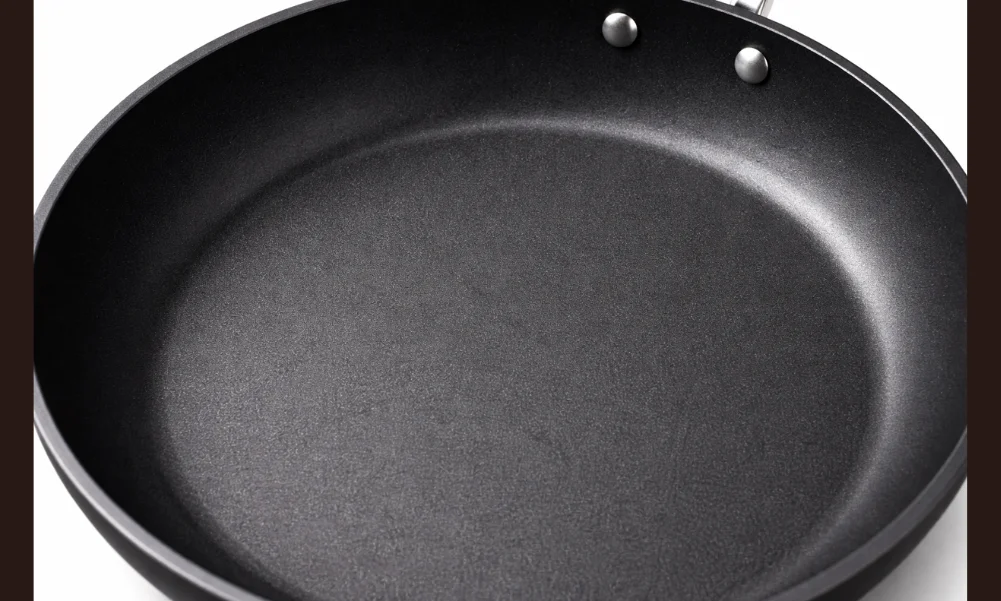
Anodized aluminum cookware undergoes a surface-hardening process that alters how the metal interacts with food. This process forms a durable oxide layer that is significantly less reactive than untreated aluminum.
The anodized surface acts as a barrier between food and raw aluminum. As a result, surface interaction remains minimal even during longer cooking times or when acidic ingredients are present. Heat behavior remains similar to bare aluminum because the underlying metal structure is unchanged.
Over time, anodized aluminum shows wear primarily through surface dulling rather than increased reactivity. The hardened layer resists scratching and corrosion better than untreated aluminum, which supports more predictable behavior across repeated use cycles.
From a safety perspective, anodized aluminum narrows the gap between aluminum’s heat performance and the stability associated with non-reactive materials. This explains why anodized aluminum is widely regarded as a more consistent option for frequent everyday cooking.
Anodized aluminum keeps the fast-heating advantage of aluminum but adds a hardened, stable surface. It is suitable for frequent everyday cooking but should be replaced if the surface becomes deeply scratched, heavily worn, or damaged.
Aluminum as a Core Beneath Protective Coatings
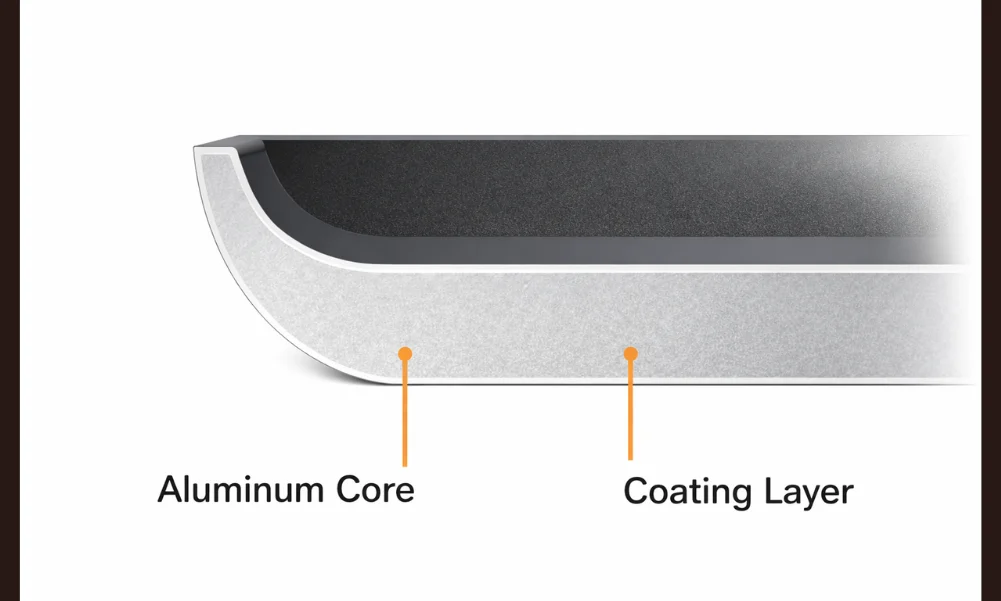
Many modern cookware designs use aluminum as a core material beneath non-stick or ceramic coatings.
The safety of coated aluminum depends on the integrity of the coating. Replace any pan if the coating is peeling or scratched, as exposure to the raw aluminum beneath increases.
In these designs, aluminum provides heat responsiveness while the coating governs food contact behavior.
When coatings remain intact, aluminum exposure is minimal. Cooking performance reflects the properties of the surface layer rather than the base metal. Safety considerations therefore shift toward coating stability and wear patterns rather than aluminum reactivity.
As coatings age, changes in surface behavior become apparent through reduced release or uneven performance. These changes occur gradually and signal declining surface predictability before aluminum exposure becomes meaningful. This relationship explains why aluminum cookware safety is often discussed alongside coating condition rather than metal composition alone.
The interaction between aluminum cores and surface coatings illustrates why aluminum cookware cannot be evaluated in isolation. Surface treatment and construction define real-world behavior more than the base metal itself.
Longevity and Safety Interaction
Aluminum cookware safety is closely tied to how its surface condition evolves over time. The metal itself does not fail suddenly. Instead, changes appear gradually through wear, discoloration, or loss of surface protection.
Cookware that maintains a stable surface tends to remain predictable in daily use. As surfaces degrade, interaction with food becomes more noticeable before any broader safety concern develops. This progression allows users to observe performance changes rather than rely on invisible indicators.
Longevity and safety therefore move together. Cookware that lasts longer usually does so because its surface changes slowly and evenly. When aluminum cookware reaches the end of its functional lifespan, performance issues such as sticking or uneven heating typically appear first.
This relationship aligns with broader lifespan expectations discussed in How Long Should Cookware Last. Replacement decisions are generally driven by declining function rather than hidden material risk.
Aluminum cookware should be replaced if it is deeply pitted, warped, or heavily scratched. Also replace it if coatings peel or anodized surfaces are worn.
Avoid using unlabeled, suspicious, or recalled cookware. For guidance, see Signs Cookware Is Not Safe to Use, Repair Scratched Cookware, and How Long Should Cookware Last.
When Aluminum Behavior Matters Most
Aluminum behavior becomes most relevant during cooking conditions that amplify surface interaction or thermal stress.
| Food Type | Examples | Why It Matters |
|---|---|---|
| Acidic foods | Tomatoes, lemon, vinegar, rhubarb | Can react with bare aluminum |
| Salty foods | Brined meat, sauerkraut, heavily salted sauces | Salt accelerates surface reaction |
| Long-simmered sauces | Tomato sauce, curry with vinegar, wine reductions | Prolonged contact increases aluminum transfer |
| Food storage | Leftovers kept in the pan | Long contact is not ideal |
Extended contact with acidic foods, repeated high-heat exposure, and abrasive cleaning accelerate surface wear.
In these contexts, untreated aluminum reacts more noticeably, while anodized or coated aluminum maintains greater stability. The distinction is not about danger, but about how quickly predictability declines under stress.
Aluminum behavior matters less during short cooking tasks, moderate heat use, and neutral food preparation. Under these conditions, aluminum performs consistently and efficiently, which explains its continued popularity for everyday cooking.
Concerns exist about aluminum and Alzheimer’s, but current evidence does not show that everyday aluminum exposure from cookware causes Alzheimer’s disease. (Alzheimer’s Research UK).
Understanding where aluminum excels and where it reaches its limits supports realistic expectations rather than avoidance.
Aluminum Compared With Stainless Steel and Cast Iron
Aluminum cookware occupies a middle position among common cookware materials.
| Material | Strength | Weakness | Best Use |
|---|---|---|---|
| Aluminum | Fast, light, affordable | Reactive if bare | Quick everyday cooking |
| Anodized aluminum | Stable, durable | Can still wear | Frequent daily use |
| Stainless steel | Non-reactive, long-lasting | Less forgiving for sticking | Acidic foods, sauces, searing |
| Cast iron | Excellent heat retention | Heavy, needs seasoning | High-heat searing, slow cooking |
| Enameled cast iron | Non-reactive, retains heat | Heavy, expensive | Braises, acidic dishes |
- Aluminum vs Stainless Steel
- Cast Iron vs Enameled
- Cookware Material Matrix
When Aluminum Is a Practical Choice
Aluminum cookware performs well in kitchens that prioritize speed, responsiveness, and manageable weight. Its behavior suits tasks that benefit from quick heating and frequent temperature changes.
It remains practical when paired with other materials that handle prolonged cooking or acidic foods more predictably. In this role, aluminum contributes efficiency without being asked to perform beyond its natural strengths.
This balance reduces surface stress and extends functional lifespan without requiring specialized handling. For buyers comparing materials, understanding surface treatment matters more than avoiding aluminum entirely.
Closing Summary
Aluminum cookware can be safe for everyday use when its behavior is understood and its limits are respected. Safety depends on surface treatment, cooking conditions, and gradual wear patterns rather than the presence of aluminum alone.
Anodized and coated aluminum provide greater surface stability, while bare aluminum remains suitable for controlled, low-acid tasks. In all cases, aluminum cookware communicates its condition through visible and functional changes.
- Choose anodized or coated aluminum for daily cooking
- Avoid long cooking of acidic or salty foods in bare aluminum
- Do not store leftovers in aluminum pans
- Cook on low to medium heat
- Use silicone, wood, or nylon utensils
- Wash by hand with mild detergent
- Replace damaged, warped, or peeling cookware
Read: maximum safe heat cookware materials
Aluminum exposure vs lead contamination: Some non-compliant imported aluminum or aluminum-alloy cookware has been found to leach lead. This is a separate issue from normal aluminum exposure. Check FDA warnings and purchase cookware from reputable brands. (FDA Warning – August 2025).
Proper use and care ensure both safety and longevity. Anodized or coated aluminum is usually the safest option for everyday cooking. Replace cookware if scratched, pitted, warped, peeling, or from a questionable source.


Content is researched and written by Engr. Jamal & KitchenMarks Editorial team based on hands-on product use, maintenance experience, and long-term household performance evaluation.