HexClad Cookware Sets Explained: Hybrid Surfaces, Wear Patterns, and Limits

Quick Answer
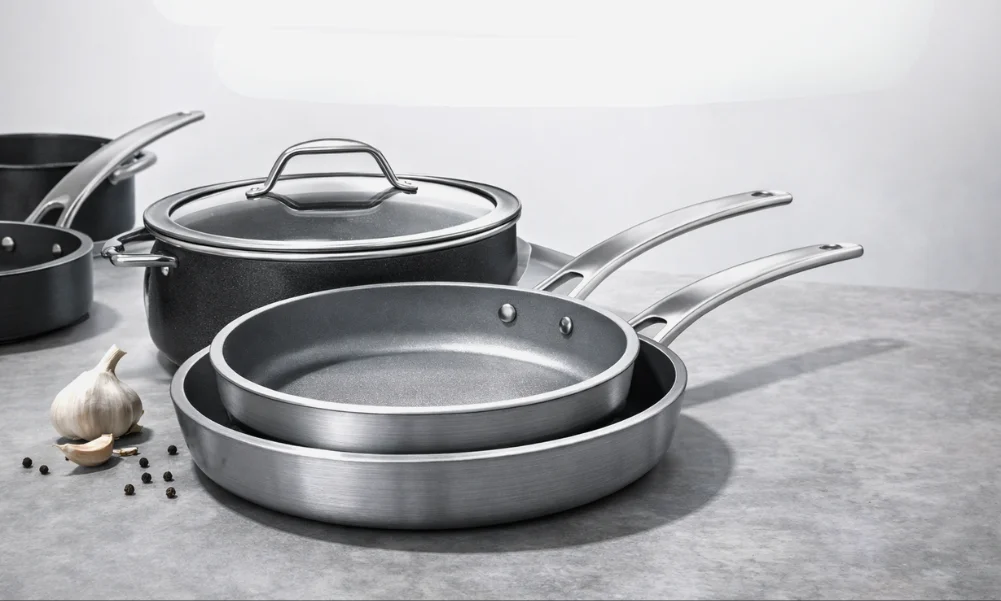
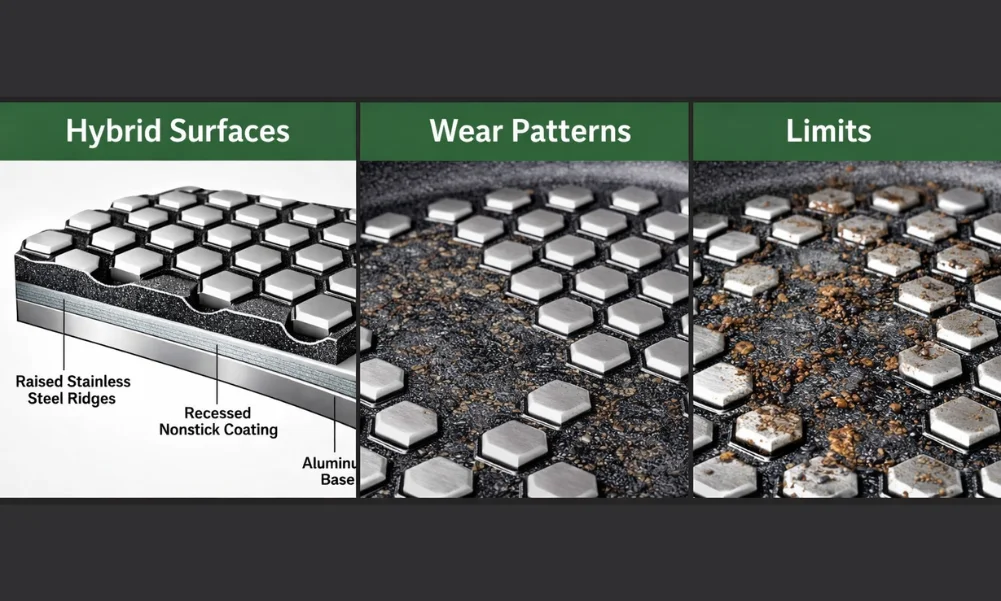
HexClad cookware sets use a hybrid construction that combines a stainless steel surface pattern with a nonstick coating applied in recessed areas. This design aims to balance surface durability with reduced sticking, but it does not eliminate the limitations of either material.
Heat behavior, coating wear, and cleaning outcomes depend on how the hybrid surface interacts with food, utensils, and heat. Longevity is limited by coating degradation rather than structural failure. Performance reflects trade-offs rather than universal improvement.
What Makes HexClad a Distinct Cookware Entity
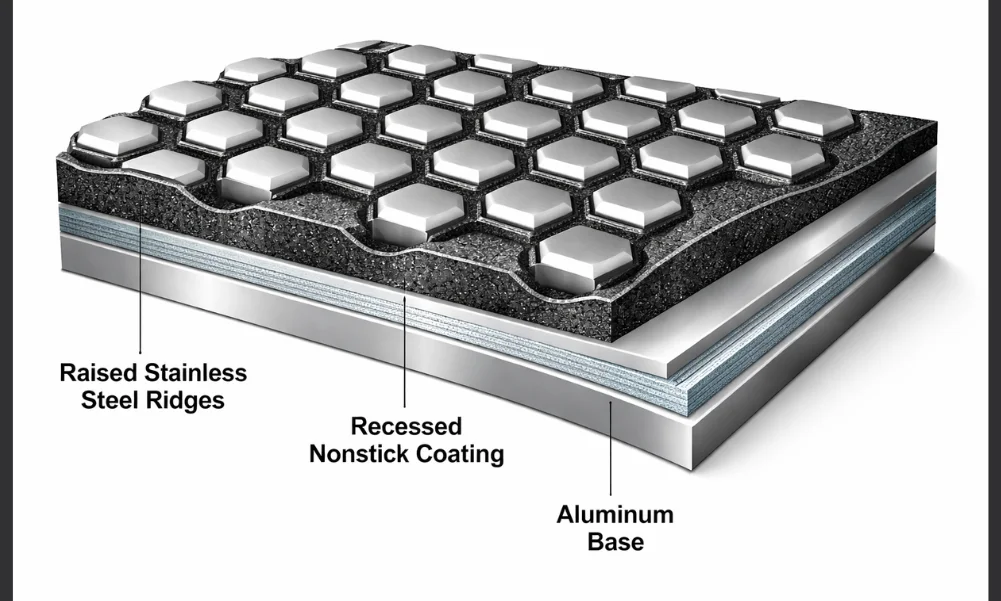
HexClad represents a hybrid approach within the coated cookware category. Its defining feature is a laser-etched stainless steel pattern that rises above a nonstick-coated base.
Food contacts both stainless steel and nonstick surfaces during cooking. This dual-contact design changes how sticking occurs, how heat transfers at the surface, and how wear develops over time.
HexClad does not introduce a new cookware material. It combines existing materials into a single surface system. Understanding that distinction prevents expectations that exceed what the materials allow. Broader cookware classification context is outlined in Cookware Types Explained.
Hybrid Surface Behavior During Cooking
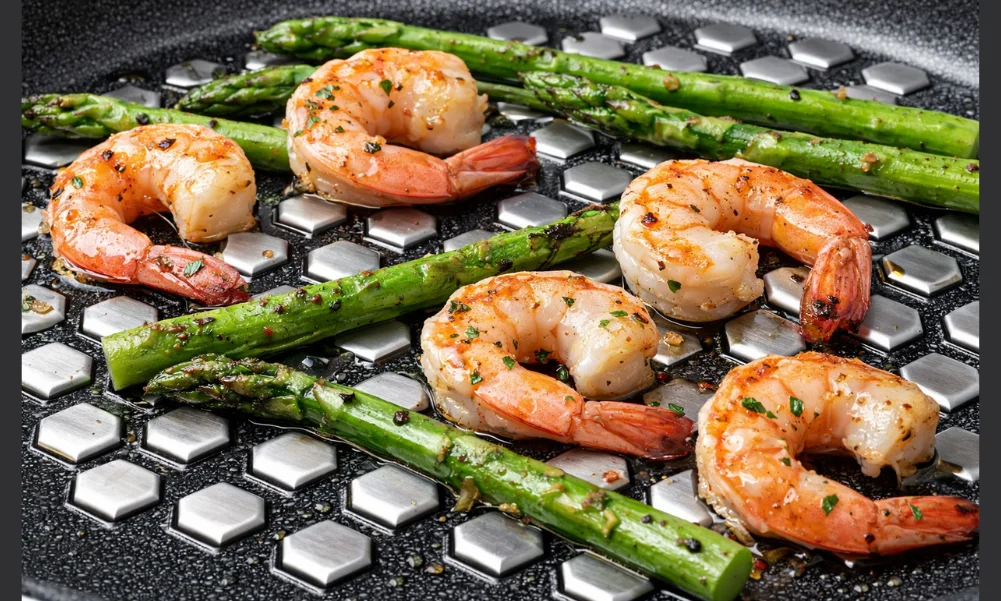
The raised stainless steel pattern provides contact points that resist abrasion from utensils. The recessed nonstick coating reduces overall sticking compared to bare stainless steel.
This interaction produces mixed results. Foods that rely on surface contact for browning interact more with the steel peaks. Foods that benefit from release interact more with the coated valleys.
The surface does not behave like full nonstick cookware, nor does it behave like traditional stainless steel. Release behavior varies by food type, moisture level, and heat stability rather than remaining consistent across tasks.
Heat Response and Energy Distribution
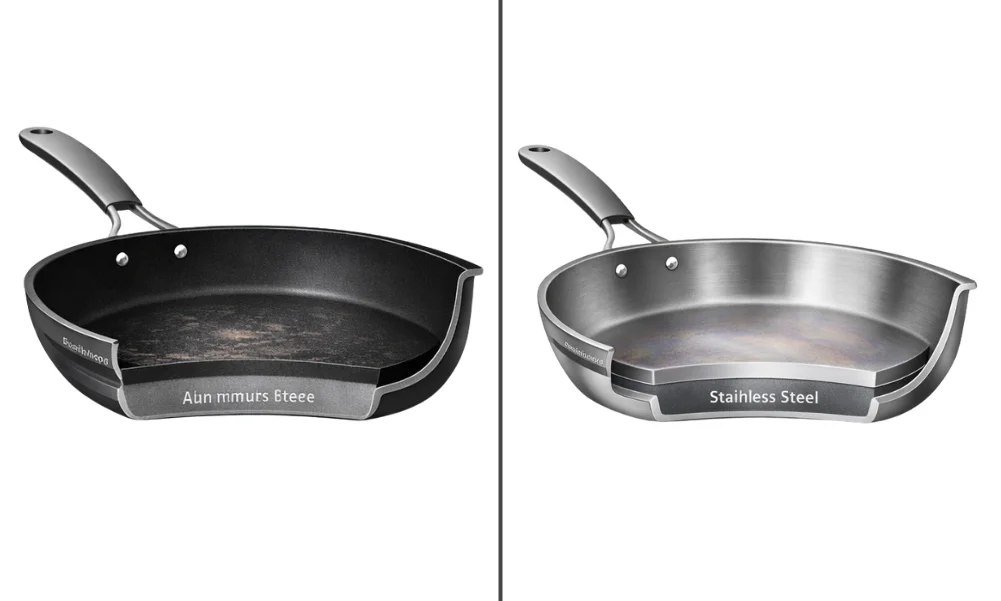
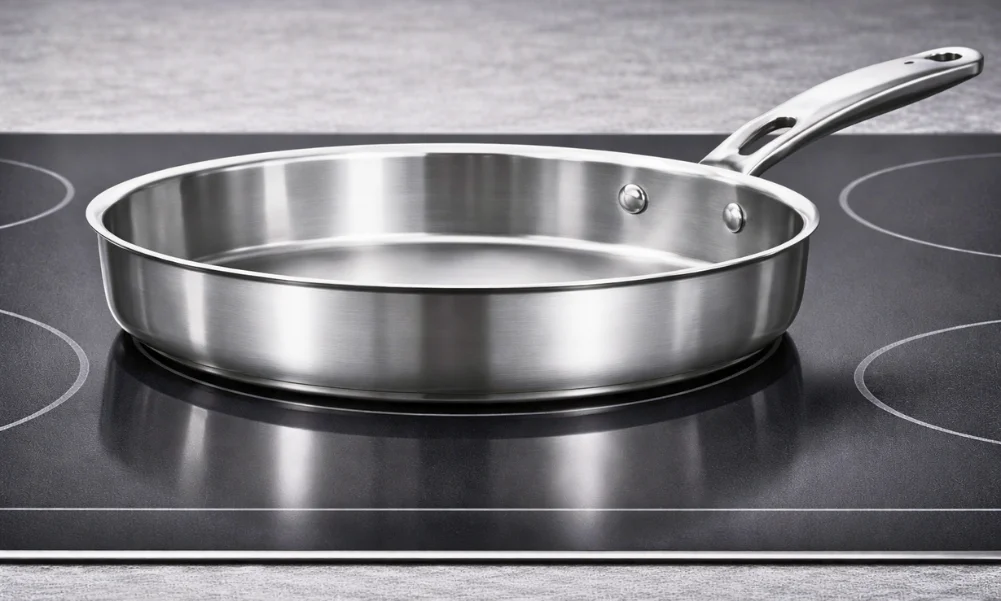
HexClad cookware typically uses a stainless steel exterior with an aluminum core. Heat behavior reflects this layered construction rather than the dual-surface system alone.
Heat enters through the base and spreads according to core thickness and bonding quality. The raised surface pattern does not significantly change thermal mass or heat retention.
At higher heat, stainless steel contact points can concentrate surface temperature more than coated areas. This difference affects browning and residue formation rather than structural safety. Heat limits follow the same patterns described in Maximum Safe Heat for Different Cookware Materials.
Coating Wear and Longevity Patterns
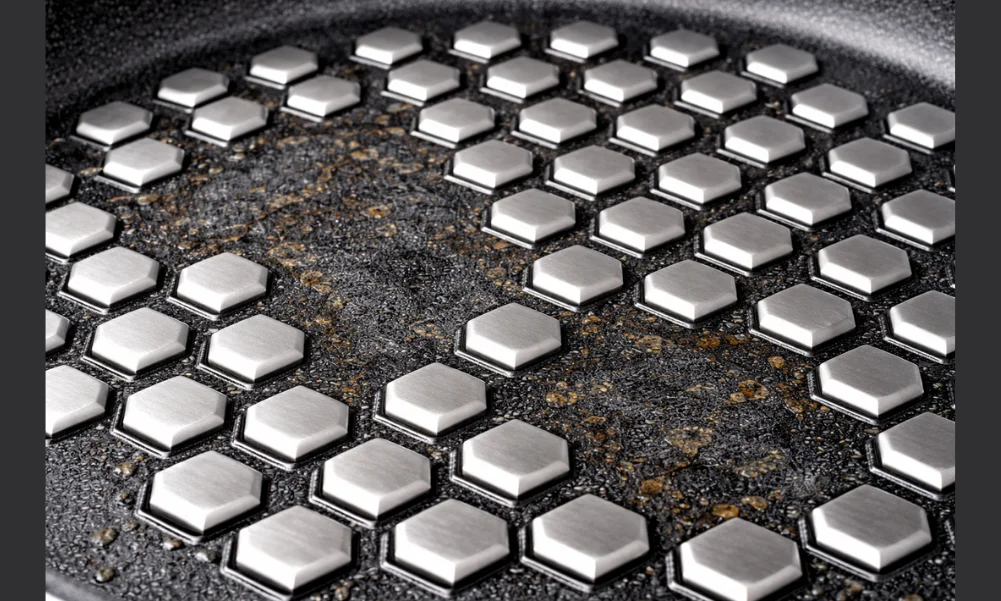
Longevity in HexClad cookware is constrained by the nonstick coating applied between stainless steel ridges. While the raised pattern reduces direct abrasion, the coating still degrades with heat cycles and cleaning friction.
Wear appears gradually as reduced release in the recessed areas rather than peeling across the entire surface. This decline mirrors functional wear patterns described in When to Replace Non-Stick Cookware.
The stainless steel pattern remains intact long after coating performance declines. This can create a perception of durability even when cooking behavior has changed.
Cleaning Behavior and Maintenance Limits
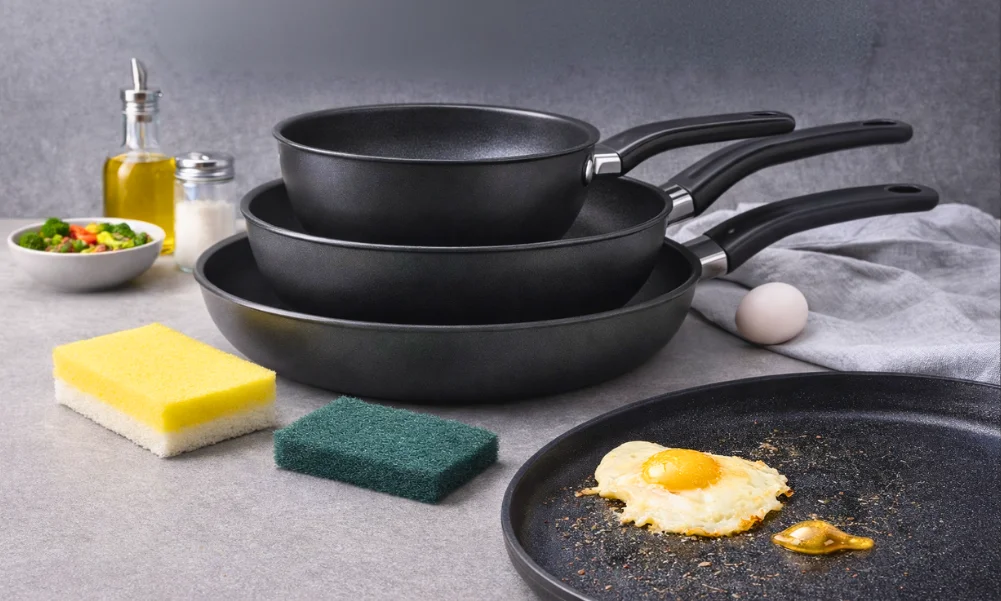
Cleaning outcomes depend on which surface interacts with residue. Stainless steel contact points can develop stuck-on food similar to traditional stainless steel cookware.
Aggressive scrubbing removes coating material from recessed areas more quickly than from raised steel. Dishwashers accelerate this process through heat and detergent exposure, consistent with patterns discussed in Is Dishwasher Use Damaging Cookware.
Hybrid construction does not remove the need for surface-aware cleaning. It shifts where wear appears rather than preventing it.
Safety Perspective
HexClad cookware safety follows the same principles as other coated cookware systems. Safety depends on predictable surface behavior, stable construction, and intact coating condition.
The presence of stainless steel does not eliminate coating-related wear or heat sensitivity. Safety concerns arise when surface degradation alters cooking control or exposes base layers.
These indicators develop gradually and are outlined in Signs Your Cookware Is No Longer Safe to Use. Hybrid design does not introduce new hazards. It introduces new wear patterns.
How HexClad Fits Into a Cookware System
HexClad cookware suits cooks seeking reduced sticking with greater surface durability than traditional nonstick. It does not replace stainless steel for fond development or nonstick cookware for low-friction tasks.
In balanced kitchens, hybrid cookware often occupies a middle role. It absorbs moderate tasks that would otherwise stress fully coated pans or frustrate bare stainless steel.
System-level cookware balance is explained further in Cookware Types Explained.
Limitations That Shape Expectations
HexClad cookware does not provide permanent nonstick performance. It does not eliminate cleaning variability. It does not tolerate unrestricted high heat without accelerating wear.
These limitations are not flaws. They reflect the constraints of combining dissimilar surface materials. Understanding those constraints prevents disappointment and misuse.
Practical Limitations to Consider
HexClad cookware does not provide permanent nonstick performance. Cleaning outcomes vary because food contacts both steel and coated areas.
High heat and abrasive cleaning accelerate coating wear despite the stainless steel pattern.
Who HexClad Cookware Is Best Suited For
HexClad cookware suits cooks who want reduced sticking with greater surface durability than traditional nonstick. It works best for moderate-heat, mixed-technique cooking where both browning and release are useful.
Cooks expecting permanent nonstick performance or uniform behavior across all foods may find the hybrid surface inconsistent.
Closing Summary
HexClad cookware sets use a mixed-surface design that combines stainless steel structure with nonstick coating. This design alters how food contacts the surface and how wear develops over time. Performance reflects trade-offs rather than universal improvement.
Longevity is limited by coating degradation, while structural elements remain intact longer. When expectations align with these limits, HexClad cookware functions predictably within a broader cookware system.