Quick Answer
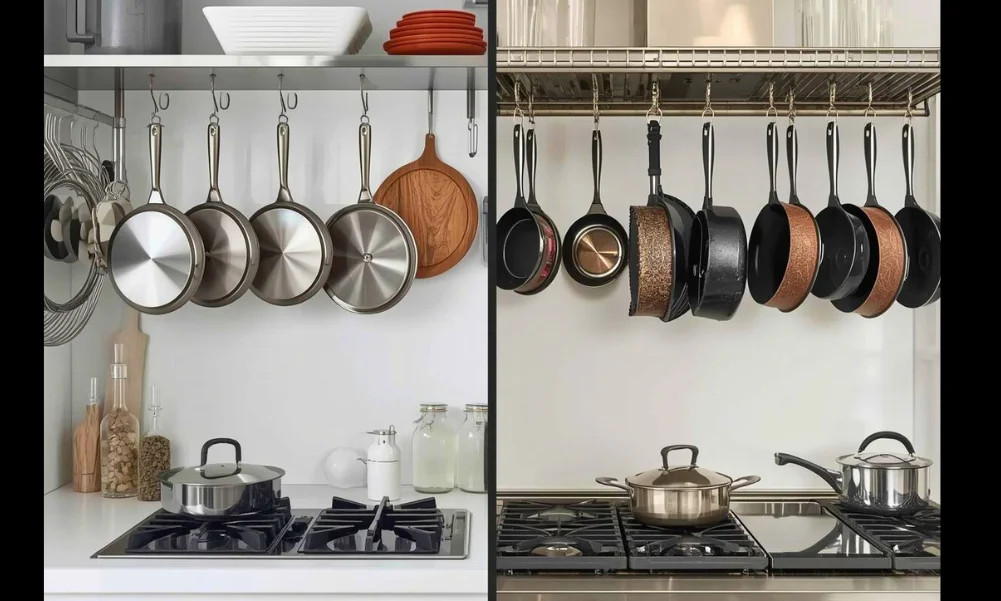
Cookware hooks and racks protect cookware in different ways. Hooks reduce surface contact but place continuous load on handles. Racks distribute weight across the pan body but increase contact points between cookware. Neither option is universally better. The right choice depends on cookware weight, handle construction, material sensitivity, and how often each piece is used.
Why Storage Method Choice Matters More Than It Appears
Cookware storage affects cookware slowly rather than immediately. Damage develops through repeated stress rather than single events.
Hooks and racks apply force differently. Hooks concentrate weight at one point. Racks spread weight across multiple surfaces. Each pattern creates its own risks and benefits over time.
These stress patterns matter because cookware materials and construction respond differently to load and contact, a relationship explained in Cookware Types Explained: Materials, Uses, and Limitations.
This is why two kitchens using the same cookware can see very different outcomes. Storage habits shape wear just as much as cooking technique.
A useful comparison is footwear storage. Hanging shoes by the heel preserves the sole but strains the upper. Storing shoes flat supports structure but creates contact points that scuff. Cookware responds to storage in a similar way.
Understanding these mechanics helps explain why storage damage often shows up later as loose handles, chipped edges, or scratched surfaces. These outcomes connect directly to cookware storage ideas that protect pots and pans, where small adjustments reduce long-term wear.
How Cookware Hooks Work
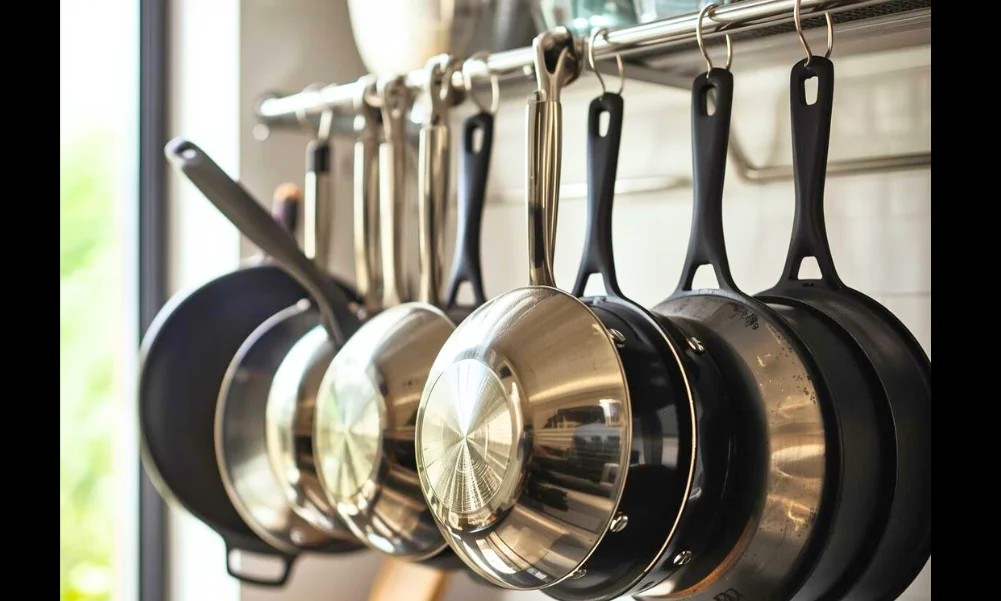
Cookware hooks suspend pans by their handles. This eliminates surface-to-surface contact and allows air to circulate freely.
However, all weight transfers through the handle attachment. Rivets or welds carry a constant load, even when the cookware is not being used. Over time, this load can loosen connections, especially on heavier cookware.
Hooks also allow movement. If cookware swings or contacts nearby surfaces, edges and finishes absorb impact. The risk increases when cookware is closely spaced or frequently removed.
Hooks work best when cookware is light, handle construction is robust, and spacing limits movement. Outside those conditions, the benefits narrow.
How Cookware Racks Work
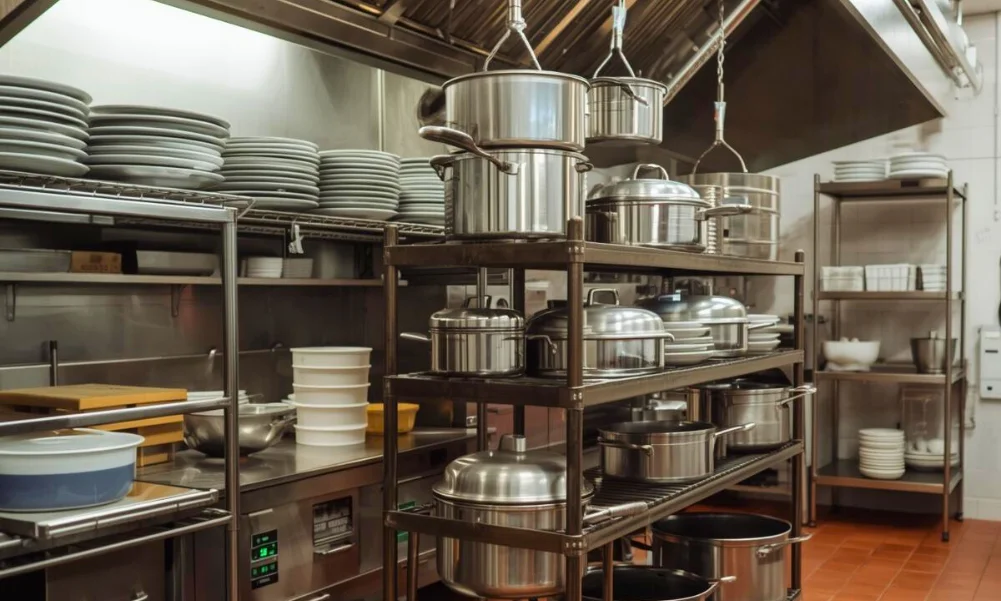
Cookware racks support pans from below rather than suspending them. Weight is distributed across the base or rim, which reduces continuous stress on handles.
This distribution benefits heavier cookware. Cast iron, enameled Dutch ovens, and thick stainless steel pans sit more naturally on racks because their mass is supported by structure rather than attachment points.
The trade-off is contact. Racks introduce more surface-to-surface interaction, especially when cookware is closely spaced. Over time, this contact creates friction. Scratches, scuffs, and chipped rims usually develop gradually rather than all at once.
Racks also depend on spacing discipline. When cookware is crowded, pans rub during placement and removal. That repeated friction explains why finish wear often appears in storage areas rather than on cooking surfaces.
In simple terms, racks protect structure while challenging surfaces.
Cookware Hooks vs Racks: Advantages and Limitations
Hooks and racks solve different problems. Understanding their trade-offs avoids false “best option” thinking.
Advantages of Hooks
Hooks minimize surface abrasion. Pans do not touch each other, which helps preserve coatings and polished finishes.
Airflow is another benefit. Moisture evaporates more easily, which supports cast iron and carbon steel care.
Access is fast. Frequently used cookware is easy to reach, reducing handling friction during daily cooking.
Limitations of Hooks
Hooks place constant load on handles. Over time, this stress can loosen rivets or welds, especially on heavier cookware.
Swing is another risk. Movement creates impact points that can dent rims or mark finishes.
Weight limits matter. Hooks that work well for frying pans may be unsuitable for stockpots or enameled pieces.
Advantages of Racks
Racks support cookware where it is strongest. Weight rests on the pan body rather than the handle.
This support suits heavy cookware and long-term storage. Structural integrity is preserved even when cookware is rarely used.
Racks also limit swinging. Cookware stays stable once placed.
Limitations of Racks
Surface contact increases. Without spacing or protection, scratching becomes likely.
Crowded racks create friction during removal. This friction accelerates cosmetic wear, which often leads buyers to question condition prematurely.
Racks require intentional organization to remain protective.
Material-Specific Storage Outcomes
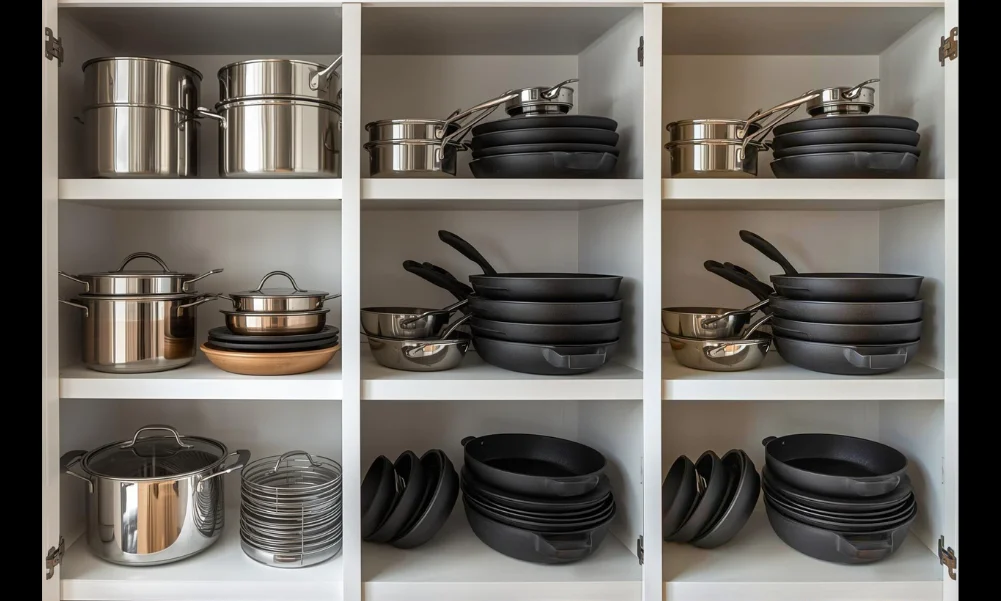
Storage choice interacts with cookware material.
Non-stick cookware benefits from reduced surface contact, which favors hooks or well-padded racks. Coating abrasion shortens useful life faster than handle wear.
Cast iron and carbon steel favor racks that support weight and limit handle stress. Airflow still matters, so dry storage remains important.
Stainless steel tolerates scratches better but still benefits from reduced friction to preserve finish. Enameled cookware is sensitive at rims and edges. Racks that allow gentle placement without impact reduce chipping risk.
Handle Construction and Why It Changes the Answer
Handle design shifts the balance between hooks and racks.
Riveted handles distribute load across multiple points and tolerate hanging better. Welded handles concentrate load at a single joint, which may fatigue sooner under constant weight.
Some handles are designed for grip, not load-bearing. Hanging these pieces accelerates wear regardless of material.
This distinction aligns with riveted vs welded cookware handles, where attachment method influences durability under stress.
When Hooks Make More Sense
Hooks work best for lightweight cookware that is used daily. Strong handle construction and adequate spacing are essential.
When these conditions are met, hooks reduce surface wear and improve accessibility without shortening lifespan.
When Racks Make More Sense
Racks suit heavy cookware, mixed materials, and long-term storage. They protect structure and reduce handle fatigue.
Spacing and protective liners improve outcomes. Without them, cosmetic wear increases.
How Hooks and Racks Fit Into Cookware Lifespan
Neither hooks nor racks are universally better. Each creates a different wear pattern.
Choosing based on cookware weight, material, and handle design extends functional life more effectively than choosing based on space or appearance.
This practical matching supports realistic expectations about how long cookware should last and reduces unnecessary replacement.
Closing Summary
Cookware hooks and racks protect cookware in different ways. Hooks reduce surface contact but stress handles. Racks support weight but increase contact points.
The better option depends on cookware design and use habits, not trends or aesthetics. Understanding these trade-offs allows buyers to store cookware in ways that preserve performance and structure over time.
Thoughtful storage is not about perfection. It is about aligning support with how cookware is built and used.