Quick Answer
Cookware storage affects how quickly pots and pans wear out. Poor storage causes gradual damage through abrasion, weight stress, and trapped moisture rather than sudden failure. The most protective storage method depends on cookware material, weight, and how often each piece is used. Small changes in storage habits can significantly reduce avoidable wear without requiring specialized equipment.
Why Cookware Storage Matters More Than Most Buyers Expect
Most cookware damage does not happen during cooking. It happens when cookware is not in use.
When pots and pans are stacked, crowded, or stored while damp, surfaces rub together repeatedly. Handles carry weight they were not designed to support. Rims contact harder materials at awkward angles. None of this causes immediate failure, which is why the damage often feels mysterious when it finally appears.
Storage damage works like erosion rather than impact. Each contact is minor. Over months and years, those contacts add up.
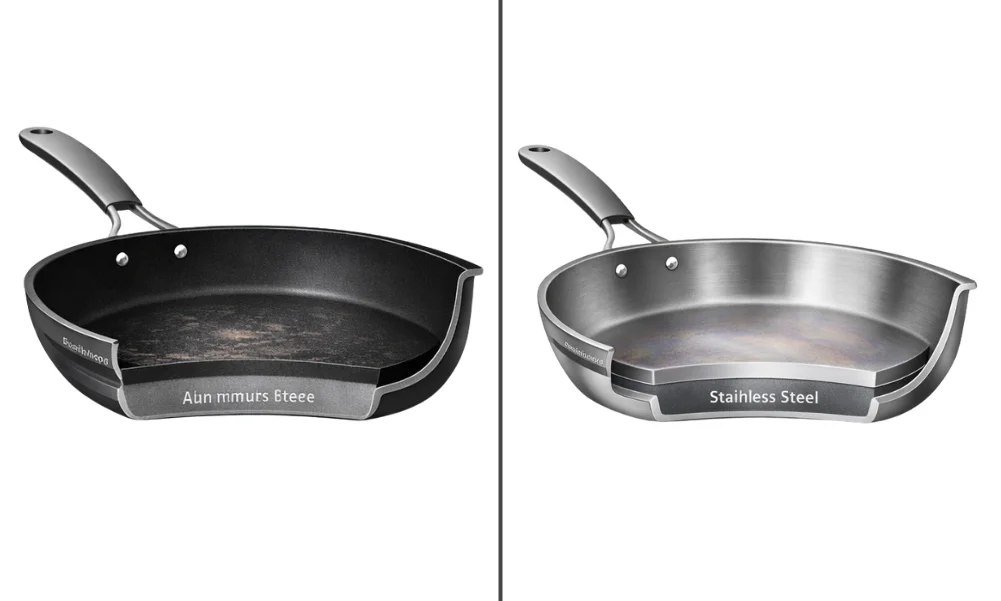
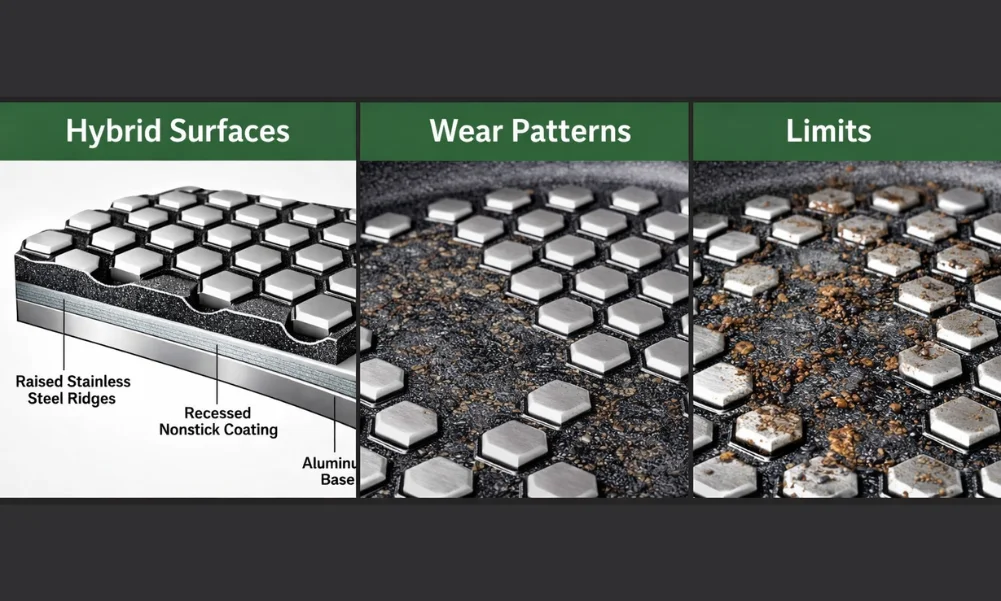
These long-term wear patterns vary by cookware material and construction, which is why storage decisions make more sense when viewed through Cookware Types Explained: Materials, Uses, and Limitations. Scratches deepen. Coatings thin. Handles loosen slightly. Flat bases lose perfect contact.
A useful way to think about storage is to compare it to posture. Sitting incorrectly for one hour rarely causes injury. Sitting that way every day eventually does. Cookware responds the same way to repeated, low-level stress.
This perspective explains why storage choices influence how long cookware should last just as much as cooking habits do.
Common Types of Storage-Related Cookware Damage
Storage-related damage follows consistent patterns across kitchens.
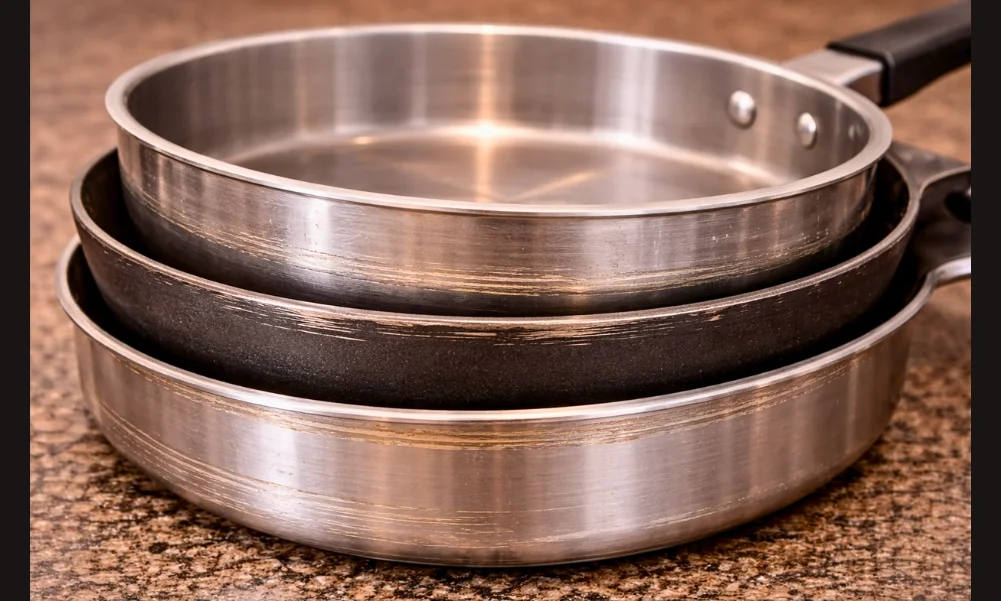
Surface scratching is the most common issue. Non-stick coatings and polished stainless steel finishes show abrasion quickly when stacked without protection. Even gentle contact becomes abrasive when repeated.
Handle stress develops when cookware weight rests on handles instead of pan bodies. Over time, this stress loosens rivets or welds. This type of damage often appears later as instability and connects directly to signs your cookware is no longer safe to use.
Rim and edge damage occurs when heavy cookware presses against thinner pieces. Enamel chips and dented rims usually begin in storage rather than on the stove.
Warping can also develop slowly when weight is unevenly distributed in cabinets. Thin pans stored under heavy items experience constant pressure that alters shape over time.
These issues rarely result from a single mistake. They are the outcome of normal habits repeated without support or spacing.
Stacking Cookware: Benefits and Risks
Stacking is common because it saves space. In many kitchens, it is unavoidable. The key issue is not stacking itself, but how stacking is done.
When Stacking Makes Sense
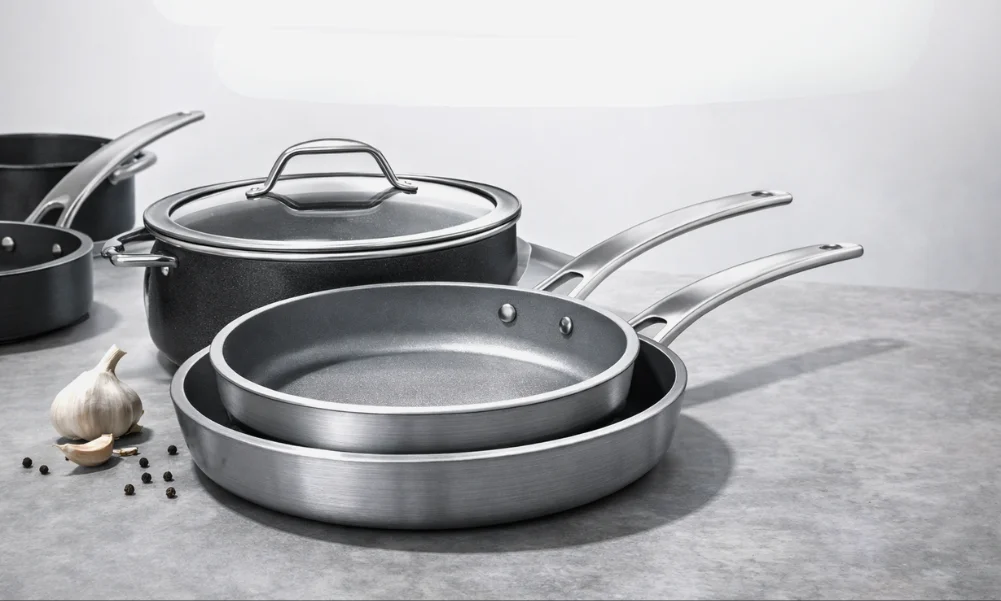
Stacking works best for cookware with durable surfaces and similar weights. Stainless steel pans without delicate finishes tolerate contact better than coated or enameled pieces. Shallow stacking, where weight is distributed evenly, also reduces stress.
When stacking is limited to cookware of similar size and material, abrasion and pressure stay manageable. In these cases, stacking is a reasonable compromise rather than a mistake.
When Stacking Causes Problems
Problems begin when heavy cookware rests on lighter pieces or when coated surfaces contact bare metal. Non-stick coatings wear fastest in these conditions. Enameled rims chip when they repeatedly strike harder edges.
Tall stacks amplify pressure. The bottom pan carries weight continuously, not just during use. Over time, this constant load contributes to subtle warping and makes cookware harder to stabilize on the cooktop.
Stacking is not inherently harmful, but unmanaged stacking accelerates wear in predictable ways.
Protective Layering Between Cookware
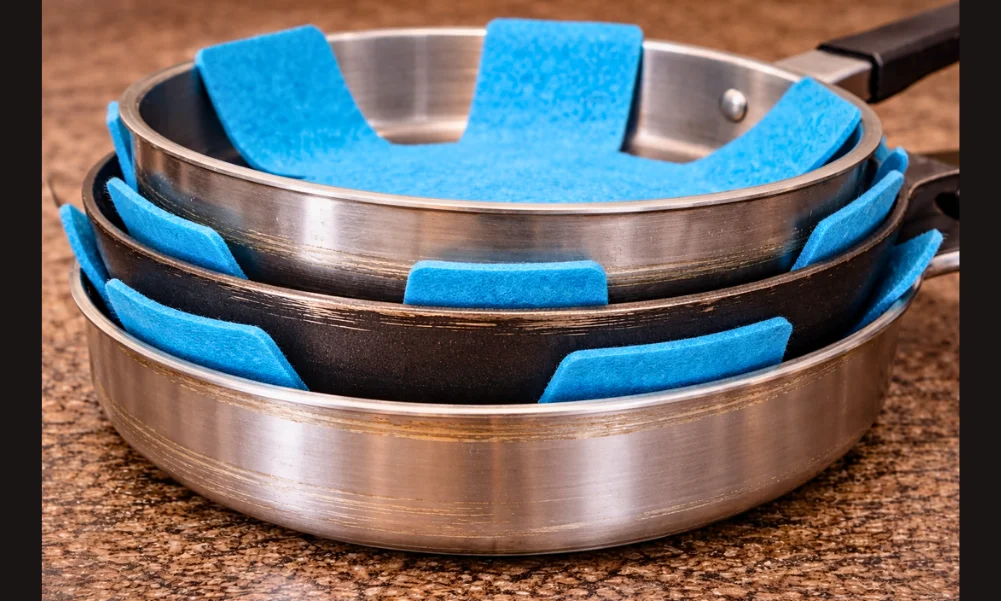
Protective layers reduce contact damage without changing storage layout.
Separators create a buffer that absorbs friction. Even thin, soft layers interrupt abrasion and prevent coating-to-metal contact. The goal is not padding, but separation.
Purpose-made liners work well, but improvised solutions also help. Clean cloths, paper towels, or soft mats can serve the same function when used consistently. What matters is coverage at contact points, not the material itself.
Protective layering is especially valuable for cookware with sensitive surfaces. It extends usable life and reduces the need for repair discussed in can you repair scratched cookware.
The benefit compounds over time. Each prevented scratch or chip delays larger problems later.
Vertical Storage Options
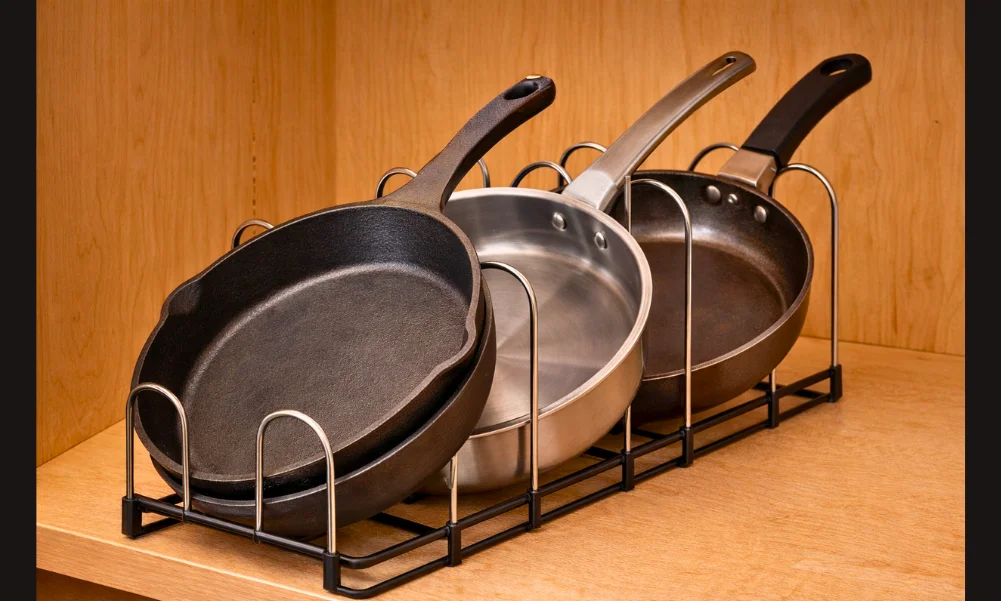
Vertical storage changes how weight and contact are managed.
Cabinet Dividers
Dividers keep cookware upright and separated. This reduces surface contact and distributes weight along pan bodies rather than rims or handles.
Stability matters here. Dividers that allow cookware to lean or shift can create new stress points. When cookware stands securely, vertical storage is one of the most protective options.
Drawer Storage
Deep drawers support cookware from below rather than from the side. This spreads weight evenly and limits contact.
Drawers work best when cookware is not overcrowded. Overfilling reintroduces friction and pressure. Accessibility also matters. Easy access reduces the tendency to drag cookware against edges, which causes scratching.
Hanging Cookware Storage
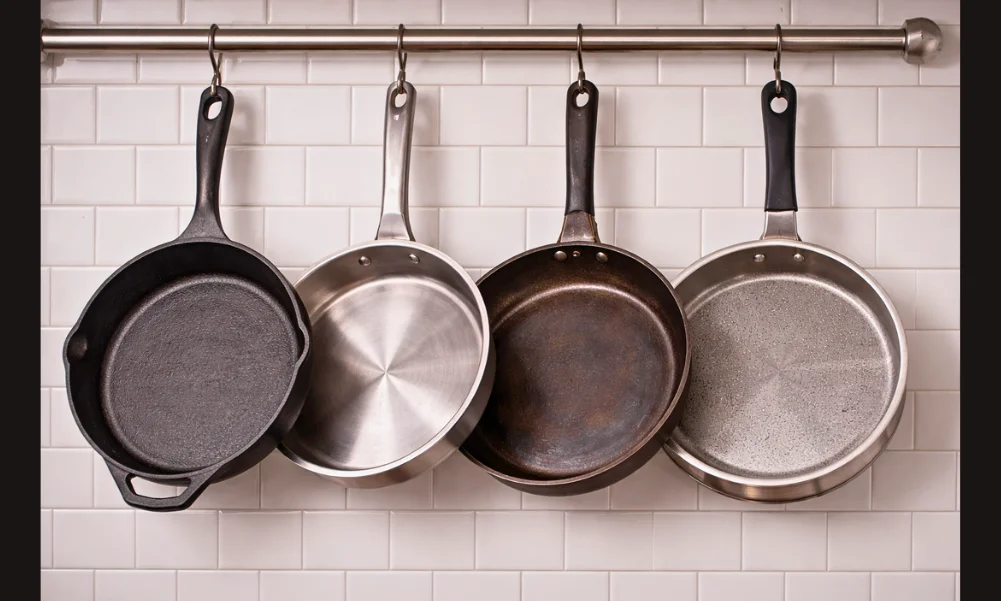
Hanging storage removes surface contact but introduces other considerations.
Benefits of Hanging
Hanging reduces stacking abrasion entirely. Cookware remains separated and visible. Moisture dries more easily, which supports cast iron and carbon steel care.
For frequently used pieces, hanging can reduce daily handling stress.
Risks of Hanging
Hanging shifts weight to handles. Not all handles are designed for constant load. Over time, this can loosen attachments, especially on heavier cookware.
Swinging introduces impact risk. If cookware knocks against walls or other pieces, edges and finishes suffer. Weight limits and spacing matter more than appearance.
Hanging works best for lighter cookware with robust handle construction and sufficient clearance.
Material-Specific Storage Considerations
Different materials benefit from different priorities.
Non-stick cookware needs surface protection first. Avoiding direct contact preserves coating integrity.
Cast iron and carbon steel need moisture control and solid support. Weight should rest on flat surfaces, not edges or handles.
Stainless steel tolerates scratching better but still benefits from reduced friction to preserve finish.
Enameled cookware requires edge protection. Chips usually start at rims during storage, not cooking.
Storage Habits That Shorten Cookware Lifespan
Storing cookware while damp encourages corrosion and residue buildup. Overcrowding increases abrasion. Resting weight on handles accelerates loosening.
These habits connect storage to outcomes discussed in cookware discoloration and signs your cookware is no longer safe to use. The link is gradual, not dramatic.
How to Balance Protection and Practicality
Perfect storage is not required. Consistent, small improvements matter more.
Protect frequently used cookware first. Accept cosmetic wear where it does not affect function. Focus on reducing repeated stress rather than eliminating all contact.
Storage works best as a system that fits daily habits, not as a rigid rule set.
Closing Summary
Cookware storage plays a quiet but significant role in how long pots and pans last. Abrasion, weight stress, and moisture cause gradual damage that often goes unnoticed until performance declines.
Stacking, hanging, and vertical storage can all work when matched to cookware material and weight. Simple protective layers and thoughtful placement reduce avoidable wear without requiring new purchases.
By treating storage as part of cookware care rather than organization alone, buyers can extend lifespan and reduce unnecessary replacement while keeping kitchens practical and functional.