Quick Answer
Waterless cookware refers to cookware designed to cook foods using their natural moisture rather than added liquid. It relies on tight-fitting lids, controlled heat, and efficient heat retention to create a sealed cooking environment. This method works best with moisture-rich foods and gentle heat. It does not eliminate the need for water in all cooking and does not perform well for browning, searing, or dry foods.
What “Waterless Cooking” Actually Means
Waterless cooking is a technique, not a special cooking process that defies basic physics. The term describes cooking methods that avoid adding extra water by using the moisture already present in food.
Most foods, especially vegetables and proteins, contain significant water content. When heated gently in a covered pot, this moisture is released as steam. A tight-fitting lid traps that steam, which then condenses and returns to the food. This creates a closed loop of moisture circulation rather than evaporation.
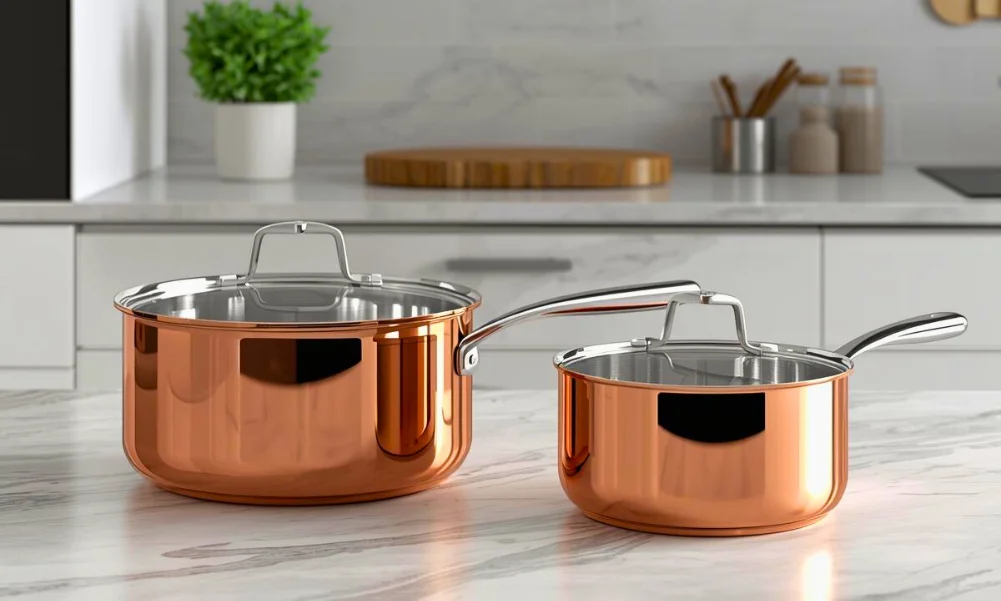
Waterless cookware is designed to support this loop. Heavier construction helps stabilize temperature. Well-fitted lids reduce steam loss. Together, these features allow cooking to continue with minimal added liquid.
These design features are part of broader cookware construction choices that affect heat retention and moisture control, as explained in Cookware Types Explained: Materials, Uses, and Limitations.
A common misunderstanding is that waterless cookware somehow cooks without moisture. In reality, it cooks with internal moisture instead of external water. If food does not contain enough moisture, the method breaks down.
A useful way to think about waterless cooking is as controlled steaming inside the cookware itself. The cookware enables the technique, but it does not replace the need for appropriate ingredients or heat control.
The Physics Behind Waterless Cooking
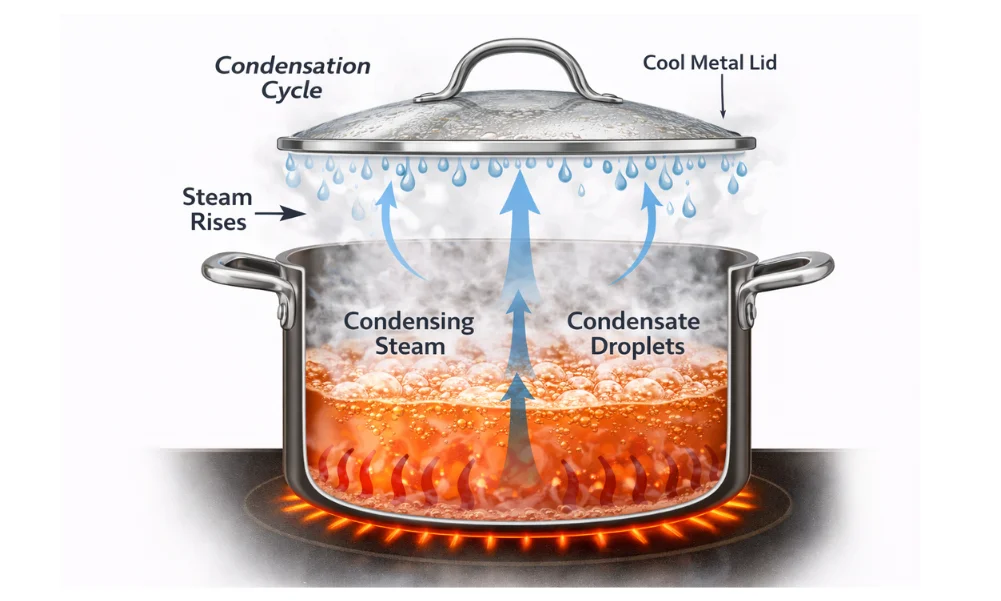
Waterless cooking depends on three physical factors: moisture content, temperature control, and containment.
As food heats, water inside it turns into steam. In an open pan, that steam escapes. In a sealed environment, it is trapped. When the lid is cooler than the steam, condensation forms and falls back into the food, maintaining moisture.
Heat control is critical. Excessive heat drives moisture out faster than it can condense, breaking the cycle and risking scorching. Gentle, steady heat allows the system to stabilize.
Thicker cookware stabilizes temperature changes and reduces hot spots, which supports this process and is explained further in Cookware Thickness Explained: Why It Affects Heat Control.
The cookware itself does not create this effect. Any pot with sufficient mass and a tight lid can support waterless cooking. Dedicated waterless cookware simply makes it easier to achieve consistently.
This explains why results vary widely. When the conditions are right, waterless cooking works well. When they are not, it fails quickly.
When Waterless Cooking Works Well
Waterless cooking performs best when the food itself supplies sufficient moisture and when the cooking goal is gentle, even heating rather than surface browning.
Vegetables are the most reliable candidates. Many vegetables release enough water during heating to sustain the moisture cycle, especially when cut and layered properly. Covered cookware allows them to soften and cook through without dilution from added water.
Moisture-rich proteins, such as poultry or fish cooked at moderate temperatures, can also benefit. The trapped steam helps prevent drying while maintaining tenderness, provided heat remains controlled.
Soups, stews, and one-pot dishes that already contain liquid are compatible as well, though these do not demonstrate the core benefit of waterless cooking. In these cases, the cookware functions like any well-sealed pot.
The common thread is predictable moisture and patience. When cooking is slow, covered, and moisture-rich, waterless techniques align well with the physics involved.
When Waterless Cooking Does Not Work
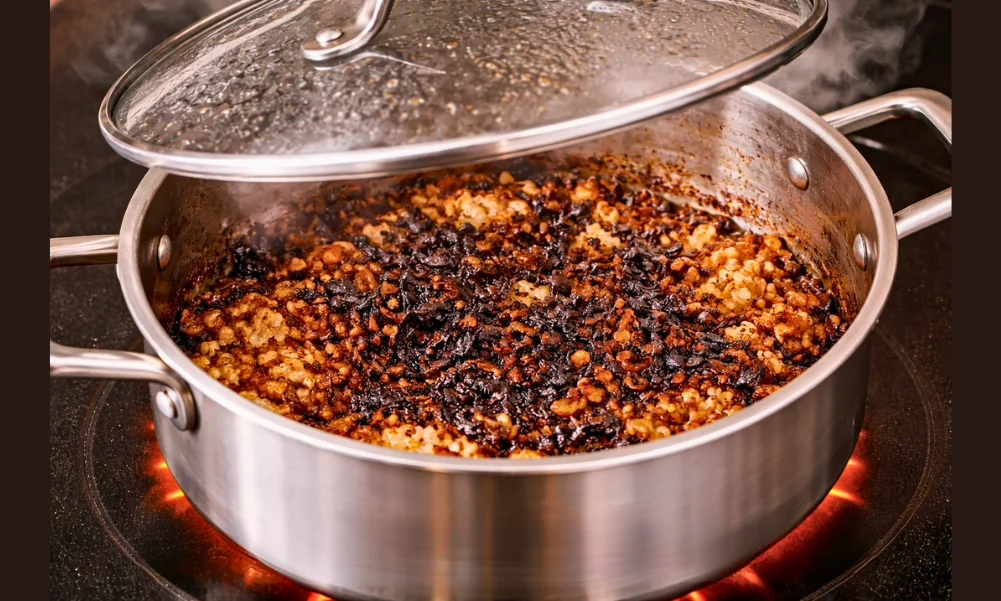
Waterless cooking breaks down when moisture is insufficient or when high heat is required. Dry foods, such as grains cooked without liquid or foods intended to crisp, do not release enough moisture to sustain the process.
Browning and searing are poor matches. These techniques depend on evaporation and surface temperatures that exceed the boiling point of water. A sealed, moist environment prevents the conditions needed for browning reactions to occur.
High heat also disrupts the system. Excessive temperature forces moisture out rapidly, overwhelming the condensation cycle and increasing the risk of scorching. Once moisture is depleted, the cookware behaves like a dry pot, often with worse outcomes due to the sealed environment.
Applying high heat in sealed cookware can also increase thermal stress on the pan itself, a factor discussed in Cookware Warping: Causes, Prevention, and Fixes.
This limitation explains why waterless cookware does not replace other cookware types. It supports a narrow range of techniques rather than offering universal versatility.
Common Marketing Claims vs Practical Reality
Waterless cookware is often associated with claims about nutrient preservation, energy savings, or universal applicability. These claims require context.
Cooking with less water can reduce the loss of water-soluble nutrients compared to boiling, but this benefit depends on food type, cook time, and temperature. It is not unique to specialized cookware.
Energy savings are possible because cooking times can be shorter and heat levels lower, but the difference is modest in typical home use. Results depend more on technique than on cookware design.
Claims that waterless cookware can replace all other cookware overlook its limitations. It supports specific methods well, but it does not eliminate the need for sauté pans, skillets, or bakeware.
Waterless Cookware vs Standard Cookware
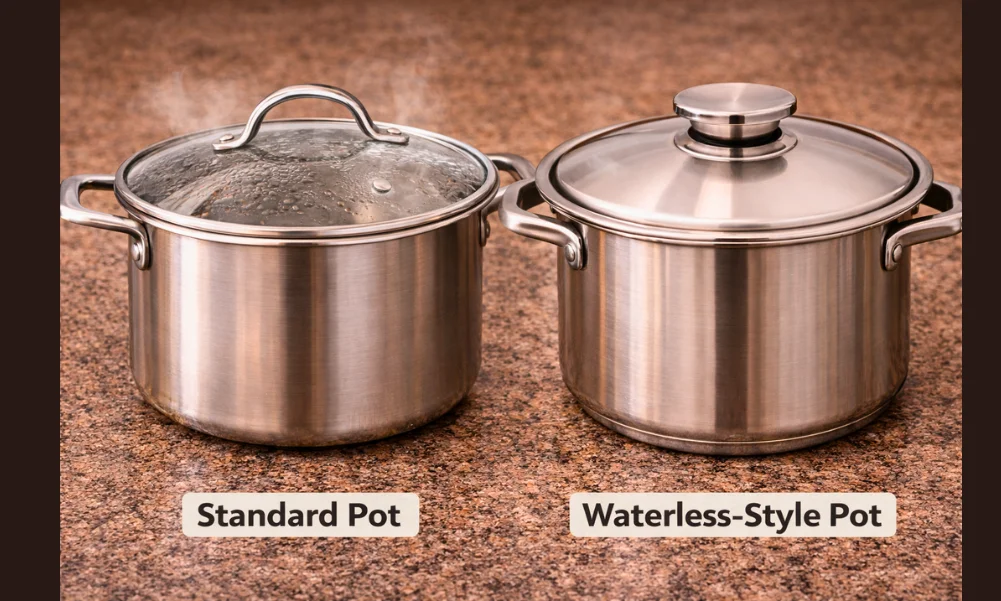
Waterless cookware differs more in design emphasis than in fundamental capability. Heavier construction and tighter lids make moisture retention easier, but they do not create a new cooking process.
Standard cookware can achieve similar results when used thoughtfully. The difference is consistency. Dedicated waterless cookware reduces margin for error, while standard cookware requires more attention to lid fit and heat control.
For buyers, this means waterless cookware is best evaluated as a tool that supports a technique, not as a category that replaces others.
Closing Summary
Waterless cooking relies on internal food moisture, tight containment, and controlled heat. When those conditions are met, it can produce gentle, efficient results, particularly with vegetables and moisture-rich foods.
When those conditions are absent, the method fails quickly. Dry foods, high heat, and browning techniques fall outside its strengths.
Understanding how waterless cooking works allows buyers to decide whether it fits their cooking habits. The cookware enables the method, but it does not change the underlying rules of heat and moisture.