Granite Cookware Explained: Safety, Coatings, Durability, and Buyer Mistakes

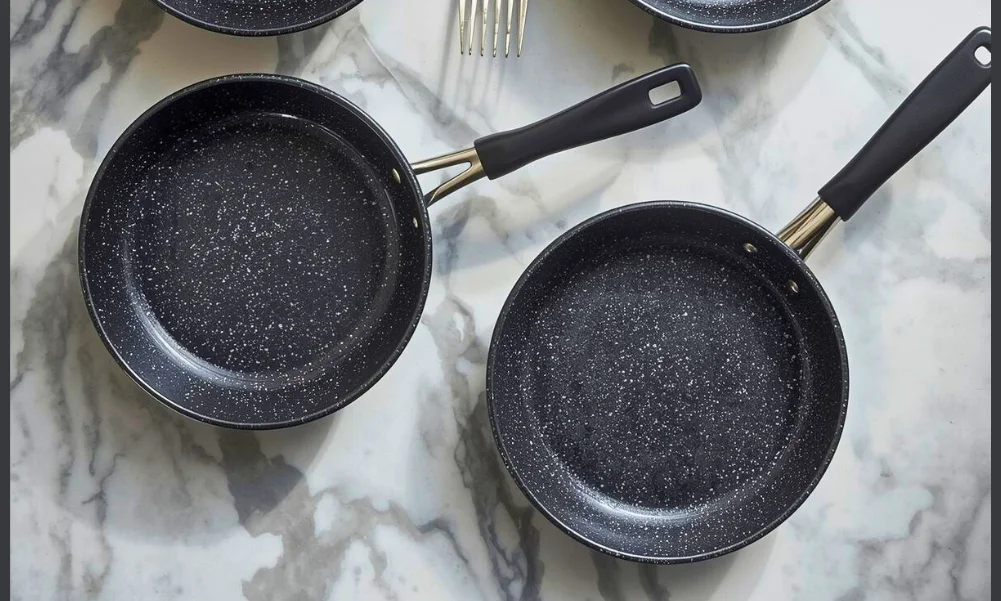
Granite cookware is not made from granite stone. Despite the name, granite cookware does not contain granite stone and does not behave like stone cookware. It is typically aluminum cookware coated with a nonstick surface that contains mineral fillers to create a stone-like appearance.
Most granite cookware uses a modern PTFE-based coating that is PFOA-free, with safety and performance depending on heat control, coating condition, and care practices. Its durability is limited by the lifespan of the nonstick coating rather than the base material.
Most granite cookware looks durable and “stone-like,” but in practice, it behaves much closer to standard nonstick cookware than many buyers expect.
Understanding that difference is the key to deciding whether Granite-style cookware is actually a good choice—or just good marketing.
Quick Answer: What Is Granite Cookware?
Granite cookware is usually aluminum cookware with a speckled nonstick coating. It is not made from solid granite stone. The word “granite” usually describes the pan’s appearance, not its actual cooking material.
Granite cookware behaves more like nonstick cookware, so safety and durability depend on the coating quality, heat use, cleaning habits, and whether the surface is scratched or peeling.
Is Granite Cookware Actually Made of Granite?
Granite cookware is not made from actual stone. The term “granite” refers to the appearance and texture of the nonstick coating, which often resembles stone, but the pan itself is typically made from aluminum, with a mineral-reinforced nonstick coating that creates a stone-like finish.
How Granite Cookware Is Built?
Base Metal: Most granite cookware uses aluminum as its base because it heats quickly and distributes heat evenly. Some brands may use stainless steel or carbon steel, but aluminum is the most common.
Coating Layer: The cooking surface is generally PTFE-based nonstick coating, with added mineral fillers to create a stone-like appearance. These fillers do not affect the functionality of the coating, which is still nonstick.
| Coating Claim | What it May Mean | What Buyers Should Check |
|---|---|---|
| PFOA-Free | No PFOA used in manufacturing | May still be PTFE-based |
| PTFE-Free | No Teflon-style nonstick coating | Check if it’s ceramic or sol-gel-based |
| PFAS-Free | No PFAS-related chemicals | Verify with brand testing |
| Stone-Derived | Natural, durable material | Just mineral particles added for texture |
Granite cookware is safe to use when handled properly. However, nonstick coatings like PTFE can release fumes when overheated. Always avoid high-heat cooking, dry preheating, and using metal utensils, as they can damage the surface and cause harmful emissions.
- Avoid Overheating: Do not exceed the manufacturer’s recommended heat limits. Overheating can break down the coating, releasing fumes that could be harmful.
- Check for Damage: Always inspect the pan for scratches, peeling, or bubbling of the coating. If any of these issues arise, it’s time to replace the pan.
- Use Low to Medium Heat: Stick to low-to-medium heat to prevent any degradation of the nonstick surface.
| Pros | Cons |
|---|---|
| Easy food release | Coating wears with use |
| Lightweight | Cannot handle high heat |
| Easy cleanup | Susceptible to scratching and peeling |
| Affordable | Shorter lifespan compared to cast iron or stainless steel |
Good For:
- Eggs
- Pancakes
- Fish
- Vegetables
- Light sautéing
- Low-oil cooking
- Everyday cooking
Not Good For:
- Searing steaks
- High-heat broiling
- Prolonged empty preheating
- Metal utensils
- Dishwashing
- Heavy-duty cooking styles
What Granite Cookware Actually Is
Granite cookware is a name, not a material definition. In cookware labeling, “granite” describes how a pan looks and how it is positioned, not what it is made from.
At its core, granite cookware is coated cookware. The cooking surface is a synthetic nonstick layer applied to a metal base, most often aluminum. Mineral or ceramic particles are added to the coating to create a speckled, stone-like texture. These particles influence appearance and surface feel, but they do not turn the pan into stone cookware.
This distinction is important for buyers. Materials such as cast iron or stainless steel describe the substance that directly affects heat behavior, durability, and long-term performance.
Coated cookware does not function as a standalone material category, which aligns with how cookware categories are defined in Cookware Types Explained. It behaves like nonstick cookware because that is what it is.
A useful way to think about granite cookware is as nonstick cookware wearing a stone-patterned jacket. The exterior impression may suggest ruggedness or natural materials, but the cooking experience is governed by the same rules that apply to other coated pans.
Understanding how granite cookware compares to other materials is easier when you look at a full cookware materials comparison guide.
Typical Construction of Granite Cookware
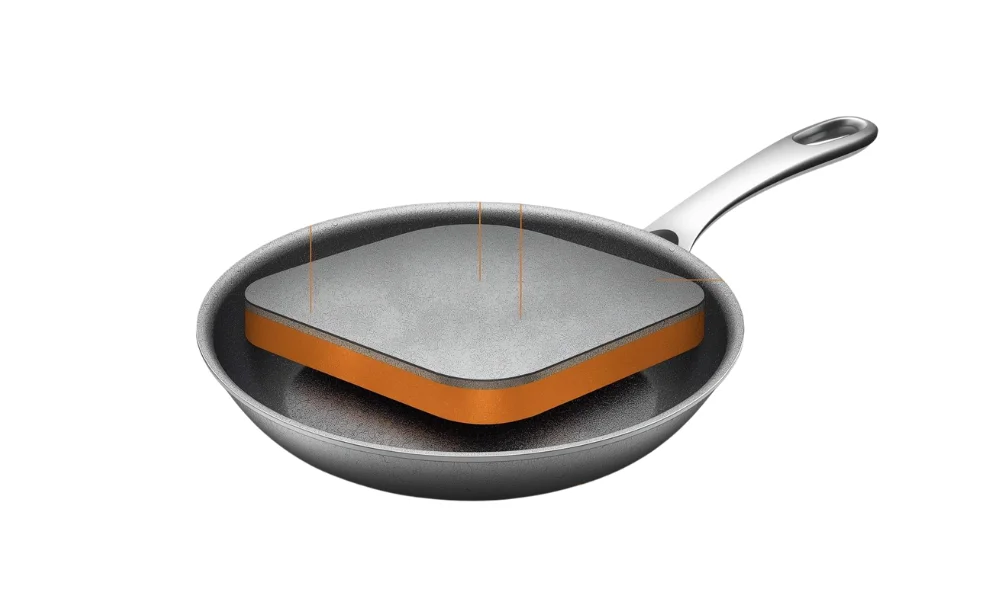
Granite cookware follows a relatively consistent construction pattern across manufacturers, even when marketing language differs.
Base Metal
Most granite cookware uses aluminum as its base. Aluminum is widely used in coated cookware because it heats quickly, distributes heat evenly, and keeps cookware lightweight. These traits suit everyday cooking tasks such as sautéing, simmering, and pan-frying at moderate temperatures.
Some granite-style cookware uses stainless steel or carbon steel as a base, but this is less common. When it does occur, the cooking behavior still depends heavily on the coating rather than the metal beneath it.
The base metal determines how heat enters the pan. The coating determines how the food interacts with the surface.
Coating System
The cooking surface is typically a PTFE-based nonstick coating that includes mineral fillers. These fillers may be marketed as “granite,” “stone,” or “mineral-reinforced,” but they do not replace the underlying nonstick chemistry.
In practical terms, the fillers can slightly increase surface texture and visual depth. They do not eliminate the core limitations of nonstick coatings. Release performance, heat tolerance, and wear resistance remain tied to coating thickness, formulation quality, and usage conditions.
Modern PTFE coatings used in granite cookware are manufactured without PFOA. This reflects current regulatory standards rather than a unique feature of granite-labeled products.
Is Granite Cookware Safe to Use?
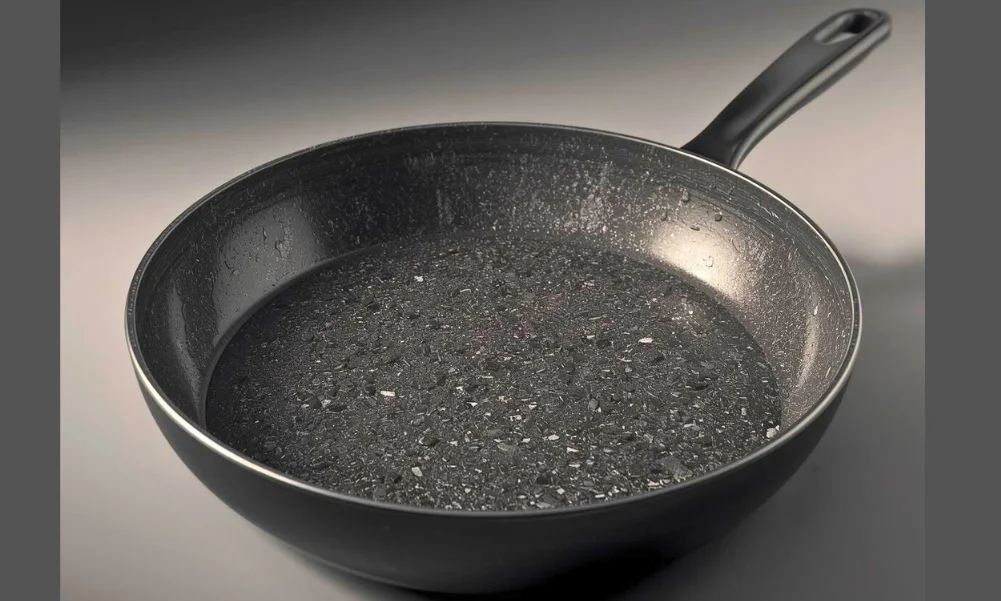
Granite cookware safety is best understood in terms of how it is used, not how it is named. The materials involved are familiar, and their behavior is well documented when handled within intended limits.
Most granite cookware uses a modern PTFE-based nonstick coating that is manufactured without PFOA. This reflects industry-wide changes that have been in place for years rather than a special property of granite-style cookware. When used at normal cooking temperatures, these coatings are considered stable and widely used across home kitchens.
Safety concerns arise when nonstick cookware is overheated or significantly worn. PTFE coatings can degrade if exposed to temperatures well above typical stovetop cooking ranges. At the same time, a scratched or peeling surface signals that the coating is no longer performing as designed. In both cases, the issue is not granite specifically, but the limits of nonstick coatings as a category.
From a buyer perspective, granite cookware is safest when treated as medium-heat cookware. It is well suited to everyday tasks such as eggs, vegetables, grains, and gentle pan-frying. It is not designed for prolonged high-heat searing, empty preheating, or oven use beyond manufacturer guidelines.
A helpful mental model is to treat granite cookware like a precision surface rather than a rugged one. It performs well when respected, but it is not forgiving of misuse.
To better understand how modern coatings are formulated and regulated, this PFAS-free cookware explained guide provides additional context.
Heat Performance and Cooking Behavior
Granite cookware heats primarily according to its aluminum base. Aluminum responds quickly to changes in burner output, which allows for good temperature control during routine cooking. This responsiveness is one of the main reasons aluminum is paired with nonstick coatings.
At the same time, the nonstick surface acts as a limiting layer. Granite cookware does not tolerate extreme heat well, even if the aluminum beneath it could physically handle higher temperatures. High heat can shorten coating life and reduce nonstick performance over time.
Compared to uncoated cookware, granite cookware excels at low to medium heat consistency. Food releases easily, and cleanup is minimal when the coating is intact. However, it does not develop fond, and it does not reward high-temperature techniques.
In practice, granite cookware performs best when the goal is efficiency rather than intensity. It favors control over power and consistency over versatility.
Durability and Realistic Lifespan
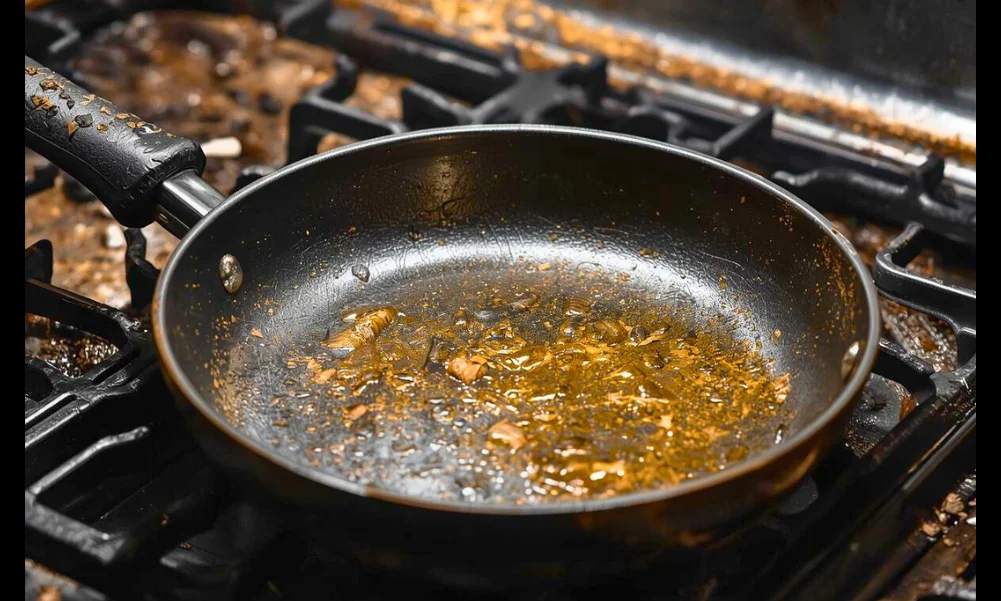
Durability is where granite cookware requires the most honest expectations. The limiting factor is not the metal body, but the nonstick coating itself.
Even with mineral reinforcement, nonstick coatings wear with use. Utensil contact, repeated heating cycles, and cleaning abrasion gradually reduce release performance. The stone-like appearance does not prevent this process. It can sometimes mask early wear, but it does not stop it.
For most households, granite cookware offers short to moderate-term durability. This lifespan aligns with expectations discussed in how long should cookware last, where coated cookware is evaluated by performance decline rather than appearance. With careful use, it can perform well for several years. With heavy use or high heat, that lifespan shortens noticeably.
This does not make granite cookware a poor choice. It makes it a purpose-specific tool. Buyers who expect decade-long durability may be better served by uncoated materials. Buyers who prioritize easy release and low maintenance often find Granite-effect cookware acceptable, provided expectations are aligned.
Maintenance and Care Requirements
Granite cookware remains functional longer when care practices align with the limits of nonstick coatings. While the surface is designed to reduce sticking, it is not designed to resist abrasion or thermal stress indefinitely.
Cleaning should be done with non-abrasive sponges and mild detergents. Aggressive scrubbing removes small amounts of coating over time, even when no damage is immediately visible. Dishwashers accelerate this wear through heat, detergents, and water pressure, which is why hand washing is generally recommended for coated cookware.
Utensil choice also affects longevity. Wood, silicone, or nylon utensils reduce surface contact stress compared to metal tools. Storage matters as well. Stacking pans without protection introduces repeated friction that slowly degrades the coating.
A practical way to think about maintenance is to treat granite cookware as low-effort during cooking but high-awareness between uses. The convenience appears on the stove. The preservation happens afterward.
Granite Cookware Compared to Related Categories
Granite cookware often overlaps with other nonstick categories, which can make comparisons confusing. Looking at construction rather than labels helps clarify where it fits.
Granite vs Ceramic Cookware
Both granite and ceramic cookware are frequently marketed as “natural” or “stone-inspired,” yet most products in both categories are coated metal pans. Ceramic cookware typically uses a silica-based coating instead of PTFE.
Ceramic coatings are PTFE-free by formulation, but they tend to lose nonstick performance more quickly under regular use. Granite-style cookware, which usually relies on PTFE, often maintains release properties longer when used within heat limits.
The tradeoff is heat sensitivity. Both coatings degrade with excessive heat, but ceramic surfaces are generally less forgiving over time.
For a more detailed breakdown of how these coatings compare in real kitchens, see this ceramic vs granite cookware comparison.
Granite vs Traditional PTFE Nonstick
Functionally, granite cookware and traditional nonstick cookware behave very similarly. Both rely on PTFE chemistry for food release. The main difference lies in texture and presentation, not core performance.
Granite-style coatings may feel slightly more textured and appear more durable. In practice, lifespan and performance depend more on coating thickness and care than on surface appearance.
Safety considerations for PTFE-based coatings are explored in is Teflon-coated cookware still safe to use, where proper heat use and surface condition matter more than coating labels.
Granite vs Enameled Cast Iron
Enameled cast iron occupies a different category entirely. It is heavier, slower to respond to heat changes, and designed for long cooking sessions. The enamel surface is durable but not nonstick in the same way.
Granite cookware prioritizes ease of use and quick cleanup. Enameled cast iron prioritizes heat retention and long-term durability. Choosing between them depends on cooking style rather than perceived quality.
Who Granite Cookware Is Best Suited For
Granite cookware suits cooks who value convenience, controlled heat, and easy cleanup. It works well for everyday meals where sticking is a frustration rather than a technique.
It is less suited to cooks who frequently use high heat, metal utensils, or expect cookware to last for decades. In those cases, uncoated materials provide more resilience with fewer constraints.
Granite-style cookware performs best when expectations are realistic. It is a comfort tool, not a forever tool.
Evaluating Common Granite Cookware Claims
Marketing language around granite cookware often emphasizes natural materials, enhanced durability, or superior safety. These claims should be interpreted carefully.
Mineral fillers do not turn nonstick cookware into stone cookware. Phrases such as “stone-derived” or “rock coating” describe appearance, not composition. Safety claims usually reflect standard compliance rather than unique properties.
A useful rule is to focus on what is disclosed rather than what is implied. Clear information about coating type, heat limits, and care instructions is more meaningful than descriptive names.
Granite Cookware Marketing Claims vs Reality
| Claim | What It Sounds Like | What It Really Means |
|---|---|---|
| Granite Coating | Made from real granite | Usually a stone-like nonstick coating over metal |
| Stone-Derived | Natural, durable material | Just mineral particles added for texture |
| PFOA-Free | Free of harmful chemicals | Doesn’t guarantee safety; check for PTFE/PFAS |
| Dishwasher Safe | No extra care needed | Heat and detergent in dishwashers shorten coating life |
| Non-toxic | Chemically simple | Needs coating disclosure to verify |
Should You Buy Granite Cookware?
Granite cookware can be a good choice if you want easy cleanup and low-maintenance cooking, especially for everyday meals.
If you’re comparing it with other materials, this complete guide to the best cookware breaks down which options perform best based on durability, heat control, and long-term value.
Buy it if:
- You want a nonstick pan for everyday cooking.
- You prefer lightweight cookware with easy cleanup.
- You cook at low-to-medium heat regularly.
Avoid it if:
- You use high heat for searing or broiling.
- You want cookware that lasts a lifetime.
- You regularly use metal utensils or put pans in the dishwasher.
Consider Alternatives:
- Stainless Steel for long-term durability.
- Cast Iron for searing and high-heat cooking.
- Ceramic-Coated Cookware for PTFE-free options.
FAQs About Granite Cookware
Is granite cookware made from real granite?
No, it’s usually aluminum with a nonstick coating designed to look like granite.
Is granite cookware safe for everyday cooking?
Yes, as long as you follow the manufacturer’s guidelines for heat limits and care instructions.
How long does Granite-style cookware last?
It typically lasts a few years with proper care. However, excessive heat or abrasive cleaning can shorten its lifespan.
Can granite cookware be used on high heat?
Not recommended. High heat can damage the nonstick coating.
Is Granite-style cookware dishwasher safe?
Most Granite-style cookware should be hand-washed to preserve the nonstick coating.
Can scratched granite cookware still be used?
Light cosmetic marks may not matter, but peeling, flaking, bubbling, or deep scratches are signs the pan should be replaced.
Why is food sticking to my granite pan?
Food may stick because the coating is worn, the pan is too hot, residue has built up, or not enough oil is being used.
Is granite cookware better than ceramic cookware?
Granite-style PTFE cookware may hold release performance longer, while ceramic cookware may appeal to buyers who want PTFE-free coatings. The better choice depends on coating quality, care habits, and heat use.
Can granite cookware go in the dishwasher?
Some brands allow it, but handwashing is safer for coating life. Dishwasher heat and detergent can shorten nonstick performance.
How long does granite cookware last?
Most granite cookware lasts a few years with careful use, but heavy heat, metal utensils, stacking, and dishwasher use can shorten its useful life.
Granite Cookware Safety Checklist
Before buying or using granite cookware, check the following:
- Coating is disclosed clearly (PTFE, ceramic, etc.)
- No scratches, peeling, or damage to the coating
- Oven temperature limit is clearly stated
- Low-to-medium heat usage is advised
- Use of soft utensils (wood, silicone, or nylon) is recommended
- Hand washing is recommended instead of using the dishwasher
How Granite Cookware Fits into the Cookware Landscape
Granite cookware belongs within the nonstick category, not alongside foundational materials such as stainless steel or cast iron. It offers a balance of convenience and control, with tradeoffs in durability and heat tolerance.
For buyers researching cookware materials, granite cookware is best evaluated as one option among coated pans. Understanding its construction and limits allows it to be used effectively without inflated expectations.
When chosen for the right reasons and used with care, granite cookware can be a practical part of a home kitchen. When chosen for the wrong reasons, it often disappoints. The difference lies in understanding what the label does and does not mean.