Teflon-coated cookware remains one of the most commonly used types of cookware in home kitchens. Its non-stick surface makes everyday cooking easier, reduces the need for added oil, and simplifies cleanup. For these reasons, it is often chosen for breakfast foods, delicate proteins, and quick meals.
At the same time, questions about the safety of Teflon cookware continue to surface. Many of these concerns originate from older information, changes in manufacturing practices, or confusion between different chemical terms associated with non-stick coatings.
This article examines modern Teflon-coated cookware as it is produced and used today. It explains what Teflon is, how it behaves during cooking, and under what conditions it is considered safe. It also outlines its limitations so readers can decide whether it fits their cooking habits.
This article examines modern Teflon (PTFE) coatings specifically. It does not evaluate overall cookware safety or compare cookware materials broadly.
Quick Answer: Is Teflon-Coated Cookware Safe Today?
Modern Teflon-coated cookware is generally considered safe for everyday home cooking when used within normal temperature ranges and maintained in good condition.
Current Teflon coatings are made without PFOA and are designed to remain stable during typical low-to-medium heat cooking. Safety concerns are more closely linked to misuse, such as overheating empty pans or continuing to use cookware after the coating has significantly deteriorated.
In practical terms, the safety of Teflon cookware depends more on how it is used and replaced over time than on the presence of the coating itself.
For most home cooks, modern Teflon cookware is safe when used for low-to-medium heat cooking and replaced once the coating shows clear wear.
What Teflon (PTFE) Is and How It Works

Teflon is the commonly used name for a material called PTFE, short for polytetrafluoroethylene. In cookware, PTFE functions as a surface coating rather than a structural material. The pan or pot beneath the coating is typically made from aluminum, which provides heat conduction.
The role of the PTFE layer is to create a smooth, low-friction cooking surface. This surface limits the ability of food to bond to the pan during cooking, which is why non-stick cookware performs well with minimal oil and gentle heat.
PTFE is chemically stable under normal cooking conditions. However, it is not designed for extreme temperatures or prolonged dry heating. Its performance and safety depend on staying within the temperature range for which it was intended.
Modern Teflon cookware uses layered coating systems that bond the PTFE to the metal base and improve durability.
PFOA vs PTFE: Clearing the Most Common Confusion
Concerns about Teflon cookware are often rooted in confusion between PFOA and PTFE. Although the two terms are frequently mentioned together, they refer to different substances with different roles.
What PFOA Was Used For
PFOA, or perfluorooctanoic acid, was previously used as a processing aid during the manufacturing of PTFE coatings. It was not the non-stick surface itself and was not intended to be present in finished cookware.
Over time, environmental and regulatory scrutiny led to the phase-out of PFOA in cookware production. Manufacturers transitioned to alternative processes that no longer rely on this compound.
What Modern Teflon Contains Today
Modern Teflon-coated cookware is manufactured without PFOA. This change reflects updated production standards rather than a modification of how PTFE performs during cooking.
As a result, warnings that reference PFOA exposure often relate to older manufacturing practices rather than current consumer cookware. Understanding this distinction is important when evaluating the relevance of older safety concerns.
When Teflon-Coated Cookware Is Safe to Use
Teflon-coated cookware is designed for everyday cooking tasks that involve moderate heat and the presence of food in the pan. Under these conditions, the coating remains stable and performs as intended.
Normal Temperature Ranges in Home Cooking
Most home cooking takes place at temperatures well below the threshold that would stress a PTFE coating. Common stovetop settings used for eggs, vegetables, and light sautéing fall within this range.
When cookware is preheated briefly and food is added promptly, the coating is not exposed to prolonged high temperatures. This type of use aligns with the design parameters of non-stick cookware.
Appropriate Cooking Applications
Teflon-coated cookware is well suited to foods that benefit from easy release and gentle handling. These include breakfast foods, delicate fish, and reheated leftovers.
In these situations, non-stick cookware provides convenience rather than high-heat performance. It is not intended to replace cookware designed for searing or prolonged cooking.
When Teflon-Coated Cookware Becomes a Problem
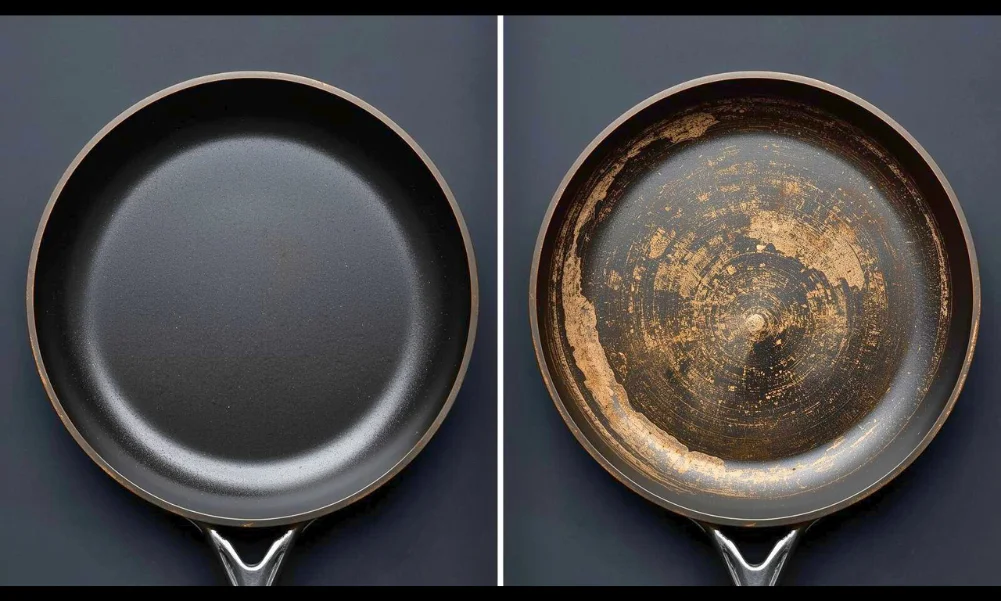
Limitations become apparent when Teflon cookware is used outside its intended conditions. Most issues arise from temperature misuse or surface degradation rather than normal cooking.
Overheating and Dry Heating
Placing an empty non-stick pan on high heat can cause temperatures to rise quickly. Without food to absorb heat, the coating may be exposed to conditions beyond its recommended range.
Repeated overheating accelerates coating wear and reduces non-stick performance over time. This type of use shortens the functional lifespan of the cookware.
Scratches and Surface Damage
Surface damage affects both performance and longevity. Metal utensils, abrasive cleaners, and stacking cookware without protection can wear down the coating.
As the surface degrades, food release becomes less consistent, and cleaning becomes more difficult. Continued use at this stage often leads to frustration rather than safety concerns.
🔗 Related reading: When to Replace Non-Stick Cookware
Teflon Compared With Other Non-Stick Options
Teflon-coated cookware is not the only non-stick option available. Comparing it with alternatives helps clarify where it performs well and where its limitations are more noticeable.
Teflon vs Ceramic Coatings
Ceramic-coated cookware is often marketed as a more natural or non-toxic alternative. In practice, ceramic coatings behave differently from PTFE.
Teflon coatings tend to maintain non-stick performance longer when used within recommended heat ranges. Ceramic coatings often lose their release properties more quickly, even when handled carefully.
Heat tolerance also differs. Ceramic coatings can tolerate slightly higher temperatures but are more prone to performance decline over time. Teflon favors consistent low-to-medium heat and offers more predictable release during its usable lifespan.
🔗 Related: Ceramic Cookware Explained: Coatings, Safety, and Longevity
Teflon vs Anodized Aluminum

Anodized aluminum cookware does not rely on a non-stick coating. Instead, it uses a hardened aluminum surface that reduces reactivity and improves durability.
Teflon cookware prioritizes ease of release, while anodized aluminum prioritizes surface stability. Anodized aluminum requires more oil but tolerates higher heat and longer cooking times.
Choosing between these materials depends on cooking style rather than safety alone.
🔗 Related: Is Aluminum Cookware Safe for Everyday Use
Health Concerns and Practical Risk Perspective
Health discussions around Teflon cookware often lack context. Evaluating risk requires separating everyday use from misuse and understanding how exposure occurs.
What Safety Concerns Often Overlook
Many safety claims assume extreme conditions that do not reflect normal cooking. Prolonged dry heating or industrial temperatures are not representative of everyday kitchen use.
When cookware is used as intended, with food in the pan and controlled heat, exposure concerns are minimal. Wear and overheating, not the coating itself, account for most problems associated with non-stick cookware.
Who May Prefer to Avoid Teflon Cookware
Some users may choose to avoid Teflon based on personal cooking habits rather than safety necessity. High-heat cooking, frequent searing, or a preference for cookware with longer lifespans may make other materials more suitable.
This decision reflects cooking priorities, not a universal safety requirement.
How to Use Teflon-Coated Cookware Safely
Using Teflon cookware effectively involves matching it to appropriate tasks and handling it with care.
Heat Control Guidelines
Low to medium heat settings are sufficient for most non-stick cooking. Preheating should be brief, and empty pans should not be left unattended on high heat.
Cleaning and Maintenance
Gentle cleaning preserves the coating. Soft sponges and mild detergents reduce surface wear, while abrasive cleaners accelerate degradation.
Utensils That Extend Coating Life
Wooden, silicone, or nylon utensils reduce surface damage. Metal utensils shorten the functional lifespan of the coating.
Pros and Cons of Teflon-Coated Cookware
Advantages
Teflon cookware provides consistent non-stick performance, requires less cooking oil, and simplifies cleanup. These benefits make it convenient for everyday meals.
Limitations
The coating has a finite lifespan and requires controlled heat and careful handling. It is not designed for high-heat cooking or long-term durability.
Should You Still Use Teflon-Coated Cookware?
Teflon-coated cookware remains a practical option for many home kitchens when used appropriately. It offers convenience and reliable performance for specific tasks rather than universal versatility.
When Teflon Makes Sense
Teflon cookware suits everyday cooking that emphasizes easy release, moderate heat, and efficiency.
When Another Material Is a Better Fit
High-heat cooking, frequent searing, or a preference for long-lasting cookware may favor stainless steel, cast iron, or anodized aluminum.
Final Verdict: Is Teflon-Coated Cookware Still Safe to Use?
Modern Teflon-coated cookware is considered safe for everyday use when it is used within normal temperature ranges and replaced once the coating degrades. Current formulations no longer rely on PFOA, and safety concerns are primarily linked to misuse rather than standard cooking practices.
For home cooks who value convenience and controlled cooking, Teflon remains a functional choice. Its limitations are best managed by understanding when to use it and when another cookware material is better suited.
For broader safety context, see What Is the Safest Non-Stick Cookware for Home Cooking and Cookware Safety Certifications Explained.