Quick Answer
High-quality cookware is defined by construction, material choice, and manufacturing consistency, not by brand name alone. Thickness, heat distribution, handle attachment, surface finish, and long-term durability matter more than logos or price tiers. While reputable brands can signal quality control, true cookware quality is measurable through physical design features that affect performance and lifespan.
What “Quality” Means in Cookware
In cookware, quality is not a single attribute. It is a combination of how well a pan performs, how consistently it behaves, and how long it remains reliable under normal use.
Performance quality refers to heat control, evenness, and responsiveness. A high-quality pan heats predictably and reacts to adjustments without sharp swings. Durability quality reflects how well the cookware resists warping, handle failure, coating breakdown, or structural fatigue over time. Safety quality involves stability, secure attachments, and materials that behave predictably under heat.
These quality dimensions are rooted in how different cookware materials and constructions behave under heat and stress, which is explained in Cookware Types Explained: Materials, Uses, and Limitations.
Brand names often compress these ideas into a reputation shortcut. That shortcut can be helpful, but it is incomplete. Two pans from different brands can perform similarly if their construction is comparable. Two pans from the same brand can perform very differently if they target different price points or manufacturing standards.
A useful way to think about cookware quality is as engineering expressed through repetition. A quality pan does not perform well once. It performs the same way every time, across years of use.
Construction Features That Define Quality
Quality cookware reveals itself through specific, observable features rather than marketing language.
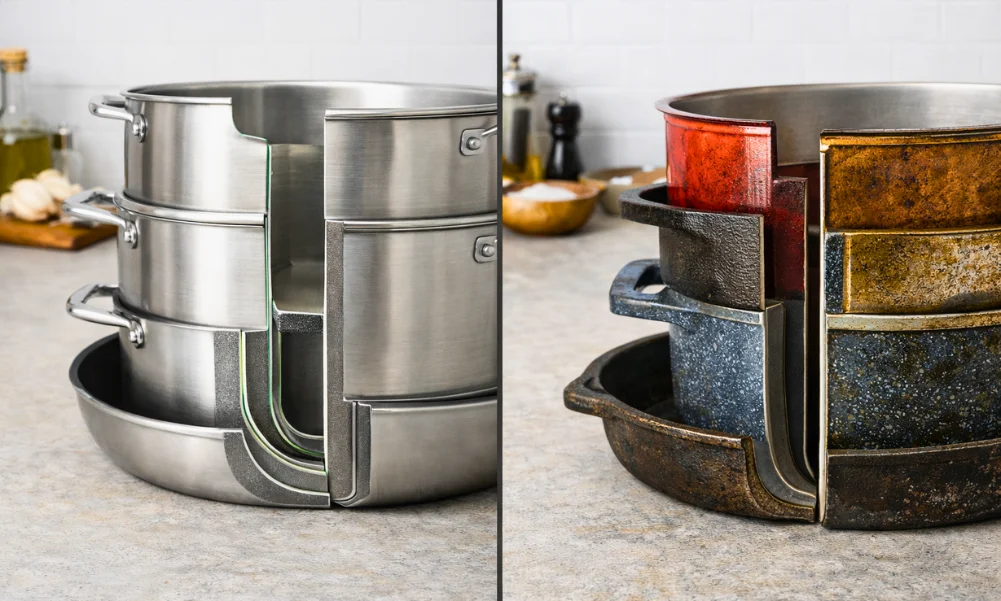
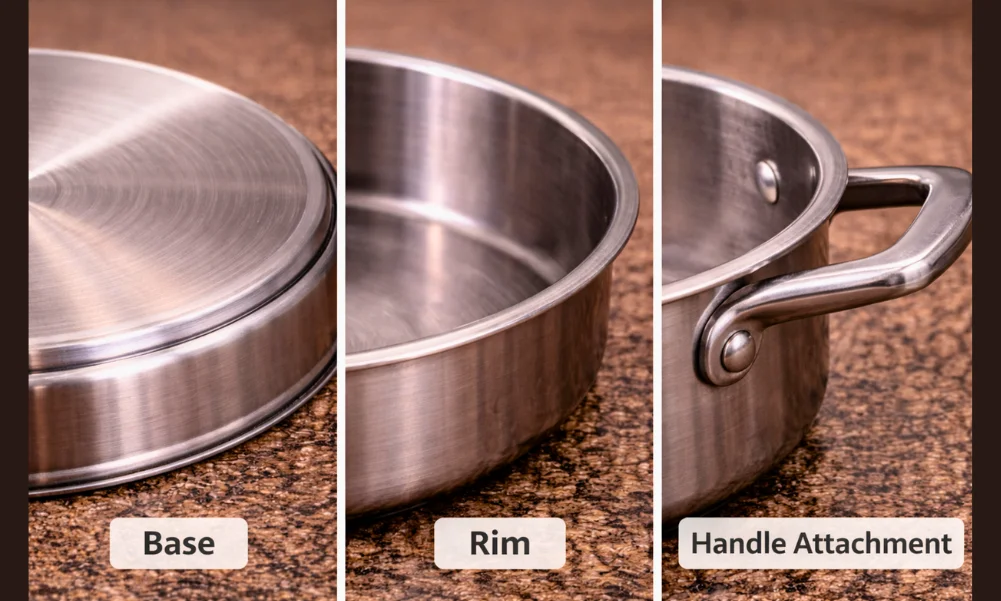
Material thickness is one of the clearest indicators. Adequate thickness in the base and walls improves heat distribution and reduces stress-related failures. In multi-layer cookware, the thickness of the conductive core matters more than the outer metal grade.
Thickness influences how cookware manages heat and stress over time, a relationship explained in more detail in Cookware Thickness Explained: Why It Affects Heat Control.
Handle attachment is another key marker. Secure rivets or well-executed welds indicate attention to load-bearing stress and heat cycling. Loose handles or undersized attachment points suggest cost-cutting.
Handle attachment quality affects long-term reliability and failure modes, which are explored in Riveted vs Welded Cookware Handles: Which Lasts Longer.
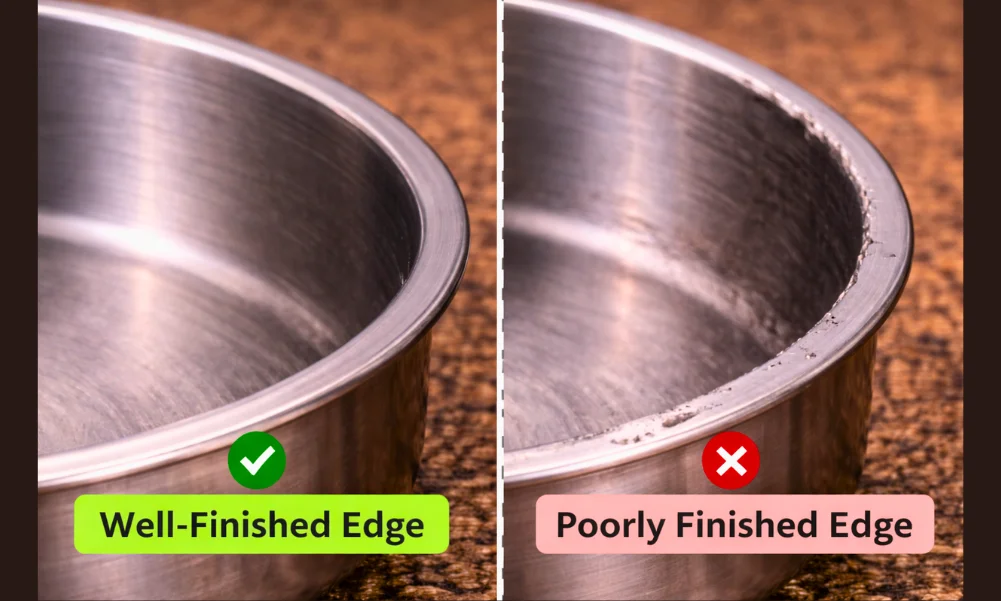
Surface finish also matters. Smooth interiors reduce sticking and simplify cleaning. Even exterior finishing reflects manufacturing consistency, which often correlates with tighter tolerances elsewhere in the pan.
These features are not exclusive to premium brands. They are the result of design priorities and manufacturing discipline, which some brands maintain more consistently than others.
What Brand Names Do—and Do Not—Guarantee
Brand reputation can signal experience, scale, and quality control, but it does not guarantee uniform quality across all products. Many cookware brands operate across multiple price tiers, materials, and manufacturing locations. As a result, brand consistency varies by product line rather than by name alone.
What a reputable brand often does guarantee is baseline reliability. Established brands are more likely to adhere to material standards, disclose construction details, and maintain consistent tolerances. This reduces the risk of severe defects, but it does not ensure top-tier performance.
What brand names do not guarantee is suitability for a specific cooking style. A pan designed to hit a certain price point may sacrifice thickness, core material, or handle construction, even if it carries a well-known logo. Conversely, lesser-known brands can produce excellent cookware when design and manufacturing priorities align.
For buyers, brand reputation is best treated as context, not a conclusion. It can narrow choices, but it should not replace evaluation of construction details.
How to Evaluate Cookware Without Brand Bias

Evaluating cookware quality without relying on brand names requires focusing on features that affect performance and longevity.
Start with thickness and weight distribution. A pan should feel balanced, with sufficient mass in the base to support even heating. Excess weight in the handle or thin walls paired with a thick base can indicate uneven design priorities.
Next, inspect handle attachment. Rivets should be flush and secure. Welds should be clean and uniform, without visible gaps or discoloration. Movement or flex at the handle is a red flag regardless of brand.
Surface finish offers additional clues. Smooth interiors, consistent brushing, and clean edges suggest controlled manufacturing. Rough transitions, sharp edges, or uneven finishes often point to looser tolerances.
Finally, consider disclosure. Brands that clearly state materials, construction methods, and limitations make it easier for buyers to match cookware to their needs. Transparency is often a stronger quality signal than marketing language.
Why Some Brands Cost More
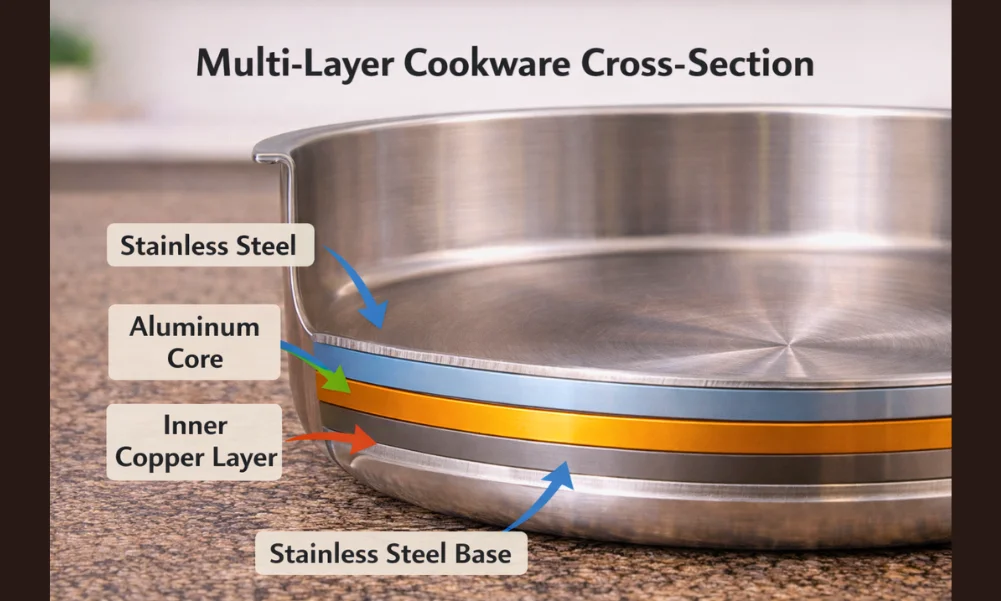
Higher prices often reflect higher material costs, tighter manufacturing tolerances, or labor-intensive processes. Thicker cores, multi-layer bonding, and precise finishing increase cost before branding is considered.
Manufacturing location also matters. Cookware produced in regions with higher labor costs or stricter quality oversight tends to cost more. This does not automatically make it better, but it can improve consistency.
It is also important to separate structural cost from branding cost. Some price differences reflect real material and process upgrades. Others reflect positioning, distribution, and marketing. Buyers benefit from identifying which category a given product falls into.
Common Buyer Mistakes
One common mistake is assuming that brand reputation overrides construction details. This can lead to disappointment when a pan does not perform as expected despite its name.
Another mistake is equating price with durability. Expensive cookware can still be poorly suited to a buyer’s habits, especially if maintenance requirements are misunderstood.
Misunderstanding construction details often leads to issues like warping, which is examined in Cookware Warping: Causes, Prevention, and Fixes.
A third mistake is focusing on a single feature, such as thickness or handle style, without considering the overall design. Quality emerges from how features work together, not from any one specification.
How Brand Fits Into a Balanced Buying Decision
Brands are tools for reducing uncertainty, not substitutes for understanding cookware behavior. They are most useful when combined with basic knowledge of materials, thickness, and construction.
For buyers, the goal is not to find the “best brand,” but to identify cookware that matches cooking style, maintenance tolerance, and performance expectations. Brands can help guide that search, but they should not define it.
Closing Summary
High-quality cookware is defined by measurable design and construction choices rather than by brand name alone. Thickness, heat distribution, handle attachment, surface finish, and manufacturing consistency shape performance and longevity.
Brands can signal quality control, but they do not replace careful evaluation. Buyers who focus on how cookware is built, rather than who built it, are more likely to choose pieces that perform well and last as expected.