Titanium non-stick cookware is not made from solid titanium. In most cases, it is standard non-stick cookware with a PTFE-based coating that includes titanium compounds as a reinforcement additive. The titanium does not form the cooking surface and does not eliminate the core limitations of non-stick coatings. Safety and durability depend on coating quality, heat management, and wear over time rather than the presence of titanium in the coating.
What Titanium Non-Stick Cookware Is (and Is Not)
Titanium non-stick cookware is defined more by labeling language than by material composition. The term “titanium” is used to describe an element added to the non-stick coating system, not the pan itself.
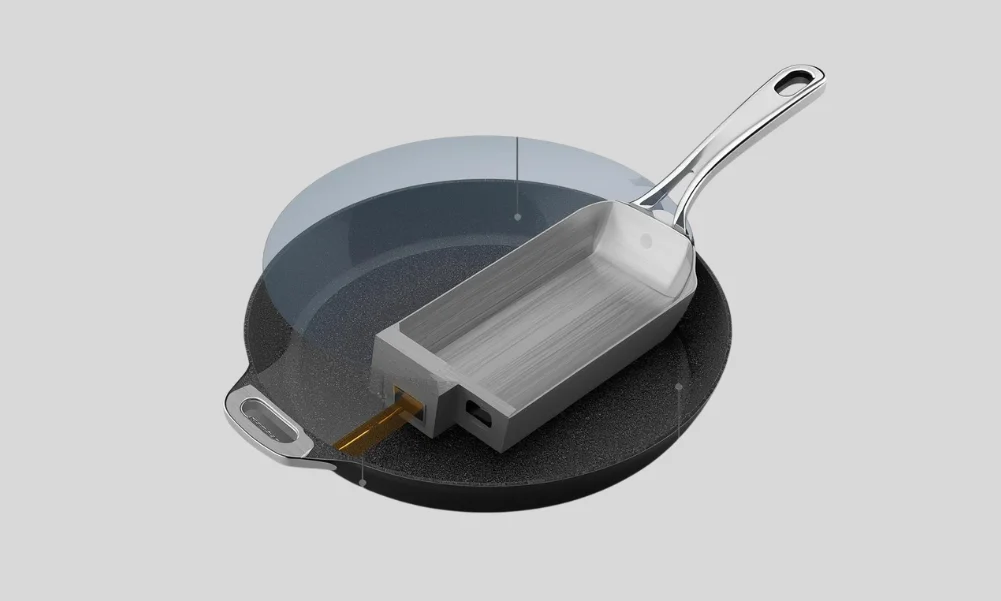
In typical construction, the cookware body is aluminum or stainless steel. The cooking surface is a synthetic non-stick coating, most often PTFE. Titanium compounds may be incorporated into this coating to improve hardness or abrasion resistance, but they do not replace the non-stick material. Food does not come into contact with titanium metal.
This distinction matters because titanium is widely associated with strength, medical implants, and aerospace applications. Those associations create expectations of extreme durability that do not translate directly to cookware coatings. A titanium-reinforced non-stick pan still behaves like non-stick cookware. It remains sensitive to overheating, surface damage, and gradual wear.
Another common source of confusion is the assumption that titanium non-stick cookware is fundamentally different from standard non-stick cookware. In practice, the difference is incremental rather than transformative. The coating may resist light abrasion slightly better, but it does not become permanent, metal-like, or immune to failure.
A useful way to think about titanium non-stick cookware is as non-stick cookware with a tougher recipe, not a new material category. The underlying rules remain the same.
How Titanium Is Used in Non-Stick Cookware
Titanium is introduced into non-stick cookware as part of the coating formulation, not as a standalone layer. In most products, titanium appears as fine particles or compounds blended into a PTFE-based coating. The goal is reinforcement, not replacement.
Titanium-Reinforced PTFE Coatings
PTFE remains the primary non-stick material. Titanium additives are intended to increase hardness and improve resistance to light abrasion during normal use. This can help the coating tolerate repeated utensil contact and cleaning better than basic formulations.
What titanium does not do is change the fundamental behavior of non-stick cookware. Heat limits remain governed by PTFE. Release performance still declines with wear. Overheating and surface damage still shorten lifespan. Titanium reinforcement may slow these processes, but it does not stop them.
In practical terms, titanium functions like rebar in concrete. It can strengthen the structure under typical loads, but it does not prevent failure if the structure is overstressed.
Marketing Claims vs Material Reality
Titanium non-stick cookware is often marketed using language that emphasizes strength, longevity, and resilience. These claims rely on the reputation of titanium as a metal rather than on how it is actually used in cookware.
Phrases such as “titanium strength” or “titanium durability” suggest a surface that behaves like metal. In reality, the cooking surface remains a polymer coating. Scratch resistance may improve modestly, but metal utensils, abrasive cleaners, and high heat still cause damage over time.
Longevity claims are another area where expectations can drift. Titanium reinforcement can extend useful life compared to entry-level non-stick pans, but it does not create a permanent surface. Once the coating wears through, the pan no longer functions as intended, regardless of the additives used.
For buyers, the key is to separate relative improvement from absolute change. Titanium may improve durability within the non-stick category. It does not redefine the category itself.
Is Titanium Non-Stick Cookware Safe?
Safety considerations for titanium non-stick cookware are the same as for other modern non-stick cookware. The coating is typically PFOA-free and designed for everyday cooking temperatures.
Titanium’s presence does not meaningfully change safety characteristics. It is not the cooking surface, and it does not introduce new exposure pathways. Safety remains use-dependent, with overheating and severe coating degradation being the primary concerns.
When used within recommended temperature ranges and replaced once the coating is compromised, titanium non-stick cookware does not present unique safety issues compared to other non-stick options.
Heat Performance and Use Limitations
Titanium does not increase heat tolerance. Non-stick coatings, reinforced or not, are still intended for low to medium heat cooking.
The underlying cookware body, often aluminum, determines how quickly heat moves. The coating determines how much heat the surface can tolerate. Titanium reinforcement does not change this relationship.
High-heat searing, empty preheating, and prolonged exposure to intense burners remain poor matches for titanium non-stick cookware. These conditions accelerate coating breakdown regardless of reinforcement.
Durability and Realistic Lifespan
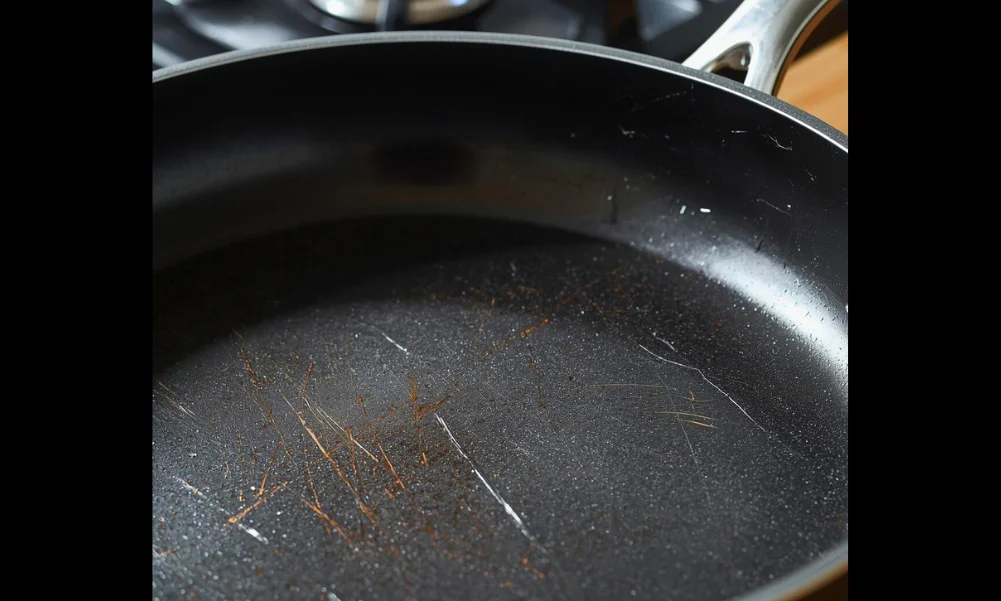
Durability remains the most misunderstood aspect of titanium non-stick cookware. Reinforcement can reduce early wear, but it does not eliminate gradual degradation.
Common failure modes still apply. The surface may lose release properties before visible damage appears. Scratches accumulate. Peeling or flaking eventually signals end of life.
From a realistic buyer standpoint, titanium non-stick cookware offers incremental durability gains, not a fundamentally longer lifespan. Care practices still matter more than additives.
Titanium Non-Stick Compared to Related Cookware
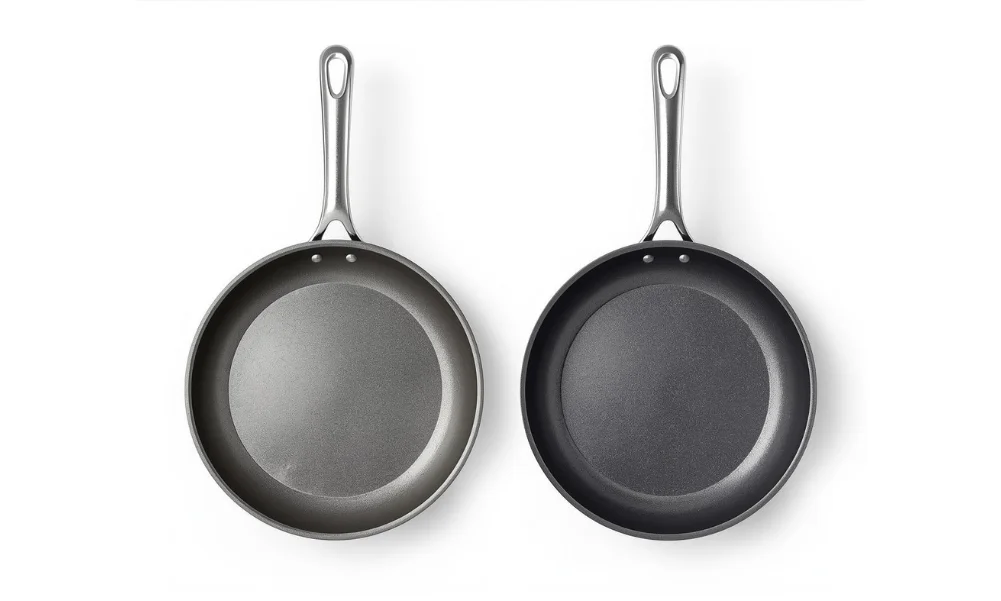
Titanium Non-Stick vs Standard PTFE Non-Stick
Both rely on PTFE for non-stick performance. Titanium-reinforced coatings may feel slightly more robust and last somewhat longer under similar use, but the cooking experience is largely the same.
Titanium Non-Stick vs Ceramic Cookware
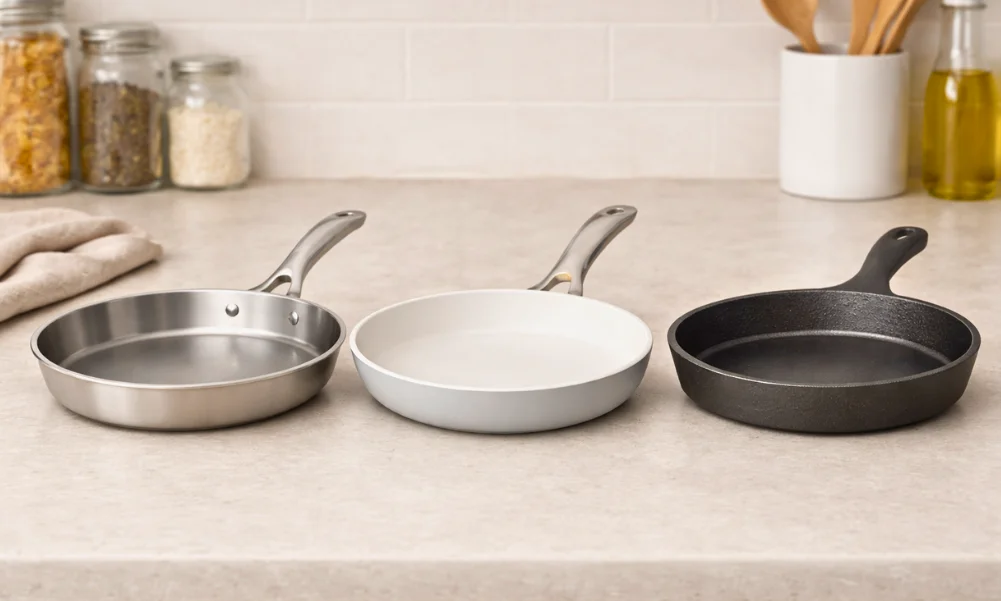
Ceramic cookware uses a different coating chemistry and is PTFE-free. Ceramic surfaces often lose non-stick performance faster, while titanium-reinforced PTFE coatings tend to retain release properties longer when properly used.
Titanium Non-Stick vs Stainless Steel
Stainless steel offers durability and heat tolerance but requires technique to prevent sticking. Titanium non-stick prioritizes convenience at the expense of longevity and heat range.
Who Titanium Non-Stick Cookware Is Best Suited For
Titanium non-stick cookware suits buyers who want easy food release and are drawn to durability claims, provided expectations remain realistic. It fits routine, moderate-heat cooking where convenience matters more than permanence.
It is less suitable for buyers seeking cookware that improves with age or tolerates aggressive use.
How Titanium Non-Stick Fits Into the Cookware Landscape
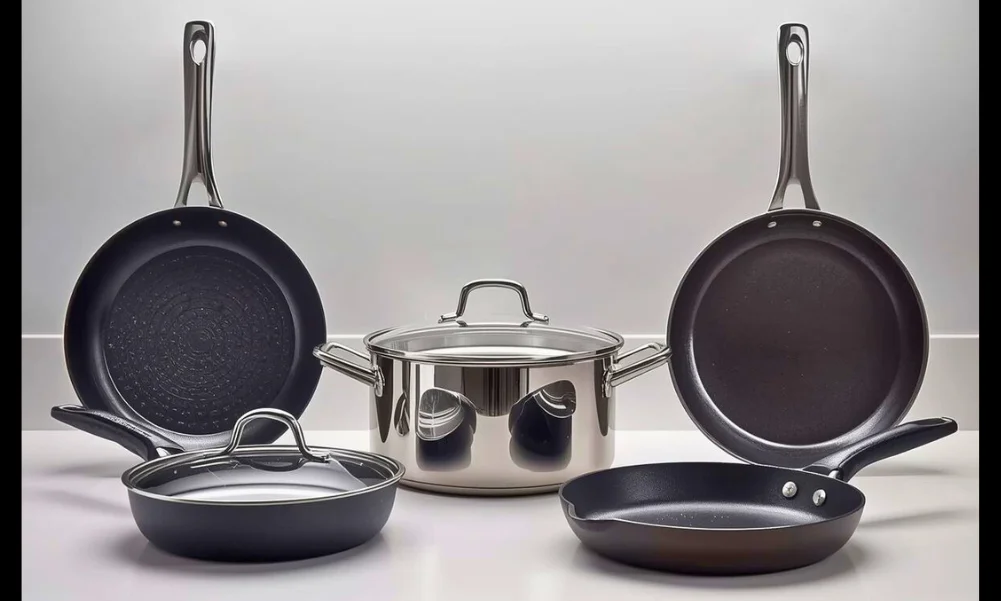
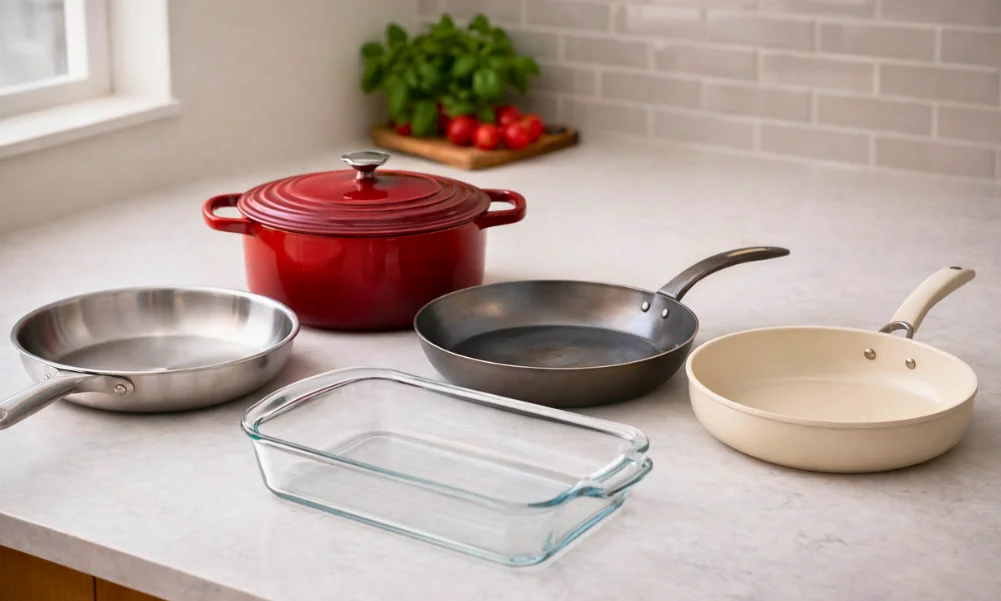
Titanium non-stick cookware belongs squarely within the non-stick category. It should be evaluated alongside other coated options, not alongside foundational materials like stainless steel or cast iron.
When understood as a refined version of non-stick, rather than a breakthrough material, titanium non-stick cookware can meet expectations. When misunderstood, it often disappoints.
Clarity, rather than claims, determines whether it is a good choice.