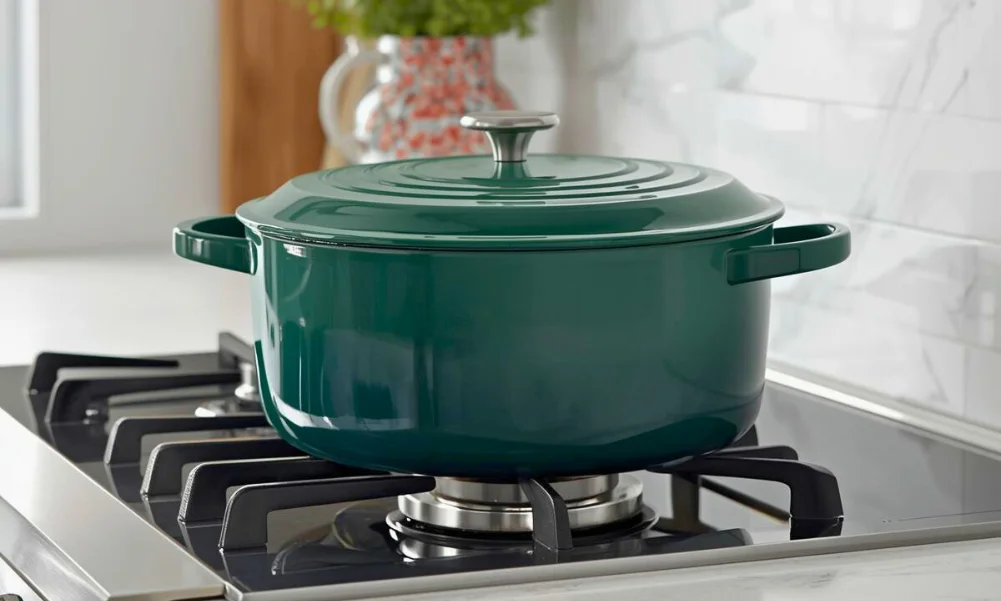
Enameled cast iron cookware is often viewed as a premium option that combines the durability of cast iron with a more convenient cooking surface. It is widely used for braising, slow cooking, baking, and dishes that benefit from steady heat.
At the same time, enameled cast iron is frequently misunderstood. Some buyers assume it requires no care, behaves like non-stick cookware, or lasts indefinitely without attention. These assumptions can lead to misuse and early damage.
This article explains how enameled cast iron cookware actually performs in everyday kitchens. It outlines its strengths, its limitations, and the care practices that help extend its lifespan. The goal is to help readers decide whether it fits their cooking style and expectations.
Quick Answer: Is Enameled Cast Iron Worth It?
Enameled cast iron cookware offers excellent heat retention without the need for seasoning. It handles acidic foods better than raw cast iron and works well for slow cooking and oven-based recipes.
However, the enamel layer requires care and can chip or crack if mishandled. Enameled cast iron is best suited for steady cooking rather than high-impact or high-motion use.
Its value depends on whether its strengths align with how it will be used. It is most valuable for cooks who frequently braise, simmer, or bake and less suitable for high-motion or high-heat stovetop cooking.
What Enameled Cast Iron Cookware Is
Enameled cast iron cookware consists of a cast iron base coated with a layer of enamel. Each component plays a distinct role in cooking performance and maintenance.
Cast Iron Base Explained
The core of enameled cast iron cookware is traditional cast iron. This material is thick and dense, allowing it to absorb and retain heat effectively.
Once heated, cast iron provides a stable cooking environment. Temperature changes occur slowly, which supports even cooking over longer periods.
This thermal stability makes cast iron well suited for braising, simmering, and baking.
What the Enamel Coating Does
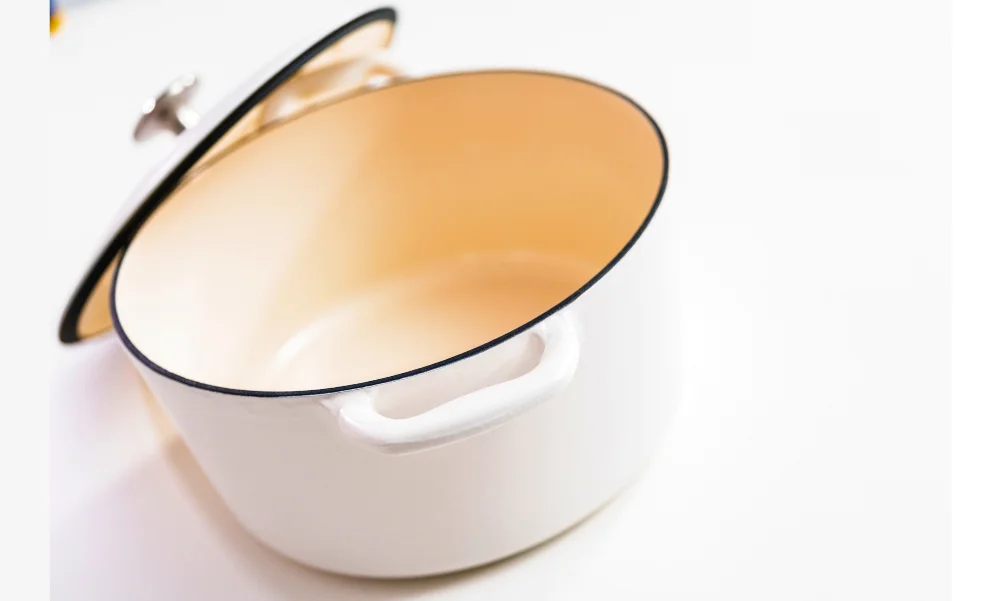
The enamel coating is a glass-based layer fused to the cast iron surface at high temperatures. This coating creates a smooth, non-reactive barrier between the iron and food.
Because the enamel prevents direct contact with the metal, it eliminates the need for seasoning. It also allows acidic ingredients, such as tomatoes or wine, to be used without affecting flavor or damaging the surface.
The enamel layer improves ease of cleaning and adds visual appeal, but it also introduces new care considerations. While the enamel changes surface behavior and maintenance needs, it does not alter the underlying heat retention of the cast iron itself.
🔗 Related: Cast Iron vs Enameled Cast Iron: Cooking and Care Compared
How Enameled Cast Iron Cooks
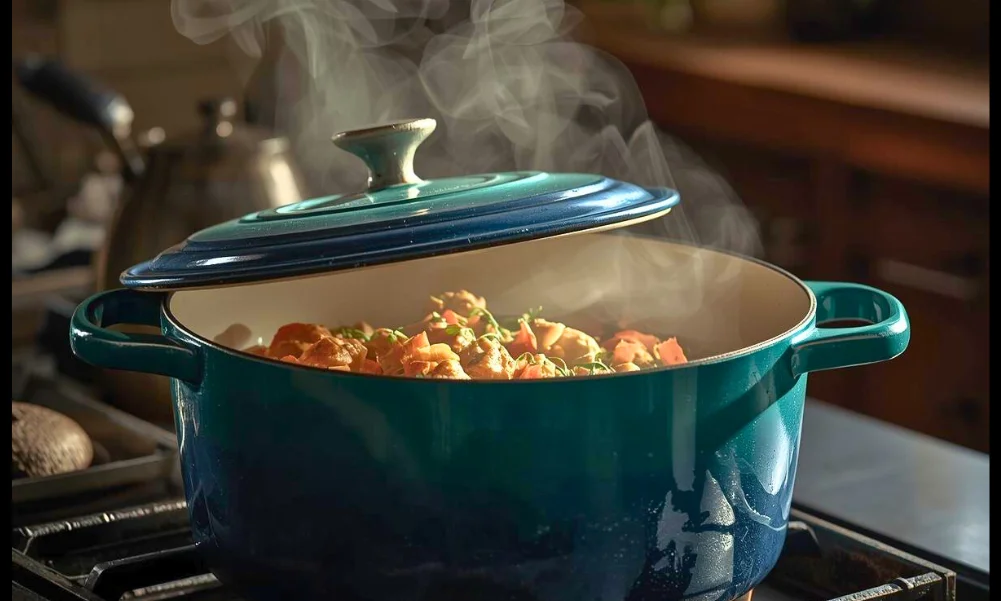
Enameled cast iron favors thermal stability over responsiveness, which shapes how it should be used on the stovetop. Enameled cast iron cookware behaves differently from lighter materials because of its mass and coated surface. Understanding this behavior helps set realistic expectations.
Heat Retention and Distribution
Enameled cast iron heats slowly but evenly. The thick cast iron base absorbs heat gradually and distributes it across the cooking surface once fully heated.
This slow heating curve reduces temperature fluctuations during cooking. As a result, foods cook steadily rather than reacting sharply to burner adjustments.
For recipes that benefit from consistent heat, such as stews or braises, this stability supports reliable results.
Cooking With Acidic Foods
One of the main advantages of enameled cast iron is its ability to handle acidic ingredients. The enamel layer prevents iron from reacting with foods like tomatoes, vinegar, or wine.
This makes enameled cast iron suitable for long-simmered sauces and braised dishes where acidity would compromise raw cast iron seasoning.
The surface remains neutral, preserving flavor and reducing maintenance concerns associated with acidic cooking.
Searing, Braising, and Baking
Enameled cast iron performs well for searing when properly preheated. Once hot, it can brown meats effectively, although it requires patience during the preheating phase.
Braising is where enameled cast iron excels. The combination of heat retention and a tight-fitting lid helps maintain moisture and temperature over long cooking times.
In the oven, enameled cast iron transitions easily from stovetop to baking. Its stability supports bread baking, casseroles, and slow-roasted dishes.
Pros of Enameled Cast Iron Cookware
Enameled cast iron offers several advantages that appeal to cooks seeking durability without the maintenance demands of raw cast iron.
No Seasoning Required
Unlike raw cast iron, enameled cast iron does not require seasoning to maintain a cooking surface. The enamel coating provides a consistent, non-reactive surface from the start.
This simplifies ownership and reduces the learning curve for cooks unfamiliar with seasoning techniques.
Non-Reactive Cooking Surface
The enamel barrier prevents metallic interaction with food. This allows for broader recipe flexibility, including acidic and delicate dishes.
Flavor neutrality makes enameled cast iron suitable for sauces, soups, and recipes that rely on subtle seasoning balance.
Oven-to-Table Versatility
Enameled cast iron cookware is designed to tolerate oven temperatures commonly used in home cooking. Its appearance also makes it suitable for serving directly at the table.
This versatility reduces the need for transferring food between containers and helps retain heat during serving.
Cons and Limitations to Understand
Despite its strengths, enameled cast iron is not maintenance-free or universally suitable.
Enamel Can Chip or Crack
The enamel coating, while durable, is not immune to damage. Impacts, sudden temperature changes, or repeated contact with metal utensils can cause chipping or cracking.
Once enamel damage occurs, the cookware may lose its protective barrier and become less suitable for cooking.
Heavy Weight
Enameled cast iron retains the weight of traditional cast iron. Lifting, pouring, and cleaning can be challenging, especially when the cookware is full.
Storage also requires consideration, as heavier cookware places stress on shelves and racks.
Not Ideal for High-Impact Use
High-motion cooking techniques, such as frequent tossing or rapid temperature changes, are not well suited to enameled cast iron.
The material performs best when used deliberately rather than aggressively.
Enameled Cast Iron vs Raw Cast Iron

Comparing enameled cast iron with raw cast iron highlights the trade-offs between convenience and repairability.
Maintenance Differences
Raw cast iron requires seasoning and regular oiling. Enameled cast iron eliminates seasoning but requires protection of the enamel surface.
While raw cast iron can often be restored after damage, enamel damage is permanent.
Cooking Flexibility
Enameled cast iron offers greater flexibility with acidic foods. Raw cast iron performs better for high-heat cooking and can be repaired more easily.
Choosing between them depends on whether ease of use or long-term resilience is the priority.
🔗 Related: Carbon Steel vs Cast Iron Cookware
Enameled Cast Iron vs Stainless Steel
Stainless steel cookware differs significantly in behavior and care.
Heat Control
Stainless steel responds more quickly to heat adjustments. Enameled cast iron prioritizes heat stability over responsiveness.
Acidic Cooking
Both materials handle acidic foods well. Stainless steel does so through non-reactivity, while enameled cast iron relies on its enamel coating.
Everyday Use vs Specialty Use
Stainless steel supports a wider range of everyday cooking tasks. Enameled cast iron excels in slow, steady cooking rather than quick stovetop use.
🔗 Related: Stainless Steel Cookware Sets: What Matters and What Doesn’t
How to Care for Enameled Cast Iron Properly
Proper care extends the lifespan and performance of enameled cast iron cookware.
Cleaning Without Damaging Enamel
Soft sponges and non-abrasive cleaners help protect the enamel surface. Harsh scrubbing tools can wear or scratch the coating.
Allow cookware to cool before washing to avoid thermal stress.
Heat Management Tips
Gradual preheating reduces the risk of thermal shock. High heat is rarely necessary, as the material retains heat effectively once warmed.
Avoid placing hot cookware under cold water or on cold surfaces.
Storage and Handling
Using protective liners when stacking cookware helps prevent enamel chipping. Lids should be stored carefully to avoid contact with the cooking surface.
Common Myths About Enameled Cast Iron
“It’s Completely Maintenance-Free”
Enameled cast iron requires less maintenance than raw cast iron but still benefits from careful use and cleaning.
“It Lasts Forever No Matter How You Use It”
While durable, enameled cast iron can be damaged through misuse. Longevity depends on proper handling.
“It’s Just Cast Iron With Paint”
The enamel coating is a specialized glass layer, not decorative paint. It changes how the cookware behaves and must be treated accordingly.
Who Enameled Cast Iron Is Best For
Enameled cast iron suits cooks who prepare slow-cooked meals, braises, and oven-based dishes. It appeals to those who value steady heat and ease of cooking with acidic ingredients.
When Another Material Is Better: Cooks who prioritize lightweight cookware, fast heat response, or frequent tossing may prefer stainless steel or carbon steel for daily use.
Final Takeaway: Should You Choose Enameled Cast Iron?
Enameled cast iron cookware offers reliable performance for specific cooking styles. Its strengths lie in heat retention, versatility with acidic foods, and oven use.
Understanding its limitations helps prevent damage and disappointment. When matched with appropriate tasks and care, enameled cast iron can be a valuable part of a well-rounded kitchen.
Frequently Asked Questions
Can enameled cast iron chip?
Yes. Impacts and thermal shock can damage the enamel coating.
Is enameled cast iron safe for acidic foods?
Yes. The enamel coating prevents metal interaction with acidic ingredients.
Does enameled cast iron need seasoning?
No. The enamel surface eliminates the need for seasoning.
Can enameled cast iron go in the dishwasher?
Hand washing is recommended to protect the enamel and extend lifespan.