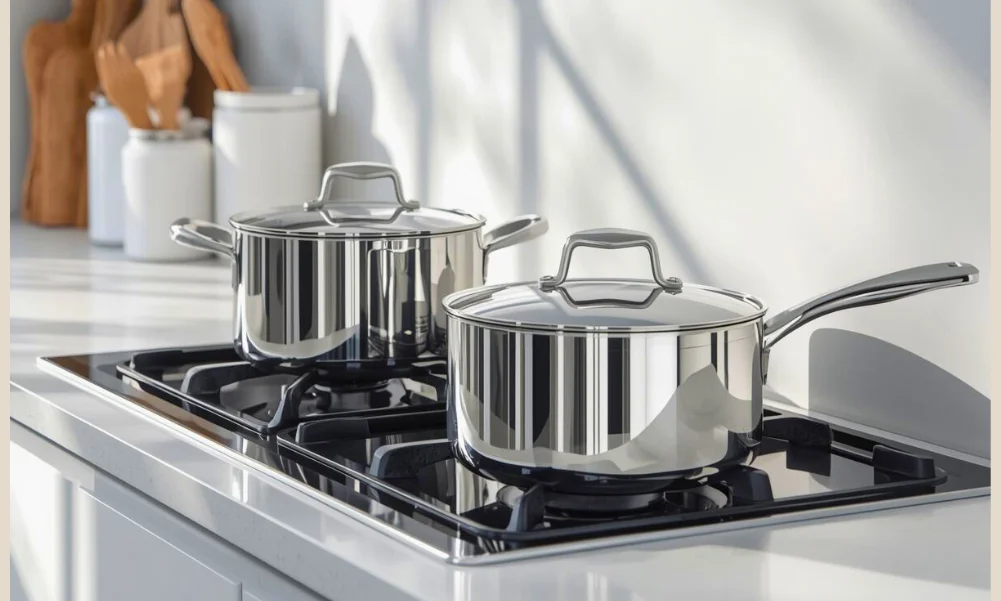
Stainless steel cookware is often considered the safest and most versatile option for home kitchens. It is non-reactive, durable, and suitable for a wide range of cooking tasks, from boiling and simmering to searing and sauce-making.
Despite this reputation, many buyers feel overwhelmed when choosing a stainless steel cookware set. Marketing language emphasizes ply counts, steel grades, finishes, and oversized sets, making it difficult to tell which features affect cooking performance and which are mostly cosmetic.
This article explains stainless steel cookware in practical terms. It focuses on the construction choices that influence heat control, durability, and daily usability, while also identifying features that matter far less than advertising suggests. The goal is to help home cooks choose cookware based on how they actually cook, not on specifications alone.
This guide is written for home cooks choosing stainless steel for everyday use, not for professional kitchens or specialty collectors.
Quick Answer: What Actually Matters in Stainless Steel Cookware?
In stainless steel cookware sets, construction matters more than brand or appearance. Multi-layer construction with an aluminum or copper core has the greatest impact on heat distribution and cooking control.
Steel grade influences corrosion resistance but does not significantly change cooking performance. Extremely high ply counts and oversized sets often add cost without meaningful benefits.
The most suitable set is one that matches real cooking habits, includes commonly used pieces, and balances heat performance with manageable weight.
- Core construction (aluminum or copper layers)
- Practical piece selection
- Balanced weight and handle design
What Stainless Steel Cookware Is and Why It’s Used
Stainless steel cookware is built around one primary advantage: it does not react with food. This makes it reliable for a wide range of ingredients and cooking methods.
Why Stainless Steel Is Considered Non-Reactive
Stainless steel contains chromium, which forms a thin protective layer on the surface of the metal. This layer prevents rust and limits chemical interaction with food.
As a result, stainless steel does not alter the flavor of acidic ingredients such as tomatoes, wine, or citrus. This property makes it well suited for sauces, braises, and long simmering.
For many home cooks, non-reactivity is the main reason stainless steel becomes the default cookware choice.
Why Stainless Steel Alone Does Not Conduct Heat Well
Although stainless steel is durable and stable, it is a poor conductor of heat on its own. Heat tends to concentrate where the burner contacts the pan, leading to uneven cooking if stainless steel is used without additional layers.
To address this limitation, most stainless steel cookware incorporates a core of aluminum or copper. These materials spread heat more evenly across the cooking surface and improve temperature control.
This layered construction explains why cookware performance depends more on what lies beneath the steel than on the steel itself.
Induction compatibility depends on base construction rather than surface steel grade, which is explained further in What Is Induction Cookware and How Does It Work?
Stainless Steel Grades Explained (18/10, 18/8, 18/0)
Stainless steel cookware is often labeled with numbers such as 18/10 or 18/8. These figures refer to the composition of the steel, not to how the cookware heats or cooks food.
What the Numbers Mean
The first number represents the percentage of chromium in the steel. Chromium improves corrosion resistance and helps stainless steel maintain its protective surface layer.
The second number represents the percentage of nickel. Nickel enhances resistance to rust and gives stainless steel a brighter finish.
For example, 18/10 stainless steel contains approximately 18 percent chromium and 10 percent nickel. An 18/8 formulation contains slightly less nickel, while 18/0 stainless steel contains no nickel.
Does Steel Grade Affect Cooking Performance?
Steel grade has very little effect on how food cooks. Heat distribution and responsiveness are determined primarily by the core material beneath the steel, not by the stainless steel surface itself.
In everyday cooking, the difference between 18/10 and 18/8 stainless steel is largely cosmetic and related to corrosion resistance rather than performance. Both grades behave similarly on the stovetop.
The absence of nickel in 18/0 stainless steel can make the cookware slightly less resistant to corrosion, but it also allows the steel to be magnetic. This property is why 18/0 stainless steel is often used for induction-compatible cookware bases.
When Steel Grade Actually Matters
Steel grade matters most for durability and compatibility, not for cooking results. Kitchens with hard water or frequent dishwasher use may benefit from higher nickel content for corrosion resistance.
For induction cooking, magnetic properties matter more than composition alone. Many stainless steel cookware sets use layered construction to ensure compatibility regardless of surface grade.
Ply Construction: The Feature That Matters Most
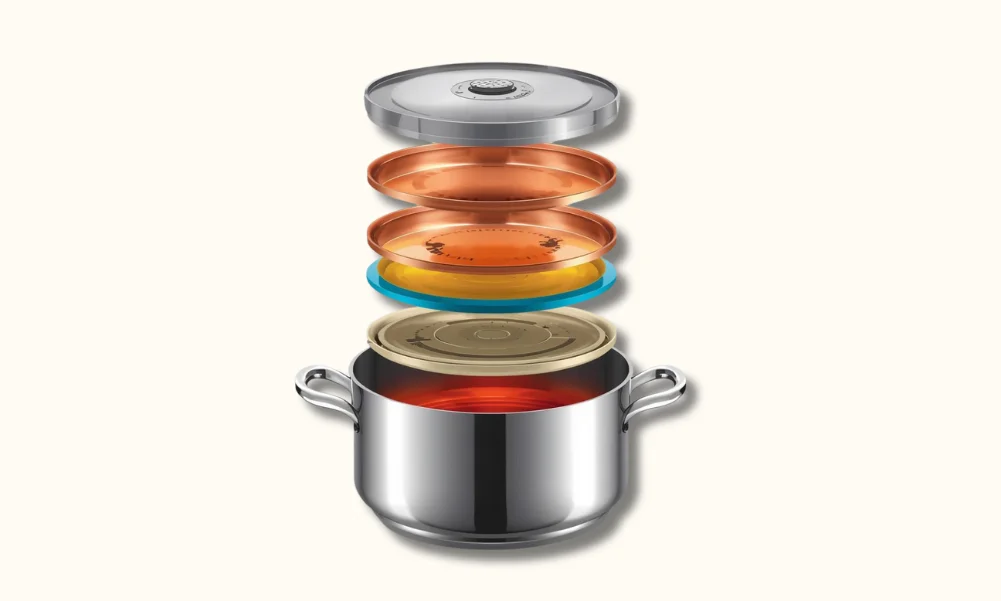
Among all stainless steel cookware specifications, ply construction has the greatest impact on cooking performance. It determines how evenly the pan heats and how it responds to temperature changes.
What “Ply” Means in Cookware
Ply refers to the number of bonded layers in the cookware. Each layer serves a purpose. Stainless steel provides durability and a non-reactive surface, while aluminum or copper layers improve heat conduction.
These layers are bonded together to function as a single unit. This construction spreads heat more evenly across the pan and reduces hot spots.
3-Ply vs 5-Ply vs Higher Ply Counts
Three-ply cookware typically consists of stainless steel on the exterior and interior with an aluminum or copper core. This design offers a strong balance of performance, weight, and cost.
Five-ply cookware adds additional layers, which can increase heat retention and stability. However, the improvement over three-ply is often incremental rather than dramatic.
Cookware marketed as seven-ply or higher tends to add weight and cost without proportional gains in everyday cooking performance. For most home kitchens, three-ply or well-designed five-ply cookware provides sufficient control.
Fully Clad vs Disc-Bottom Construction
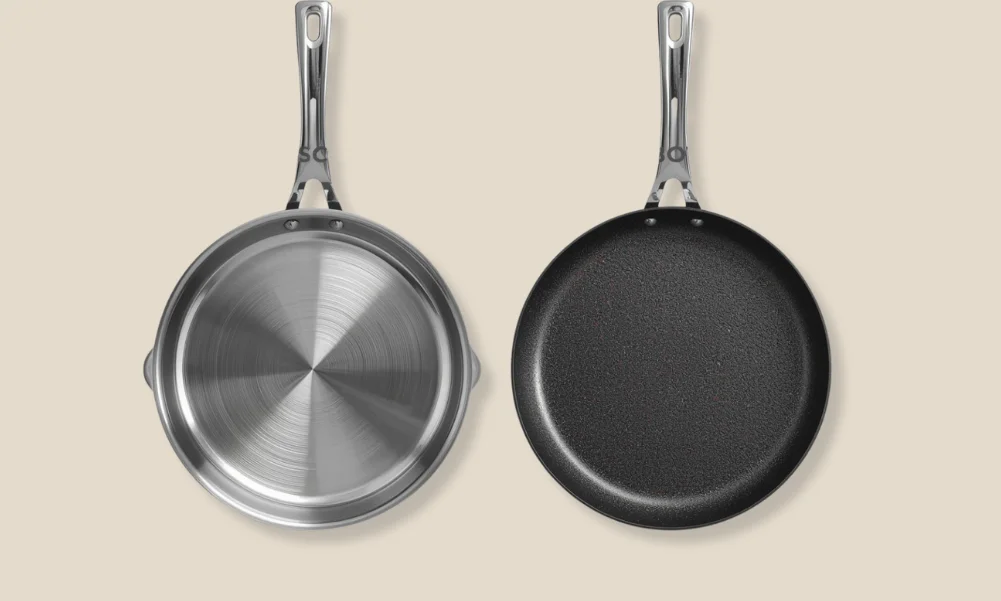
Fully clad cookware has layered construction that extends up the sides of the pan. This allows heat to travel evenly across the entire cooking surface and sidewalls.
Disc-bottom cookware concentrates the heat-spreading material at the base only. This design can work well for boiling and simmering but offers less control for sautéing or sauce reduction.
Choosing between these constructions depends on cooking style rather than quality alone.
Core Materials: Aluminum vs Copper
The performance of stainless steel cookware depends heavily on the material used in its core. Stainless steel provides durability and food safety, but the core determines how heat moves through the pan.
Aluminum Core Performance
Aluminum is the most common core material in stainless steel cookware. It conducts heat efficiently and distributes it evenly across the cooking surface.
In practical use, aluminum-core cookware responds predictably to temperature changes. When heat is increased or reduced, the pan adjusts quickly, which helps prevent scorching and uneven cooking.
Aluminum also keeps cookware weight manageable. This balance of performance and usability explains why aluminum cores are widely used in mid-range and professional cookware sets.
Copper Core Performance
Copper conducts heat more efficiently than aluminum. It responds faster to temperature changes, which allows for precise control during cooking.
This responsiveness is valuable for tasks such as sauce preparation, where small temperature adjustments matter. However, copper cores increase cost and weight, and the performance advantage may be subtle for everyday cooking.
Copper-core cookware often appeals to experienced cooks who value fine control. For general home use, aluminum cores typically provide sufficient performance without added expense.
🔗 Related: Copper Cookware: Performance, Maintenance, and Cost Trade-Offs
Handles, Lids, and Build Quality
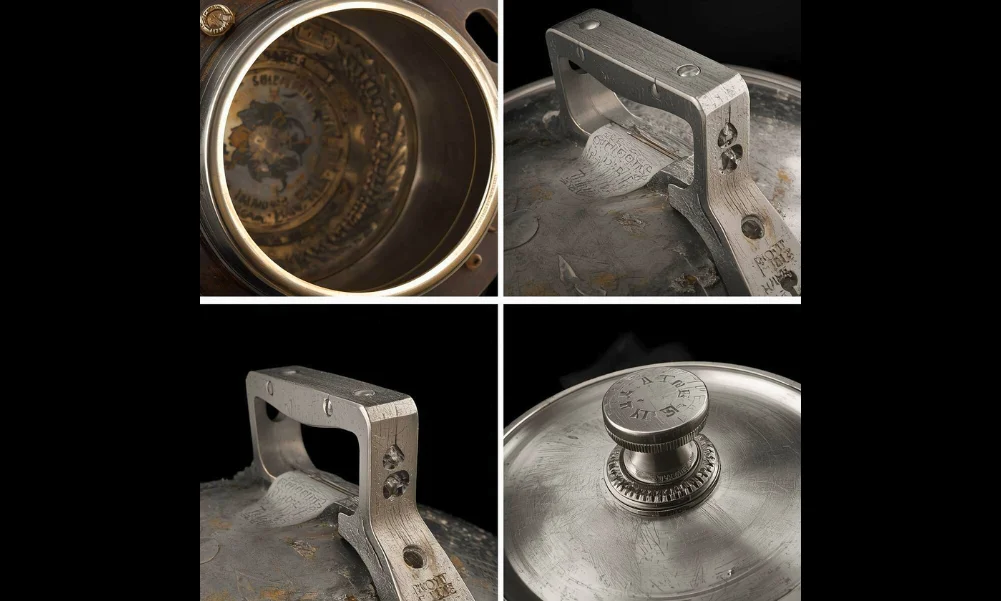
Construction details beyond the cooking surface affect comfort, durability, and long-term satisfaction. These elements are often overlooked during purchasing decisions.
Riveted vs Welded Handles
Riveted handles are attached through the body of the cookware. This method provides strong attachment but creates interior rivets that can trap food and require extra cleaning.
Welded handles attach externally without penetrating the pan interior. This design simplifies cleaning but relies on manufacturing quality for long-term durability.
Both methods can perform well when properly constructed. The choice often comes down to cleaning preference rather than strength alone.
🔗 Related: Riveted vs Welded Cookware Handles: Which Lasts Longer
Lid Fit and Material
Well-fitting lids help control moisture and heat. Stainless steel lids are durable and allow the pan to retain heat effectively.
Glass lids offer visibility but may release heat more readily and are more prone to breakage. The practical impact depends on cooking habits and personal preference.
Weight Balance and Ergonomics
Cookware weight influences stability and comfort. Heavier pans retain heat better but can be tiring to handle. Lighter pans are easier to maneuver but may respond more quickly to temperature changes.
Balanced cookware distributes weight evenly between the handle and the body. This balance improves control during pouring and stirring.
What Doesn’t Matter as Much as Marketing Claims
Some features receive disproportionate attention despite having limited impact on everyday cooking.
Mirror Polishes and Exterior Finishes
Highly polished exteriors affect appearance rather than performance. Brushed and polished finishes behave similarly on the stovetop.
Choosing a finish based on ease of cleaning often makes more sense than focusing on appearance.
Extremely High Ply Counts
Very high ply counts increase weight and cost without providing meaningful benefits for most cooking tasks. Beyond a certain point, additional layers offer diminishing returns.
For home kitchens, thoughtful construction matters more than the number printed on the packaging.
Oversized Cookware Sets
Large sets often include pieces that see little use. These extra items add cost and storage demands without improving daily cooking capability.
Selecting fewer, well-chosen pieces usually leads to greater satisfaction over time.
How Many Pieces Do You Actually Need?
Stainless steel cookware sets are often marketed with a high piece count. In practice, most home cooks rely on a small core group of items for daily cooking.
Pieces You Will Use Regularly
For most kitchens, a few items handle the majority of cooking tasks. A medium saucepan supports sauces, grains, and reheating. A larger pot is useful for pasta, soups, and batch cooking. A skillet handles sautéing, browning, and shallow frying.
These pieces see frequent use because they align with common cooking routines rather than special occasions.
Pieces That Often Go Unused
Small specialty pans, oversized stockpots, and duplicate lids often remain in storage. While they may appear useful in theory, they rarely justify their space in everyday kitchens.
Including rarely used items increases the cost of a set without improving its practical value.
Cookware Sets vs Buying Individual Pieces
Cookware sets offer convenience and visual consistency. However, buying individual pieces allows cooks to prioritize quality and select sizes that match their habits.
For many buyers, starting with a smaller set or building gradually leads to a more functional collection over time.
🔗 Related: Is a Cookware Set Better Than Buying Pieces Individually
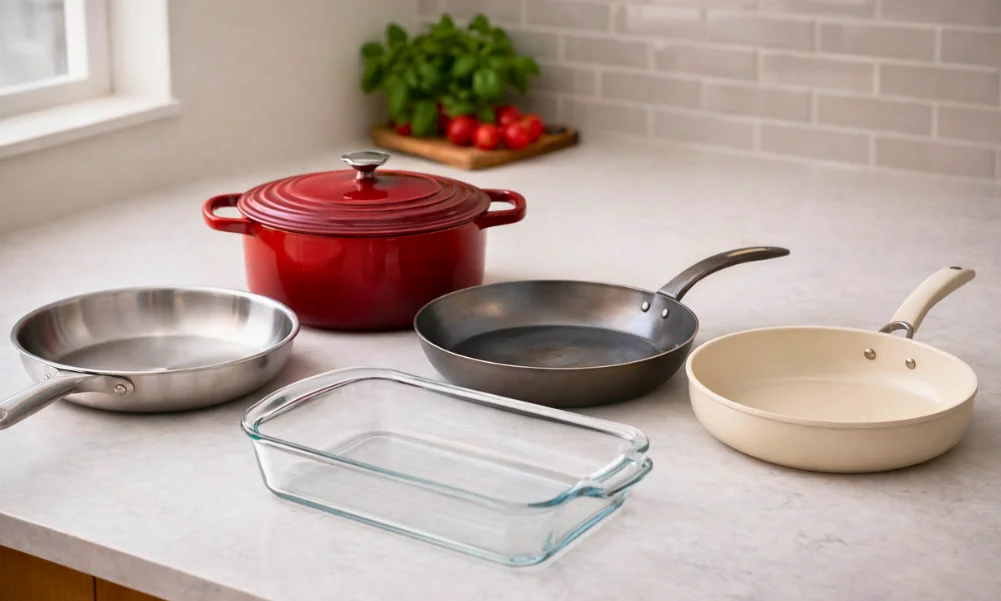
Stainless Steel Compared With Other Cookware Materials
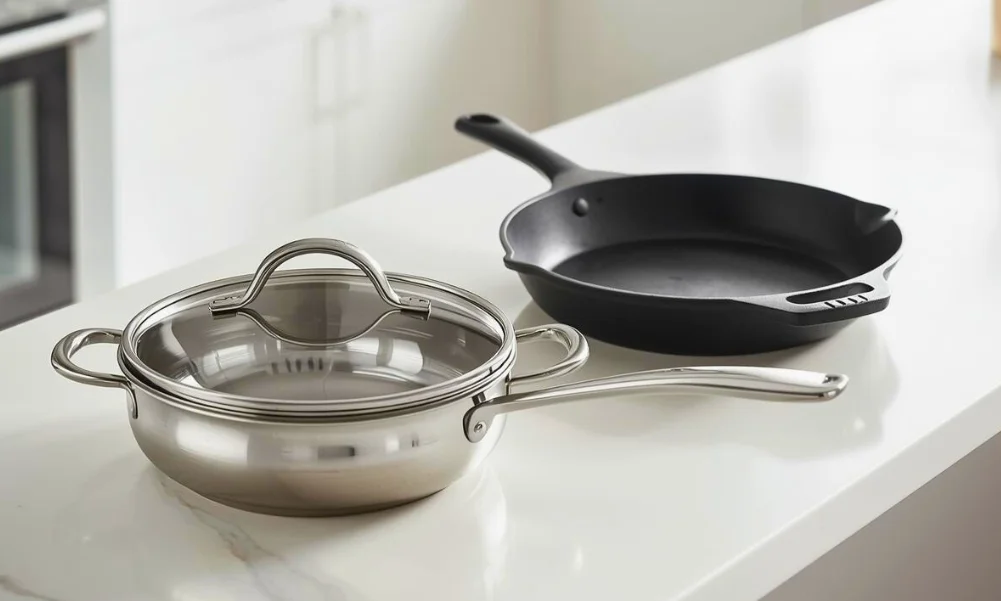
Understanding how stainless steel compares with other materials helps clarify its strengths and limitations.
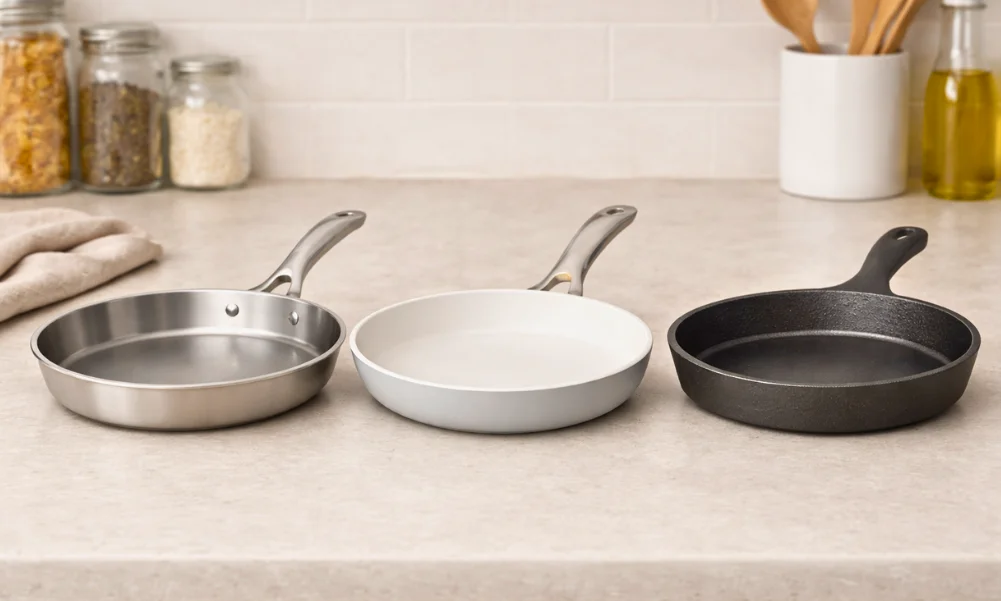
Stainless Steel vs Non-Stick Cookware
Stainless steel handles higher heat and lasts longer than non-stick cookware. It requires more attention to technique, particularly for preventing sticking.
Non-stick cookware offers convenience but sacrifices durability and heat tolerance. Many kitchens benefit from using both materials for different tasks.
🔗 Related: Stainless Steel vs Non-Stick Cookware
Stainless Steel vs Cast Iron
Cast iron retains heat exceptionally well and excels at searing. However, it is heavier and requires more maintenance.
Stainless steel offers easier handling and lower maintenance while providing sufficient heat control for most cooking tasks.
🔗 Related: Cast Iron vs Enameled Cast Iron
Stainless Steel vs Carbon Steel
Carbon steel shares some characteristics with cast iron but is lighter and more responsive. It requires seasoning and maintenance similar to cast iron.
Stainless steel avoids seasoning requirements and offers broader versatility, particularly for acidic cooking.
🔗 Related: Carbon Steel vs Cast Iron Cookware
Who Stainless Steel Cookware Is Best For
Stainless steel cookware suits cooks who value durability, versatility, and long-term reliability. It supports a wide range of cooking methods and ingredients without reacting with food.
Cooking Styles That Benefit Most
Home cooks who prepare sauces, soups, grains, and proteins benefit from stainless steel’s stability and heat tolerance. It is especially useful for recipes that involve deglazing or acidic components.
When Stainless Steel Is Not Ideal
Cooks who prioritize effortless release or primarily prepare delicate foods may prefer non-stick cookware for certain tasks. Stainless steel also requires learning basic heat control techniques to avoid sticking.
Final Takeaway: How to Choose a Stainless Steel Cookware Set
Choosing stainless steel cookware becomes simpler when attention is placed on construction rather than marketing claims. Multi-layer construction with a well-designed core affects cooking performance far more than steel grade or finish.
A practical set includes commonly used pieces, manageable weight, and durable handles. Understanding trade-offs leads to better long-term satisfaction than chasing maximum specifications.
Frequently Asked Questions
Is five-ply cookware better than three-ply?
Five-ply cookware can offer slightly improved heat stability, but the difference is often small for everyday cooking.
Does stainless steel cookware need seasoning?
Stainless steel does not require seasoning, although proper preheating helps reduce sticking.
Can stainless steel cookware be used on induction cooktops?
Most modern stainless steel cookware is induction-compatible, especially when designed with magnetic layers.
Why does food stick to stainless steel?
Sticking usually results from improper heat control or insufficient oil rather than a flaw in the cookware.