Quick Answer
Ceramic and granite cookware are both forms of coated cookware, but they differ in coating chemistry, wear behavior, and lifespan patterns. Ceramic cookware relies on a silica-based coating, while granite cookware typically uses a PTFE-based non-stick coating with mineral fillers.
Neither material is stone. Their differences tend to appear most clearly in heat tolerance, surface longevity, and how performance changes over time.
What “Ceramic” and “Granite” Mean in Cookware Terms
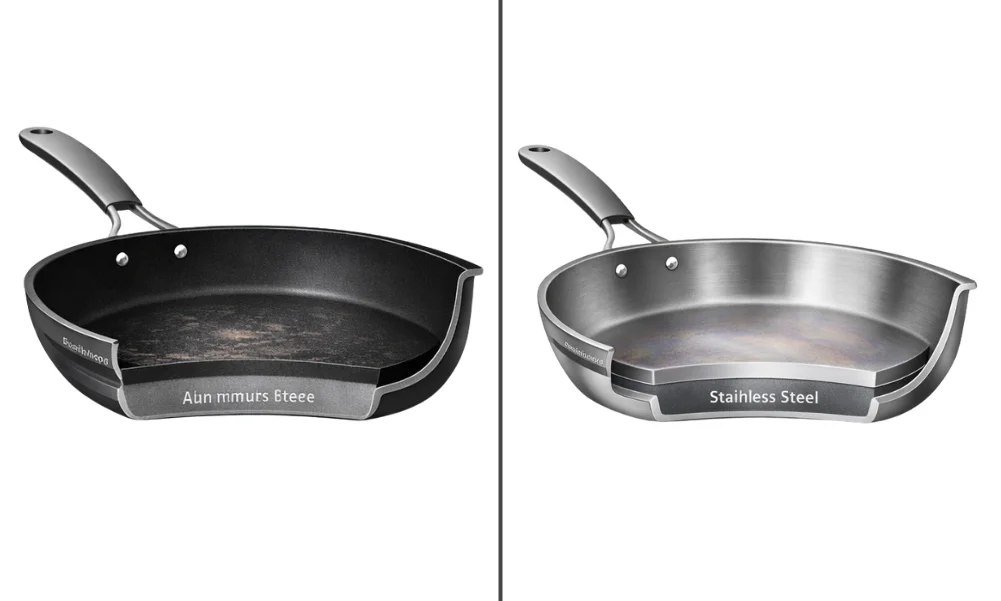
Ceramic and granite cookware are naming categories rather than base materials. Both describe surface treatments applied to a metal core.
Ceramic cookware usually refers to cookware coated with a silica-based, inorganic coating. This coating is applied over aluminum or steel to create a smooth, non-stick surface.
Granite cookware refers to non-stick cookware with a mineral-reinforced coating. The appearance mimics stone, but the coating remains polymer-based.
In both cases, the base metal largely governs heat distribution. The coating largely governs food release, wear rate, and surface limits.
This distinction helps explain why ceramic and granite cookware behave similarly in some situations and differently in others. They occupy the same functional category while relying on different coating systems.
Surface Behavior and Heat Sensitivity
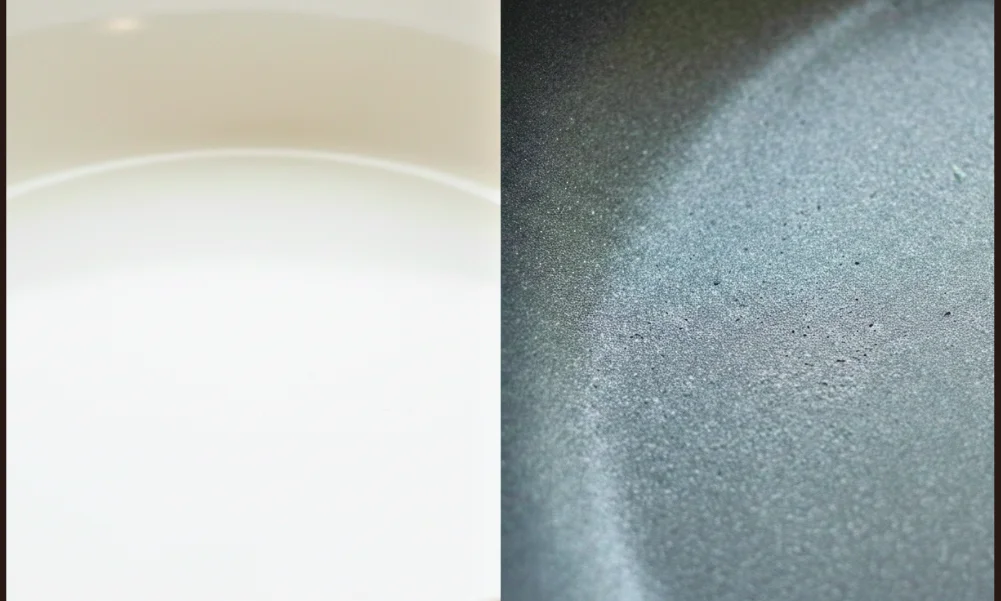
Ceramic and granite cookware respond differently to heat stress. The difference reflects surface system rather than metal strength.
Ceramic coatings generally tolerate moderate heat but lose non-stick performance gradually. Surface smoothness declines even when the cookware appears intact.
Granite coatings often maintain release performance longer under controlled heat. However, they may show sharper decline when overheated repeatedly.
Neither coating typically benefits from sustained high heat. Empty heating tends to accelerate surface wear in both categories.
These behaviors help explain why both cookware types tend to perform more predictably under moderate, consistent heat than under extreme temperature exposure. Surface change appears before structural damage in most cases.
Longevity and Wear Patterns Over Time
Ceramic and granite cookware age primarily through surface change rather than structural failure. The difference lies in how quickly coatings lose functional consistency.
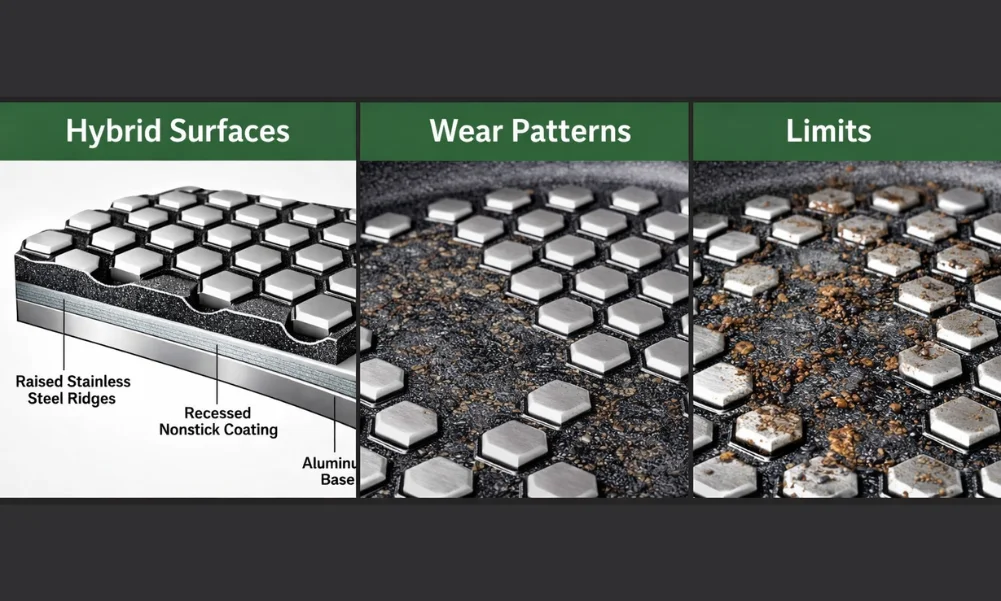
Ceramic coatings tend to lose non-stick performance gradually over time. The surface becomes less slick even when no peeling or cracking is visible.
This decline often feels subtle at first. Food release changes before the coating shows obvious wear.
Granite coatings usually maintain release longer during early use. Once wear begins, performance often declines more unevenly across the surface.
These patterns reflect coating formulation rather than usage error. Both surfaces experience cumulative wear through heat exposure and cleaning contact.
Longevity expectations depend more on coating limits than base metal durability. The metal body often remains usable after surface performance declines.
These coating lifespan patterns align with broader expectations discussed in how long should cookware last.
Safety Boundaries in Ceramic and Granite Cookware
Safety differences between ceramic and granite cookware are surface-based rather than material-based. Neither category presents inherent risk when coatings remain intact and cookware stays stable.
For ceramic cookware, safety concerns relate to surface degradation. Loss of non-stick behavior affects performance predictability rather than immediate safety.
For granite cookware, safety concerns also center on coating condition. Scratches or coating loss change how heat transfers across the surface.
Structural safety depends on the base metal. Warping, instability, or handle loosening signal mechanical limits rather than coating chemistry.
Cosmetic wear alone rarely indicates a safety issue. Behavioral changes provide more reliable signals over time.
Clear indicators of surface and structural decline are outlined in signs your cookware is no longer safe to use.
How Use Patterns Influence Coating Differences
Use frequency shapes how ceramic and granite cookware diverge over time. Occasional use reduces visible differences between the two coatings.
Under frequent use, ceramic coatings tend to lose release consistency sooner. Granite coatings often retain early performance longer before uneven wear appears.
Heat exposure plays a larger role than food type. Repeated temperature stress accelerates surface change in both categories.
Cleaning habits also influence outcomes. Abrasive contact contributes to coating thinning regardless of formulation.
These patterns explain why ownership experiences vary. They reflect coating formulation under repeated stress rather than product quality.
Storage, Handling, and System-Level Effects
Storage and handling affect ceramic and granite cookware similarly. The difference lies in how surface wear becomes visible.
Stacking increases friction between coated surfaces. Repeated contact accelerates wear even when cookware is not actively used.
Granite coatings may mask early wear visually. Ceramic coatings often show performance change before visual cues appear.
Handling stress affects the base metal in both categories. Warping and attachment loosening alter stability regardless of coating type.
These effects develop gradually. They shape long-term condition alongside cooking behavior.
Common Assumptions About Ceramic and Granite Cookware
Ceramic cookware is often viewed as more “natural.” In practice, both categories rely on applied coatings.
Granite cookware is often perceived as more durable. Durability still depends on coating formulation and heat exposure.
Visual texture does not equal surface strength. Stone-like appearance does not indicate stone performance.
These assumptions simplify material behavior. Construction and coating chemistry explain outcomes more reliably than labels.
So, Which Is Better for Most Home Cooks?
For most home cooks, ceramic and granite cookware offer similar convenience within different wear patterns. Ceramic cookware suits cooks who prioritize smoother surfaces and accept gradual performance decline.
Granite cookware suits cooks who want longer early non-stick performance but manage heat carefully to avoid uneven wear.
Closing Summary
Ceramic and granite cookware share a common coated-metal foundation. Their differences arise from surface system and wear behavior.
Ceramic coatings tend to lose non-stick performance gradually. Granite coatings often retain early performance longer but wear unevenly.
Neither category is universally superior. Understanding their limits supports realistic expectations and predictable long-term use.