Aluminum vs Stainless Steel Cookware: Heat, Durability, and Real-World Use

Quick Answer
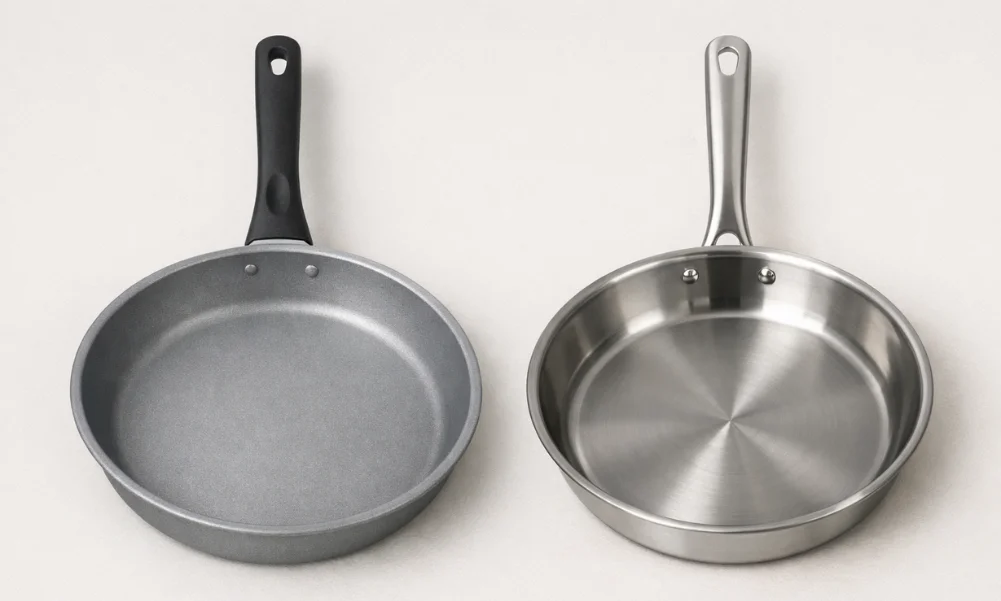
Aluminum and stainless steel cookware differ in how they conduct heat, respond to stress, and age over time. Aluminum tends toward rapid heat response and lightweight handling, while stainless steel tends toward structural stability and long-term durability.
Neither material is universally superior. Their differences appear most clearly in heat behavior, wear patterns, and maintenance expectations rather than immediate cooking results.
How Aluminum and Stainless Steel Behave Under Heat
Aluminum and stainless steel manage heat in fundamentally different ways. These differences influence everyday cooking behavior and long-term performance.
Aluminum conducts heat quickly. Temperature changes at the burner transfer rapidly across the pan surface.
This responsiveness supports faster adjustments. It can also increase sensitivity to sudden heat input or uneven burner contact.
Stainless steel conducts heat more slowly. Temperature changes spread gradually through the material.
This slower response tends to support greater stability. It tends to limit localized stress during heating and cooling cycles.
Because of these properties, aluminum cookware reacts quickly, while stainless steel resists rapid thermal change. These behaviors influence how each material tolerates repeated use over time.
Construction Differences That Shape Performance
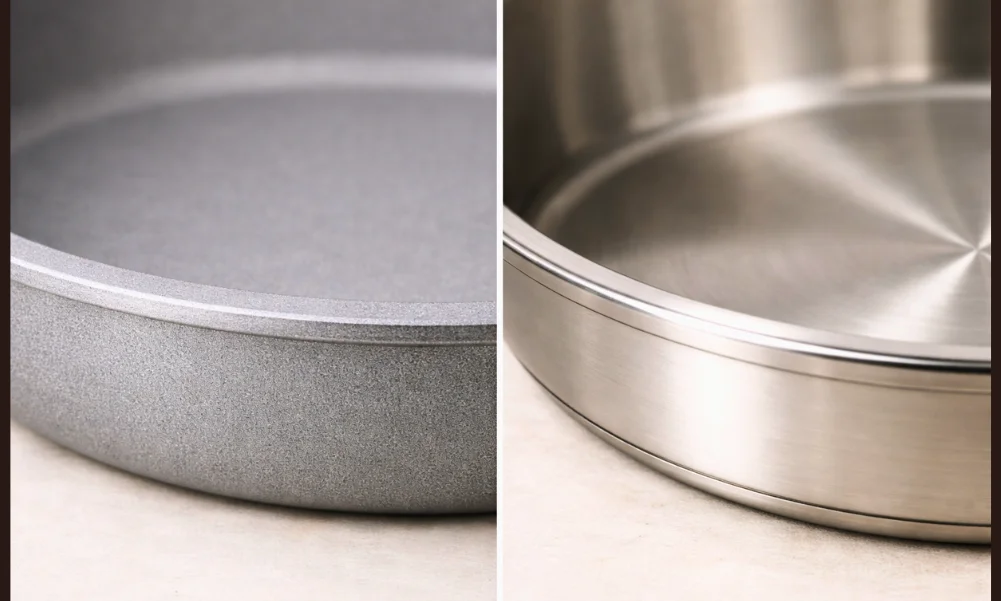
Material behavior alone does not explain cookware performance. Construction plays an important role in both aluminum and stainless steel cookware.
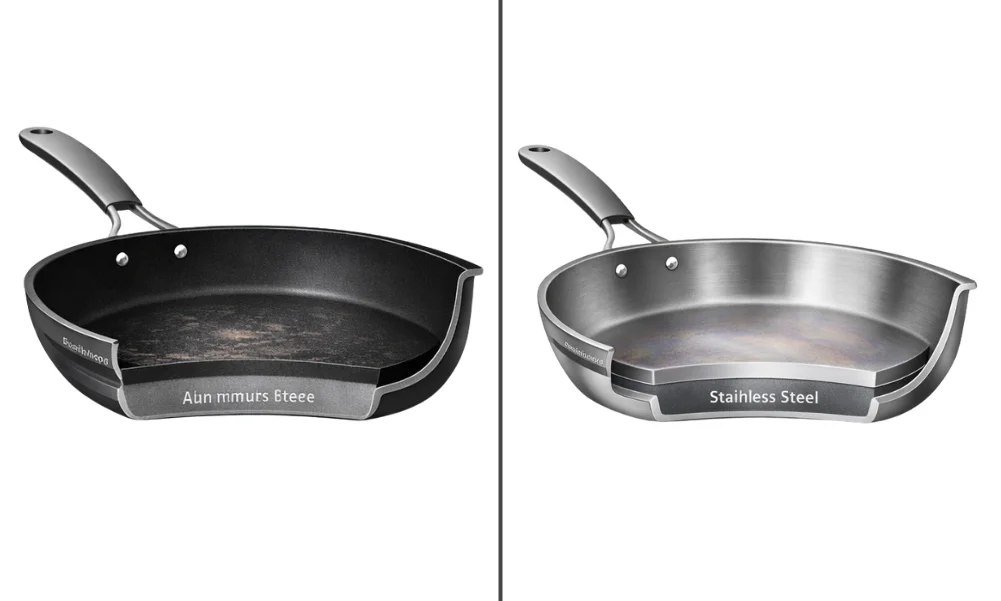
Many aluminum pans rely on thickness to increase stability. Thin aluminum heats very quickly but deforms more easily under stress.
Stainless steel cookware often uses layered construction. An aluminum or copper core helps distribute heat beneath the steel surface.
Bonding quality affects longevity. Poor layer adhesion can lead to separation as cookware expands and contracts.
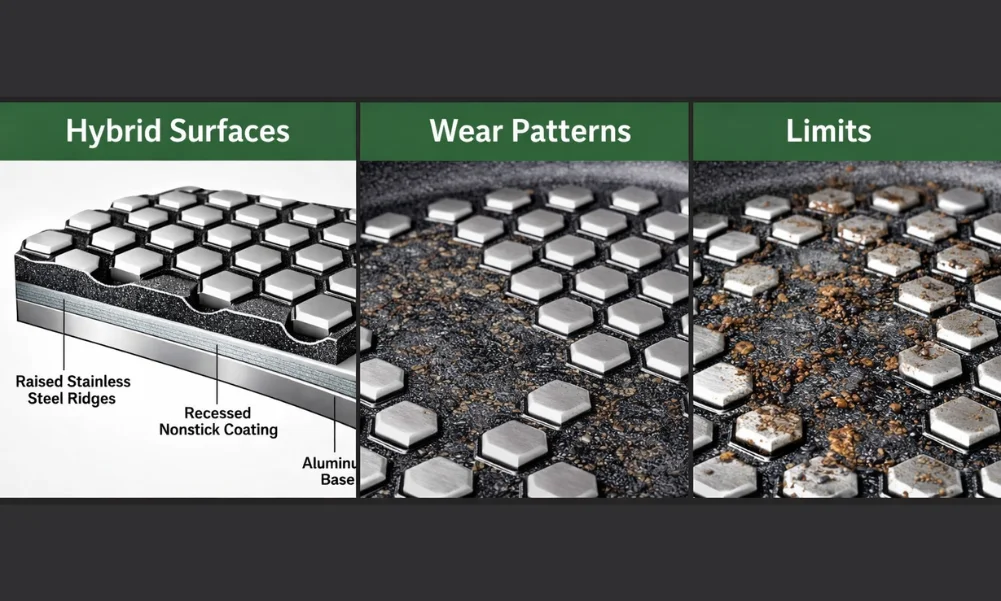
Surface condition also matters. Bare stainless steel resists abrasion, while aluminum surfaces often rely on coatings or treatments.
These construction differences help explain why cookware within the same material category can behave very differently. Performance reflects both material choice and how that material is formed.
Longevity and Wear Patterns Over Time
Aluminum and stainless steel show wear differently as use accumulates. The difference lies in how each material responds to repeated stress.
Aluminum is softer and more flexible. Repeated heating and cooling gradually change its shape.
Warping often appears earlier in thinner aluminum cookware. The change is usually permanent rather than cosmetic.
Stainless steel generally resists deformation more effectively. Its rigidity tends to preserve shape across repeated heat cycles.
Wear on stainless steel appears first as surface changes. Discoloration and sticking develop before structural instability.
Both materials remain usable well after visible changes appear. Longevity depends on construction quality and use frequency rather than appearance alone.
These patterns align with broader lifespan behavior discussed in how long should cookware last.
Safety Boundaries in Aluminum and Stainless Steel Cookware
Safety differences between aluminum and stainless steel are mechanical rather than chemical. Neither material presents inherent risk when cookware remains structurally sound.
For aluminum cookware, safety concerns emerge when deformation affects stability. Warped bases reduce contact with the cooktop and can increase tipping risk.
For stainless steel cookware, safety concerns relate to attachment integrity. Loose handles or layer separation reduce control during handling.
Surface condition plays a secondary role. Scratches or discoloration rarely indicate immediate safety loss.
Clear mechanical warning signs apply to both materials. These indicators are outlined in signs your cookware is no longer safe to use.
Safety boundaries are reached when predictability is lost. That loss usually develops gradually rather than suddenly.
How Use Patterns Influence Material Differences
Use frequency influences how aluminum and stainless steel diverge over time. Light use minimizes most material differences in everyday kitchens.
Under frequent use, aluminum’s responsiveness becomes more noticeable. Rapid heating can increase cumulative stress when temperature changes are abrupt.
Stainless steel absorbs repeated use more gradually. Its slower thermal response reduces stress concentration across cycles.
These differences explain varied ownership experiences. Heavy use magnifies material behavior, while occasional use narrows the gap.
Neither pattern implies superiority. They reflect how materials respond under different usage intensity.
Storage, Handling, and System-Level Effects
Aluminum cookware responds more predictably to even support during storage. Uneven stacking increases the likelihood of shape change over time.
Stainless steel generally tolerates stacking and contact more predictably. Rigid structure limits deformation from static pressure.
Handling stress affects both materials. Lifting, sliding, and impact contribute to long-term condition.
Surface treatments influence wear visibility. Aluminum often shows cosmetic change sooner than stainless steel.
These effects accumulate quietly. Storage and handling shape longevity alongside cooking behavior.
These long-term effects connect closely with cookware storage practices discussed in cookware storage ideas that protect pots and pans.
Common Assumptions About Aluminum and Stainless Steel
Aluminum cookware is sometimes viewed as less durable by default. In practice, durability depends strongly on thickness and construction.
Stainless steel cookware is often perceived as maintenance-free. Surface changes still occur and require realistic expectations.
Cost differences do not define material behavior. Price reflects construction choices rather than inherent safety margins.
These assumptions simplify a more nuanced reality. Material behavior explains outcomes more reliably than labels.
So, Which Material Is Better for Most Home Cooks?
For most home cooks, aluminum and stainless steel perform well when used within their design limits. Aluminum suits cooks who value fast heat response and lightweight handling.
Stainless steel suits cooks who prioritize stability, durability, and predictable long-term behavior.
Closing Summary
Aluminum and stainless steel cookware differ primarily in heat response and structural rigidity. These differences influence how cookware behaves under repeated use and handling.
Aluminum emphasizes responsiveness and lightweight construction. Stainless steel emphasizes stability and resistance to deformation.
Neither material is universally superior. Understanding their behavior supports realistic expectations and predictable long-term use.