Quick Answer
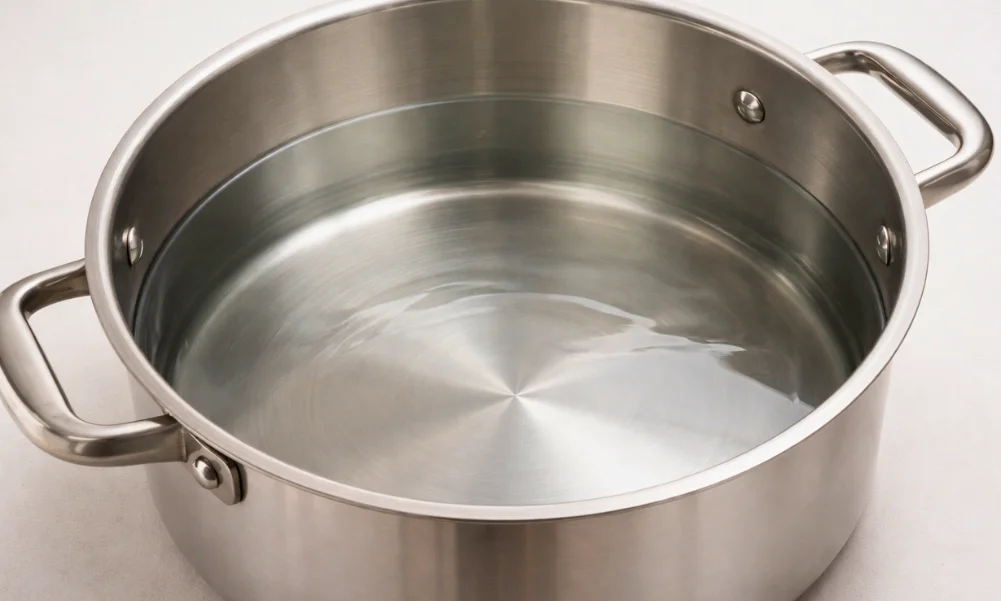
Pasta cookware works best when pot size and shape allow stable boiling and consistent water movement. Performance depends more on vessel geometry and capacity than on cookware material alone.
Most pasta-related problems come from cookware mismatch rather than cooking technique or ingredient choice. In practice, this means choosing a pot that can hold at least 3–4 times the dry pasta volume in water without approaching rim capacity.
What “Pasta Cookware” Actually Refers To
Pasta cookware is not a distinct material category. It refers to cookware that can handle large volumes of water and sustained boiling without instability.
In practice, pasta cookware is defined by size, shape, and load tolerance. The pot must accommodate water movement, starch release, and food expansion.
Tall, narrow pots and wide, shallow pots behave differently under load. These differences affect how water circulates and how evenly heat distributes.
Pasta does not require specialty cookware. It requires cookware that remains stable and predictable when filled and heated.
This distinction helps explain why similar-looking pots perform differently. Behavior depends on geometry and capacity, not branding or labels.
Why Pot Size and Shape Matter More Than Material
Pot size influences how water moves around the pasta. Adequate space allows starch to disperse rather than concentrate.
When cookware is undersized, water movement becomes restricted. Crowding changes how heat and motion interact inside the pot.
Pot shape also affects stability during boiling. Wide bases distribute weight more evenly across the heat source.
Tall, narrow pots concentrate mass vertically. This can increase load stress on handles and rims when filled.
Material still matters, but it acts within these physical limits. Understanding cookware behavior by shape is outlined further in cookware types explained, where geometry and use cases are separated.
Pasta Inserts: What They Change and What They Don’t
Pasta inserts function as lifting and draining aids rather than performance enhancers. They change how pasta is removed from the pot, not how it cooks.
An insert reduces direct handling of hot water. It allows pasta to be lifted as a single mass once cooking ends.
However, inserts also reduce usable pot volume. The basket walls displace water and restrict internal movement.
This restriction changes circulation during boiling. Water moves around the insert rather than freely through the pot.
As a result, inserts do not prevent sticking, foaming, or uneven motion. They trade internal space for convenience at the end of cooking.
Understanding this distinction helps explain why inserts feel helpful but do not solve performance issues.
Pasta inserts make sense when lifting convenience matters more than maximum boiling capacity. They are less suitable when cooking large batches or when pot size is already marginal.
Structural Stress and Insert Weight
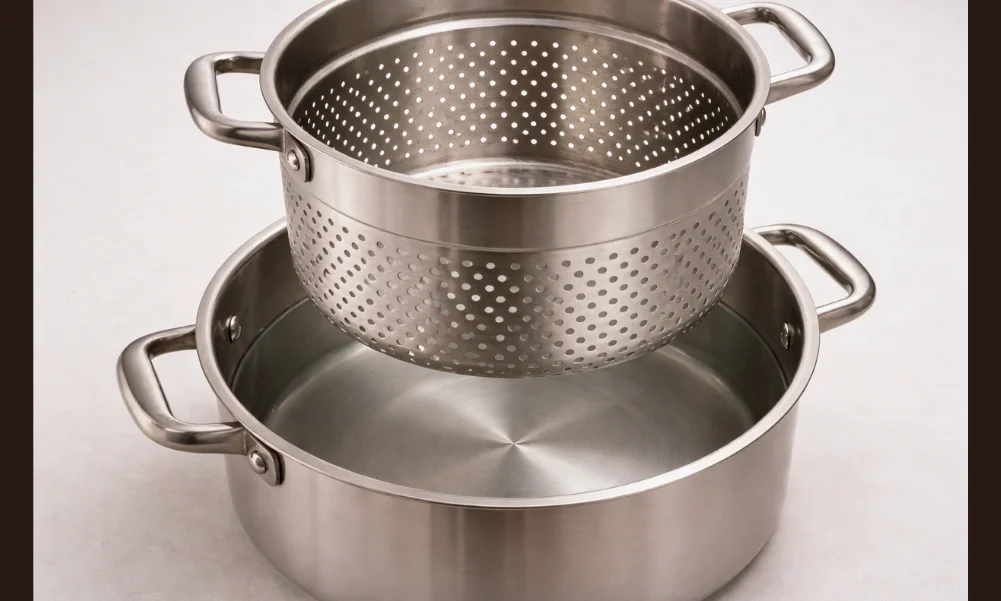
A filled pasta insert concentrates weight in a vertical column. That load transfers directly to the pot’s rim and handle attachments.
Lifting increases stress at connection points. This stress differs from the distributed load created by a full pot.
Handles experience combined forces from heat expansion and weight. Repeated lifting accelerates fatigue at attachment joints.
This effect matters most for welded or lightly riveted handles. Attachment design influences how well cookware tolerates repeated lifting.
Handle construction differences are explained further in riveted vs welded cookware handles, where load behavior matters more than appearance.
Common Pasta Cookware Mistakes (Equipment-Based)
Most pasta-related issues trace back to cookware mismatch rather than user behavior. Undersized pots restrict water movement and increase internal congestion.
Thin cookware bases struggle with sustained boiling loads. They heat unevenly and respond poorly to large volume demands.
Overloaded inserts create imbalance during lifting and draining. Weight shifts amplify stress at handles and rims.
Cookware not designed for repeated boiling cycles shows fatigue sooner. This includes loosened handles, rim distortion, and base instability.
These outcomes reflect design limits rather than cooking errors. Recognizing cookware boundaries reduces unnecessary frustration.
Pasta Cookware and Long-Term Longevity
Pasta cooking places consistent stress on cookware through heat and load. Repeated boiling cycles expand and contract metal over time.
Large water volumes amplify this effect. The combination of heat and weight accelerates fatigue at joints and seams.
Handles absorb more stress during lifting than during stationary use. This is especially true when cookware is filled near capacity.
Longevity patterns tied to repeated high-load use are discussed in how long should cookware last, where use frequency matters more than material labels.
Cookware often remains functional long after cosmetic wear appears. Structural changes develop gradually and deserve closer attention.
When Pasta Cookware Becomes a Safety Issue
Pasta cookware becomes a safety concern when stability is compromised. Rocking, handle movement, or base deformation indicate structural stress.
Weight imbalance during lifting increases spill risk. This matters more than surface condition or appearance.
Safety issues rarely appear suddenly. They develop through repeated use beyond design limits.
Pasta cookware performs best when the pot is filled to no more than two-thirds capacity, remains stable on the heat source, and allows free water movement throughout the cooking cycle. These conditions reduce foaming, sticking, and handle stress simultaneously.
Clear mechanical warning signs are outlined in signs your cookware is no longer safe to use, where structure defines safety rather than age or finish.
Closing Summary
Pasta cookware performance depends primarily on pot size, shape, and load tolerance. Material plays a supporting role within these physical limits.
Inserts add convenience but introduce tradeoffs in capacity and stress distribution. Longevity improves when cookware design aligns with repeated boiling demands.
Understanding these relationships helps buyers choose cookware based on use logic rather than assumptions.