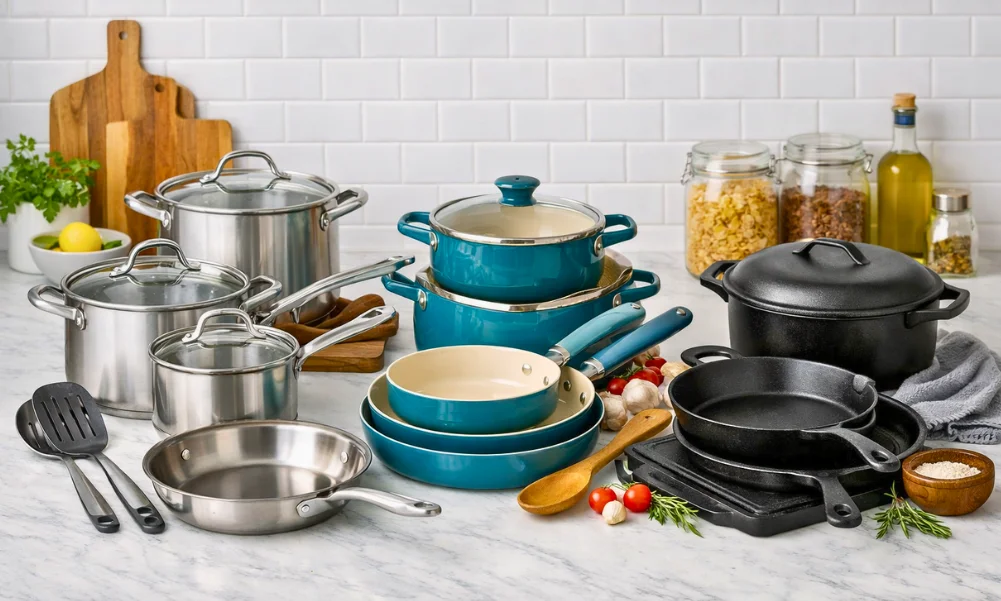
I’ve spent years evaluating cookware and home products from an engineering and ownership perspective. This Cuisinart MultiClad Pro 15-Piece Cookware Set review comes down to more than whether the pans look well made. The real questions are how the tri-ply stainless steel behaves over heat, how comfortable the cookware is to handle, and whether the larger 15-piece configuration is worth buying over a smaller set.
The Cuisinart MultiClad Pro MCPS-15N gets the fundamentals right. Its tri-ply stainless-steel construction uses an aluminum core to improve heat distribution, while the broad mix of saucepans, skillets, a sauté pan, stockpot, casserole, and steamer gives frequent cooks enough range to cover most everyday meals.
It’s also the Cuisinart set I’d look at if you’re comparing broader options in our best cookware sets guide, where MultiClad Pro stands out as a strong stainless-steel value. But the 15-piece version isn’t automatically the better buy.
If you cook frequently, prepare meals for a family, and will genuinely use the larger pans and specialty pieces, the 15-piece configuration makes sense. If cabinet space is tight or you already own several good pans, the smaller 12-piece MultiClad Pro set will probably be easier to justify.
Quick Verdict
The Cuisinart MultiClad Pro 15-piece set is a strong choice for home cooks who want to build most of a stainless-steel cookware collection in one purchase.
The fully clad design is the main reason to consider it. Cuisinart uses an aluminum core through the cookware body, and its Heat Surround construction is intended to distribute heat along both the bottom and sidewalls. In practice, that translates into the kind of heat control I want for searing, sautéing, simmering, and reducing sauces.
There is a learning curve. Stainless steel doesn’t release food like nonstick cookware, and poor heat control can make an otherwise good pan frustrating.
The 15-piece version also demands more storage. For frequent cooks who need the extra vessels, that breadth is useful. For smaller households and kitchens, the 12-piece MultiClad Pro is usually the more practical buy.
Best For
This set makes the most sense for:
- Frequent home cooks building a cookware collection
- Families that use several pots and pans during a meal
- Buyers who want fully clad stainless cookware without immediately stepping into premium pricing
- Induction users who want broad cooktop compatibility
- People who regularly move cookware from stovetop to oven
- Buyers who will actually use larger pieces rather than storing them indefinitely
Skip It If
I’d look elsewhere if:
- You expect every skillet to behave like a nonstick pan
- Cabinet space is already limited
- You cook mostly simple meals for one or two people
- You already own good saucepans, a stockpot, and larger specialty pans
- You don’t want to learn stainless-steel temperature control
Key Specifications
| Specification | Cuisinart MultiClad Pro 15-Piece Set | Why It Matters |
|---|---|---|
| Model | MCPS-15N | Identifies the 15-piece U.S. listing |
| Construction | Tri-ply stainless steel with aluminum core | Helps distribute heat through the cookware body |
| Heat design | Heat Surround Technology | Extends heat distribution along the base and sidewalls |
| Main cooking surface | Stainless steel | Good for browning, searing, and deglazing |
| Cooktop compatibility | Includes induction | Gives you flexibility if your cooktop changes |
| Handles | Riveted stainless-steel Cool Grip design | Secure attachment and loaded-pan control |
| Oven rating | Up to 500°F | Useful for stovetop-to-oven recipes |
| Set size | 15 pieces including lids and inserts | The count doesn’t mean 15 independent pans |
| Warranty | Lifetime cookware warranty for U.S. consumers, subject to Cuisinart terms | Useful protection against qualifying material/workmanship defects |
Cuisinart’s current MultiClad Pro documentation confirms tri-ply construction, Heat Surround Technology, induction compatibility, dishwasher-safe stainless cookware, and a 500°F oven rating on the current 12-piece line. The company’s U.S. warranty page separately identifies cookware under its lifetime warranty terms.
The construction matters more than the feature count. That’s the specification that changes how these pans behave over heat.
What’s Included in the Cuisinart MultiClad Pro 15-Piece Set?
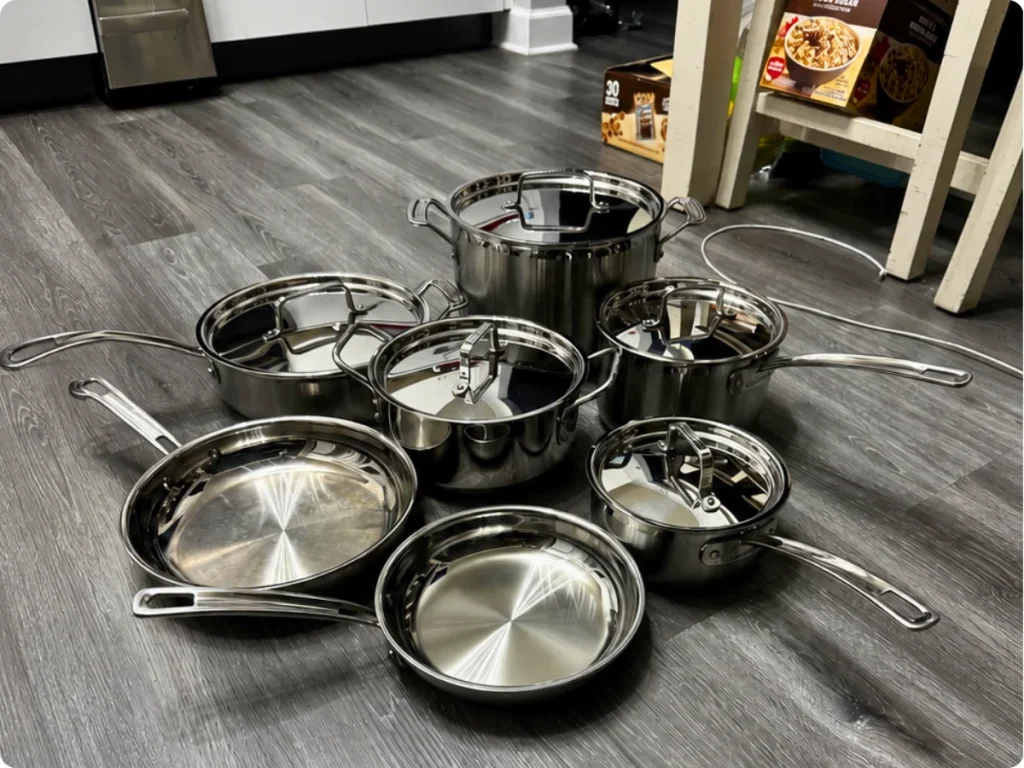
“15-piece” sounds like a mountain of cookware, but manufacturers count lids and inserts as individual pieces. That’s normal. It just means you should pay attention to the actual cooking vessels rather than the number printed on the box.
The 15-piece configuration includes cookware aimed at everything from sauces and small portions to pasta, braising, steaming, and larger skillet work.
| Piece | Most Useful For | Practical Value |
|---|---|---|
| 1.5-quart saucepan with lid | Sauces, reheating, small portions | Useful |
| 3-quart saucepan with lid | Rice, vegetables, larger sauces | Very useful |
| 3.5-quart sauté pan with helper handle and lid | Searing, braising, one-pan meals | High |
| 8-quart stockpot with lid | Pasta, soup, stock, batch cooking | High |
| 8-inch skillet | Small portions and quick jobs | Useful |
| 10-inch skillet | General frying and searing | High |
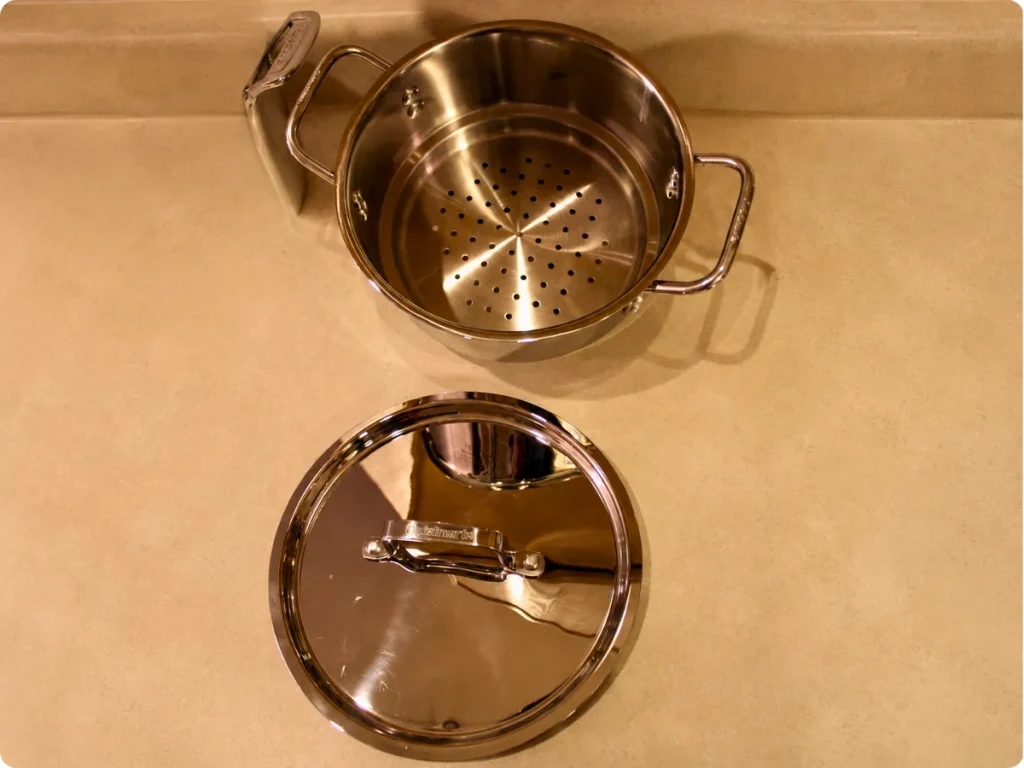
| Steamer insert with lid | Vegetables and steaming | Depends on your cooking |
| 12-inch nonstick skillet with helper handle | Eggs, pancakes, delicate foods | Useful |
| 4-quart casserole with lid | Braises and larger side dishes | High for frequent cooks |
The sauté pan and stockpot are easy to justify. So is the 10-inch skillet.
The casserole is more situational. For someone building a kitchen from scratch, it fills a useful space between a saucepan and a stockpot. An occasional cook may barely touch it.
That’s the theme with the entire 15-piece package: value depends on whether those extra shapes match the way you cook.
Practical Hands-On Experience
What Stood Out During Use
The first thing I noticed wasn’t the brushed stainless finish. It was how much more substantial the pans feel than lightweight cookware.
There’s enough material here that the cookware doesn’t feel flimsy when you set it over heat or move food around the pan. Once properly preheated, I also found less reason to chase aggressive burner settings just to get decent browning.
That matters.
A lot of cooks move from thinner cookware to clad stainless and keep using the same high-heat habits. With this type of pan, that can work against you.
Medium heat does more than many first-time stainless users expect.
Stainless Steel Has a Learning Curve
If you’re coming from nonstick, your first few meals may be frustrating.
Food can stick. Eggs can stick badly. Chicken may seem glued to the surface if you try to move it before a crust has formed.
That doesn’t automatically mean the pan is poor.
With stainless cookware, I pay attention to three things: preheating, cooking fat, and patience. Bring the pan up to temperature, add oil when appropriate, and give meat enough time to brown before trying to turn it.
Once the surface has developed a proper crust, proteins often release much more easily.
But no technique turns bare stainless steel into nonstick. If easy egg or pancake release matters every morning, the included coated 12-inch skillet has a clear role.
Cooking Performance
Heat Distribution
Cuisinart builds MultiClad Pro around a stainless exterior, aluminum core, and stainless cooking surface. Its Heat Surround design carries that conductive aluminum layer through the cookware body so heating isn’t limited to a disk under the base.
From an engineering standpoint, that’s where the construction earns its keep.
Stainless steel makes a durable, stable cooking surface, but aluminum moves heat much more readily. Pairing them lets the stainless provide the cooking surface while the aluminum helps move heat across a larger part of the pan.
During use, that difference becomes more noticeable when you aren’t simply blasting the middle of a skillet. Sauces, sautéed vegetables, and ingredients near the sidewalls all benefit from cookware that doesn’t treat the walls as an afterthought.
Searing and Browning
The stainless skillets are at their best when you actually want browning.
Meat develops fond on the bottom of the pan, vegetables can take on real color, and the surface is well suited to cooking techniques where browned residue later becomes part of a pan sauce.
But, there’s no need to run the burner flat-out.
Once the 10-inch skillet is hot, reducing the heat gives you more control than continuing at maximum output. During cooking, I found that this makes the difference between controlled browning and oil starting to smoke before the food is ready.
Better cookware doesn’t remove the need for technique. It makes good technique easier to use.
Simmering and Sauce Work
The saucepans may look less exciting than the skillets, but they’re some of the pieces I’d use most often.
A 1.5-quart pan works well for smaller sauces and reheating. The 3-quart size is better for grains, vegetables, larger sauces, and everyday family portions.
The clad sidewalls matter here because sauce doesn’t stay only on the bottom. When you’re reducing or simmering, ingredients contact the sides too, and more consistent heating around that area makes temperature management less fussy.
I also like stainless saucepans for whisking, stirring, and scraping because I don’t have to treat the cooking surface as delicately as a traditional coated pan.
Stockpot and Larger Meals
An 8-quart stockpot puts this collection firmly into family-meal territory.
It gives you room for pasta, soups, stock, corn, and larger batches without filling the vessel almost to the rim.
Full pots get heavy, though.
This is where handles matter much more than they do when you’re picking up an empty pot. I want enough grip to feel controlled with hot water inside, not merely a handle that looks clean on a product page.
The 12-Inch Nonstick Skillet Has a Different Job
Including one nonstick skillet actually makes sense.
A completely stainless collection sounds appealing until breakfast. Eggs, pancakes, delicate fish, and similar foods are simply easier on a coated surface.
Cuisinart’s current 12-inch MultiClad Pro nonstick skillet uses a PFAS-free PURELYCERAMIC interior, retains tri-ply construction and induction compatibility, and is listed as dishwasher safe and oven safe to 500°F.
Still, I wouldn’t use it for the same jobs as the stainless skillets. The bare stainless pans are where I’d do harder searing and heavy browning. The coated skillet makes more sense when easy release is the priority.
Two cooking surfaces. Two jobs.
Build Quality and Handle Design
Tri-Ply Construction Feels Substantial
One thing that stood out during handling was how planted the cookware feels compared with thin stamped pans.
The walls don’t feel like an afterthought, and the riveted handles give the pieces a more permanent feel than cookware built around lightweight attachment points.
Weight doesn’t automatically mean quality. A heavy pan can still be poorly designed.
Here, though, the added substance comes with a layered construction that has a practical thermal purpose.
Cool Grip Handles: Secure, but Shape Still Matters
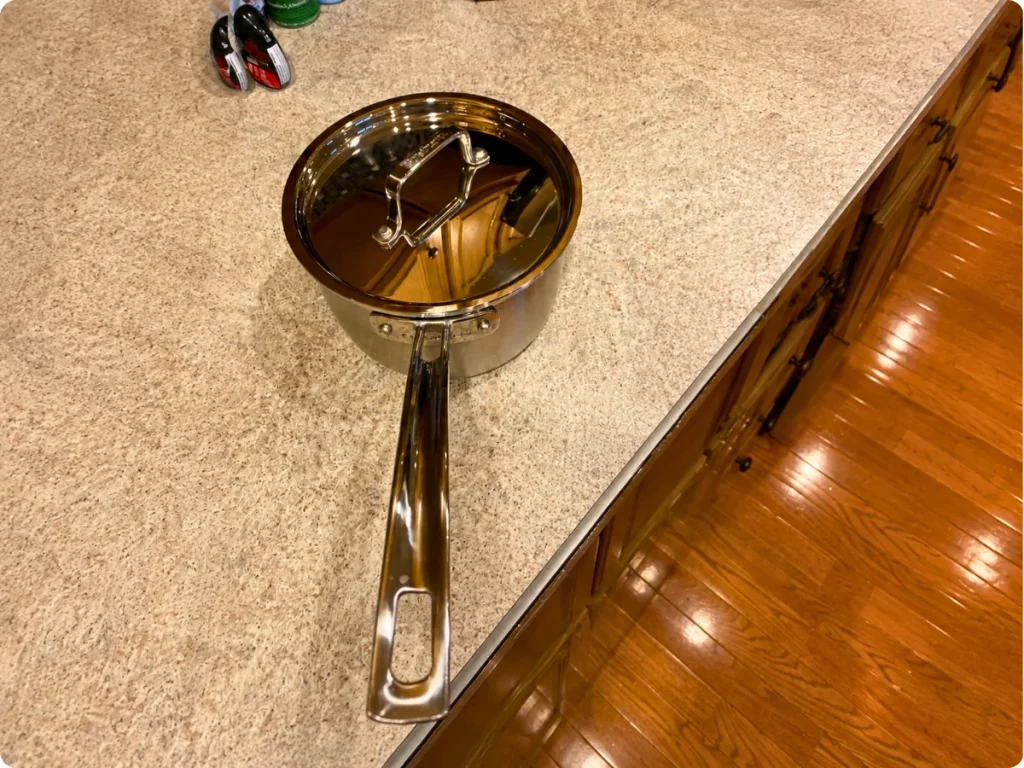
Cuisinart describes the line as using riveted stainless-steel Cool Grip handles designed to stay cool on the stovetop.
I still wouldn’t treat the name as permission to grab every handle without thinking. Burner size, pan position, cooking time, nearby heat, and oven use all change what the metal is exposed to.
What matters more during normal stovetop cooking is the shape.
The long handles feel secure, but their narrow stainless profile won’t suit every hand equally. On a light skillet, that’s a minor issue. Add food to a sauté pan and start moving it one-handed, and ergonomics become much more noticeable.
The helper handles on the larger pieces are useful for exactly that reason.
If you have smaller hands or simply dislike narrow metal handles, this is one area I’d pay attention to before committing to a full set.
Oven and Cooktop Compatibility
The MultiClad Pro stainless line works across common stovetop types, including induction. Cuisinart’s current 12-piece documentation confirms compatibility with all stovetop ranges, including induction.
That’s useful even if you don’t own an induction range today. Cooktops change. Kitchens get remodeled. Buying cookware that can move between gas, conventional electric, and induction makes the collection easier to keep long term.
The MCPS-15N listing specifies oven use up to 500°F.
That covers the sort of stovetop-to-oven work most home cooks are likely to do: finishing thicker cuts after searing, braising, roasting, or keeping a pan hot during a multi-step meal.
And once a stainless handle has been in the oven, forget the “Cool Grip” name. Use an oven mitt.
Ease of Cleaning and Maintenance
Everyday Cleanup
Stainless steel becomes easier to live with once you stop expecting it to look untouched after every meal.
Most routine messes come off with hot water, dish soap, and ordinary cleaning. Cuisinart lists its current MultiClad Pro stainless set as dishwasher safe.
During use, I found cleanup easiest when I dealt with residue before it had hours to harden.
Sometimes cooking itself helps. If you’ve seared meat and have browned bits on the base, deglazing the pan for a sauce removes a good portion of that residue before the pan ever reaches the sink.
Water Spots and Heat Tint
Shiny stainless cookware shows cosmetic marks.
Hard-water minerals can leave spots. High heat can leave rainbow-like discoloration. Those marks don’t automatically mean the pan is ruined.
This matters because it’s easy to start scrubbing aggressively every time stainless stops looking showroom-new.
I wouldn’t.
Cookware is a tool. Keep it clean, remove stubborn residue when needed, and don’t confuse normal cosmetic changes with failure.
Burned-On Oil Takes More Work
Polymerized oil is a different problem.
When oil gets too hot and bonds to stainless steel, ordinary dish soap may not remove it immediately. That’s another reason good burner control matters during cooking, not just for the food.
Less unnecessary heat means less unnecessary cleanup.
Treat the Nonstick Skillet as a Separate Tool
The coated skillet has its own purpose.
I’d use it when easy release matters rather than making it the default pan for hard searing. Cuisinart lists the current MultiClad Pro ceramic nonstick skillet as dishwasher safe and oven safe to 500°F.
Following the care instructions supplied with the included skillet is still the sensible approach, particularly with utensils and high-heat cooking.
Storage and Everyday Ownership
Fifteen pieces take space.
That sounds obvious, but cookware sets are often judged on a countertop while ownership happens inside a cabinet.
The 12-inch skillet has a wide footprint. The stockpot is tall. Lids need somewhere to go. Add the casserole, sauté pan, saucepans, smaller skillets, and steamer, and you’re dealing with a genuine cookware collection rather than a starter bundle.
If you have deep drawers or a dedicated cookware cabinet, fine.
In a small apartment kitchen, I wouldn’t buy the larger set just because the per-piece price looks attractive. A pan you never use isn’t value.
It’s storage.
Cuisinart 15-Piece vs. 12-Piece MultiClad Pro
This is the decision that matters more than the headline piece count.
Cuisinart’s current 12-piece MultiClad Pro set, MCPS-12N, carries the same basic tri-ply construction, Heat Surround design, induction compatibility, dishwasher-safe specification, and 500°F oven rating.
So the question isn’t whether the 15-piece set uses fundamentally better cookware.
It’s whether you need the broader collection.
When the 15-Piece Set Is Worth It
I’d lean toward the 15-piece version if you’re starting with little good cookware and expect to use the larger selection regularly.
It makes particular sense for:
- Families
- Frequent meal prep
- People who entertain
- Cooks who use several pans during a single meal
- Buyers who want a large skillet and additional mid-size cookware without buying pieces separately
For those users, the extra cookware fills real jobs.
When the 12-Piece Set Is the Smarter Buy
For many households, the smaller set is enough.
If you already own a large skillet, Dutch oven, casserole, or another specialty pan you like, paying for overlapping cookware doesn’t improve your kitchen.
The 12-piece version also makes more sense when storage is limited.
And if you’re moving into stainless steel for the first time, starting with fewer pieces gives you a chance to learn which pan shapes you actually reach for before filling an entire cabinet.
More cookware isn’t the goal.
Useful cookware is.
Pros and Cons
Pros
- Fully clad tri-ply construction
- Aluminum core extends through the cookware body
- Strong selection of everyday sizes
- Stainless cooking surface works well for searing and browning
- Induction compatible
- Oven safe up to 500°F
- Dishwasher-safe MultiClad Pro construction
- Large sauté pan and stockpot suit family cooking
- Separate nonstick skillet gives delicate foods an easier cooking surface
- Riveted stainless handles
- U.S. cookware lifetime warranty under Cuisinart’s stated warranty terms
Cons
- Stainless steel requires better heat and oil technique than nonstick
- Handle shape won’t suit every hand
- Large set demands considerable cabinet space
- Stainless and nonstick pieces call for different cooking habits
- Fifteen pieces may be unnecessary for smaller households
- Keeping brushed stainless cosmetically spotless takes more work than basic cleaning
Who Should Buy the Cuisinart MultiClad Pro 15-Piece Set?
Frequent Home Cooks
If you cook most days and regularly move between saucepans, skillets, sauté pans, and larger pots, you have a better chance of using what the set actually provides.
That’s where fifteen pieces begin to make sense.
Families Building a Kitchen From Scratch
Starting with almost no cookware changes the value calculation.
A broad clad set can be more convenient than assembling comparable pans one at a time, provided the included sizes match the meals you regularly cook.
Buyers Who Want Fully Clad Stainless Without Immediately Going Premium
This is one of the strongest reasons to consider MultiClad Pro.
You’re buying the engineering idea that matters—a conductive aluminum layer paired with stainless cooking surfaces—without making a premium badge the whole reason for the purchase.
Induction Users
Cuisinart lists MultiClad Pro as compatible with induction along with other common stovetop types.
That makes the set an easy fit for homes already using induction and gives conventional cooktop owners some flexibility later.
Who Should Skip It?
Buyers Who Want Nonstick Simplicity Everywhere
One coated skillet doesn’t change the character of the collection.
Most of the cookware is stainless steel. If you don’t want to think about preheating, oil, browning, and food release, a predominantly stainless collection probably isn’t the right match.
Small-Kitchen Owners
The amount of cookware becomes difficult to justify once storage is already tight.
The smaller set is easier to live with.
People Who Already Own Good Specialty Cookware
If you already have a stockpot, large skillet, casserole, and favorite nonstick pan, you’re likely buying duplicate functions.
Infrequent Cooks
Someone making a couple of simple meals each week doesn’t need the same collection as someone feeding a family every night.
Buy for the way you actually cook.
Alternatives
Cuisinart MultiClad Pro 12-Piece Set
This is the first alternative I’d consider.
The MCPS-12N keeps the same core MultiClad Pro design while trimming the collection down. Cuisinart currently lists the 12-piece set at $299.95, though cookware pricing changes and should be checked when you buy.
For smaller households, limited storage, or buyers who already own specialty cookware, it can be the better value.
All-Clad D3
All-Clad D3 is the natural premium comparison for shoppers considering fully clad stainless cookware.
I’d look at it if you’re willing to spend more and prefer its particular handle design, finish, pan selection, or brand ecosystem.
But a higher price doesn’t automatically make cookware better for your kitchen. If Cuisinart gives you the sizes you need and you prefer how it feels in your hands, spending considerably more may not change what you can cook.
Final Verdict
The Cuisinart MultiClad Pro 15-Piece Cookware Set (MCPS-15N) is a strong fit for frequent home cooks who want the flexibility of fully clad stainless steel and enough cookware to cover nearly every routine kitchen job.
The construction is the real reason to buy it. Cuisinart’s tri-ply aluminum-core design gives the cookware a better thermal foundation than basic thin stainless pans, while the stainless cooking surfaces are well suited to browning, deglazing, sauce work, and stovetop-to-oven cooking.
During use, what stood out to me was how much technique matters once the cookware itself stops being the weak link. You don’t need extreme burner settings. You do need to understand preheating, food release, and temperature control.
The 15-piece version makes the most sense for families, frequent cooks, and buyers starting with an incomplete kitchen.
For a smaller household or kitchen, I’d save the cabinet space and seriously consider the 12-piece version instead.
That’s the decision I’d base the purchase on—not the larger number printed on the box.
|| Check Latest price on Amazon
Editorial Transparency
This review combines practical product evaluation, engineering knowledge, manufacturer specifications, official documentation, and editorial analysis.


Content is researched and written by Engr. Jamal & KitchenMarks Editorial team based on hands-on product use, maintenance experience, and long-term household performance evaluation.